
ATF WS, or Automatic Transmission Fluid World Standard, is a specialized, low-viscosity fluid designed primarily for modern automatic transmissions. Originally developed for Toyota, Lexus, and Scion vehicles from the mid-2000s onward, this fluid standard is engineered to optimize fuel efficiency and ensure smooth gear shifting. Determining whether your vehicle requires this specific fluid is a critical step before performing any maintenance, as using an incompatible fluid can lead to severe mechanical issues. To verify your vehicle’s requirements, you must consult your owner’s manual or inspect physical indicators on the vehicle itself.
Understanding the ATF WS Specification
The ATF WS standard was introduced to meet the demanding engineering requirements of modern, multi-speed automatic transmissions. The “WS” stands for World Standard, reflecting its widespread application across various global vehicle platforms. Unlike older, higher-viscosity transmission fluids, ATF WS features a thin, low-viscosity formulation designed to reduce parasitic drag within the gearbox, thereby improving overall fuel economy.
In tropical environments where high ambient temperatures and heavy stop-and-go traffic are common, transmission fluids face significant thermal stress. ATF WS is formulated with specific friction modifiers and thermal stabilizers to maintain its protective properties under these demanding conditions. However, despite its global name, it is not a universal fluid. It is a proprietary specification, and its compatibility is strictly limited to transmissions engineered specifically for its unique viscosity and frictional characteristics.
Products mentioned in this guide
![[1 LITER] Toyota ATF WS - Genuine Toyota Auto Parts](https://img.lazcdn.com/g/p/571b88a73d22789ece710f4b6161e082.jpg_400x400q80.jpg_.webp)
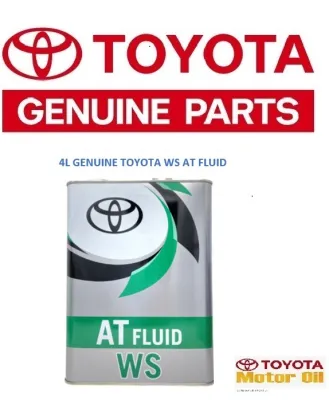
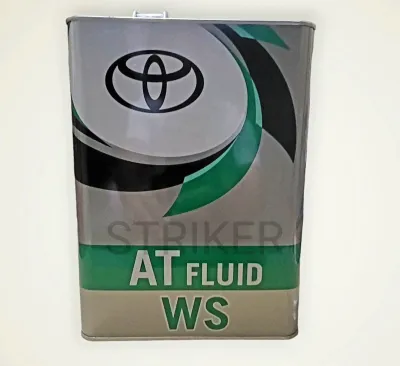
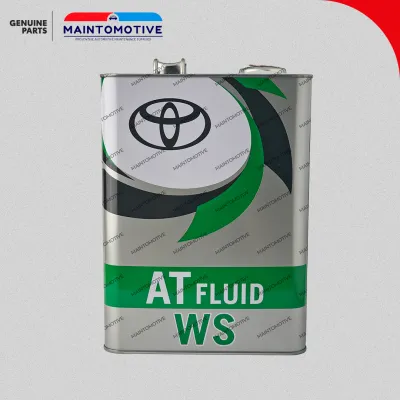
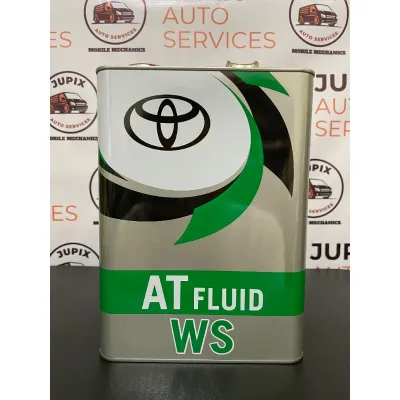
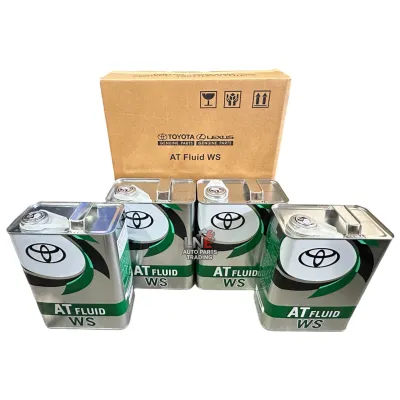
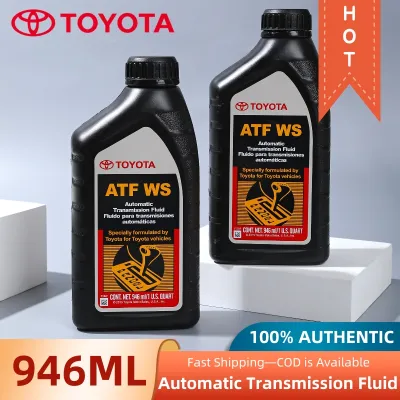
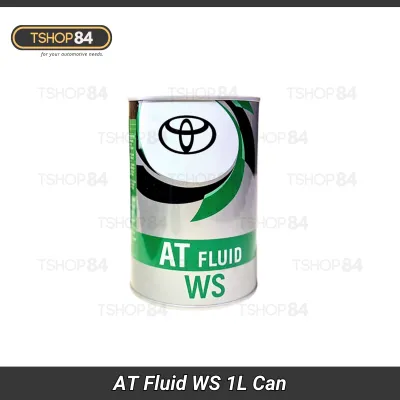
Prices are valid at publication and may change. Please refer to the product page for the latest price.
How to Verify If Your Car Requires ATF WS
Confirming whether your vehicle requires ATF WS is a straightforward process that should always precede any fluid purchase or top-up. The most reliable source of information is your vehicle’s owner’s manual. Navigate to the index and look for sections labeled “Specifications,” “Fluid Capacities,” or “Scheduled Maintenance.” Here, the manufacturer will explicitly list the required transmission fluid standard, often specifying “Toyota Genuine ATF WS” or an approved equivalent.

If the manual is unavailable, you can perform a physical inspection of the vehicle. For vehicles equipped with a transmission dipstick, locate the dipstick handle under the hood. Manufacturers frequently stamp or engrave the required fluid specification directly onto the plastic handle or the metal blade of the dipstick. If you see “WS” or “ATF WS” engraved there, your vehicle requires this specific fluid.
Many modern vehicles utilize sealed automatic transmissions that do not feature a traditional dipstick. In these cases, the fluid specification may be stamped on the transmission’s fill plug, drain plug, or an adjacent identification tag underneath the vehicle. Accessing these plugs safely requires raising the vehicle on a hoist or jack stands, which must be done with proper safety gear and support.
If you are still uncertain after these checks, contact a local authorized dealership or a certified automotive technician. By providing your vehicle identification number (VIN), the service department can look up the exact factory specifications for your transmission. Avoid relying on generic application charts at retail stores or unverified advice on online forums, as these sources can sometimes overlook subtle model-year variations.
Risks of Using the Wrong Transmission Fluid
Using an incorrect or incompatible transmission fluid can have immediate and severe consequences for your vehicle’s drivetrain. Automatic transmissions rely on precise hydraulic pressure to engage clutches and change gears. A fluid with the wrong viscosity or chemical composition can disrupt this pressure, leading to noticeable performance issues.
Common symptoms of using the wrong fluid include delayed gear engagement, harsh or rough shifting, and transmission slippage, where the engine revs but the vehicle struggles to accelerate. Over time, the incorrect friction modifiers can cause the internal clutch plates to slip excessively, generating intense heat. In tropical climates, this heat buildup is accelerated, which can quickly degrade the fluid and lead to premature failure of internal seals, solenoids, and gear sets.
If you discover that the wrong fluid has been added to your transmission, do not continue to drive the vehicle. Operating the vehicle under these conditions can turn a simple fluid correction into an expensive transmission rebuild that could cost tens of thousands of pesos ₱. The vehicle should be towed to a professional service center where a technician can perform a complete system flush to remove all traces of the incorrect fluid before refilling it with the proper specification.
Purchasing and Handling ATF WS Safely
When purchasing ATF WS, it is essential to source the product from reputable automotive parts retailers, authorized dealerships, or official online brand stores. Counterfeit or low-quality fluids are a risk in the automotive aftermarket, and using a substandard fluid can cause the same mechanical damage as using the wrong specification entirely. Always inspect the packaging for intact seals and clear manufacturer labeling that explicitly states compliance with the ATF WS standard.
Before attempting to check or top up your transmission fluid, review the safety and operating instructions in your owner’s manual. Checking transmission fluid levels is highly sensitive to fluid temperature. If the fluid is checked when it is too cold or too hot, you may get an inaccurate reading, leading to overfilling or underfilling, both of which can damage the transmission.
Always park the vehicle on a flat, level surface and engage the parking brake before performing any under-hood inspections. If your vehicle has a sealed transmission system, do not attempt to open the fill or overflow plugs yourself unless you have the specialized tools and training required. Sealed systems are easily contaminated by dirt and moisture, and improper handling can lead to fluid loss or transmission damage. For these vehicles, professional servicing is highly recommended.
Frequently Asked Questions (FAQ)
Can I mix ATF WS with other types of automatic transmission fluid?
No, you should never mix ATF WS with other types of automatic transmission fluid, such as Dexron, Mercon, or older Toyota Type T-IV. These fluids have distinct chemical additives, base oils, and viscosity profiles. Mixing them can cause a chemical reaction that degrades the fluid’s lubricating properties, leading to clutch slippage, rough shifting, and accelerated wear. If you suspect different fluids have been mixed, seek professional assistance to have the transmission completely flushed.
Is ATF WS the same as CVT fluid?
No, ATF WS is not the same as continuously variable transmission (CVT) fluid. ATF WS is formulated for traditional geared automatic transmissions that use planetary gears and a torque converter. CVTs operate on a completely different mechanical principle, utilizing a steel belt or chain running between adjustable pulleys. CVT fluid requires unique friction characteristics to prevent the belt from slipping against the metal pulleys. Using ATF WS in a CVT, or CVT fluid in a traditional automatic, will cause rapid and catastrophic transmission failure.
Community discussion
Share your experience or ask a question. Comments are reviewed before publication.