
Navigating the world of motorcycle safety gear can feel overwhelming, especially when trying to decode the various safety stickers plastered on the back of your riding gear. If you own or are planning to buy a KYT helmet, you have likely noticed labels like ICC, PS, DOT, or ECE. These certifications indicate that your helmet has undergone rigorous laboratory testing to verify its structural integrity, impact absorption, and road legality in the Philippines.
Selecting a certified helmet is your primary line of defense against severe head injuries on the road. In a country characterized by dense urban traffic, unpredictable weather, and varied road conditions, understanding these safety standards ensures you are buying genuine protection rather than a false sense of security. This guide breaks down what each certification means, how they protect you, and how to verify that your gear is fully compliant and authentic.
Decoding the Labels: PS, ICC, DOT, and ECE Explained
Many Filipino riders search for “PSB” certification when buying a KYT helmet, often leading to confusion. PSB actually stands for the Product Standards Board of Singapore. Because many helmets sold in Southeast Asia are distributed regionally, some genuine KYT models carry a PSB sticker intended for the Singaporean market. However, PSB is not the legal safety standard in the Philippines. The correct local authority is the Bureau of Philippine Standards (BPS), which administers the Philippine Standard (PS) mark and the Import Commodity Clearance (ICC) sticker.
Products mentioned in this guide
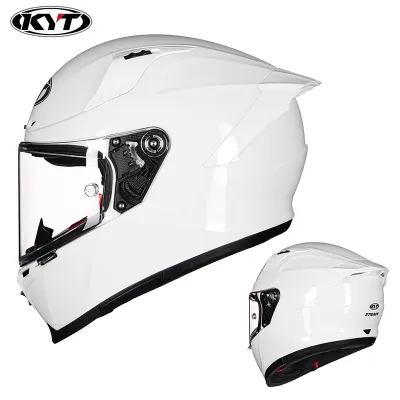
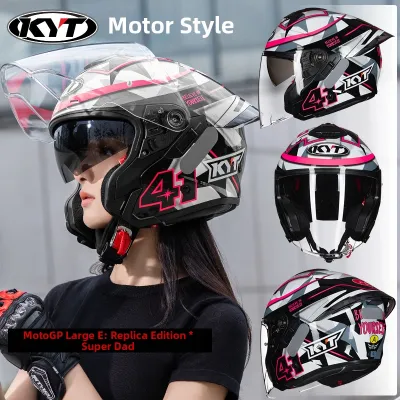
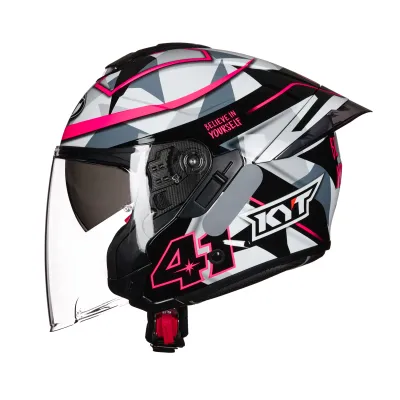
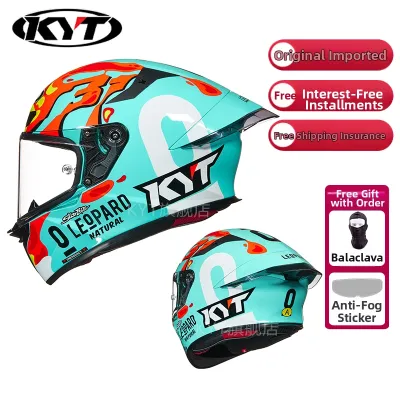
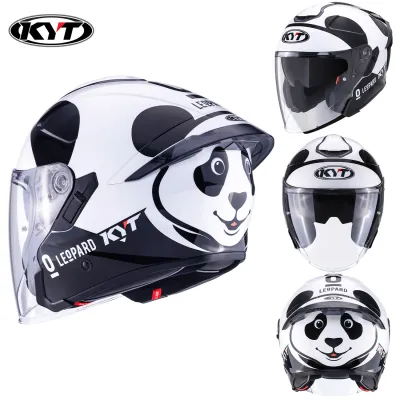
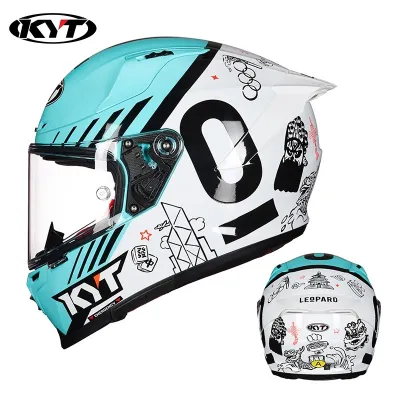
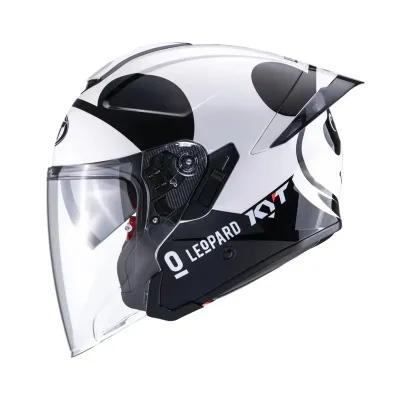
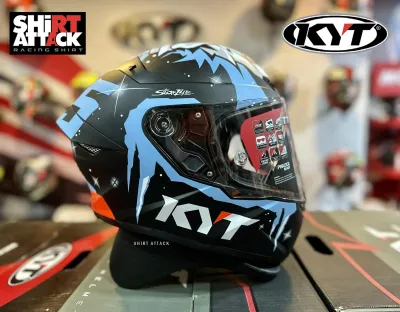
Prices are valid at publication and may change. Please refer to the product page for the latest price.
Because KYT helmets are manufactured overseas and imported into the Philippines, they must carry an authentic ICC sticker to be legally sold and used on local roads. The ICC sticker serves as physical proof that a specific batch of imported helmets has been inspected, sampled, and tested by the BPS. This process ensures the helmets comply with the mandatory Philippine National Standards (PNS) before they ever reach retail shelves.
The PS mark serves a similar purpose but is reserved for protective gear manufactured domestically within the Philippines. Since KYT is an international brand with manufacturing facilities located abroad, you will primarily look for the holographic ICC sticker on your helmet rather than the domestic PS mark.
Beyond local certifications, you will often see global safety standards on your gear. The DOT (Department of Transportation) mark is the United States federal safety standard. A DOT-certified helmet meets the basic legal safety requirements for the North American market. However, the DOT system relies heavily on manufacturer self-certification, with the US government performing random spot-checks. While it guarantees a baseline of safety, it is generally considered less rigorous than newer international standards.
The Economic Commission for Europe (ECE) standard, particularly the updated ECE 22.06, is a highly respected global benchmark. Unlike the DOT system, ECE certification requires independent, third-party laboratory testing before any helmet model can be sold to the public. ECE 22.06 testing is incredibly demanding, incorporating multi-angle impact points, rotational force measurements, and visor shatter resistance. Many premium KYT models carry this certification, reflecting their track-ready development.
Understanding these labels is also a matter of legal compliance. Under Republic Act No. 10054, also known as the Motorcycle Helmet Act of 2009, all motorcycle riders on Philippine roads must wear a standard protective motorcycle helmet bearing a valid PS or ICC mark. Riding with a helmet that only displays international markings like DOT or ECE—without the official BPS-issued ICC sticker—can result in traffic citations, heavy fines, and temporary confiscation of your driver’s license.
How Safety Standards Translate to Real-World Protection
When you are riding, safety certifications are not just bureaucratic stamps; they represent engineered survival thresholds. The most critical component of this protection is impact attenuation, which is the helmet’s ability to absorb kinetic energy. Inside the tough outer shell of your KYT helmet lies a thick layer of Expanded Polystyrene (EPS) foam. During a crash, this EPS liner is designed to compress and deform in a controlled manner. This microscopic crushing action absorbs the energy of the impact, extending the deceleration time of your head and dramatically reducing the G-forces transferred to your brain.

Another vital safety metric is penetration resistance. The road environment is filled with sharp hazards, such as footpegs, handlebars, and jagged debris. Certification tests ensure the helmet’s outer shell can withstand these hazards without puncturing. Depending on the model, KYT utilizes advanced shell materials ranging from high-grade thermoplastic resins to sophisticated tri-fiber composites consisting of carbon fiber, Kevlar, and fiberglass. During testing, a heavy, pointed steel striker is dropped onto the shell to verify that it successfully prevents sharp objects from penetrating through to the EPS liner.
The strength of the retention system, or chin strap, is also tested extensively. A helmet cannot protect you if it flies off your head during an accident. Standards subject both micrometric quick-release buckles and double D-ring retention systems to dynamic and static load tests. These tests apply sudden, heavy pulling forces to ensure the strap does not stretch excessively, tear, or release prematurely under pressure.
Field of vision and visor clarity are also evaluated because preventing an accident is just as important as surviving one. ECE and local PNS standards dictate strict requirements for peripheral vision angles, ensuring the helmet does not create dangerous blind spots. Furthermore, visors must offer high optical clarity without distortion, which is essential when navigating heavy traffic during a sudden tropical downpour. Certified visors must also resist shattering when struck by flying pebbles or road debris.
While these rigorous laboratory tests ensure your helmet meets high safety baselines, it is crucial to recognize their limits. Safety certifications represent minimum survival thresholds under specific, controlled test conditions. They do not guarantee absolute invincibility or zero injury in every real-world scenario. Riding defensively, maintaining safe speeds, and staying alert remain your primary lines of defense on the road.
Spotting Fake Certifications and Counterfeit Helmets
Due to the popularity of the KYT brand among Filipino riders, counterfeit helmets have become a significant safety hazard in the local market. These fake helmets are often sold online at prices that seem exceptionally low. While they may look visually similar to genuine models, they are constructed using cheap plastics and lack the engineered EPS liners required to absorb impact. In a crash, a counterfeit helmet can split open instantly, offering virtually no protection to your head.
To protect yourself, you must know how to verify the authenticity of the ICC sticker. Genuine BPS-issued ICC stickers are holographic, showing a distinct color shift and security patterns when tilted under light. They feature unique serial numbers and, on newer batches, scannable QR codes that link directly to official government verification databases. If the ICC sticker on a helmet is a flat, poorly printed paper decal with blurry text or lacks holographic depth, the helmet is highly likely a counterfeit.
Inspecting the physical build quality of the helmet can also reveal its authenticity. Genuine KYT helmets are manufactured with high quality-control standards. Red flags of a counterfeit include loose or uneven stitching on the comfort liner, flimsy visor mechanisms that wobble when operated, cheap-feeling plastic vents, and misspelled branding or safety warnings on the box or helmet labels. Additionally, fake helmets often feel unusually lightweight because they omit the dense EPS foam liner entirely, substituting it with soft packaging foam.
To ensure you are purchasing a genuine, certified product, always buy from authorized KYT dealers, official online brand stores, or reputable physical motorcycle accessory shops. Avoid unverified third-party sellers on online marketplaces who offer premium models at suspiciously low prices. A genuine entry-level KYT helmet typically costs between ₱3,500 and ₱6,000, while professional composite racing models can cost significantly more. If a deal seems too good to be true, it is a compromise on your personal safety.
Beyond the Sticker: Fit, Condition, and Daily Riding Safety
Even a highly certified helmet cannot protect you if it does not fit your head correctly. When purchasing a KYT helmet, do not rely solely on your general hat size. Try the helmet on in person. A properly fitting helmet should feel snug around your entire skull, with the cheek pads pressing firmly against your cheeks without causing pain. When you shake your head from side to side, the helmet should not slip or rotate independently. To test the retention, fasten the chin strap securely and pull upward on the back of the helmet; it must not roll forward off your head.
Helmets also have a limited lifespan due to material degradation. The EPS liner is sensitive to extreme heat, intense UV radiation, and high humidity, all of which are common in the Philippines. Over time, sweat, hair oils, and grooming products also slowly break down the internal materials. Safety experts and manufacturers recommend replacing your helmet every 3 to 5 years from the date of first use, or 7 years from the date of manufacture, even if the helmet has never been involved in an accident.
It is equally important to adhere to the “one impact” rule. Motorcycle helmets are single-use safety devices. The EPS liner is designed to absorb energy by permanently compressing. Once this compression occurs, that section of the helmet loses its ability to protect you from future impacts. If you are involved in a crash, or if your helmet suffers a severe drop from a significant height—such as falling off your motorcycle seat onto hard asphalt—it must be replaced immediately. Even if the outer shell shows no visible cracks, the internal safety structure may be completely compromised.
Daily maintenance also plays a role in your safety. Clean your helmet’s visor and outer shell using only mild soapy water and a soft microfiber cloth, in accordance with the manufacturer’s care instructions. Avoid using harsh household glass cleaners, alcohol-based solvents, or abrasive pads. These chemicals can degrade the polycarbonate shell, strip away anti-scratch coatings, and damage the EPS liner, reducing both your visibility and your helmet’s structural integrity.
Frequently Asked Questions (FAQ)
Is a DOT-certified KYT helmet legal to use in the Philippines without an ICC sticker?
No, it is not legally compliant for road use in the Philippines. While a DOT certification indicates that the helmet meets United States safety standards, local traffic laws mandate that all motorcycle helmets used on public roads must bear a valid ICC or PS mark issued by the Bureau of Philippine Standards (BPS). If you are stopped by traffic enforcers or Land Transportation Office (LTO) officers while wearing a helmet that lacks this local sticker, you can face traffic citations and fines, regardless of any international certifications printed on the shell.
Does an ECE-certified KYT helmet offer significantly better protection than a basic ICC/DOT model?
Yes, helmets certified under the ECE standard, particularly ECE 22.06, generally offer a higher margin of safety due to more advanced and diverse testing protocols. While basic ICC and DOT standards establish solid baseline safety, ECE 22.06 testing includes rotational impact tests to simulate how a helmet behaves when sliding or tumbling on the road. This reduces the risk of brain shear injuries. ECE testing also evaluates the helmet at various impact speeds and angles, ensuring superior real-world performance compared to basic certification standards.
Can I still use my KYT helmet if it was dropped on the floor but shows no visible damage?
If the helmet was empty and fell from a low height, such as slipping from your hand or rolling off a low stool onto a flat floor, it is typically safe to continue using it after a thorough inspection. Because there was no heavy mass inside the helmet to compress the EPS liner against the outer shell, the internal safety structure should remain intact. However, if the helmet fell from a high shelf, was dropped while containing heavy items, or if you have any doubts about its condition, you should err on the side of caution and replace it, as internal damage is often invisible to the naked eye.
Community discussion
Share your experience or ask a question. Comments are reviewed before publication.