
When shopping for a Red Bull branded helmet, verifying local safety certifications is the most critical step you can take before riding. In the Philippines, the presence of a Philippine Standard (PSB) mark or an Import Commodity Clearance (ICC) sticker is not just a legal formality; it is your primary assurance that the protective gear has undergone rigorous testing to safeguard your life on the road.
Many riders are drawn to the striking blue, yellow, and red graphics of Red Bull liveries, which are highly popular in motorsports. However, a helmet’s aesthetic appeal does not equal structural safety. Whether you are navigating congested city streets or cruising on the highway, understanding how these local certifications apply to your gear ensures you stay both legally compliant and physically protected.
What PSB and ICC Marks Mean for Helmet Safety in the Philippines
The PSB and ICC certifications serve as the official safety benchmarks established by the Bureau of Philippine Standards under the Department of Trade and Industry. These marks indicate that a helmet model has successfully passed mandatory compliance testing, proving its ability to absorb impacts, resist penetration, and remain securely fastened during an accident.
Products mentioned in this guide
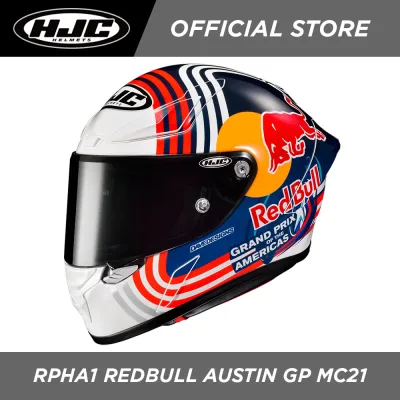
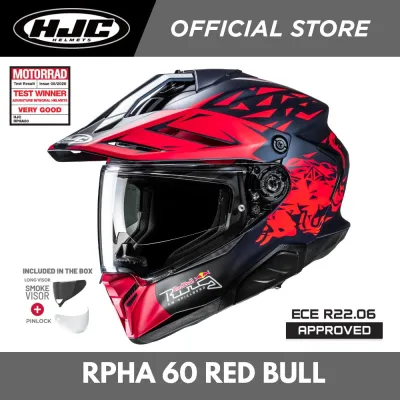
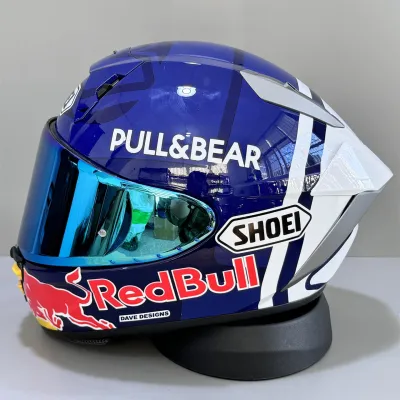
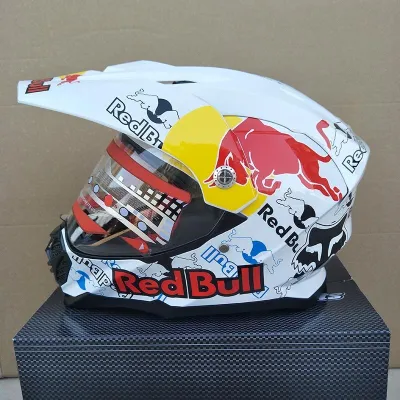
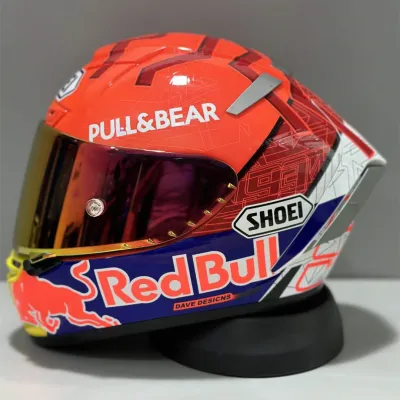
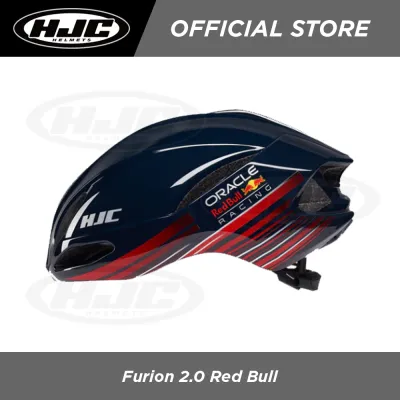
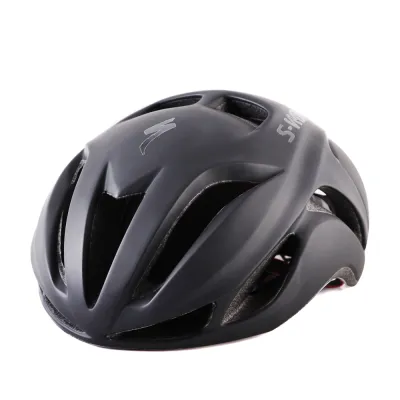
Prices are valid at publication and may change. Please refer to the product page for the latest price.
For locally manufactured helmets, the PSB mark is issued to certify that the production facility and the finished products consistently meet national safety standards. For imported helmets, which constitute a large portion of the premium riding gear market, the ICC sticker is issued after the shipment undergoes strict quality verification. Both marks signify that the helmet meets the minimum safety thresholds required to protect a rider’s head from severe trauma.
It is important to recognize that brand licensing, sponsorships, and graphic designs do not guarantee safety. Red Bull does not manufacture helmets; instead, their iconic logo and colors are licensed to established helmet manufacturers or applied as custom paint schemes. Therefore, a helmet featuring these graphics is only as safe as the underlying physical shell, which must carry its own valid PSB or ICC certification to be legally road-worthy in the Philippines.
How to Verify Certifications on a Red Bull Branded Helmet
Verifying the authenticity of safety marks on a helmet requires a close physical inspection before you complete your purchase. Counterfeit helmets and fake certification stickers are common in unauthorized online marketplaces, making diligent verification essential for your safety.

First, locate the physical certification sticker on the helmet. Genuine ICC stickers are typically silver, holographic, and feature a unique serial number along with a QR code or specific security patterns. These are usually affixed to the back of the helmet shell or near the lower rim. PSB marks may be printed directly onto the helmet’s permanent labeling or affixed as a secure decal.
Second, inspect the sticker for signs of tampering. Genuine stickers are designed to destroy or tear if someone attempts to peel them off. If a sticker looks crooked, has lifting edges, or lacks a clear, high-quality holographic reflection, it may be a counterfeit label applied to an uncertified helmet.
Third, look inside the helmet beneath the comfort padding to find the manufacturer’s original product label. This label should list the actual manufacturing brand (such as HJC, LS2, or MT Helmets), the specific model name, the size, and the date of manufacture. Cross-reference this manufacturer and model with the official list of certified helmet brands maintained by the Department of Trade and Industry to confirm that the specific model is legally cleared for use.
Evaluating Safety Beyond Basic Local Compliance
While PSB and ICC certifications establish the legal baseline for riding in the Philippines, high-performance riding often demands protection that exceeds these minimum standards. To ensure your helmet matches your specific riding style and environment, you should also look for recognized international certifications.
Check the back of the helmet shell or the inner comfort liner for international safety ratings such as ECE 22.05 or the newer ECE 22.06 (European standard), DOT (United States standard), or Snell certification. These standards involve rigorous testing protocols, including high-velocity impact tests, rotational acceleration tests, and chin strap retention checks. A helmet that carries both local ICC/PSB marks and a reputable international certification offers a much higher level of engineered protection.
Additionally, consider how the helmet’s design fits your daily riding conditions. In a tropical climate characterized by high humidity, intense heat, and sudden downpours, effective ventilation is crucial. Look for helmets with adjustable intake and exhaust vents to prevent heat buildup and shield fogging. Always consult the manufacturer’s official user manual to understand the specific impact absorption limits, proper fitment guidelines, and retention system adjustments for your selected model.
Steps to Take If the Helmet Lacks PSB or ICC Marks
If you encounter a Red Bull branded helmet that lacks a visible, verifiable PSB or ICC mark, you should halt the purchase immediately. Riding with an uncertified helmet not only exposes you to severe safety risks but also leaves you vulnerable to traffic citations and fines under the Motorcycle Helmet Act, which can range from ₱1,500 to ₱10,000.
Avoid the temptation to buy unverified helmets from unauthorized sellers or suspicious online platforms. These products are often cheap replicas made from low-grade plastics that can shatter upon impact, offering virtually no protection to your skull or brain. Furthermore, without official certification, there is no guarantee that the internal expanded polystyrene (EPS) foam is of the correct density to absorb crash energy.
To guarantee your safety and legal compliance, always purchase your riding gear from authorized physical dealerships, official brand stores, or reputable motorcycle accessory shops. These retailers can provide official receipts, verify the helmet’s supply chain, assist you with professional fitting to ensure the helmet sits correctly on your head, and honor the manufacturer’s warranty.
Frequently Asked Questions (FAQ)
Can a helmet have a Red Bull livery but fail local safety standards?
Yes, a helmet can feature a Red Bull livery and still fail local safety standards. Because Red Bull graphics are highly sought after, counterfeiters frequently apply these designs to cheap, uncertified helmet shells to attract buyers. Even if a helmet is a genuine replica of a professional racer’s gear, it must still undergo the official local testing process to receive a PSB or ICC mark. Always verify the physical certification sticker rather than relying on the brand graphics.
Do PSB and ICC certifications expire?
The physical PSB and ICC stickers do not have an expiration date, as they certify that the helmet met safety standards at the time of manufacture or import. However, the helmet itself has a limited operational lifespan. Over time, exposure to tropical heat, humidity, sweat, and UV radiation degrades the protective EPS foam liner and the outer shell materials. Manufacturers generally recommend replacing your helmet every three to five years of use, or immediately after any drop or collision, regardless of the sticker’s condition.
Community discussion
Share your experience or ask a question. Comments are reviewed before publication.