
When you ride a motorcycle in the Philippines, your helmet is your primary line of defense against severe head injuries. The silver and blue stickers on the back of your helmet—bearing the PS (Philippine Standard) mark or the ICC (Import Commodity Clearance) sticker—are not mere decorative decals or bureaucratic formalities. They are official certifications proving that your protective gear has passed rigorous safety evaluations conducted by the Bureau of Philippine Standards (BPS). These stickers signify that the headgear can withstand high-velocity impacts, keep its structural integrity during a slide, and remain securely fastened to your head when you need it most.
What the PS Mark and ICC Sticker Actually Are
To understand what these labels mean, it is essential to clarify the terminology and identify the government agency responsible for overseeing them. Many riders in the Philippines colloquially refer to these certifications as “PSB” stickers. This is a common consumer misconception, often confusing the local standards bureau with Singapore’s Productivity and Standards Board (PSB). In the Philippines, the correct governing body is the Bureau of Philippine Standards (BPS), an agency operating under the Department of Trade and Industry (DTI). The actual certifications issued are the PS (Philippine Standard) license mark and the ICC (Import Commodity Clearance) certificate sticker.
The PS mark is specifically designed for helmets manufactured locally within the Philippines. When a local manufacturer produces protective headgear, the BPS conducts audits of their production facilities and subjects product samples to strict testing. This process ensures the manufacturing run consistently aligns with the Philippine National Standards (PNS UNECE R22.05 or its updated equivalents) for protective headgear. Once a manufacturer proves compliance, they are authorized to print or stick the PS mark directly onto their products.
Products mentioned in this guide
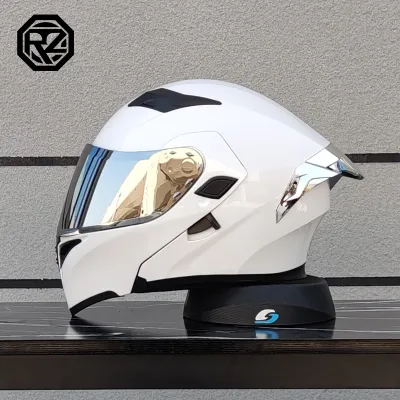
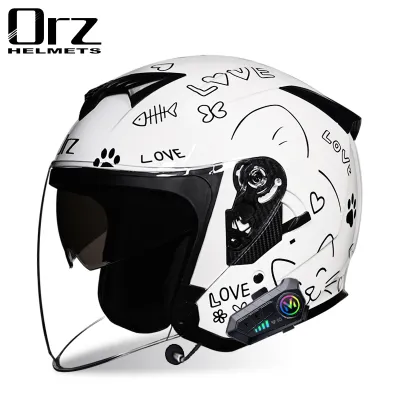
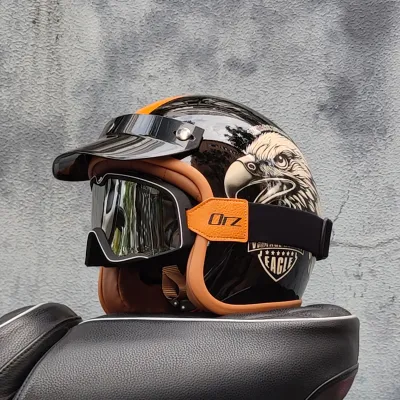
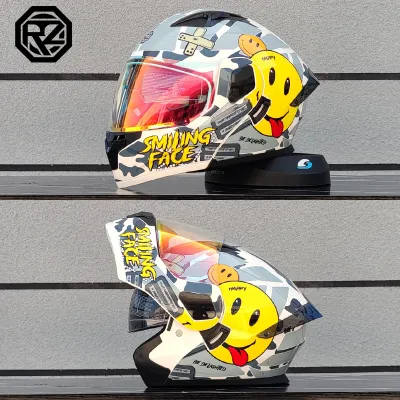
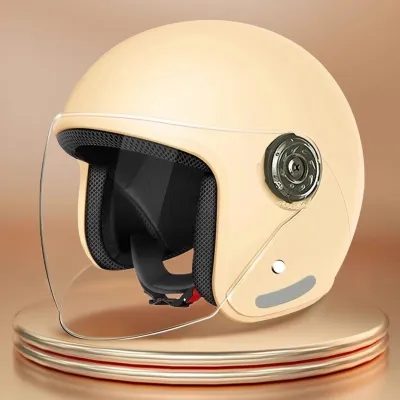
Prices are valid at publication and may change. Please refer to the product page for the latest price.
Conversely, the ICC sticker is the mandatory clearance required for imported helmets. Since a vast majority of the premium and mid-range helmets sold in the Philippine market are manufactured abroad, they must go through an importation clearance process. Importers are required to submit these shipments for BPS evaluation, which includes verifying foreign test reports from accredited laboratories or subjecting random samples from the shipment to local testing. Once the shipment is cleared, the BPS issues the physical ICC stickers, which must be affixed to each individual helmet before they can be legally distributed and sold to consumers.
While they have different names and are applied to different supply chains, both the PS mark and the ICC sticker serve the exact same safety purpose. They verify that the helmet has undergone standardized testing for impact absorption, penetration resistance, and structural integrity. Whether you buy a locally made utility helmet or a high-end imported racing helmet, the presence of either authentic sticker indicates that the product meets the baseline safety performance required to protect human life on public roads.
The Legal Mandate: Republic Act No. 10054
Riding with a certified helmet is not just a matter of personal safety; it is a strict legal requirement across the archipelago. This mandate is codified under Republic Act No. 10054, otherwise known as the Motorcycle Helmet Act of 2009. Enacted to curb the high rate of fatal head injuries among motorcycle riders, this law makes it mandatory for all motorcycle drivers and pillion passengers (backriders) to wear standard protective motorcycle helmets at all times while operating on any public road, highway, or street.

Under RA 10054, a helmet is only considered “standard” and legal if it bears the official BPS PS mark or the ICC sticker. The law explicitly prohibits the sale, distribution, and use of substandard helmets, as well as “novelty” helmets that lack proper certification. Traffic law enforcement agencies, including the Land Transportation Office (LTO), the Metropolitan Manila Development Authority (MMDA), and local government unit (LGU) traffic enforcers, are authorized to conduct checkpoints to inspect helmets for these official markings.
The consequences of failing to comply with this law are substantial. Riding without a certified helmet, or wearing a helmet without the required PS or ICC sticker, subjects the violator to progressive fines. First-time offenders face a fine of ₱1,500, which escalates to ₱3,000 for the second offense, ₱5,000 for the third offense, and ₱10,000 plus the confiscation of the driver’s license for the fourth and subsequent offenses. Sellers and distributors caught offering uncertified helmets face even steeper penalties, including massive fines and the cancellation of their business permits.
This legal framework applies uniformly to all types of two-wheeled motor vehicles, including underbone motorcycles, scooters, standard motorbikes, and heavy cruisers. No matter the distance of your commute—whether you are riding a few blocks to the local market or embarking on a long-distance tour across provinces—compliance with RA 10054 is a non-negotiable legal obligation.
Certified vs. Non-Certified Helmets: The Safety Reality
The physical difference between a BPS-certified helmet and a non-certified alternative lies in the engineering and materials used to manufacture them. While a cheap, uncertified helmet might look identical to a premium certified one from a distance, its performance during an accident is vastly different. Certified helmets are engineered to manage and dissipate extreme kinetic forces, whereas uncertified helmets often act as little more than cosmetic accessories.
Impact Absorption and Shell Integrity
A certified helmet relies on a sophisticated dual-layer protection system to safeguard your skull and brain. The first layer is the outer shell, typically constructed from high-impact materials like polycarbonate, fiberglass composites, or carbon fiber. This outer shell is engineered to distribute the localized force of an impact over a wider surface area and prevent sharp objects from penetrating the helmet. The second, and arguably most critical, layer is the inner liner made of Expanded Polystyrene (EPS). The EPS liner is designed to compress under load, absorbing the kinetic energy of a crash and slowing down the deceleration of your brain inside your skull.
In contrast, non-certified or “novelty” helmets are typically made from cheap, brittle plastics that shatter easily upon impact. More dangerously, they often lack a true high-density EPS liner, substituting it with soft, cheap packaging foam or simple fabric padding. When a crash occurs, these substandard materials fail to absorb the kinetic energy, transferring the full, devastating force of the impact directly to the rider’s head.
To obtain BPS certification, helmet models must pass rigorous laboratory testing. These tests include drop tests from specific heights onto flat and hemispherical steel anvils, measuring the peak acceleration transmitted through the helmet. If the outer shell cracks catastrophically or the EPS liner fails to compress within safe, regulated thresholds, the helmet model is denied certification.
Retention System and Visor Safety
A helmet can only protect you if it stays on your head during an accident. This is why the retention system—comprising the chin strap, rivets, and fastening mechanisms like D-rings or quick-release buckles—is subjected to strict testing under BPS standards. Certified helmets undergo dynamic retention tests where the strap is subjected to sudden, heavy loads to ensure it does not stretch excessively, slip, or snap under tension.
Substandard, uncertified helmets frequently compromise on these retention components. They often feature weak plastic buckles and thin synthetic straps that can easily fail during a slide or secondary impact. If the strap snaps or the buckle slips open during a fall, the helmet will fly off the rider’s head, leaving them completely unprotected during subsequent impacts with the pavement or other vehicles.
Visor safety is another critical area where certified helmets excel. A certified visor is manufactured from shatter-resistant polycarbonate materials designed to withstand impacts from flying road debris, gravel, and insects without cracking or splintering. Furthermore, these visors must offer excellent optical clarity, preventing visual distortion that could cause misjudgments while riding in low-light or rainy conditions. Cheap, uncertified visors are prone to shattering into sharp, dangerous fragments close to the rider’s eyes, and they often distort vision, increasing the risk of an accident.
How to Spot Fake Stickers and Verify Authenticity
Due to the strict enforcement of RA 10054, a lucrative black market for counterfeit PS and ICC stickers has emerged. Unscrupulous sellers often buy cheap, uncertified helmets and apply fake stickers to deceive buyers and traffic enforcers. To protect yourself from purchasing a dangerous counterfeit, you must know how to verify the authenticity of these markings both in-store and online.
In-Store Verification
When shopping at a physical retail store, you have the advantage of inspecting the product firsthand. Start by closely examining the physical quality of the PS or ICC sticker. Genuine BPS stickers are printed with high-precision security features that are difficult for counterfeiters to replicate. Look for holographic elements that shift color when tilted under light, clear micro-printing that remains sharp under close inspection, and a unique serial or batch number printed clearly on the sticker.
Beyond the sticker itself, evaluate the overall build quality of the helmet. Check the stitching of the comfort liner, the thickness of the EPS foam (which should be dense and firm to the touch, not soft like sponge), and the weight of the helmet. Counterfeit helmets with fake stickers are often lightweight, feel flimsy, and exhibit poor finish quality, such as rough plastic edges or loose chin strap rivets.
Do not hesitate to ask the retail staff for documentation. Legitimate helmet dealers in the Philippines should be able to provide a copy of the BPS Certificate of Conformity or the Import Commodity Clearance certificate associated with the specific brand and model they are selling. If the retailer is evasive or cannot produce any proof of official importation, it is best to walk away.
Online Marketplace Verification
Shopping on online marketplaces requires extra vigilance because you cannot handle the product before paying. Be highly suspicious of listings that offer helmets at prices that are significantly lower than the established retail price for that brand. If a listing explicitly uses terms like “replica,” “OEM standard,” “no sticker,” or “for aesthetic purposes only,” it is a guaranteed sign that the product is uncertified and unsafe.
Before clicking the purchase button, message the seller directly and request clear, unedited, high-resolution photographs of the actual helmet they intend to ship, specifically focusing on the PS or ICC sticker and the manufacturing date tag inside the helmet. Avoid sellers who only provide generic stock images or refuse to send live photos of the product.
Always check the seller’s profile, customer reviews, and ratings. Look for reviews that include photos and videos from previous buyers, and pay close attention to any complaints regarding fake stickers or poor material quality. To minimize risk, prioritize buying from official brand stores, flagship outlets, or authorized distributors on online marketplaces, as these channels maintain a verified chain of custody directly from the manufacturer to your doorstep.
Maintenance and Replacement Boundaries for Certified Helmets
Owning a certified helmet is only the first step; maintaining its structural integrity is vital for long-term safety. Even the highest-quality helmet has a finite lifespan and must be cared for properly to ensure the safety materials do not degrade prematurely.
Most helmet manufacturers recommend replacing your helmet every three to five years from the date of purchase, or five years from the date of manufacture. In the tropical climate of the Philippines, high humidity, intense UV exposure from the sun, sweat, and hair oils can accelerate the degradation of the EPS liner and the outer shell’s resins. Over time, these environmental factors cause the protective materials to become brittle, reducing their ability to absorb impact energy.
There is an absolute, non-negotiable rule regarding accidents: you must replace your helmet immediately after any significant impact or crash. This rule applies even if the helmet looks completely undamaged on the outside. The EPS liner is designed for one-time use; it absorbs impact by permanently compressing. Once compressed, that specific area of the liner cannot cushion a second impact, leaving you vulnerable if you crash again.
Furthermore, avoid purchasing used or second-hand helmets. Even if the seller claims the helmet has never been in an accident, you cannot verify its true history, internal degradation, or whether it has been dropped from a height sufficient to compromise the EPS liner.
When it comes to cleaning, always consult the helmet manufacturer’s instructions first. As a general safety boundary, clean the outer shell and visor using only mild soap and warm water with a soft microfiber cloth. Avoid using harsh chemical solvents, petroleum-based cleaners, or glass cleaners, as these substances can chemically react with the polycarbonate shell or visor coating, causing micro-fractures and severely compromising the helmet’s structural strength.
Frequently Asked Questions (FAQ)
Can I use a helmet with a DOT or ECE sticker instead of the PS or ICC mark in the Philippines?
While DOT (Department of Transportation, US) and ECE (Economic Commission for Europe) are highly respected international safety standards, Republic Act No. 10054 specifically mandates that helmets used on Philippine public roads must bear the local BPS PS mark or the ICC sticker. Many premium imported helmets carry ECE or DOT certifications alongside the official ICC sticker. However, riding with a helmet that only has a foreign sticker without the local ICC or PS marking is technically a violation of local traffic laws and can result in fines during LTO or MMDA inspections.
Does a BPS-certified helmet guarantee I will not get injured in a crash?
No helmet can guarantee absolute protection against all injuries, as crash dynamics, speed, angle of impact, and external obstacles vary widely in every accident. However, wearing a BPS-certified helmet significantly reduces the risk of sustaining fatal traumatic brain injuries and skull fractures compared to wearing an uncertified helmet or riding bareheaded. The PS and ICC marks guarantee that the helmet has met rigorous, standardized baseline testing designed to manage extreme impact forces and keep the helmet securely in place when you need it most.
Community discussion
Share your experience or ask a question. Comments are reviewed before publication.