
To choose the right hydraulic jack tonnage, you need a jack rated for at least 60% to 100% of your vehicle’s total curb weight. For most passenger cars, a 2-ton jack is sufficient, while mid-size SUVs, crossovers, and pickup trucks typically require a 3-ton jack. Selecting the correct capacity ensures that the jack can easily handle the load concentrated on a single lifting point while maintaining a crucial safety margin.
Using an underpowered jack poses severe safety risks, including sudden hydraulic failure and vehicle collapse. Conversely, buying an excessively heavy-duty jack can be an unnecessary expense and make roadside storage difficult. Finding the perfect balance requires understanding your vehicle’s specifications and how hydraulic systems distribute weight during a lift.
In tropical climates like the Philippines, where high humidity and heat can accelerate the wear of rubber seals, choosing a high-quality jack with an appropriate weight rating is even more critical. Proper maintenance and correct usage will keep your lifting equipment operating safely for years.
Products mentioned in this guide
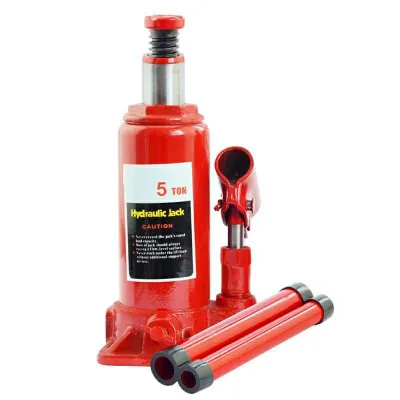
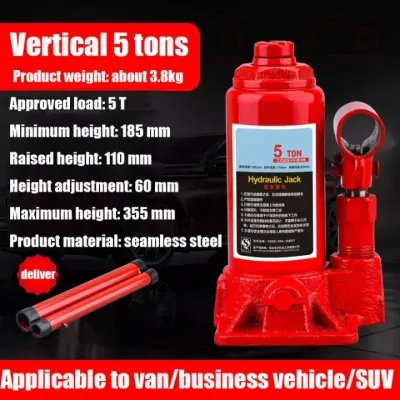
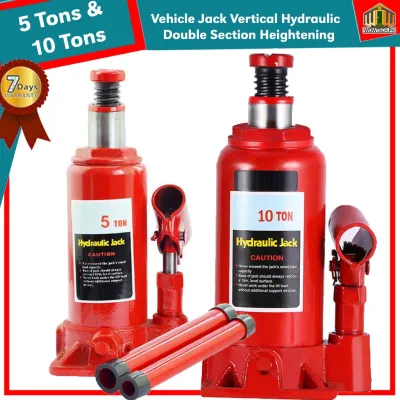
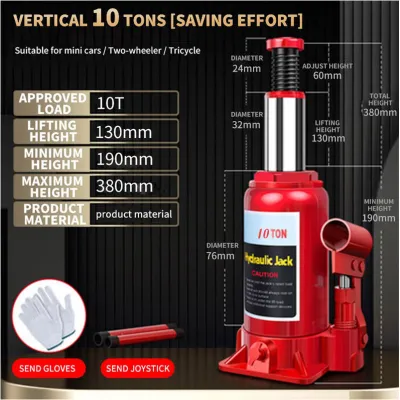
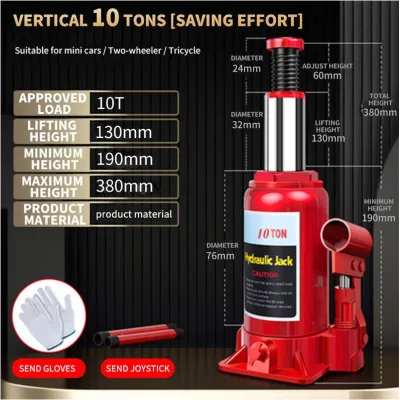

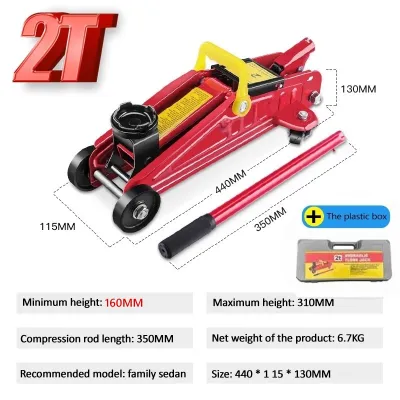
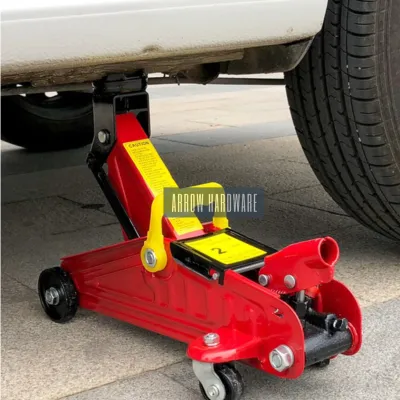
Prices are valid at publication and may change. Please refer to the product page for the latest price.
Understanding Your Vehicle's Weight Ratings
Before purchasing a hydraulic jack, you must locate and understand your vehicle’s official weight specifications. The two most common metrics are Curb Weight and Gross Vehicle Weight Rating (GVWR). Curb weight refers to the actual weight of the vehicle with a full tank of fuel and standard equipment, but without passengers or cargo.
In contrast, the Gross Vehicle Weight Rating (GVWR) is the maximum operating weight specified by the manufacturer, including passengers, cargo, and accessories. For selecting a hydraulic jack, the curb weight serves as your primary baseline, but you must also account for any cargo or modifications currently in the vehicle.
To find these specifications, check the driver’s side door jamb sticker, often referred to as the tire and loading information placard. If the sticker is faded or missing, you can find these exact figures in your vehicle’s owner’s manual. Always verify your specific vehicle model, year, and trim level, as different engine options or drivetrain configurations can significantly alter the vehicle’s total weight.
Additionally, consider any aftermarket modifications you have installed. Heavy steel bull bars, roof racks, off-road tires, or custom drawer systems common on local utility vehicles add permanent weight to the chassis. If your vehicle is loaded with tools, emergency gear, or heavy cargo, the actual operational weight will be closer to the GVWR, requiring a higher-capacity jack.
Calculating the Required Jack Tonnage
When you lift a vehicle to change a tire or perform basic maintenance, the hydraulic jack does not support the entire weight of the car. Instead, it lifts a single corner or one axle at a time, which typically represents about 50% to 60% of the vehicle’s total weight. For example, if a compact sedan has a curb weight of 1,200 kilograms, lifting one front corner subjects the jack to roughly 720 kilograms of force.

Despite this fractional load, you should never select a jack that only meets the bare mathematical minimum of a single corner’s weight. Standard automotive safety protocols dictate using a jack rated for at least 60% of the vehicle’s total curb weight, though opting for a rating equal to or greater than the full curb weight is highly recommended. This safety buffer ensures the jack operates well within its mechanical limits, preventing premature wear on internal components.
Operating a hydraulic jack near its maximum capacity puts immense pressure on the internal rubber seals, valves, and O-rings. Over time, this extreme pressure can cause hydraulic fluid bypass, leading to a gradual loss of lifting height or a sudden seal blowout. A blown seal can cause the jack to drop the vehicle instantly, creating a catastrophic hazard for anyone nearby.
Investing in a jack with a higher tonnage rating, such as a 3-ton jack for a 1.8-ton crossover, provides peace of mind and extends the tool’s lifespan. The heavier-duty components in a higher-rated jack are designed to withstand greater forces, reducing the risk of structural bending or hydraulic failure. This safety margin is a non-negotiable requirement for any DIY garage setup.
Beyond Tonnage: Other Critical Jack Specifications
While tonnage is the primary safety metric, a hydraulic jack must also physically fit your vehicle’s dimensions and suspension design. The minimum saddle height is critical for low-clearance vehicles, such as sports cars or lowered sedans. If the jack’s collapsed height is taller than your car’s ground clearance, you will not be able to slide it under the designated lifting points.
Conversely, the maximum lift range is the most important factor for high-clearance vehicles like SUVs, crossovers, and pickup trucks. These vehicles have long suspension travel, meaning the chassis must be lifted significantly higher before the tires actually leave the ground. A standard trolley jack may run out of vertical travel before the tire clears the pavement, rendering it useless for tire changes.
You must also verify that the jack’s saddle size and shape are compatible with your vehicle’s designated lifting points. Many modern unibody cars require a slotted rubber pad to protect the thin metal pinch welds along the rocker panels. Using a flat metal saddle on a pinch weld can crush the metal, damage the paint, and lead to rust, which spreads quickly in humid tropical environments.
Finally, consider the physical design of the jack: floor jacks versus bottle jacks. Floor jacks feature a wide, wheeled chassis that provides exceptional stability and a low profile, making them the preferred choice for garage maintenance. Bottle jacks are compact, highly portable, and offer high weight capacities, but their narrow base and high starting height make them less stable and unsuitable for low-clearance passenger cars.
Safe Lifting Practices and Equipment Pairing
Operating a hydraulic jack safely requires strict adherence to vehicle-specific instructions and the use of secondary support equipment. A hydraulic jack is designed solely to lift a vehicle, never to support it for any length of time. Before crawling underneath a vehicle or placing any part of your body under the chassis, you must transfer the vehicle’s weight to properly rated jack stands.
Always consult your vehicle’s owner’s manual to identify the precise, reinforced chassis lifting points. Placing a jack or jack stand under unapproved areas, such as floor pans, suspension arms, steering linkages, or battery trays, can cause severe structural damage and lead to vehicle instability. For complex lifting procedures or modifications, seeking assistance from a qualified professional is highly recommended.
Before starting any lift, conduct a thorough pre-lift inspection of your equipment. Check the hydraulic cylinder for signs of fluid leaks, inspect the pump handle for cracks or loose connections, and ensure the saddle is free of debris or wear. In the Philippines, where salty coastal air and high humidity can accelerate rust, keeping your jack clean, lubricated, and stored in a dry place is essential for maintaining its structural integrity.
Frequently Asked Questions (FAQ)
Can I use a standard 2-ton jack for a mid-size SUV or pickup truck?
Using a standard 2-ton jack for a mid-size SUV or pickup truck is generally not recommended. While a 2-ton jack can mathematically lift a single corner of a 2.5-ton vehicle, it operates too close to its maximum capacity, leaving virtually no safety margin. Always verify your vehicle’s actual curb weight in the owner’s manual, and opt for a 3-ton hydraulic jack to ensure safe, stable lifting.
Does a higher tonnage hydraulic jack lift the car faster?
No, a higher tonnage rating does not correlate with faster lifting speeds. Tonnage measures the maximum weight capacity the hydraulic system can safely support, whereas lifting speed is determined by the volume of fluid displaced per pump stroke. In fact, some heavy-duty jacks require more physical effort or more pump strokes to lift a vehicle because they are geared for maximum mechanical advantage rather than speed.
What should I do if my hydraulic jack struggles to lift its rated capacity?
If your hydraulic jack struggles, stalls, or begins to sink under a load, stop pumping immediately and safely lower the vehicle if it is raised. This issue is often caused by low hydraulic fluid, air trapped in the system, or attempting to lift a vehicle that exceeds the jack’s capacity. Check the fluid level and bleed the hydraulic system according to the manufacturer’s instructions, and consult a professional if you suspect damaged internal seals.
Community discussion
Share your experience or ask a question. Comments are reviewed before publication.