
To run 220V household appliances in your vehicle, you must match the inverter’s continuous wattage to your devices’ power draw and choose the correct waveform—either pure sine wave or modified sine wave. For sensitive electronics like laptops, medical equipment, or devices with brushless motors, a pure sine wave inverter is essential to prevent overheating and electrical noise. For basic resistive loads like simple travel kettles or incandescent lights, a modified sine wave inverter is a more budget-friendly alternative. Always verify that your vehicle’s electrical system can safely support the total power demand before plugging in any device.
Understanding Wattage Capacity for Your Devices
Every electrical device requires a specific amount of power to run, measured in watts. When selecting an inverter for your car, you must distinguish between continuous (running) wattage and peak (starting) wattage. Continuous wattage is the amount of power a device consumes steadily while operating. Peak wattage is the brief, high-energy surge required to start devices with electric motors, compressors, or large capacitors, such as a small car fridge or a power tool.
To find these values, inspect the physical labels, power bricks, or user manuals of the devices you plan to use. If a label only lists voltage and amperage, you can calculate the wattage by multiplying the two numbers (Watts = Volts x Amps). For example, a device rated at 220V and 0.5A requires 110 watts of continuous power.
Products mentioned in this guide
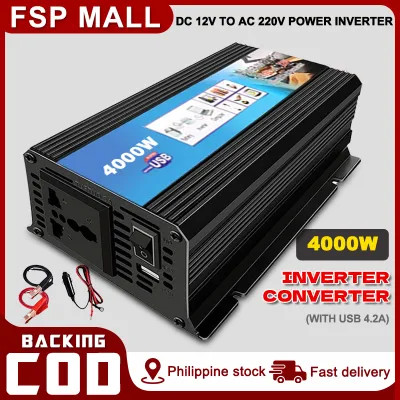
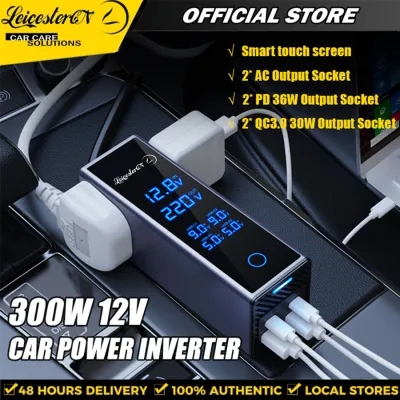
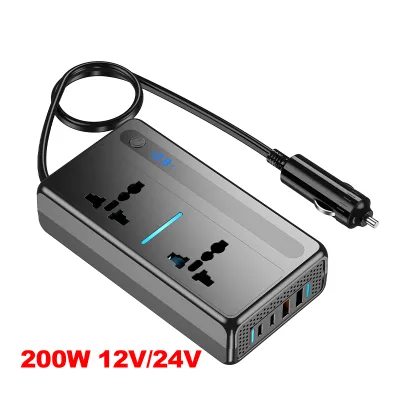
Prices are valid at publication and may change. Please refer to the product page for the latest price.
When planning to run multiple devices simultaneously, add their continuous wattages together to find your total load. To account for startup surges, identify the single device with the highest peak wattage and add that surge value to your continuous total. It is highly recommended to apply a safety buffer of 20% to 30% above this final number to prevent the inverter from running at its absolute limit, which can cause overheating and trigger automatic shutdown features.
Finally, you must ensure that your vehicle’s alternator and battery can actually supply the input current required by the inverter. A high-capacity inverter will quickly drain your battery or strain your alternator if the vehicle’s electrical system is not rated for that level of output. Always consult your vehicle’s owner’s manual to verify the maximum current limits of your electrical system before purchasing an inverter.
Pure Sine Wave vs. Modified Sine Wave: Which One to Pick?
The type of electrical waveform your inverter produces directly affects how your devices perform and how long they last. A pure sine wave inverter produces an electrical output that closely replicates the smooth, continuous, sinusoidal wave of standard household utility grids. This clean power is necessary for sensitive electronics, including laptops, smart devices, medical equipment like CPAP machines, and appliances with brushless motors or digital control panels. Running these devices on clean power ensures they operate quietly, efficiently, and without unnecessary thermal stress.

In contrast, a modified sine wave inverter produces a choppy, stair-step waveform that approximates a sine wave. While these units are generally more affordable and work well for simple resistive loads, they are not suitable for all electronics. Devices powered by a modified sine wave may experience reduced efficiency, audible buzzing noises, or significant heat buildup. In some cases, sensitive microprocessors or battery chargers may fail to function entirely or suffer permanent damage.
To decide which waveform you need, evaluate the specific gear you plan to connect. If your primary goal is to charge high-end laptops, camera batteries, or run sensitive medical gear, a pure sine wave inverter is the appropriate choice. If you only need to power basic heating elements, simple power tools, or incandescent lighting, a modified sine wave inverter can serve as a cost-effective solution. When your setup includes a mix of both, choosing a pure sine wave model is the safest approach to protect your valuable equipment.
Checking Your Vehicle’s Power Limits and Safety Boundaries
Before connecting any inverter, you must understand how your vehicle distributes power. Most standard 12V accessory sockets, commonly known as cigarette lighter sockets, are protected by a 10-amp or 15-amp fuse. This means the socket can safely deliver a maximum of approximately 120W to 180W of power. Attempting to draw more than this limit will instantly blow the fuse, disabling the socket.
For power demands exceeding 150W, you must connect the inverter directly to the vehicle’s battery terminals using heavy-duty cables. This direct connection bypasses the thin, cabin-bound wiring of the 12V accessory socket, preventing electrical fires and voltage drops. If your installation requires direct battery connection or modifications to your vehicle’s wiring, consult your vehicle’s manual and consider having a qualified auto electrician perform the installation to ensure all safety standards are met.
Operating an inverter also requires careful attention to environmental conditions, particularly in hot and humid tropical climates like the Philippines. Inverters generate substantial heat during operation, so you must place the unit in a well-ventilated area away from direct sunlight, moisture, and flammable materials. Never cover the cooling fans or block the ventilation slots on the inverter housing.
If your calculated power needs exceed what your vehicle’s alternator can safely replenish while the engine is running, do not attempt to force the system. Drawing too much power can damage your alternator or leave you with a dead battery. In these situations, stop and consider alternative power solutions, such as a dedicated portable power station, which can be charged safely at home and used independently inside your vehicle.
Step-by-Step Guide to Matching Your Inverter to Your Gear
To finalize your selection and ensure a safe setup, follow this structured verification process:
Step 1: List all the devices you plan to run at the same time and record both their continuous and peak wattages from their specification labels.
Step 2: Identify if any of these devices contain sensitive microprocessors, digital clocks, or variable-speed motors that require a pure sine wave to operate safely.
Step 3: Calculate your total power requirement by summing the continuous wattages and adding the highest single surge wattage, then add a 20% safety margin to find your target inverter capacity.
Step 4: Verify that your vehicle’s manual supports the required power draw, choose the appropriate connection method (12V socket or direct battery clamps), and ensure all cables and inline fuses are rated for the load.
Frequently Asked Questions (FAQ)
Can I run a refrigerator or air conditioner from a car 220V outlet?
Running high-draw cooling appliances like a refrigerator or air conditioner from a standard car 220V outlet is generally impractical. These appliances have massive compressor startup surges that easily exceed the capacity of typical car inverters and standard vehicle alternators. Sustaining such heavy continuous loads will rapidly drain your car battery and can overheat your vehicle’s alternator, even with the engine running. For these appliances, a dedicated generator or a high-capacity portable power station is a much safer and more reliable choice.
Will a modified sine wave inverter damage my laptop charger?
A modified sine wave inverter can cause laptop chargers to run significantly hotter than usual and may produce an audible buzzing sound. Over time, this excess heat can degrade the internal components of your power brick, potentially leading to premature failure or reduced charging efficiency. To protect expensive electronics, check the manufacturer’s guidelines for your laptop. It is highly recommended to use a pure sine wave inverter to ensure clean, stable power that mimics a standard home wall outlet.
Community discussion
Share your experience or ask a question. Comments are reviewed before publication.