
To safely elevate a truck or large SUV for maintenance, you need heavy duty car ramps with a weight capacity rating that exceeds your vehicle’s actual loaded axle weight and a ramp length that provides a gentle enough incline to clear your front bumper. In the Philippines, where high-clearance SUVs and dual-cab pickups navigate both flooded city streets and rugged provincial roads, choosing the correct ramp dimensions and load ratings is critical. Using undersized or too-steep ramps can lead to structural failure, vehicle damage, or severe personal injury. Determining the right specifications requires understanding your vehicle’s weight distribution and physical geometry.
Calculating the Required Weight Capacity for Heavy Duty Ramps
Before purchasing heavy duty car ramps, you must understand how vehicle weight is measured and distributed. Many vehicle owners confuse “curb weight” with the “Gross Vehicle Weight Rating” (GVWR). Curb weight is the weight of the vehicle with a full tank of fuel and necessary fluids, but without passengers, cargo, or aftermarket accessories. GVWR is the maximum operating weight specified by the manufacturer, including the vehicle itself, passengers, cargo, and any tongue weight from a trailer.
For maintenance, your calculations must account for the actual weight of the vehicle as it sits in your garage. If your truck is loaded with heavy toolboxes, a canopy, steel off-road bumpers, or cargo, these additions significantly increase the load on the ramps. Always check the driver-side door jamb sticker (the Safety Compliance Certification Label) or your owner’s manual to find the exact Gross Axle Weight Ratings (GAWR) for the front and rear axles.
Products mentioned in this guide
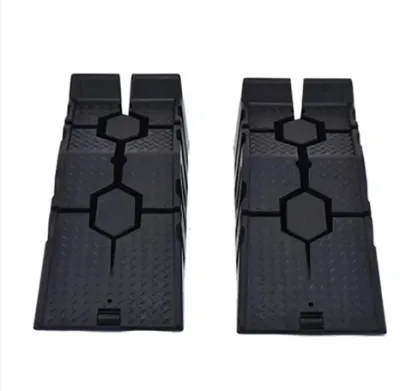
Prices are valid at publication and may change. Please refer to the product page for the latest price.
When reading ramp specification labels, pay close attention to how the manufacturer defines the load capacity. Some brands list the capacity “per pair,” while others list it “per ramp.” For example, a pair of ramps labeled with a 10,000-pound (approximately 4,535 kg) capacity usually means each individual ramp is rated to support 5,000 pounds (approximately 2,268 kg). Because the engine bay houses the heaviest components of a truck or SUV, the front axle typically carries up to 60 percent of the vehicle’s total weight.
To ensure a safe working environment, apply a generous safety margin. Never select ramps that exactly match your vehicle’s axle weight. Instead, choose a pair of heavy duty car ramps with a rated capacity that exceeds your vehicle’s loaded axle weight by at least 20 to 30 percent. This buffer accounts for dynamic weight transfer as the vehicle climbs the incline and prevents the structural materials from operating at their absolute physical limits.
Determining the Correct Ramp Length and Incline Angle
The physical length of a ramp directly dictates its incline angle. A shorter ramp requires a steeper slope to reach the same elevation, which poses a significant risk to low-hanging front bumpers, plastic air dams, and the approach angles of four-wheel-drive vehicles. If the incline is too steep, the lower edge of your bumper will strike the ramp before the tires can make contact with the slope, causing cosmetic or structural damage to your vehicle’s bodywork.

To determine if a ramp’s angle is compatible with your truck or SUV, you can perform a simple physical check of your vehicle’s approach angle and front overhang. Measure the distance from the front edge of your front tire to the furthest forward point of your bumper (the overhang), and measure the vertical clearance from the ground to the lowest point of that bumper. If the ratio of the vertical clearance to the overhang distance is less than the slope ratio of the ramp, your bumper will scrape.
For modified SUVs or trucks with low-hanging trim, longer ramps with a gradual incline (often referred to as low-profile or extended ramps) are necessary. The gradual slope ensures that the tire begins climbing and lifting the chassis before the bumper reaches the ramp’s structure.
Additionally, the structural design and surface texture of the ramp play a vital role in maintaining traction during the climb. Heavy vehicles require high-traction surfaces, such as deep molded ribs, raised metal grates, or textured rubber pads, to prevent the tires from slipping backward. In humid tropical climates like the Philippines, where condensation or sudden rain can make garage floors and tires slick, a highly textured ramp surface is essential to prevent dangerous tire spin or sudden slippage.
Essential Safety Checks and Setup Conditions
Operating heavy duty car ramps requires strict adherence to safety protocols to prevent catastrophic vehicle roll-offs or structural failures. First and foremost, you must position the ramps on a clean, hard, and completely level concrete surface. Never attempt to use ramps on soft dirt, loose gravel, or hot asphalt. Under the immense weight of a large SUV or truck, soft ground can shift or sink, causing the ramps to tilt, slide, or collapse entirely.
Before driving onto the ramps, align them perfectly straight with the front tires. Once the vehicle has successfully climbed the incline and is positioned on the flat top platform, immediately engage the parking brake fully. Place the transmission in “Park” for automatic vehicles, or in first gear for manual transmissions, and turn off the engine before exiting the vehicle.
Before crawling underneath the chassis, place heavy duty wheel chocks behind both rear tires to prevent any backward movement. Walk around the vehicle to verify that the front tires are fully centered and securely seated within the ramp’s top cradle or safety stop.
As a critical safety boundary, never rely solely on the ramps to support the vehicle while performing maintenance. Always place high-capacity jack stands under the vehicle’s designated frame lift points as a secondary safety measure. This redundant support system ensures that if a ramp suffers an unforeseen structural failure, the jack stands will catch the vehicle and protect your life.
When to Stop and Seek Professional Alternatives
Even the most robust consumer-grade ramps have physical limits, and you must know when to stop and seek professional assistance. Inspect your ramps thoroughly before every single use. If you observe any visible cracks, structural deformation, bent metal supports, or severely worn-down traction surfaces, retire the ramps immediately. Attempting to use compromised equipment with a heavy vehicle is extremely dangerous.
Modified trucks and SUVs present unique challenges that often exceed the safe limits of standard heavy duty car ramps. If your vehicle features aftermarket heavy steel bumpers, winch mounts, suspension lift kits, or oversized off-road tires, its weight distribution and physical dimensions may no longer align with the ramp’s original specifications. Oversized tires may overhang the sides of the ramp cradle, leading to unstable tire placement and potential roll-offs.
When vehicle modifications, actual curb weights, or axle distributions cannot be verified with absolute certainty, do not guess. In these scenarios, transition to professional hydraulic lifts or seek the services of a certified garage. Professional automotive shops in the Philippines possess the heavy-duty commercial lifts and specialized equipment necessary to safely elevate modified, lifted, or exceptionally heavy vehicles for under-chassis maintenance.
Frequently Asked Questions (FAQ)
Can I use standard car ramps for a lightweight pickup truck?
Even if a pickup truck is classified as lightweight, you should avoid using standard passenger car ramps unless the manufacturer’s label explicitly authorizes it. Pickup trucks carry a significant portion of their weight over the front axle due to the engine and transmission configuration. Furthermore, the wider tire tread and larger overall diameter of truck tires may exceed the physical width and cradle size of standard car ramps, leading to tire overhang or unstable positioning. Always verify the ramp’s maximum tire width and weight capacity specifications against your truck’s actual measurements before use.
Do I need longer ramps if my SUV has a lift kit?
Yes, suspension modifications like lift kits can dramatically alter your vehicle’s approach angle and tire positioning. While a lift kit increases overall ground clearance, it also raises the vehicle’s center of gravity and changes how the tires interact with an incline. To maintain a safe, stable, and drivable incline during the climb, you may require longer ramps with a more gradual slope. Always remeasure your vehicle’s approach angle and overhang after installing any suspension modifications to ensure your ramps remain safe to use.
Community discussion
Share your experience or ask a question. Comments are reviewed before publication.