
For owners of the Yamaha Aerox V1, maintaining a crisp start and smooth acceleration requires keeping a close eye on the ignition system. To answer the core question directly: your spark plug is a routine consumable that should typically be replaced every 8,000 to 10,000 kilometers, while your ignition coil is a highly durable electrical component designed to last the lifetime of the scooter—often exceeding 50,000 kilometers—and should only be replaced if it exhibits physical damage or electrical failure. Staying on top of this schedule ensures your 155cc engine runs efficiently and prevents unexpected breakdowns on busy roads.
Understanding the Lifespan of Aerox V1 Ignition Components
To keep your scooter performing at its peak, it is essential to understand how these two components work together and why their lifespans differ so significantly. The spark plug is positioned directly inside the combustion chamber, where it is subjected to intense heat, high pressure, and constant electrical erosion as it fires thousands of times per minute. Over time, the metal electrodes on the spark plug gradually wear down, widening the gap that the electrical spark must jump, which eventually degrades combustion efficiency.
Because of this continuous physical wear, the official Yamaha Aerox V1 Owner’s Manual lists the spark plug as a periodic maintenance item with a strict replacement interval. Relying on arbitrary guesses or waiting for the engine to start misbehaving before replacing the plug can lead to poor fuel economy and unnecessary strain on other electrical parts. Always refer to your specific owner’s manual as the primary authority for service intervals, as it provides the manufacturer-recommended baseline for your scooter’s engine health.
Products mentioned in this guide
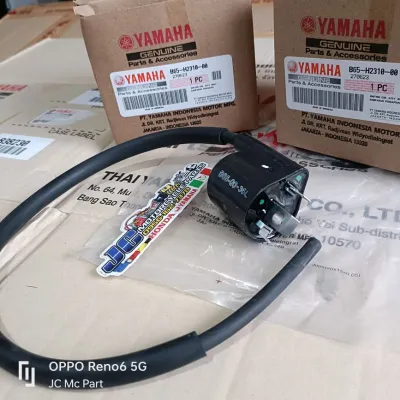
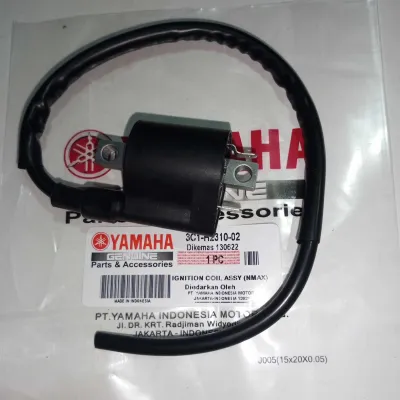
![[KV] Yamaha AEROX Genuine Ignition Coil Part # B65-H2310-02 from Indonesia](https://img.lazcdn.com/g/p/1888764f2650294d908ac5279cd089e1.jpg_400x400q80.jpg_.webp)
Prices are valid at publication and may change. Please refer to the product page for the latest price.
The ignition coil, on the other hand, is a solid-state transformer mounted securely to the frame, away from the direct heat of the combustion chamber. Its job is to take the low-voltage current from your scooter’s battery and step it up to the high voltage required to create a spark across the plug gap. Since it has no moving parts and is not exposed to combustion gases, it does not wear out through normal operation in the same way a spark plug does.
However, an ignition coil is still subject to gradual degradation from environmental heat, electrical resistance, and vibration. Instead of replacing the coil on a fixed schedule, you should manage its maintenance by tracking your overall mileage, engine hours, and service history. A coil that has covered tens of thousands of kilometers through challenging riding conditions may eventually require replacement, but under normal circumstances, it is treated as a replace-on-failure component rather than a routine consumable.
Warning Signs of Failing Spark Plugs and Ignition Coils
Recognizing the early warning signs of ignition wear can save you from being stranded on the side of the road. When a spark plug begins to wear out or becomes fouled with carbon, the symptoms usually manifest gradually. You might notice a rough idle, where the engine vibrates excessively or feels unstable while you are stopped at a traffic light. Acceleration may also become sluggish, with a distinct lag or hesitation when you twist the throttle to overtake other vehicles.

Another common indicator of a worn spark plug is a noticeable drop in fuel efficiency, as incomplete combustion allows unburnt fuel to escape through the exhaust. Hard starting, particularly during cool mornings or after the scooter has sat idle for several days, is also a classic sign that the spark plug is struggling to generate a strong enough spark to ignite the fuel-air mixture.
In contrast, a failing ignition coil often produces more severe and sudden symptoms. Because the coil is responsible for delivering high-voltage current, a malfunction can lead to severe engine misfires, which feel like sudden, violent losses of power while riding. Your scooter may also stall unexpectedly at low speeds, such as when you slow down for a turn or idle in traffic. Other warning signs of a failing coil include backfiring—caused by unburnt fuel igniting within the hot exhaust system—and a complete failure to start. If your starter motor cranks the engine vigorously and your battery is fully charged, but the engine refuses to catch, a failed ignition coil is a highly probable culprit.
To differentiate between these two issues during basic troubleshooting, look at the timeline and severity of the symptoms. If the engine performance has degraded slowly over several months, starting with minor hesitation and progressing to a rough idle, the spark plug is the logical first place to look. If the symptoms are sudden, severe, and accompanied by stalling or a total lack of spark despite installing a fresh plug, the diagnostic focus should shift to the ignition coil, its high-tension wire, and the spark plug cap.
Real-World Factors That Accelerate Ignition Wear
Riding conditions in the Philippines present unique challenges that can significantly accelerate the wear and tear on your Aerox V1’s ignition components. The combination of intense tropical heat and high relative humidity puts extra stress on electrical insulation. Over time, the rubber seals on the spark plug cap and the protective sheath of the ignition coil’s high-tension wire can dry out, crack, and degrade.
When these protective barriers fail, high humidity or heavy monsoon rains can allow moisture to penetrate the electrical connections. This leads to a phenomenon known as electrical arcing, where the high-voltage current leaks from the wire or cap directly to the metal frame of the scooter instead of traveling to the spark plug electrode. Arcing causes immediate misfires and can eventually ruin the ignition coil entirely.
Furthermore, daily commuting in heavily congested urban areas involves constant stop-and-go city traffic. These frequent short trips and prolonged idling prevent the engine from reaching and maintaining its optimal operating temperature. When the engine runs cool, the spark plug cannot reach its self-cleaning temperature, which is necessary to burn off carbon deposits. This leads to rapid carbon fouling, coating the electrode in a black soot that weakens or completely blocks the spark.
Fuel quality also plays a critical role in ignition longevity. Utilizing low-quality gasoline or unverified fuel additives can introduce impurities into the combustion chamber. These impurities leave hard chemical deposits on the spark plug electrodes, which can bridge the gap and cause a short circuit, requiring premature replacement of a plug that might otherwise have had thousands of kilometers of life remaining.
Safe Inspection and Preventive Maintenance Steps
Before performing any inspection or maintenance on your scooter’s ignition system, it is vital to prioritize safety and protect your vehicle’s warranty. Always consult your Yamaha Aerox V1 owner’s manual and the documentation of any replacement parts before beginning work. Ensure that the engine is completely cool to the touch to prevent severe burns from the cylinder head or exhaust pipe, and disconnect the negative terminal of the battery to eliminate the risk of accidental electrical shocks or short circuits.
Once safety protocols are met, you can proceed with a visual inspection of the spark plug. Carefully pull the spark plug cap off by gripping the boot rather than pulling the wire, then use a dedicated spark plug socket to unscrew the plug. Examine the tip of the electrode closely: a healthy spark plug should have a light tan or grayish color with minimal wear on the metal tip.
If you observe heavy, dry black soot, the plug is suffering from carbon fouling; if the tip is wet with dark engine oil, this indicates oil intrusion, which requires professional engine diagnosis. Next, use a precise wire feeler gauge to measure the gap between the center and ground electrodes, ensuring it matches the exact specification in your owner’s manual. If the electrode is visibly rounded or the gap is wider than specified, the plug must be replaced.
Shift your attention to the ignition coil wire and the spark plug cap. Inspect the entire length of the high-tension wire for any visible cracks, stiffness, or signs of rubbing against the frame. Look inside the spark plug cap for any green or white powdery deposits, which indicate corrosion that must be cleaned or replaced.
While visual checks are straightforward, testing the electrical integrity of these components requires specialized tools. If your visual inspection does not reveal the cause of your ignition issues, and you suspect the coil itself is faulty, do not attempt to perform internal resistance testing with a multimeter unless you are fully qualified and have the official service manual. If any components are seized, or if you feel unsure about any step of the process, stop immediately and consult a qualified mechanic to avoid damaging your scooter’s electrical system.
Choosing the Right Replacement Parts for Your Scooter
When the time comes to purchase replacement parts, compatibility and quality must be your top priorities. You must verify your specific vehicle model year, interface dimensions, and mounting positions from official documentation before buying. Installing a spark plug with the incorrect heat range, thread pitch, or thread reach can cause catastrophic engine damage, such as a piston collision or pre-ignition that melts engine internals.
When selecting a spark plug, you will generally choose between three material types:
- Standard Copper Plugs: These are highly affordable, typically costing between ₱150 and ₱250, and offer excellent electrical conductivity. However, they wear out the fastest and must be replaced every 8,000 to 10,000 kilometers.
- Platinum Plugs: A mid-tier option that provides improved durability and wear resistance compared to copper, extending the replacement interval slightly while remaining moderately priced.
- Iridium Plugs: These feature an extremely fine wire center electrode made of iridium, which requires less voltage to spark and offers superior wear resistance. While they cost more—usually ranging from ₱500 to ₱900—they can last between 20,000 and 30,000 kilometers, making them a highly cost-effective long-term choice.
When shopping for a replacement ignition coil for aerox v1, it is critical to avoid cheap, unbranded, or generic ‘racing’ coils sold on unverified online marketplaces. These low-quality components often lack proper internal voltage regulation and can send high-voltage feedback directly into your scooter’s sensitive Engine Control Unit (ECU). This can fry the ECU or damage the wiring harness, resulting in incredibly expensive repairs. Always stick to genuine OEM Yamaha parts or certified, reputable aftermarket brands that guarantee compatibility with the Aerox V1 electrical system.
Frequently Asked Questions (FAQ)
Can I upgrade to iridium spark plugs for my Aerox V1?
Yes, you can upgrade to an iridium spark plug for your Aerox V1, provided you verify that the specific plug model matches the exact heat range, thread reach, and physical dimensions required by your engine. Iridium plugs offer a much longer service life, better resistance to carbon fouling, and a more stable spark under high-load conditions. However, keep in mind that upgrading the spark plug is not a magic fix for underlying electrical issues. It will not compensate for a weak battery, a failing ignition coil, or damaged wiring, so the rest of your ignition system must still be properly maintained.
Should I replace the ignition coil every time I change the spark plug?
No, you do not need to replace the ignition coil every time you change your spark plug. The ignition coil is designed to be a highly durable, long-term component that can last for tens of thousands of kilometers, whereas the spark plug is a routine consumable that wears down relatively quickly. You should only replace the ignition coil if it shows clear signs of physical damage, fails professional electrical resistance testing, or causes severe, persistent ignition issues that a fresh spark plug cannot resolve. Routine maintenance should focus on replacing the spark plug at recommended intervals and simply inspecting the coil and its wiring for wear.
Community discussion
Share your experience or ask a question. Comments are reviewed before publication.