
Selecting the correct BRD radiator variant for your Honda Click requires matching the aftermarket unit’s physical dimensions, mounting tabs, and hose inlet angles directly to your scooter’s specific engine displacement and model year. Because Honda has updated the Click chassis and engine configurations across several generations—ranging from the older 125cc and 150cc models to the newer 160cc versions—there is no universal radiator that fits every model. Installing an incompatible radiator can lead to coolant leaks, pinched hoses, fairing clearance issues, and severe engine overheating.
In the tropical climate of the Philippines, maintaining an efficient cooling system is vital for daily commuting and long-distance rides. High ambient temperatures and dense traffic put immense stress on your scooter’s engine, making aftermarket aluminum radiators a popular upgrade for riders looking to improve heat dissipation. However, a radiator is only effective if it integrates seamlessly with your scooter’s existing cooling loop, fan shroud, and body panels.
To make an informed purchase and avoid the hassle of returning incorrect parts, you must establish a clear profile of your scooter’s specifications. This guide outlines how to identify your Honda Click’s generation, compare the technical specifications of BRD radiator variants, and execute a safe installation process.
Products mentioned in this guide
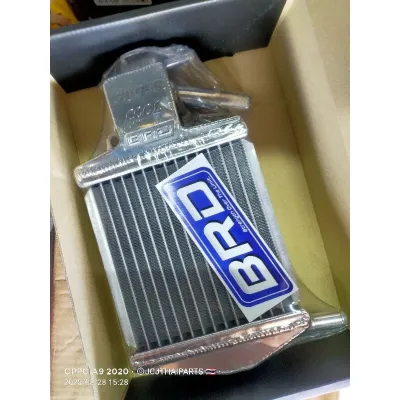
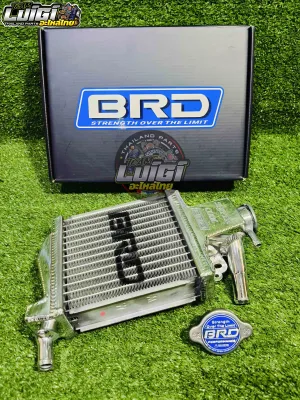
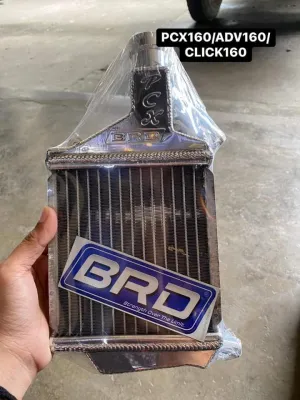
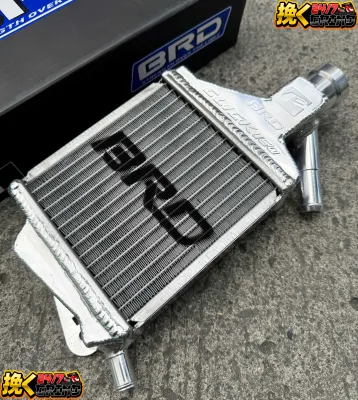
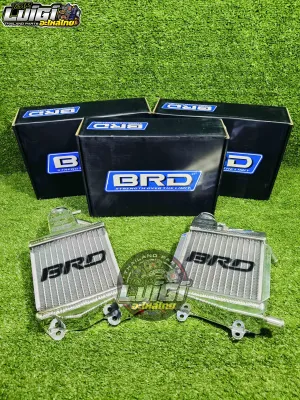
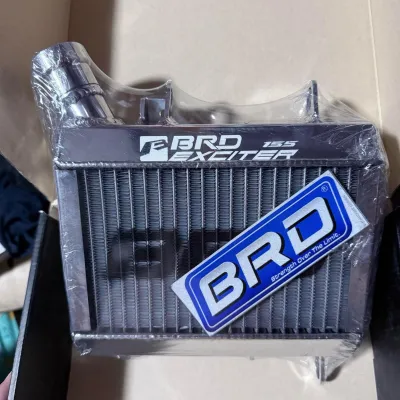
Prices are valid at publication and may change. Please refer to the product page for the latest price.
Identify Your Honda Click Generation and Engine Specs
Before browsing online marketplaces or visiting local motorcycle parts shops, you must determine your scooter’s exact engine displacement. The Honda Click is widely available in 125cc, 150cc, and 160cc variants, and each of these engines utilizes a distinct cooling system layout. The radiator core size, coolant capacity, and hose attachment diameters differ significantly between these displacements, meaning a radiator designed for a 150cc model will not bolt directly onto a 125cc frame without extensive, unsafe modifications.
Next, locate your scooter’s chassis code and production year to identify its specific generation. This information is typically stamped on the vehicle identification plate located under the utility box or near the frame neck. Honda Click models are often grouped by riders into generations, such as the older version 1, the version 2 “Game Changer,” and the latest version 3 or 160cc models. Manufacturers of aftermarket parts design their products to match the mounting brackets of specific production runs, so knowing your exact model year prevents fitment errors.
Finally, take physical measurements of your original equipment manufacturer (OEM) radiator as a baseline. Note the distance between the mounting bolts, the overall height and width of the core, and the depth of the fan shroud. This step is especially important if your scooter has previously undergone repairs or if you purchased it secondhand, as some components may have been modified by a previous owner.
Match the BRD Radiator Variant to Your Scooter
When evaluating different BRD radiator variants, the first specification to compare is the core dimension and thickness. Aftermarket aluminum radiators often feature thicker cores than stock units to increase coolant volume and surface area for heat dissipation. However, you must verify that the increased thickness does not obstruct the front fairings, interfere with the front fork’s range of motion, or reduce the clearance needed for the front wheel during suspension compression.

Inlet and outlet hose orientations are equally critical when selecting a radiator variant. The coolant pipes on the radiator must align perfectly with the routing of your scooter’s stock coolant hoses. If the angles or diameters do not match, you may be forced to bend or stretch the rubber hoses, which can cause kinking. Kinked hoses restrict the flow of coolant, leading to rapid heat buildup in the engine cylinder head and potential head gasket failure.
Another key factor is cooling fan compatibility. Some aftermarket radiators are designed to reuse the stock Honda Click cooling fan and shroud, while others require an upgraded high-flow fan or custom mounting brackets. Check the product specifications of the BRD variant to confirm whether it includes pre-drilled mounting holes that align with your OEM fan assembly, or if you will need to source a compatible aftermarket fan shroud.
Lastly, consider the coolant capacity and pressure ratings of the radiator variant. The radiator must be rated to handle the operating pressure of your scooter’s cooling system, which is regulated by the radiator cap. Ensure the variant you select is compatible with a standard-pressure radiator cap or comes supplied with a cap that matches the pressure specifications recommended in your Honda Click owner’s manual.
Installation Boundaries and Cooling System Safety
Replacing a motorcycle radiator involves working with pressurized, high-temperature fluids, which presents a serious safety risk. Always allow the engine to cool completely before attempting to open the radiator cap or disconnect any hoses. Hot coolant can spray under pressure, causing severe burns to your skin and eyes. Wear appropriate protective gear, including safety glasses and gloves, and work in a well-ventilated area.
Before mounting the new BRD radiator, perform a thorough inspection of the rest of your scooter’s cooling system. Check the water pump for signs of weeping or bearing play, inspect the thermostat to ensure it opens correctly, and examine all coolant hoses for cracks, swelling, or soft spots. Installing a high-performance radiator will not resolve cooling issues if the water pump is failing or if a hose is on the verge of bursting.
Properly bleeding the cooling system is a non-negotiable step during the installation of a new radiator. When you refill the system with fresh coolant, air pockets can become trapped inside the engine block and radiator core. These air pockets prevent coolant from circulating properly, leading to localized hot spots that can warp the cylinder head. Follow the specific bleeding procedure outlined in your Honda Click service manual, which typically involves running the engine with the radiator cap off and gently squeezing the hoses to release trapped air.
If you encounter any alignment issues during installation, stop immediately. Do not force the radiator into place, bend the mounting brackets, or overtighten the bolts, as this can crack the aluminum welds and cause immediate leaks. If the hoses do not align naturally or if the temperature warning light on your dashboard illuminates after refilling, turn off the engine and consult a qualified motorcycle mechanic to diagnose the issue.
Frequently Asked Questions (FAQ)
Can I use a 150cc radiator variant on a 125cc Honda Click?
Using a radiator variant designed for a 150cc engine on a 125cc Honda Click is generally not recommended due to differences in physical dimensions, mounting points, and hose diameters. While both engines belong to the same scooter family, the 150cc cooling system is scaled for a higher thermal load, resulting in a larger radiator footprint. Attempting to force a larger radiator into a 125cc frame can lead to fairing clearance issues, pinched hoses, and mounting bracket misalignment. Always select the variant specifically designated for your engine displacement.
Do I need to change the coolant when upgrading to an aftermarket radiator?
Yes, you must completely drain and flush the cooling system, then refill it with fresh coolant when installing a new radiator. Reusing old coolant can introduce contaminants, dirt, and debris into your new aluminum radiator, which can clog the narrow cooling passages and reduce heat transfer efficiency. Use a high-quality, pre-mixed ethylene glycol-based coolant formulated specifically for aluminum motorcycle engines, and avoid mixing different brands or colors of coolant.
Will an aftermarket radiator void my scooter's warranty?
Installing an aftermarket radiator can void the warranty on your scooter’s cooling system and any engine components directly affected by its operation. Authorized dealers in the Philippines typically evaluate warranty claims based on whether an aftermarket modification caused or contributed to the failure. Before performing the upgrade, review your scooter’s warranty terms and consult with your local authorized dealer to understand how installing non-OEM parts might affect your coverage.
Community discussion
Share your experience or ask a question. Comments are reviewed before publication.