
Selecting the correct automatic transmission fluid (ATF) is vital for your vehicle’s mechanical health, and the right Caltex variant depends entirely on your vehicle manufacturer’s original equipment manufacturer (OEM) specifications. While Caltex offers highly versatile multi-vehicle options under its Havoline brand, there is no universal fluid that fits every gearbox. You must match the fluid’s specific friction profile and viscosity to your car’s exact transmission type, whether it is a conventional automatic, a continuously variable transmission (CVT), or a dual-clutch transmission (DCT).
In the tropical climate of the Philippines, where high humidity and intense stop-and-go traffic in areas like Metro Manila put immense thermal stress on your drivetrain, transmission fluid plays a critical role. Beyond lubrication, ATF acts as a hydraulic medium to actuate gear shifts and a vital coolant. Using an incompatible fluid can lead to severe mechanical issues, including gear slipping, harsh shifting, overheating, and premature wear of internal clutch packs.
Step 1: Locate Your Vehicle's OEM Fluid Requirements
Before purchasing any transmission fluid, you must identify the exact technical standard required by your vehicle’s manufacturer. This standard is not a generic classification but a highly specific OEM code, such as Toyota ATF WS, Honda DW-1, Nissan Matic-S, Mitsubishi DiaQueen ATF-SP III, or GM Dexron VI.
Products mentioned in this guide
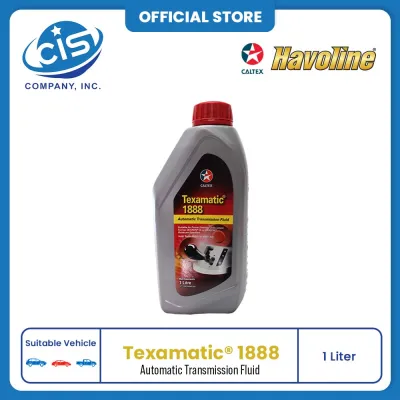
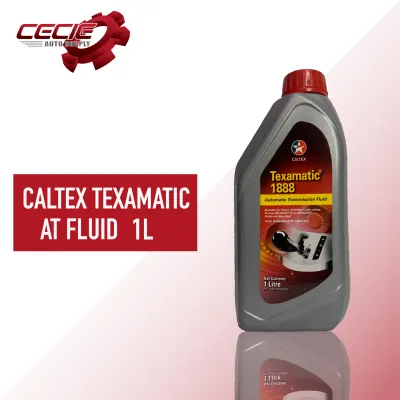
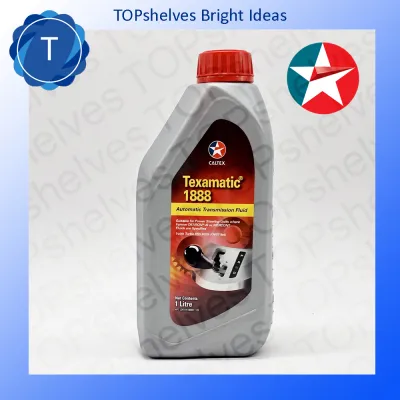
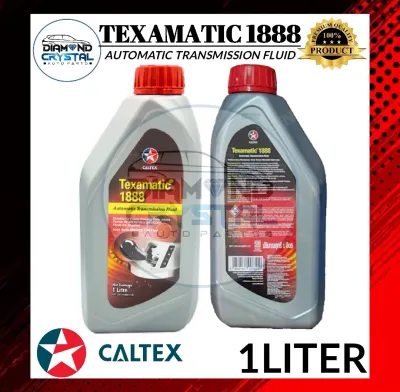
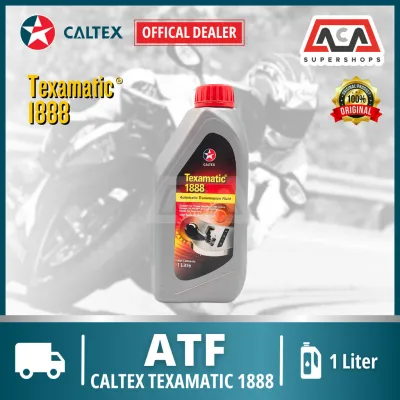
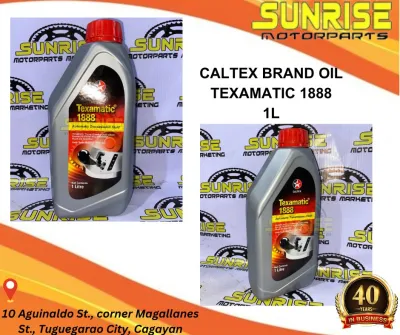
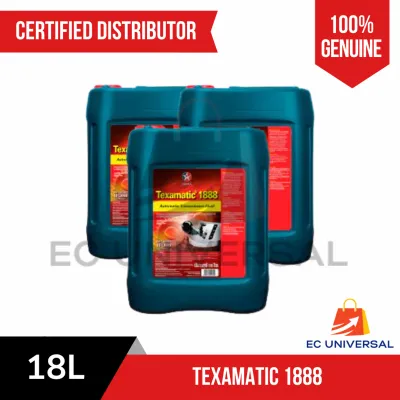
Prices are valid at publication and may change. Please refer to the product page for the latest price.
Your primary source of truth is the vehicle’s Owner’s Manual. Navigate to the maintenance or technical specifications section to find the recommended fluid type and the transmission’s capacity. Keep in mind that a standard drain-and-fill requires significantly less fluid than a complete system flush, as a large volume of fluid remains trapped inside the torque converter and valve body.
If you do not have the physical manual, you can often find the specification physically stamped on the vehicle. For older vehicles equipped with a transmission dipstick, pull the dipstick out and inspect the metal blade or plastic handle, where the required fluid standard is frequently embossed.
For modern, “sealed” automatic transmissions that lack a dipstick, check for a specification label on the transmission oil pan or next to the fill plug. If these physical markers are missing, use your Vehicle Identification Number (VIN) to consult an authorized local dealership’s parts department to verify the correct factory-fill specification.
Step 2: Map Your Transmission Type to Caltex ATF Categories
Once you have identified your vehicle’s OEM requirements, you can map them to the corresponding Caltex transmission fluid categories. Caltex markets its passenger car transmission fluids under the Havoline brand, with formulations engineered for specific mechanical architectures.

Using the wrong category of fluid can permanently damage internal components within a few kilometers of driving. Different transmission designs rely on fundamentally different physical principles to transfer power, requiring highly specialized chemical additives and friction modifiers.
Conventional Automatic Transmissions (AT)
Traditional stepped automatic transmissions utilize a torque converter, planetary gear sets, and wet clutch packs to change gears. These systems require a fluid that balances wear protection for the gears with specific frictional properties that allow the clutches to engage smoothly without slipping or grabbing too aggressively.
Caltex offers several fluids for these systems, ranging from mineral-based options for older vehicles to advanced synthetic formulations for modern gearboxes. For older 3-speed or 4-speed automatic transmissions, standard fluids meeting older specifications like Dexron III or Mercon may be sufficient. However, modern 6-speed, 8-speed, or 10-speed transmissions require low-viscosity synthetic fluids designed to improve fuel efficiency and maintain shear stability under high pressures.
When selecting a Caltex product, such as Havoline Multi-Vehicle ATF, you must verify whether your specific modern low-viscosity standard is covered. While multi-vehicle fluids are highly versatile, some ultra-modern transmissions demand highly specific, dedicated OEM fluids that cannot be substituted by general multi-vehicle formulations.
Continuously Variable Transmissions (CVT)
Continuously Variable Transmissions operate on a completely different mechanical principle than traditional automatic gearboxes. Instead of gears, a CVT uses a steel belt or chain riding between two variable-width pulleys to provide an infinite range of gear ratios.
Because of this design, CVTs require a specialized Continuously Variable Transmission Fluid (CVTF), such as Havoline Full Synthetic CVTF. This fluid is formulated with unique friction modifiers that provide high steel-on-steel friction to prevent the drive belt or chain from slipping against the smooth metal pulleys. If the belt slips, it will quickly score the pulleys and destroy the transmission.
You must never, under any circumstances, use standard automatic transmission fluid in a CVT, nor should you use CVT fluid in a conventional automatic. Standard ATF is designed to allow controlled slip in wet clutches, which is the exact opposite of the high static friction required to keep a CVT belt from slipping. Introducing standard ATF into a CVT will cause rapid, catastrophic mechanical failure.
Dual-Clutch Transmissions (DCT) and Automated Manuals
Dual-Clutch Transmissions, also known as DCTs or DSG systems, are essentially automated manual transmissions that use two separate clutches to pre-select alternating gears. These systems can utilize either “dry” clutches or “wet” clutches submerged in oil, and they require highly specialized fluids to operate their rapid hydraulic actuators and protect the dual-clutch assemblies.
DCTs demand fluids with exceptional shear stability, rapid air release properties, and precise synchronizer friction characteristics. Standard ATFs or CVTFs do not possess the correct viscosity profile or additive packages required for these high-performance, fast-shifting gearboxes.
If your vehicle is equipped with a DCT, you must look for a dedicated dual-clutch transmission fluid, such as Havoline Direct Start DCTF, or the exact OEM-specified fluid. Using a non-approved fluid in a DCT can lead to severe gear clashing, sluggish shift response, clutch shudder, and premature wear of the electronic solenoids.
Step 3: Verify Labels and OEM Approvals Before Buying
Before purchasing any Caltex or Havoline transmission fluid, you must carefully read the technical label on the back of the bottle. The front of the bottle often features prominent marketing terms, but the back label contains the critical technical specifications and manufacturer approvals that guarantee compatibility.
Look for explicit OEM approval codes rather than general performance claims. There is a legal and technical distinction between a fluid that is “officially approved” by a manufacturer (meaning the formulation was tested and licensed by the OEM) and a fluid that is “recommended for use in” or “suitable for” a specification. If your vehicle is still covered by an active manufacturer warranty, using a fluid that lacks official OEM approval for your specific standard could void your coverage in the event of a transmission failure.
Pay close attention to the viscosity grade and industry standards, such as those established by the Japanese Automotive Standards Organization (JASO) or the American Petroleum Institute (API). For example, many Japanese vehicles require fluids meeting the JASO 1A or JASO 1A-LV (Low Viscosity) standards, which specify strict limits on anti-shudder durability and shear stability.
To protect your vehicle’s drivetrain, purchase your Caltex transmission fluid only from authorized Caltex service stations, official online flagship stores, or highly reputable local auto supply retailers in the Philippines. Counterfeit automotive fluids are a persistent risk in the aftermarket, and using low-quality, bootleg fluid can ruin your transmission within days. Before pouring, inspect the bottle to ensure the tamper-evident plastic cap seal is completely unbroken and that the batch code and manufacturing date are clearly printed on the packaging.
When to Seek Professional Help for Fluid Selection and Changes
While checking your transmission fluid level is a straightforward task for many car owners, performing a complete fluid change or flush often requires professional intervention. If your vehicle is currently under an active manufacturer warranty, you should have all transmission services performed by an authorized dealership or a certified service center to maintain your warranty compliance.
Many modern vehicles feature sealed transmissions that do not have a traditional dipstick or an easily accessible fill port. Checking the fluid level on these units requires lifting the vehicle level on a hoist, removing a specific overflow plug under the transmission pan, and monitoring the fluid temperature using an OBD-II diagnostic scanner. Because the fluid expands as it heats up, the level must be checked within a very narrow temperature window (typically between 35°C and 45°C) to ensure accuracy. If you do not have the specialized tools or diagnostic equipment to perform this procedure, it is best to leave it to a qualified professional.
Furthermore, if your transmission is already exhibiting symptoms such as slipping gears, delayed shifting, unusual whining noises, or a severe shudder during acceleration, do not attempt to solve the problem by simply changing the fluid. Introducing fresh, highly detergent fluid into a worn transmission can sometimes wash away suspended friction material, making the slipping symptom worse. A qualified mechanic should diagnose the underlying mechanical or electronic issue before you decide to change or flush the fluid.
Frequently Asked Questions (FAQ)
Can I mix different Caltex ATF variants if I need to top up?
You should avoid mixing different Caltex ATF variants or combining different brands of transmission fluid whenever possible. Each ATF variant is formulated with a specific balance of base oils, viscosity index improvers, and friction modifiers designed to meet distinct performance criteria. Mixing fluids with different chemical compositions can disrupt this balance, leading to altered shift quality, accelerated fluid oxidation, and reduced wear protection. If you need to top up your transmission fluid, use only the exact same fluid specification currently in the gearbox. If you do not know what fluid is currently inside your transmission, performing a complete drain and refill with a single, compatible fluid is the safest course of action.
Does the color of the Caltex ATF indicate its type or quality?
No, the color of automatic transmission fluid is not a reliable indicator of its specific type, quality, or chemical compatibility. Most conventional ATFs are dyed red solely for leak detection purposes, helping mechanics and vehicle owners distinguish transmission fluid leaks from engine oil (which is amber or brown) or coolant (which is often green, blue, or pink). Specialized fluids like CVTFs or DCTFs may be dyed green, blue, amber, or left clear depending on the manufacturer’s preference. Furthermore, while fluid that has turned dark brown or black often indicates oxidation and thermal degradation, color alone cannot tell you if the fluid’s additive package is depleted or if it meets the correct OEM specifications for your vehicle.
Community discussion
Share your experience or ask a question. Comments are reviewed before publication.