
Selecting the right car jack is one of the most critical decisions you will make when assembling a reliable vehicle toolkit. The ideal choice depends entirely on your vehicle’s physical specifications, your typical driving environments, and whether you intend to perform roadside emergency repairs or routine garage maintenance. For quick, unexpected tire changes on the shoulder of a busy highway, a compact scissor jack offers practical portability. If you drive a larger utility vehicle or SUV, a high-capacity bottle jack provides the vertical lift and power needed to clear high ground clearance. For those who prefer to handle oil changes, brake inspections, and suspension work at home, a robust hydraulic floor jack serves as the standard for stability and speed.
In tropical climates like the Philippines, where sudden monsoon downpours can quickly turn roadside shoulders into soft mud and high humidity can accelerate tool corrosion, choosing a jack with the appropriate design and material durability is essential. A mismatched or poorly maintained jack not only risks damaging your vehicle’s chassis but also poses a severe safety hazard to anyone working nearby. Understanding how each jack type operates, its physical limitations, and how to match its specifications to your vehicle’s weight and clearance will ensure you are always prepared for any situation on the road.
Assessing Your Vehicle's Lifting Requirements
Before purchasing any lifting equipment, you must determine the baseline physical requirements dictated by your specific vehicle. The first step is locating your vehicle’s Gross Vehicle Weight Rating (GVWR) and curb weight, which are typically printed on a safety compliance certification label located on the driver’s side door jamb or detailed within the owner’s manual. The jack you select must have a rated capacity that safely accommodates these weight specifications. While you rarely lift the entire weight of the vehicle at once, having a substantial safety margin prevents mechanical strain and potential failure of the lifting mechanism.
Products mentioned in this guide
Prices are valid at publication and may change. Please refer to the product page for the latest price.
Next, you must identify the manufacturer’s designated lifting points, pinch welds, and ground clearance limits. Modern vehicles are designed with specific reinforced areas along the frame or rocker panels that are engineered to bear the concentrated load of a jack. Placing a jack saddle outside of these designated areas can result in structural damage, such as crushed floorboards, bent pinch welds, or ruptured brake and fuel lines. Refer to your owner’s manual to locate these exact points and to measure the vertical clearance between the ground and the lifting points when the tires are fully inflated, as well as when a tire is completely flat.
Finally, define your primary use case to narrow down your options. If your goal is simply to have a reliable tool for emergency roadside tire changes, your priorities will lean toward lightweight portability, compact storage, and ease of use in unpredictable environments. Conversely, if you plan to establish a dedicated home workspace for routine maintenance, your priorities will shift toward speed, stability, and the ability to keep the vehicle raised safely for extended periods. Balancing these factors ensures you do not end up with a tool that is either too bulky to carry in your trunk or too unstable for garage work.
Scissor Jacks: The Space-Saving Emergency Option
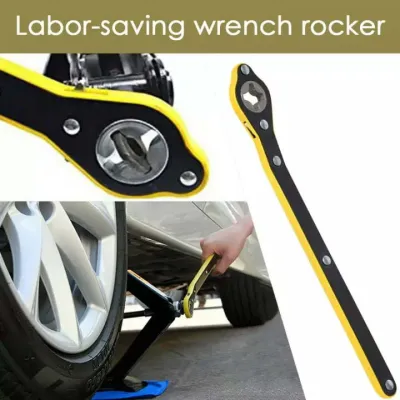
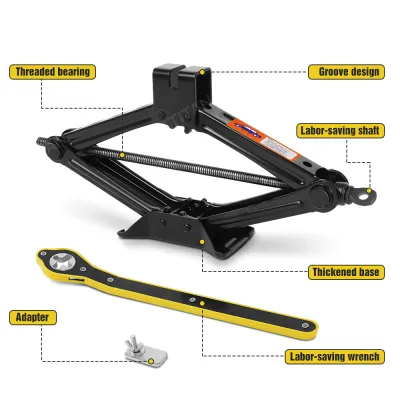
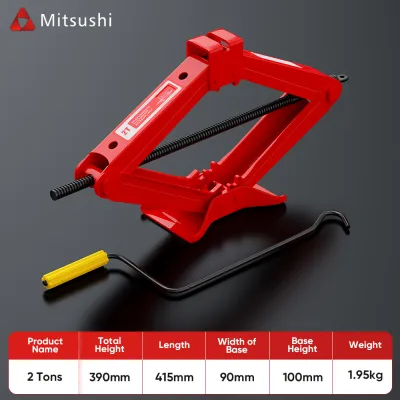
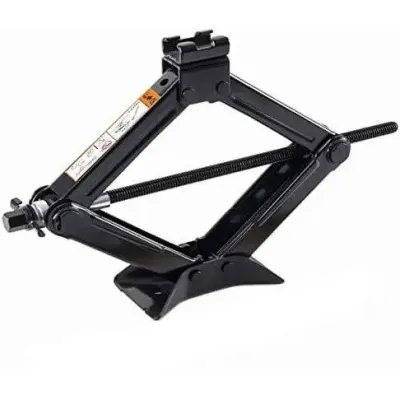
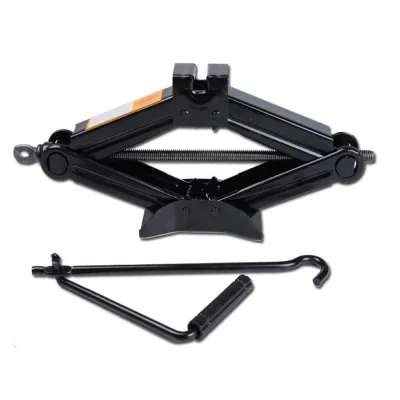
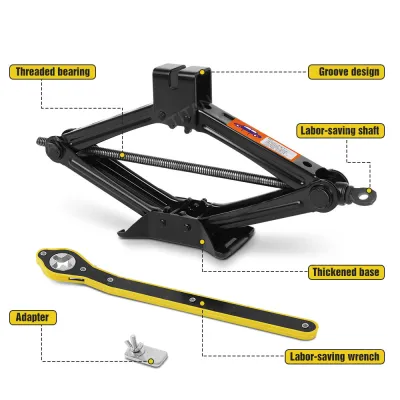
Scissor jacks are the most common type of emergency lifting equipment, often included as standard equipment in the spare tire compartment of many passenger sedans and compact hatchbacks. These jacks operate on a simple mechanical principle, utilizing a central lead screw that, when turned with a manual hand crank, draws the outer corners of a diamond-shaped steel frame together, forcing the top saddle upward. This mechanical design requires no hydraulic fluid, making the tool highly resistant to leaks and exceptionally low-maintenance over long periods of storage in a humid trunk.

The primary advantage of a scissor jack lies in its lightweight portability and compact footprint. When fully collapsed, it folds nearly flat, allowing it to fit into tight storage wells alongside a spare tire and lug wrench without consuming valuable cargo space. However, this portability comes with significant trade-offs. Lifting a vehicle with a scissor jack is a slow, physically demanding process that requires turning the crank handle dozens of times to achieve the necessary height. Additionally, because the base of a scissor jack is relatively narrow, it offers minimal lateral stability, making it highly susceptible to tipping if the vehicle shifts.
Because of these stability limits, a scissor jack must only be operated on a perfectly flat, hard, and level surface, such as concrete or solid asphalt. Attempting to use a scissor jack on a sloped driveway, gravel shoulder, or soft ground softened by tropical rain can lead to catastrophic failure as the jack tilts under load. This tool is best suited for drivers of light to mid-size passenger vehicles who view it strictly as an emergency backup for occasional roadside tire changes, rather than a primary tool for regular maintenance.
Bottle Jacks: High Capacity for Heavy-Duty Needs
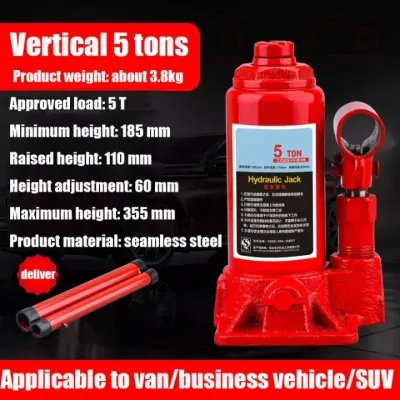
Bottle jacks utilize a vertical hydraulic cylinder mounted on a flat base, resembling a thick bottle, to deliver impressive lifting power in a relatively small package. By pumping a detachable handle, hydraulic fluid is forced from a reservoir into the main cylinder, pushing a heavy-duty piston upward to lift the vehicle. This hydraulic design allows bottle jacks to achieve much higher weight capacities than standard scissor jacks, making them a popular choice for lifting heavier vehicles such as mid-size SUVs, utility pickups, and vans.
Despite their high lifting capacity and compact storage footprint, bottle jacks have distinct physical limitations that must be carefully evaluated. The most notable constraint is their high starting height. Because the hydraulic cylinder must stand vertically, the jack itself is relatively tall even when fully collapsed. If your vehicle has low ground clearance, or if a flat tire has caused the chassis to drop close to the ground, a bottle jack may not fit underneath the designated lifting points. This makes them generally unsuitable for low-slung sedans, sports cars, or modified vehicles.
Furthermore, the relatively small, square base plate of a bottle jack concentrates the vehicle’s weight over a small surface area. On soft surfaces, such as unpaved roadsides, gravel, or asphalt softened by intense tropical heat, this concentrated pressure can cause the jack to sink or tilt during operation. To mitigate this risk, operators must ensure the jack is placed on a wide, stable, and non-slip support surface, such as a thick wooden block or a dedicated stabilizer plate, in strict accordance with the manufacturer’s safety instructions. Bottle jacks are ideal for owners of high-clearance trucks and SUVs who require heavy-duty lifting capability that can still be stored conveniently in a tool compartment.
Floor Jacks: The Garage Standard for Frequent Use
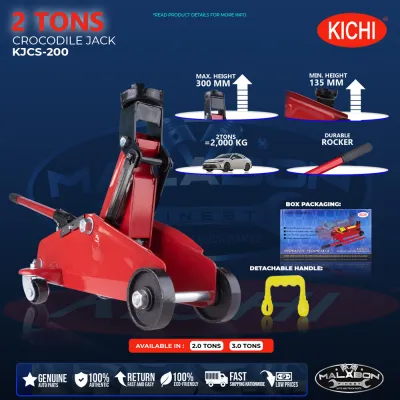
For car owners who perform their own routine maintenance, a hydraulic floor jack is the undisputed standard for garage work. Featuring a long, low-profile steel or aluminum chassis mounted on heavy-duty wheels, a floor jack uses a horizontal hydraulic cylinder and a long pump handle to quickly raise a wide, circular lifting saddle. This design allows the operator to position the jack deep under the vehicle’s chassis and raise it to the desired height with minimal physical effort in a matter of seconds.
The primary advantages of a floor jack are its exceptional speed, stability, and ease of positioning. The wide wheel track and elongated chassis distribute the vehicle’s weight over a much larger surface area than scissor or bottle jacks, greatly reducing the risk of tipping. The long pump handle provides excellent leverage, allowing you to lift heavy loads while standing comfortably, and the caster wheels allow the jack to roll slightly as the vehicle is raised, accommodating the natural arc of the lifting motion.
However, these performance benefits come at the cost of significant weight and bulk. A high-quality floor jack can weigh anywhere from 15 to over 40 kilograms, making it highly impractical to carry in a standard passenger vehicle’s trunk. It takes up substantial cargo space, adds unnecessary weight that reduces fuel efficiency, and can become a highly dangerous projectile inside the cabin during a sudden stop or collision. Consequently, floor jacks are best reserved as dedicated garage tools for home mechanics who regularly perform oil changes, brake jobs, tire rotations, or detailed undercarriage inspections on a stable, flat concrete floor.
Building Your Shortlist: Matching the Jack to Your Routine
When finalizing your toolkit configuration, it is helpful to build a shortlist based on your specific driving habits and maintenance routine. Many experienced car owners find that a dual-jack strategy is the most practical approach. This involves keeping a lightweight, compact scissor or bottle jack permanently stored in the vehicle’s trunk for unexpected roadside emergencies, while maintaining a robust, wheeled floor jack in the home garage for scheduled maintenance tasks. This setup ensures you are never caught unprepared on the road, nor are you forced to rely on a slow, unstable emergency jack for complex garage repairs.
When selecting a jack, always cross-reference its rated capacity against your vehicle’s heaviest axle weight rather than just its total curb weight. Because front-engine vehicles typically carry a significant portion of their weight over the front axle, lifting the front end of the vehicle places a disproportionate load on the jack. Choosing a jack with a rated capacity that comfortably exceeds the weight of the heaviest axle—ideally with a safety margin that matches or exceeds the total vehicle weight—ensures the hydraulic or mechanical components are never pushed to their absolute limits.
Most importantly, your shortlist must include properly rated jack stands. A car jack, regardless of its type or quality, is designed solely to lift a vehicle, never to support it for any length of time. Hydraulic seals can fail without warning, and mechanical threads can strip, causing the vehicle to drop instantly. Every time you lift a vehicle, you must immediately lower it onto a pair of heavy-duty jack stands placed under the manufacturer’s designated support points before performing any work underneath.
Essential Safety Protocols and Maintenance Checks
Operating a car jack safely requires strict adherence to non-negotiable safety protocols to prevent catastrophic accidents. Before attempting to lift your vehicle, always park on a flat, level, and solid concrete surface. Engage the parking brake firmly, place the transmission in Park (or Reverse for manual transmissions), and place heavy-duty wheel chocks behind and in front of the wheels on the opposite end of the vehicle being lifted. These steps prevent the vehicle from rolling or shifting, which is the primary cause of jack slippage.
Regular maintenance and pre-use inspections are vital to ensuring the structural integrity of your lifting equipment. Before every single lift, perform a thorough visual inspection of the jack. For hydraulic bottle and floor jacks, check for any signs of hydraulic fluid leaks around the seals, valves, and pistons, and verify that the release valve operates smoothly. For mechanical scissor jacks, inspect the lead screw for stripped or worn threads, check the frame arms for any signs of bending or structural cracks, and ensure the lifting saddle is free of dirt, grease, or debris that could cause it to slip against the vehicle’s pinch weld.
If you detect any signs of fluid leakage, structural deformation, unusual noises, or jerky movement during operation, stop immediately and lower the vehicle safely if it is already raised. Never attempt to use a damaged or compromised jack, and do not attempt to perform unauthorized repairs on hydraulic valves or structural welds. Consult the manufacturer’s documentation for authorized service procedures, or replace the tool entirely to guarantee your safety. Remember, a high-quality jack is a long-term investment in both your vehicle’s maintenance and your personal safety.
Frequently Asked Questions (FAQ)
Can I use a scissor jack from another car model on my vehicle?
Using a scissor jack designed for a different vehicle model is generally unsafe and not recommended. Manufacturer-supplied scissor jacks are often custom-engineered to match the exact weight distribution, pinch weld profile, and saddle interface of a specific vehicle model. A jack from a lighter compact car may not be rated to handle the weight of a larger sedan or crossover, and a mismatched saddle shape can easily slip off your vehicle’s lifting points, causing severe damage or injury. Always verify that any jack you use is explicitly rated for your vehicle’s weight and features a compatible saddle design.
Do I need to buy a low-profile jack for a lowered sports car?
Yes, vehicles with reduced ground clearance, such as sports cars, modified vehicles, or cars equipped with aftermarket body kits, typically require a dedicated low-profile floor jack. Standard floor jacks and bottle jacks often have a minimum starting height that is too tall to slide under the vehicle’s lifting points without scraping the side skirts or front splitters. A low-profile floor jack features an elongated, ultra-low chassis designed to clear low bodywork, allowing you to safely reach the designated lifting points. Measure the exact clearance of your vehicle at its lowest point before purchasing to ensure the jack’s minimum saddle height is compatible.
Community discussion
Share your experience or ask a question. Comments are reviewed before publication.