
Selecting the ideal dash camera depends entirely on your daily driving environment, route conditions, and parking habits. While every driver benefits from basic video recording, the specific hazards of your daily commute dictate which advanced features deserve your budget. For instance, navigating stop-and-go urban traffic demands high video resolution and a wide field of view to document lane-splitting motorcycles and sudden cut-offs. Conversely, if you frequently park on public streets or drive through poorly lit provincial highways at night, your priorities must shift toward advanced parking modes, robust low-light sensors, and high thermal resistance.
Investing in a reliable dashcamera for car is no longer just about capturing scenic road trips; it is a vital safeguard for insurance claims, legal protection, and general peace of mind. By identifying your primary driving scenarios, you can avoid paying for unnecessary gimmicks and focus on the technical specifications that keep you protected under the harsh tropical sun.
Quick Guide to Dash Cam Features by Driving Scenario
Before exploring the detailed technical specifications, use this quick reference table to map your primary driving environments to the absolute essential features your camera must possess.
Products mentioned in this guide
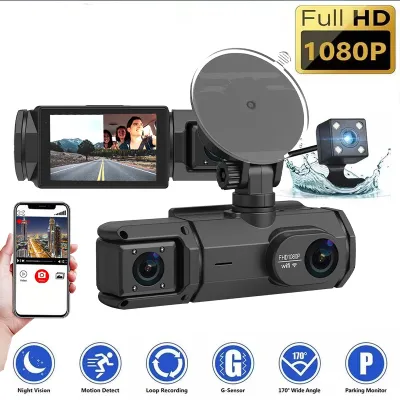
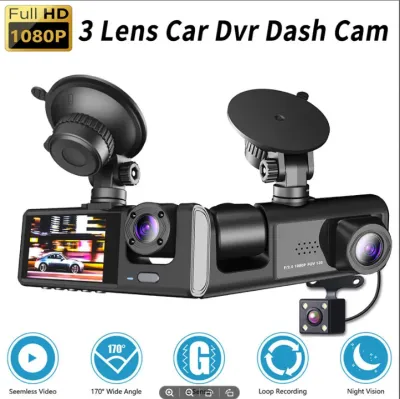
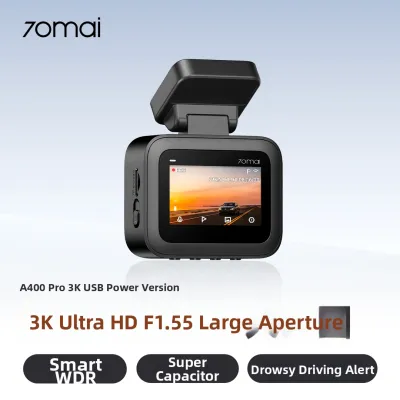
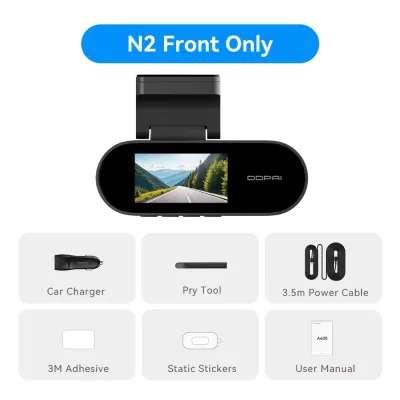
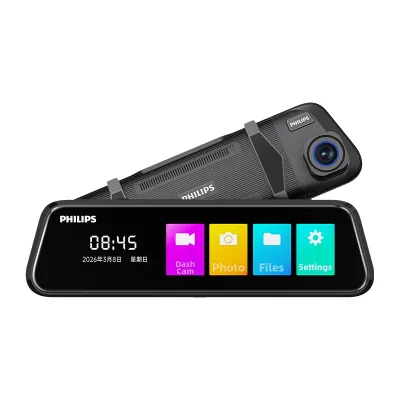
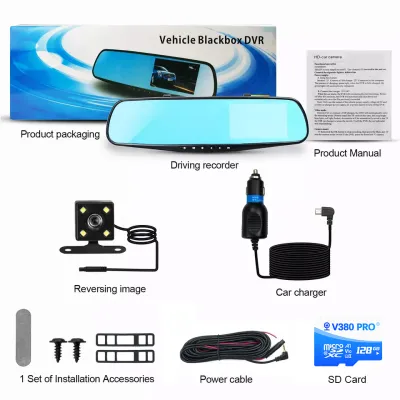
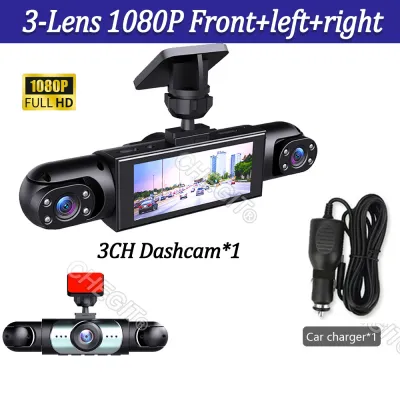

Prices are valid at publication and may change. Please refer to the product page for the latest price.
| Driving Scenario | Must-Have Features | Primary Benefit |
|---|---|---|
| Heavy Stop-and-Go Traffic | 2K/4K Resolution, 140°–170° Field of View (FOV), High-Endurance MicroSD | Captures clear license plates and side-swipe incidents in crowded lanes. |
| Night Commutes & Low Light | HDR/WDR, Sony Starvis or equivalent low-light sensor, Large Aperture (f/1.6) | Balances blinding headlights and reveals details in dark alleyways. |
| Unattended Street Parking | Buffered Parking Mode, G-Sensor, Hardwire Kit with Low-Voltage Cutoff | Records hit-and-runs while parked without draining the car battery. |
| Provincial & Long-Distance | Built-In GPS Logging, Supercapacitor Power Supply, Adhesive Mount | Logs speed and location data; withstands extreme cabin heat and vibrations. |
Heavy Traffic Commutes: Choosing a Dashcamera for Car with High Resolution and Field of View
Navigating highly congested urban corridors, such as EDSA, C5, or busy intersections in Metro Manila, presents constant risks of minor collisions, side-swipes, and disputes with aggressive drivers. In these bumper-to-bumper environments, a standard 1080p resolution often falls short. When vehicles are packed tightly together, capturing the distinct characters of a license plate—especially under varying light or when vibrating—requires the pixel density of 2K (1440p) or 4K (2160p) resolutions. Higher resolution allows you to zoom in on recorded footage during an investigation without the image pixelating into illegible blocks.

Equally important is the camera’s field of view (FOV). A narrow lens of 120 degrees or less only captures what is directly in front of your hood, completely missing the sides where motorcycles filter through traffic or where vehicles merge aggressively. Opting for a wide FOV between 140 and 170 degrees ensures that adjacent lanes and the front A-pillars of your vehicle are fully visible in the frame. However, avoid lenses exceeding 170 degrees, as they introduce extreme “fisheye” distortion that makes distant objects appear much farther away than they actually are, complicating distance estimation in accident reconstructions.
Continuous stop-and-go driving also puts immense stress on your storage media. Because your camera records continuously, it utilizes loop recording to overwrite the oldest unprotected files when the memory card is full. To prevent write errors, dropped frames, or sudden card failure, always pair your high-resolution camera with a high-endurance MicroSD card specifically rated for continuous write cycles. Additionally, verify that the dash cam’s internal processor is capable of handling high-bitrate recording without overheating, which can cause the device to freeze or drop frames at critical moments.
Night Driving: Ensuring Clarity in Low-Light Conditions
Driving after dark, whether on dimly lit municipal roads or through high-contrast city streets illuminated by harsh neon signs and blinding LED headlights, requires specialized optical hardware. A standard camera sensor will either overexpose bright light sources—turning license plates into blank white rectangles—or underexpose dark areas, leaving pedestrians and obstacles invisible. To combat this, prioritize a dash cam equipped with High Dynamic Range (HDR) or Wide Dynamic Range (WDR) technology. These systems combine multiple exposures of the same frame in real time, balancing the blinding glare of oncoming high beams while pulling details out of deep shadows.
The foundation of quality night footage lies in the image sensor and lens aperture. Look for cameras utilizing specialized low-light sensors, such as the Sony Starvis series, which are engineered to capture clear color images in near-total darkness. Pair this sensor with a lens featuring a wide physical aperture, denoted by a low f-number like f/1.6 or f/1.8. A wider aperture allows more physical light to reach the sensor, reducing the camera’s reliance on digital gain, which introduces grainy noise and motion blur into the video.
Be highly cautious of budget-tier dash cams that advertise “infrared night vision” using small red or clear LEDs mounted on the front of the housing. These consumer-grade infrared lights are designed for indoor security cameras, not automotive windshields. When activated inside a car, the infrared light reflects directly off the glass windshield back into the lens, creating a blinding white glare that renders the entire recording useless. True automotive night vision relies purely on high-quality optics and advanced sensor processing, not external light-emitting diodes.
Unattended Parking: Securing Your Vehicle with Parking Mode
For many car owners, the greatest risk of damage occurs when the vehicle is left unattended in public parking lots, roadside slots, or unmonitored driveways. Standard dash cams power down the moment you turn off the ignition, leaving your vehicle vulnerable. To protect your asset while parked, look for a camera with an advanced parking mode. While basic impact detection relies on a built-in G-sensor to turn the camera on and record after a physical shock is felt, this often misses the actual moment of impact. Advanced parking modes offer buffered recording (capturing a few seconds before and after an event), motion detection, or low-bitrate continuous recording, ensuring you capture the entire sequence of a hit-and-run or act of vandalism.
Operating a camera while the engine is off requires a continuous power source. You must never rely on the vehicle’s standard cigarette lighter port for this, as it typically deactivates with the ignition. Instead, a dedicated hardwire kit must be installed to connect the dash cam directly to your vehicle’s fuse box. This kit serves two purposes: it provides constant power from the battery when parked, and it monitors the car battery’s voltage. A high-quality hardwire kit features an adjustable low-voltage cutoff that automatically disconnects the dash cam if the car battery drops below a safe threshold (such as 12V or 11.8V), ensuring you always have enough power to crank the engine.
Furthermore, the physical power storage inside the dash cam itself is a critical safety consideration. Cheap dash cams use internal lithium-ion batteries, which are highly susceptible to swelling, leaking, or catching fire when exposed to the intense greenhouse heat of a car parked under the tropical sun. Always choose a dash cam powered by a supercapacitor. Supercapacitors do not store energy to run the camera for long periods; instead, they hold just enough charge to safely save the current video file when power is cut. They are exceptionally heat-resistant, durable, and safe for long-term use in hot climates.
Long Road Trips: GPS Logging and Heat Resistance
For long-distance highway cruises and provincial travel, the challenges shift from tight maneuvering to high-speed stability, environmental endurance, and data integrity. On long stretches of expressways or rural highways, disputes over speed limits, traffic violations, or collision dynamics are common. A dash cam with built-in GPS logging automatically embeds precise speed, time, and geographical coordinates directly into the video metadata. If you are wrongly accused of speeding or need to prove your exact location during an incident, this GPS data provides objective, legally viable evidence that coordinates with the visual footage.
Long hours of continuous driving also mean the dash cam is subjected to prolonged solar radiation through the windshield. This constant heat exposure makes supercapacitor-based models mandatory for highway travelers. Unlike lithium-ion batteries, which degrade rapidly under continuous charge and high ambient temperatures, supercapacitors maintain stable performance over thousands of temperature cycles, preventing unexpected device shutdowns in the middle of a trip.
Additionally, pay close attention to the mounting system. High-speed highway driving and uneven provincial roads generate continuous vibrations that can loosen cheap mounts, causing shaky, unwatchable footage or causing the camera to fall off entirely. Adhesive mounts using high-bond double-sided tape are highly recommended over suction cups. While suction cups are easy to move between cars, the rubber degrades quickly under heat and humidity, causing them to lose suction. Adhesive mounts offer a low-profile, rock-solid connection directly to the glass, minimizing vibrations and ensuring the camera remains securely positioned.
To manage storage during long trips, use a high-capacity memory card (at least 128GB or 256GB, depending on your camera’s maximum supported limit). High-resolution dual-channel systems can fill a 64GB card in just a few hours. If you are driving for an entire day, a larger card ensures your morning footage isn’t overwritten by the time you reach your destination in the evening. Alternatively, you can adjust the recording bitrate down slightly in the camera settings to extend recording times, though this will slightly reduce fine image details.
Balancing Multi-Scenario Needs and Installation Requirements
Selecting the right setup requires balancing your budget against the physical constraints of your vehicle and your typical driving patterns. While a premium, feature-rich model offers comprehensive protection, you can optimize your spending by focusing on the specific features that address your highest-risk scenarios.
Front-Only vs. Dual-Channel Setups
A front-only dash cam is budget-friendly, simple to mount, and highly effective at documenting incidents occurring directly ahead of your vehicle. However, it leaves you completely blind to rear-end collisions, tailgating disputes, and rear-impact hit-and-runs. A dual-channel setup, which includes both a front-facing camera and a smaller secondary camera mounted on the rear windshield, offers near-360-degree coverage. While dual-channel systems are more expensive and require routing cables through the vehicle’s headliner or trim panels, they are highly recommended for daily commuters and highway drivers, as rear-end collisions represent a significant portion of multi-vehicle accidents.
DIY vs. Professional Installation
For a basic front-only setup, a simple plug-and-play installation using the supplied cigarette lighter adapter is fully feasible for a DIY enthusiast. This method requires no electrical modifications, though it leaves power cables hanging down your dashboard and occupies your 12V power outlet. It also means you cannot utilize parking mode features, as these require constant power when the engine is off.
If you choose a hardwired setup to enable parking mode, the installation process becomes significantly more complex. Hardwiring requires routing cables behind side-curtain airbags and tapping directly into the vehicle’s fuse box using fuse taps. Because improper electrical work can cause short circuits, drain your battery, interfere with safety systems, or void your vehicle’s factory electrical warranty, it is highly recommended to have this work performed by a qualified automotive electrician. Before purchasing any hardwire kit or attempting an installation, always consult your vehicle’s original owner’s manual to identify safe accessory fuses and verify any manufacturer-specific electrical guidelines.
Frequently Asked Questions (FAQ)
Do I need a rear dash cam for city driving?
Yes, a rear dash cam is highly beneficial for city driving. Urban traffic is characterized by constant stop-and-go movement, sudden braking, and close-quarter lane merging, which dramatically increases the risk of rear-end collisions. Having a rear-facing camera provides concrete evidence if another driver tailgates you or crashes into your rear bumper, preventing disputes over who was at fault in a multi-car pileup.
How do I maintain my dash cam's memory card?
To maintain your memory card’s health, format it directly through your dash cam’s settings menu every two to four weeks. Continuous loop recording subjects the card to high write cycles, which can eventually lead to file fragmentation and corruption. Formatting clears accumulated system files and resets the directory structure, ensuring the camera can write smoothly without freezing or failing to save critical emergency files. Always verify that you have saved any important footage to your phone or computer before formatting, as this process permanently erases all data on the card.
Community discussion
Share your experience or ask a question. Comments are reviewed before publication.