
Selecting the correct e-bike front rain cover requires matching the cover’s design to your specific handlebar geometry, mounted accessories, and display layout. Because e-bikes feature highly diverse configurations—ranging from simple commuter setups to complex dashboards with integrated screens and phone mounts—a single style of cover cannot fit every ride. Choosing an incompatible cover can lead to loose material that interferes with your controls, blocks your lights, or fails to keep water out of sensitive electronics.
To find the right fit, you must evaluate three primary designs: handlebar sleeves, full-front shields, and dashboard wraps. Handlebar sleeves offer localized protection for your hands and brake levers, making them ideal for minimalist setups. Full-front shields provide maximum coverage for the entire front assembly, which is highly beneficial during heavy tropical downpours but introduces more wind resistance. Dashboard wraps focus exclusively on shielding central digital consoles and mounted devices, leaving your hands free.
By analyzing your handlebar layout and typical riding conditions, you can select a cover that keeps your hands dry and your electronics functioning safely. This guide outlines how to assess your setup, compares the three main cover styles, and provides a critical safety checklist to review before making a purchase.
Products mentioned in this guide
Prices are valid at publication and may change. Please refer to the product page for the latest price.
Assessing Your E-Bike Handlebar and Accessory Layout
Before purchasing any protective gear, you must thoroughly evaluate your e-bike’s front-end configuration to establish a baseline of physical requirements. Start by identifying all existing accessories mounted on your handlebars, such as phone mounts, GPS units, side mirrors, bells, and auxiliary lights. Measure the spatial footprint of these items, noting how far they protrude from the main bar and how much clearance they require to function properly.
Next, evaluate the physical shape and geometry of your handlebars. Straight bars, riser bars, and swept-back cruiser bars position your hands, brake levers, and shifters at vastly different angles. This geometry dictates where mounting straps, drawstrings, or brackets can securely attach without slipping or binding. A cover designed for a flat bar may bunch up or pull tight on a cruiser bar, potentially pulling on cables or restricting your range of motion.
Local weather patterns and your typical commuting habits also play a major role in your decision. In the Philippines, riders frequently encounter sudden afternoon downpours, high humidity, and strong winds, especially during the wet season. If your daily commute involves navigating heavy urban traffic in these conditions, you need a cover that offers robust waterproofing and secure fastening to prevent it from shifting at speed.
Finally, always consult your e-bike’s original user manual regarding accessory mounting and handlebar modifications. Some manufacturers specify torque limits for handlebar clamps or designate specific zones where accessories should not be attached. Ensure that any rain cover you choose respects these boundaries and does not put undue stress on lightweight aluminum or carbon fiber components.
Handlebar Sleeves: Best for Minimalist and Standard Setups
Handlebar sleeves, often referred to as handlebar muffs or mitts, are individual protective pockets designed to slip directly over the grips and brake levers. They typically secure around the handlebar tube using simple drawstrings, hook-and-loop straps, or integrated plastic clamps. This design keeps your hands and primary controls fully enclosed while leaving the center of the handlebar, including the stem and any central console, completely exposed.

This style is highly suited for e-bikes with standard straight or low-riser handlebars that feature minimal central electronics. If your e-bike uses a simple mechanical bell, basic brake levers, and lacks a large digital display, handlebar sleeves provide excellent localized protection. They keep your hands dry and shielded from wind chill, which is particularly useful during wet, windy rides where maintaining grip and brake feel is critical for safety.
However, handlebar sleeves have distinct limitations that make them unsuitable for more complex setups. Because they only cover the outer ends of the handlebars, they offer zero protection for central displays, mounted smartphones, or exposed wiring harnesses. Additionally, if your e-bike has wide accessory bars, integrated turn signals on the bar ends, or complex mirror mounts, the sleeves may interfere with their positioning or fail to seal properly, allowing water to seep inside.
Safety is another critical consideration when using handlebar sleeves. You must verify that the interior of the sleeve provides ample clearance for your brake levers to fully extend and retract without catching on the fabric. If the sleeve is too tight or collapses under wind pressure, it could accidentally compress the brake lever, leading to dangerous brake drag or sudden wheel lockup.
Full-Front Shields: Ideal for Maximum Weather Protection
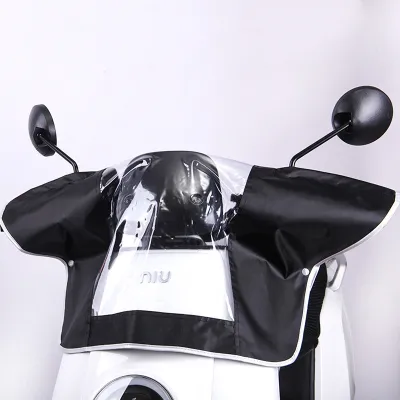
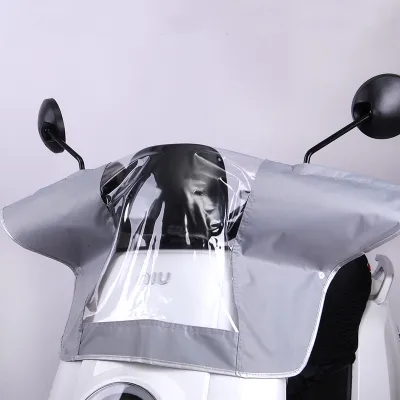
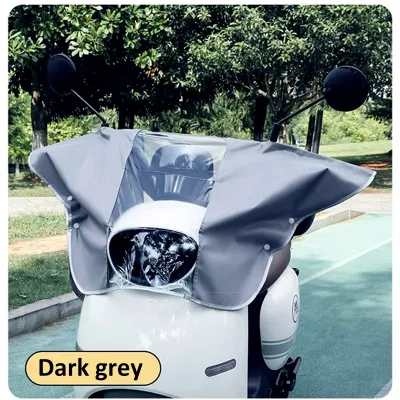
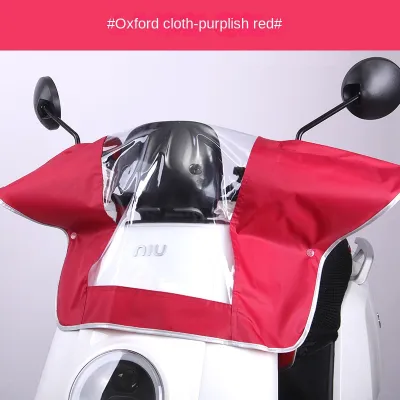
Full-front shields are large, integrated covers designed to drape over the entire front assembly of the e-bike. This style typically secures around the steering stem, side mirrors, or the frame neck, creating a continuous protective canopy over the handlebars, dashboard, and upper fork area. Some designs even feature clear plastic windows so you can still view your digital display and phone mount while riding.
These shields are highly suitable for step-through e-bikes, utility models, and commuter setups with extensive dashboard electronics. If you frequently ride through heavy, wind-driven rain during long commutes, a full-front shield keeps your entire control center dry. This comprehensive coverage prevents water from penetrating sensitive display seams, throttle housings, and key ignitions, which are highly vulnerable to water damage.
Despite their superior coverage, full-front shields come with notable trade-offs that you must carefully evaluate. The large surface area of a full shield acts like a sail, significantly increasing wind drag at higher speeds or in gusty conditions. This added resistance can affect your handling, make steering feel heavier, and reduce your overall battery range as the motor works harder to overcome the drag.
Additionally, because they drape over the front of the vehicle, full-front shields can easily obscure your headlight, front turn signals, or safety reflectors. You must carefully check the dimensions and mounting points to ensure the shield does not compromise your visibility or road legality. They are also bulkier to fold and store, requiring dedicated bag space when the rain stops and the weather clears.
Dashboard Wraps: Tailored for Console-Heavy E-Bikes
Dashboard wraps are specialized, compact covers designed specifically to shield the central digital screen, key ignition, and mounted devices. Unlike full shields or handlebar sleeves, dashboard wraps do not enclose the handlebar grips or brake levers. Instead, they focus entirely on protecting the sensitive electronic components located at the center of your handlebars.
This style is the perfect match for riders who prefer wearing high-quality waterproof gloves for hand protection but need to safeguard expensive smart displays, integrated phone mounts, or GPS units from water ingress. It keeps the core electronics dry while maintaining a completely unobstructed grip on the handlebars, ensuring you have direct, tactile feedback from your grips, brakes, and shifters.
When selecting a dashboard wrap, perform careful installation checks to ensure a safe and fit. The wrap must fit snugly over the console without blocking cooling vents on the display housing or interfering with the free movement of the steering column. Many modern e-bike displays generate a small amount of heat, and trapping that heat under a tight, unventilated plastic wrap can lead to condensation or overheating.
Verify that the fastening straps do not slip down the steering stem or bind against the brake cables and wiring harnesses. A slipping wrap can distract you during a turn or physically restrict your steering range, posing a severe safety hazard. Ensure the clear window material is UV-resistant and anti-glare, allowing you to read your screen clearly even under bright, overcast skies.
Compatibility and Safety Checklist Before You Buy
Before purchasing any front rain cover, you must perform a systematic safety and compatibility check to ensure it does not compromise your control of the e-bike. Never assume a cover will fit safely based on category terms or visual similarity alone. Always verify the physical dimensions and mounting requirements against your specific e-bike model.
First, check clearance and movement. Install the cover temporarily and verify that it does not restrict full steering lock from left to right. Ensure there is absolutely no interference with brake lever travel, throttle rotation, or gear shifter operation under any riding posture. You must be able to operate all controls smoothly and without obstruction.
Second, confirm lighting and signals. Ensure that the cover’s material, seams, or mounting straps do not block or dim your headlight, front turn signals, or safety reflectors. If the cover partially blocks a light, you must adjust its position or choose a different style to remain visible and compliant with local road safety guidelines.
Third, evaluate material and fastening. Check the manufacturer’s specifications for waterproof ratings and UV resistance. Look for secure fastening mechanisms, such as heavy-duty buckles, adjustable straps, or robust drawstrings, that prevent the cover from flapping, shifting, or ballooning when riding against strong crosswinds.
Fourth, plan for emergency release. In the event of a fall, sudden mechanical issue, or roadside repair, you must be able to quickly access your controls or detach the cover. Ensure the mounting system allows for rapid removal or does not trap your hands inside the sleeves during an emergency. Always consult your e-bike’s user manual before modifying the handlebar area, and seek assistance from a qualified bicycle mechanic if you are unsure about compatibility.
Frequently Asked Questions (FAQ)
Can I use a standard motorcycle rain cover on my e-bike?
While they may look similar, standard motorcycle rain covers are rarely a safe or proper fit for e-bikes. Motorcycle handlebars are generally much wider, and their covers are designed for heavier mounting hardware and larger frame geometries. Using a motorcycle-specific cover on a lighter e-bike can lead to loose, flapping material that can easily get caught in the front wheel, brake assemblies, or interfere with delicate pedal-assist sensors and lightweight digital displays. Always check the manufacturer’s specific fitment guide and physical dimensions rather than assuming cross-compatibility based on visual appearance.
How do I clean and store my e-bike front rain cover?
To prolong the lifespan of your cover and maintain its water-resistant properties, avoid harsh chemical cleaners, bleach, or abrasive scrubbing brushes. Instead, gently wipe the surface with a damp microfiber cloth and a mild, diluted soap solution. After cleaning or riding in the rain, always air-dry the cover completely in a shaded, well-ventilated area before folding it. Storing a damp cover can lead to mold, mildew, and rapid degradation of the waterproof inner coating. Store the dry cover in a cool, ventilated space away from direct sunlight and extreme heat to prevent the synthetic materials from becoming brittle and cracking over time.
Community discussion
Share your experience or ask a question. Comments are reviewed before publication.