
Choosing the right LS2 half-face helmet in the Philippines requires balancing your personal budget with essential safety certifications, shell materials, and daily riding comfort. LS2 offers a diverse lineup of open-face helmets, ranging from highly affordable commuter options to premium, lightweight models. To get the best value, you should identify your absolute spending limit, prioritize certified protection first, and then select the convenience features—such as integrated sun visors or advanced ventilation—that fit within your target price tier.
In a tropical climate where high humidity, intense sunshine, and sudden downpours are part of the daily commute, a half-face helmet is a highly practical choice. The open-face design provides superior airflow to keep you cool in heavy traffic, while still offering robust structural protection. However, navigating the various models and price points can be challenging if you do not know which features justify a higher price tag.
Setting Your Budget and Safety Baselines
Before browsing specific helmet models, you must establish your safety and financial boundaries. Safety certifications are completely non-negotiable, regardless of how tight your budget is. A helmet is a life-saving piece of personal protective equipment, and any model you consider must carry valid, verifiable safety marks. In the Philippines, this means looking for the mandatory Import Commodity Clearance (ICC) sticker alongside recognized international certifications.
Products mentioned in this guide
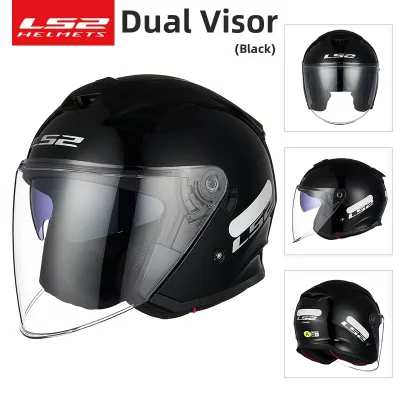
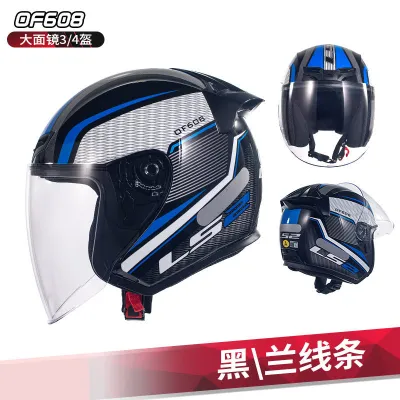
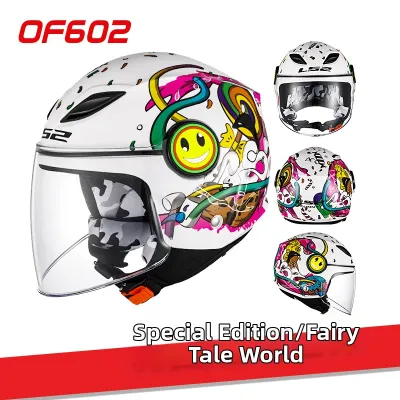
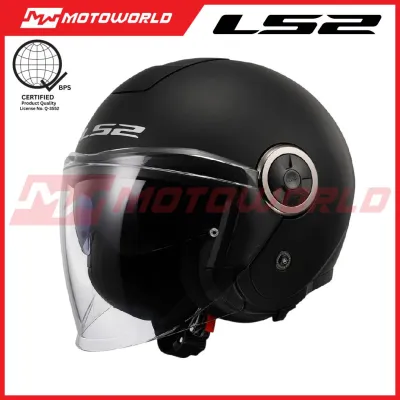
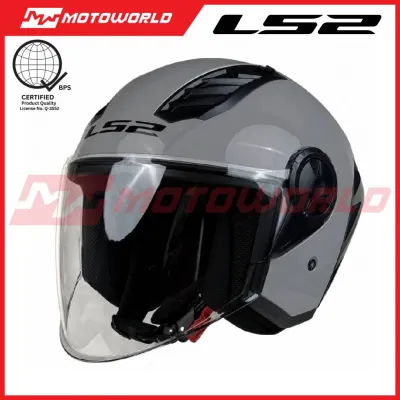
Prices are valid at publication and may change. Please refer to the product page for the latest price.
When planning your purchase, it is helpful to distinguish between “must-have” safety features and “nice-to-have” convenience upgrades. Must-have features include a secure retention system, such as a micrometric quick-release buckle, a shock-absorbing multi-density Expanded Polystyrene (EPS) liner, and a shell that fits your head shape perfectly. These elements directly impact how well the helmet protects your brain during an impact and ensure that the helmet remains securely on your head during a slide.
Nice-to-have features, on the other hand, improve your riding experience but do not alter the baseline safety of the helmet. These include built-in drop-down sun visors, Bluetooth communicator pockets, Pinlock-ready main shields, and premium graphic designs. While these additions make your daily commute more enjoyable, they also increase the manufacturing cost and retail price of the helmet.
To shop effectively, set a strict maximum spend that guarantees an authentic, certified helmet. You should never compromise on baseline safety just to afford a specific brand aesthetic or a lower price tag. If a helmet does not meet the necessary safety standards, it should be excluded from your list immediately, no matter how appealing its design or price may seem.
Navigating LS2 Half-Face Features by Price Tier
LS2 categorizes its half-face helmets into distinct tiers based on materials, manufacturing complexity, and included features. Understanding what each budget level offers allows you to manage your expectations and identify the best model for your specific riding habits.

Entry-Level Expectations
At the entry-level tier, LS2 focuses on delivering reliable, certified protection at an accessible price point. These helmets typically utilize high-pressure thermoplastic technology or basic Kinetic Polymer Alloy (KPA) for the outer shell. KPA is a proprietary blend of polycarbonate and thermoplastic materials formulated by LS2 to offer excellent penetration resistance and impact energy dispersion.
While these materials are highly durable and fully capable of passing strict safety tests, they are generally heavier than their premium counterparts. This additional weight might cause mild neck fatigue during long, multi-hour rides, but it is rarely an issue for typical short-distance city commutes. Entry-level models also feature standard clear visors with basic scratch resistance and straightforward, top-mounted ventilation ports to keep air moving inside the shell.
Even at this budget-friendly level, reputable manufacturers ensure their helmets comply with fundamental safety standards. This makes entry-level LS2 models an excellent, reliable choice for daily commuters who need certified protection on a strict budget.
Mid-Range Comfort and Convenience
Stepping up to the mid-range tier introduces significant upgrades in comfort, convenience, and daily usability. One of the most noticeable improvements is the interior lining. Mid-range LS2 helmets feature fully removable, washable, and hypoallergenic comfort liners, which are essential for riding in hot and humid tropical conditions where sweat and dirt quickly accumulate.
Another major upgrade at this level is the inclusion of an integrated, drop-down inner sun visor. This secondary shield is controlled by an external slider on the side of the helmet, allowing you to shield your eyes from bright sunlight instantly without needing to wear sunglasses or swap out your main visor. This feature is incredibly convenient for riders who transition frequently between bright highways and shaded city streets.
Additionally, mid-range models benefit from more refined aerodynamic shell designs that reduce wind buffeting at moderate speeds. They also feature upgraded quick-release visor mechanisms, making it much easier to remove the main shield for cleaning or replacement without using specialized tools.
Premium Materials and Advanced Tech
For riders with a flexible budget who prioritize maximum comfort and low weight, premium LS2 open-face helmets offer high-performance materials and advanced engineering. These top-tier models often feature outer shells constructed from fiberglass composites or pure carbon fiber, which are exceptionally strong materials that significantly reduce the overall weight of the helmet.
This weight reduction is a major benefit for long-distance touring or riders who spend hours navigating heavy traffic, as it minimizes strain on the neck and shoulder muscles. Premium helmets also utilize sophisticated multi-density EPS liners, which are engineered to manage different types of impact forces—both high-speed and low-speed—more effectively.
Furthermore, premium models feature advanced aerodynamic profiling to minimize wind noise and lift at highway speeds. The ventilation systems are highly optimized, utilizing deep channels carved into the EPS liner to maximize airflow while keeping ambient road noise to a minimum. The visors on these models often come with optical class 1 ratings to prevent visual distortion and are fully compatible with anti-fog inserts.
Verifying Authenticity and Safety Labels
Due to the popularity of the brand, counterfeit LS2 helmets are a common risk in the local market, particularly when shopping on budget-focused online marketplaces or from unauthorized physical retailers. Purchasing a counterfeit helmet is highly dangerous, as these fake products do not undergo safety testing and are made from substandard materials.
To verify that you are purchasing an authentic LS2 helmet, start by examining the physical branding and overall build quality. Genuine LS2 helmets feature high-quality paint finishes, clean decals applied under a protective clear coat, and precise alignment of all moving parts. Look for model-specific serial numbers, holographic security stickers, and official packaging that includes a branded helmet bag, user manuals, and reflective safety stickers.
Next, carefully inspect the safety certification labels. In the Philippines, any helmet legally sold for road use must feature a genuine Import Commodity Clearance (ICC) sticker issued by the Bureau of Product Standards. This sticker is typically affixed to the rear of the helmet or on the chin strap and features a unique serial number. Additionally, look for international certification markings, such as ECE 22.05 or the newer ECE 22.06 standard, which are usually printed directly on the back of the helmet shell.
Be highly suspicious of online listings offering LS2 helmets at prices that seem too good to be true. If a seller is offering a popular model for a fraction of its standard retail price, it is almost certainly a counterfeit. Fake helmets often use cheap, brittle recycled plastics instead of high-grade polycarbonate or KPA, and their inner liners consist of simple packaging foam rather than impact-absorbing EPS. In the event of a crash, these counterfeits can easily shatter, offering virtually zero protection to your head.
Factoring in Hidden Costs Before Checkout
When planning your helmet budget, it is important to remember that the retail price of the helmet itself is not always the final cost. Several secondary expenses can quickly push your total spending past your planned limit if you do not account for them before checkout.
First, consider shipping fees if you are purchasing your helmet from an online platform. Helmets are bulky, lightweight items that require large, sturdy shipping boxes to prevent damage during transit. Because of their physical volume, shipping costs can be surprisingly high, especially if the authorized dealer is located in a different region or if you live outside major metropolitan areas.
Second, think about any aftermarket accessories you might need to purchase separately. Most LS2 helmets ship with a clear main visor by default to comply with international safety standards. If you prefer a tinted, smoke, or iridium visor for daytime riding, you will need to buy this accessory separately. Additionally, if you ride frequently in the rain, investing in a Pinlock anti-fog lens insert is highly recommended to keep your vision clear, which adds to your overall initial investment.
Finally, always check the seller’s return and exchange policies regarding helmet sizing. Because helmet fit is highly personal and critical for safety, you may need to exchange the helmet if it does not fit your head shape correctly. Some retailers charge restocking fees or require you to pay for the return shipping of the bulky box, which can quickly add unexpected costs to your purchase. Confirming these policies beforehand helps protect your budget from these hidden fees.
When to Delay Your Purchase or Adjust Expectations
If your current budget is not quite enough to secure an authentic, certified LS2 helmet, you should never compromise on safety just to have a specific brand logo on your head. Riding with a counterfeit or uncertified helmet is a major safety risk that is never worth taking.
If you find yourself short on funds, consider looking at properly certified, budget-friendly helmets from other reputable, authorized brands that fit your current price range. There are several entry-level brands officially distributed in the Philippines that offer genuine ECE and ICC certifications at lower price points, ensuring you stay protected without overspending.
Alternatively, you can choose to delay your purchase and save up for the specific LS2 model you want. Keep an eye out for legitimate clearance sales, holiday promotions, or bundle deals from authorized LS2 dealers. Official distributors frequently offer discounts on previous-season graphic designs or older stock, allowing you to purchase a premium, certified helmet at a much more affordable price.
Ultimately, the core rule of buying riding gear is to prioritize certified protection and a proper fit above all else. Verify the credentials of the seller before making any payment, and only allocate your remaining budget to extra convenience features once your baseline safety requirements are fully and securely met.
Frequently Asked Questions (FAQ)
How Do I Measure My Head for an LS2 Half-Face Helmet?
To find your correct LS2 helmet size, use a soft, flexible measuring tape. Wrap the tape horizontally around your head at its widest point, which is typically about 2.5 centimeters (one inch) above your eyebrows and just above your ears. Take the measurement in centimeters and compare it directly to the official LS2 size chart for the specific helmet model you want to buy.
Do not assume your size is the same across different helmet brands or even different LS2 models. Shell shapes can vary between intermediate oval and round oval designs, which directly affects how the helmet fits. When trying on the helmet, it should feel snug but comfortable, applying even pressure around your head without causing painful pressure points on your forehead or temples. Secure the chin strap and try to move the helmet; it should not slide, rotate, or pull off your head easily.
Community discussion
Share your experience or ask a question. Comments are reviewed before publication.