
Choosing the right alarm lock for motorcycle security depends on balancing physical resistance, portability, and your typical parking environment. A disc lock with an alarm offers unmatched portability for quick stops, while a heavy-duty chain lock with an integrated alarm provides the necessary physical anchoring for high-risk street parking. A U-lock with an alarm serves as a rigid, intermediate option that balances structural strength with moderate portability. Because no single lock fits every rider’s daily routine, understanding how these three form factors perform under tropical conditions and different security threats is essential to protecting your investment.
To make an informed decision, you must evaluate how each lock type physically deters theft. While the built-in siren provides an audible warning, the physical strength of the lock remains your primary line of defense. By analyzing the structural design, material specifications, and real-world usability of each option, you can select a security setup that fits both your motorcycle’s design and your daily riding habits.
Comparing the Three Main Alarm Lock Form Factors
Understanding the physical characteristics of the three primary alarm lock form factors is the first step in determining which style suits your motorcycle. Each design utilizes a different mechanical approach to prevent unauthorized movement, and each comes with distinct advantages and trade-offs in terms of weight, size, and application.
Products mentioned in this guide
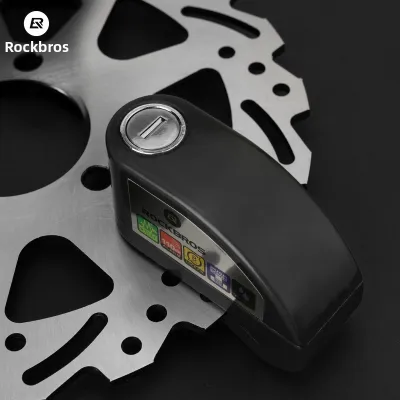
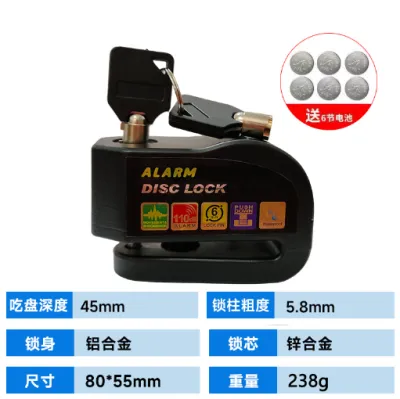
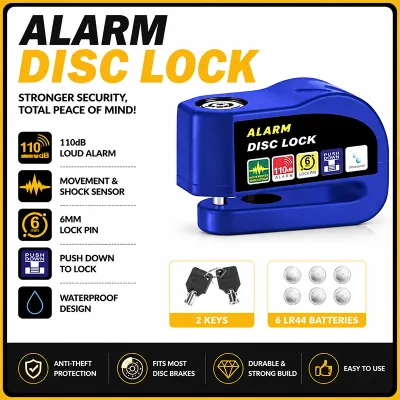
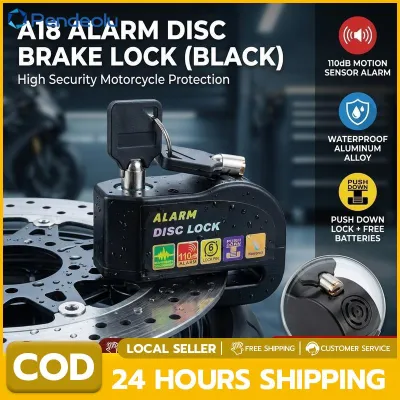
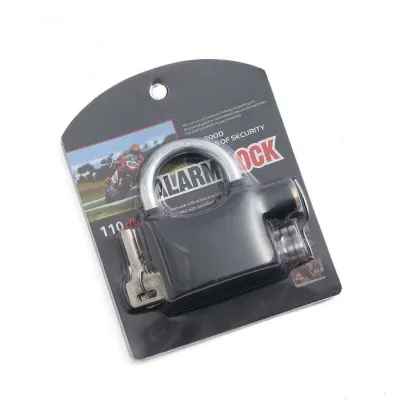
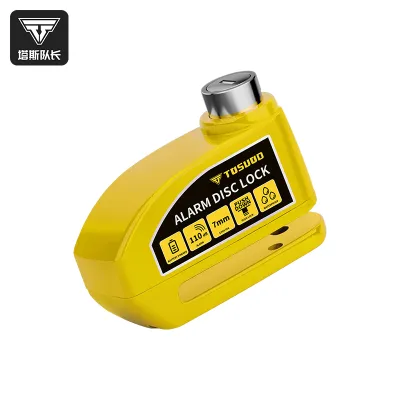
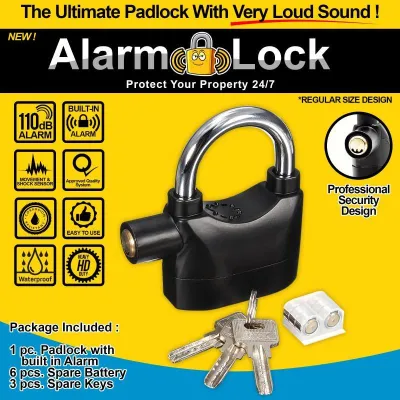
Prices are valid at publication and may change. Please refer to the product page for the latest price.
Disc locks are highly compact security devices designed to clamp directly onto your motorcycle’s brake rotor. They function by passing a hardened steel pin through one of the cooling holes in the disc brake. Once locked, the device physically prevents the wheel from rolling past the front forks or rear swingarm. Because they target the brake assembly, disc locks are incredibly small and lightweight, making them easy to carry in a pocket, tank bag, or under-seat compartment. However, they do not anchor the motorcycle to a fixed object, meaning a group of thieves could still lift the motorcycle into a utility vehicle.
Chain locks consist of a series of heavy, hardened steel links covered by a protective fabric sleeve to prevent scratching your motorcycle’s paint and wheels. An alarmed chain lock typically integrates the siren unit directly into the locking head or padlock. The primary advantage of a chain lock is its flexibility, which allows you to wrap the links around your motorcycle’s frame or wheel and secure it to a permanent fixture like a concrete post, steel railing, or ground anchor. The main trade-off is weight; a high-quality, secure chain is heavy and bulky, making it more challenging to transport on daily commutes.
U-locks, also known as D-locks, utilize a rigid, U-shaped steel shackle that secures into a straight locking crossbar. When equipped with an alarm, the sensor and siren are housed within the crossbar assembly. U-locks offer a sturdy compromise between the portability of a disc lock and the physical security of a chain. The rigid shackle is highly resistant to leverage attacks and can be looped through the wheel spokes, around the fork leg, or occasionally around narrow street fixtures. While less flexible than a chain, a U-lock is significantly lighter and easier to mount to your motorcycle’s frame using a dedicated bracket.
Critical Security and Usability Dimensions
Evaluating how these locks perform in daily use requires looking closely at three critical dimensions: portability, tool resistance, and how the alarm trigger mechanisms function in real-world environments.

Portability and storage capacity vary wildly among these three options. For riders of automatic scooters or underbone motorcycles, under-seat storage space is often limited. A disc lock easily fits into almost any small compartment, glove box, or even a jacket pocket, making it the most convenient option for riders who make frequent stops throughout the day. In contrast, carrying a heavy chain lock requires a top box, a tail bag, or a sturdy backpack, which can add physical strain during long rides. U-locks fall in the middle; they are too large for pockets but can often be strapped to a rear rack or secured inside a medium-sized backpack without adding excessive bulk.
Tool resistance is directly tied to the thickness and material composition of the lock. When shopping for any alarm lock, look for labels indicating hardened steel alloys, which are treated to resist manual hand tools. Disc locks feature short, shrouded pins (typically ranging from 5mm to 14mm in diameter) that leave very little exposed metal, making them extremely difficult to target with bolt cutters. Chain locks require thick, hexagonal or square links—ideally 10mm or larger—to resist manual bolt cutters, as round links are easier for tools to grip. U-locks rely on shackle thickness; a shackle of 13mm or thicker generally requires power tools like angle grinders to cut, providing excellent physical resistance against common street-theft tools.
Alarm trigger mechanisms rely on internal sensors to detect unauthorized movement. Most modern alarm locks use a combination of vibration, motion, and tilt sensors to trigger the siren. While high sensitivity is desirable to deter tampering, it can lead to frequent false alarms in busy urban areas. Heavy tropical downpours, strong winds, passing trucks with loud exhaust systems, or even stray animals bumping into the motorcycle can trigger a highly sensitive alarm. When comparing locks, look for models that feature a movement-delay trigger, which requires sustained movement or a secondary impact before sounding the full alarm, reducing nuisance noise for your neighbors.
Choosing Based on Your Parking and Riding Habits
Your daily routine and where you leave your motorcycle unattended should dictate the type of alarm lock you choose. Matching the lock’s physical properties to your parking environment ensures you get the right level of protection without unnecessary inconvenience.
If you regularly park on public streets, busy commercial districts, or unmonitored roadside areas, physical anchoring is highly recommended. In these high-risk environments, a chain lock with an alarm is the most effective choice. The visible presence of a thick chain wrapped around a concrete pillar or steel post acts as an immediate visual deterrent to opportunistic thieves. Even if a thief attempts to cut the chain, the integrated vibration sensor will trigger the alarm as soon as they begin tampering with the lock, drawing immediate public attention to the scene.
For daily commuting, quick errands, or parking in secure, monitored office garages, a disc lock with an alarm is often the most practical solution. When you are only stepping away from your motorcycle for a few minutes to enter a convenience store or bank, deploying a heavy chain lock can feel tedious. A disc lock can be slipped onto the brake rotor and armed in seconds. The loud siren provides peace of mind, ensuring that if anyone attempts to sit on your bike or roll it away while you are inside, you and nearby security guards will hear it immediately.
For long-term or overnight storage at home, especially in open carports or shared residential parking areas, combining physical mass with loud audible deterrence is the gold standard. Using a heavy-duty U-lock or chain lock to anchor the rear wheel to a permanent structure, combined with an alarmed disc lock on the front brake rotor, creates a multi-layered security system. This setup forces a thief to deal with two distinct physical barriers and an active audible alarm, significantly increasing the time and effort required to steal the vehicle and making it an highly unattractive target.
Verifying Alarm Specifications and Build Quality
Before purchasing an alarm lock, it is crucial to verify the technical specifications and build quality detailed on the product packaging or manufacturer’s manual. This ensures the lock can withstand both physical attacks and harsh environmental conditions.
First, check the audible deterrence rating, which is measured in decibels (dB). Most effective motorcycle alarm locks feature sirens rated between 110 dB and 120 dB. This volume level is loud enough to be painful up close and can easily cut through ambient city traffic noise. Additionally, examine the physical placement of the siren speaker holes on the lock body. High-quality designs place the speaker ports in recessed or downward-facing positions, making it difficult for a thief to quickly muffle the sound by covering the holes with tape, hands, or expanding foam.
Environmental protection is another critical factor, particularly in tropical climates characterized by intense heat, high humidity, and sudden monsoon downpours. Look for an explicit Ingress Protection (IP) rating on the product packaging. An IP65 rating indicates the lock is dust-tight and protected against water jets, while an IP67 rating means the internal electronics can survive temporary submersion in water. Avoid locks that do not specify a water-resistance rating, as moisture entering the battery compartment will quickly corrode the terminals, ruin the sensor, and cause the alarm to fail or trigger randomly.
Power management and battery accessibility should also influence your choice. Some alarm locks use replaceable button-cell batteries (such as LR44 or CR2), while others feature built-in rechargeable lithium-ion batteries charged via USB. Replaceable batteries often last longer between changes but require you to keep spares on hand and carefully seal the battery door to maintain water resistance. Rechargeable models offer convenience but require regular monitoring. Ensure the lock has a low-battery warning indicator, which typically sounds a unique sequence of short beeps when you arm the lock, signaling that it is time to charge or replace the power source.
Final Decision Framework: Which Lock Should You Get?
To finalize your decision, use this conditional framework to match your prioritized security needs, motorcycle specifications, and budget to the correct lock type:
- Choose a Disc Lock with Alarm if your primary concern is maximum portability, quick deployment during short daytime stops, and you have limited storage space on your motorcycle.
- Choose a Chain Lock with Alarm if you must park overnight or for extended periods in unmonitored public areas where physically anchoring your motorcycle to an immovable object is necessary to prevent lifting attacks.
- Choose a U-Lock with Alarm if you want a rigid, highly tool-resistant physical barrier that offers a balance of frame-level security and moderate portability without the extreme weight of a heavy chain.
Before making a purchase, you must physically verify your motorcycle’s compatibility with the lock. For disc locks, measure the diameter of the cooling holes on your brake rotor to ensure the lock’s pin (typically 6mm or 10mm) can pass through easily. For U-locks and chains, check the clearance between your wheel spokes, swingarm, and frame to ensure the shackle or links can loop through without pinching brake lines or damaging the paint.
Finally, evaluate the price-to-security ratio within your personal ₱ budget. While budget-friendly alarm locks exist on online marketplaces, investing in a lock made from certified hardened steel with a reliable, weatherproof electronic module is always more cost-effective than dealing with the devastating financial loss of a stolen motorcycle.
Frequently Asked Questions (FAQ)
Do I still need an alarm lock if my motorcycle has a built-in immobilizer?
Yes, a physical alarm lock is still highly necessary even if your motorcycle features a factory-installed electronic immobilizer. An immobilizer works by preventing the engine from starting without the correct key or key fob, which stops a thief from hotwiring the ignition and riding away. However, an immobilizer does not prevent thieves from physically rolling your motorcycle into a dark alley, pushing it away with another scooter, or lifting it entirely into the back of a van or utility truck.
An alarmed lock provides the essential physical and audible layers of security that an immobilizer lacks. The physical lock prevents the wheels from turning or anchors the frame to a post, making it impossible to roll or easily lift the bike. Simultaneously, the motion-activated alarm siren alerts bystanders and the owner the moment anyone attempts to move or tamper with the motorcycle, disrupting the theft attempt before the criminals can even try to bypass the electronic ignition system.
Community discussion
Share your experience or ask a question. Comments are reviewed before publication.