
Finding the right cp holder motowolf option for your motorcycle in the Philippines requires balancing your bike’s cockpit architecture, your smartphone’s physical dimensions, and your typical riding conditions. If you ride an underbone or a scooter with fully covered handlebars, a mirror stem mount is almost always your default choice. For street bikes, adventure motorcycles, or backbone models with exposed tubular bars, a handlebar clamp provides a highly stable, centered mounting position. Choosing the correct model ensures your phone remains secure through rough provincial roads, sudden urban potholes, and intense highway wind resistance.
Beyond mounting locations, you must match the physical width and thickness of your phone—including its protective case—to the clamp’s specific dimensions. High-end smartphones with sensitive optical image stabilization (OIS) systems also require dedicated vibration dampening to prevent permanent camera damage. While basic aluminum alloy models offer high structural durability, premium versions with integrated dampeners or charging ports cater to long-distance touring and delivery riders. Because product availability, regional pricing, and specific model variations can shift, always verify current stock, compatibility, and pricing with official Motowolf brand stores or authorized local retailers in the Philippines before making a final purchase.
Core Comparison Dimensions for Motowolf Phone Holders
To select the ideal mount, you must first understand the technical specifications that differentiate each model. The primary distinction lies in the mounting interface. Handlebar clamps attach directly to exposed metal tubes. These clamps require a specific handlebar diameter, typically ranging from 22mm to 32mm. If your bike has tapered handlebars, you must measure the exact diameter of the section where you plan to install the mount. Mirror stem mounts attach to the threaded base of your rearview mirrors. These are designed for mirror stems with standard M8 or M10 thread pitches. You must ensure the bracket’s hole matches your mirror’s bolt size and that there is sufficient clearance around the fairings for a secure installation.
Products mentioned in this guide
![[Original]MOTOWOLF CELLPHONE HOLDER FULL ALLOY / UNIVERSAL 360° ROTATABLE MOBILE PHONE HOLDER FOR MOTORCYCLE 1PC](https://img.lazcdn.com/g/p/3ffb81c7b3f0a60d6b62807ce3e2aa24.jpg_400x400q80.jpg_.webp)
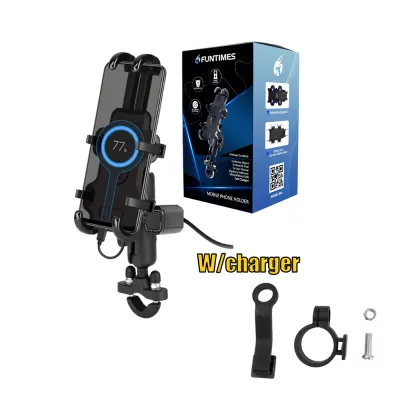
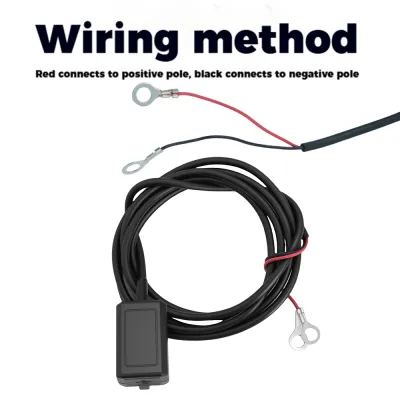
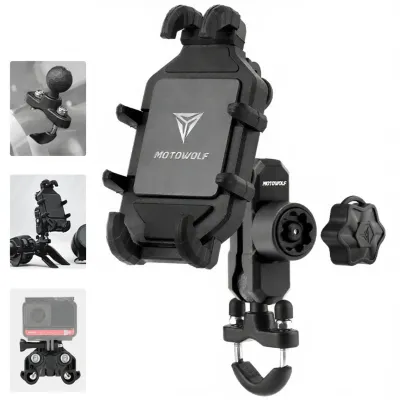
Prices are valid at publication and may change. Please refer to the product page for the latest price.
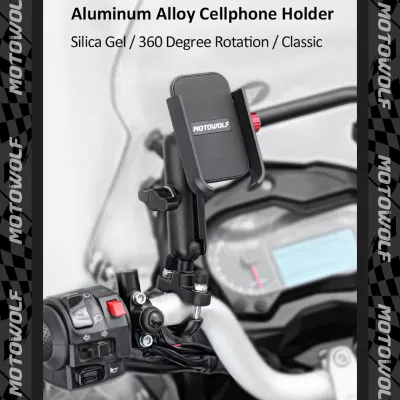
The clamp mechanism itself is another critical decision point. Motowolf designs generally fall into two categories: manual screw-tightened clamps and automatic quick-lock systems. Manual clamps use a threaded knob to compress the side grips against your phone. This design offers a highly secure, customizable fit for varying phone thicknesses, but it requires more time to mount and dismount your device. Quick-lock or auto-clamping designs use spring-loaded arms or one-way gears that snap shut when you press your phone against the center button. While highly convenient for frequent stops, you must carefully check the manufacturer’s maximum and minimum width and thickness limits. A phone case that is too thick or has an uneven back can prevent quick-lock mechanisms from engaging fully, risking a loose grip.
Material composition directly affects the longevity of your mount under harsh environmental conditions. Motowolf is widely known for utilizing CNC-machined aluminum alloy, which provides excellent structural rigidity, resistance to impact, and long-term durability against UV exposure. However, metal-on-metal contact can transmit high-frequency engine vibrations directly to your smartphone. This is where vibration control becomes essential. Modern smartphone cameras feature delicate mechanical gyroscopes for Optical Image Stabilization (OIS). Prolonged exposure to high-frequency engine harmonics can destroy these sensors, leading to blurry photos and broken focus mechanisms. When comparing models, check if the mount features integrated rubber dampening pads, or if it is compatible with a dedicated, spring-loaded vibration dampener accessory.
Comparing Motowolf Mounting Styles: Finding the Right CP Holder Motowolf Setup
Handlebar Clamp Models
Handlebar clamp models represent the classic, heavy-duty approach to mobile device mounting. These units utilize a split-ring clamp that wraps around the exposed metal tubing of your motorcycle’s handlebars, tightened down with hex bolts to prevent slipping. For riders in the Philippines navigating high-speed expressways like SLEX or NLEX, or tackling bumpy provincial roads, the direct mechanical connection of a handlebar clamp offers unmatched stability and minimal flexing.

Popular options in this category include the Motowolf MDL 2827 and MDL 2805 handlebar variations. The MDL 2827 features a robust aluminum alloy body with an adjustable mechanical screw clamp, making it highly versatile for various phone sizes. It typically supports handlebar diameters of 22mm, 25mm, and up to 28mm using included rubber spacers. These spacers serve a dual purpose: they adapt the clamp to thinner bars and provide a layer of friction that prevents the mount from rotating under wind pressure.
The primary limitation of handlebar clamp models is their compatibility. If you ride a modern scooter with fully enclosed plastic fairings—such as a Honda Click, Yamaha Mio, or Suzuki Burgman—there is no exposed metal tube to clamp onto. Attempting to modify fairings to expose the handlebar can void your vehicle’s warranty or compromise weatherproofing. For these setups, handlebar clamps are physically incompatible, and you must look toward mirror-mount alternatives.
Mirror Stem and Rearview Mounts
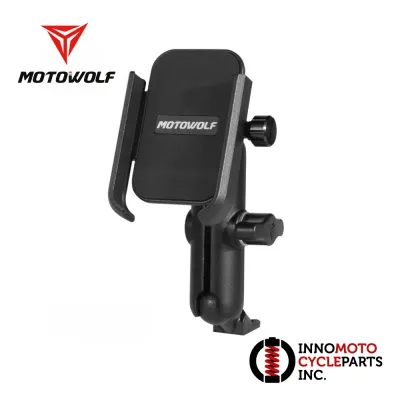
Mirror stem and rearview mounts solve the compatibility issue for scooters, underbones, and any motorcycle with limited handlebar space. These brackets feature a flat metal tab with an integrated hole designed to slide over the threaded shaft of your rearview mirror. Once the mirror is screwed back into its mount on the master cylinder or handlebar bracket, it clamps the phone holder firmly in place.
Models like the mirror-mount version of the Motowolf MDL 2827 or the MDL 2811 are widely used across the Philippines. They position the smartphone higher up and closer to the rider’s natural line of sight, which is highly beneficial when navigating busy city streets using GPS applications. This elevated position reduces the distance your eyes must travel from the road to the screen, enhancing overall situational awareness.
However, these mounts require careful verification of thread specifications. Most Japanese motorcycles use standard M10 threads, but some models, particularly from Yamaha, use a left-hand thread on the right-side mirror. You must ensure the mounting bracket does not interfere with the mirror’s adjustment or the operation of your front brake master cylinder. Additionally, because mirror stems are thinner and longer than handlebars, they are more susceptible to low-frequency engine vibrations, which can cause the phone screen to shake or blur at certain engine RPMs.
Specialty and Charging-Compatible Models
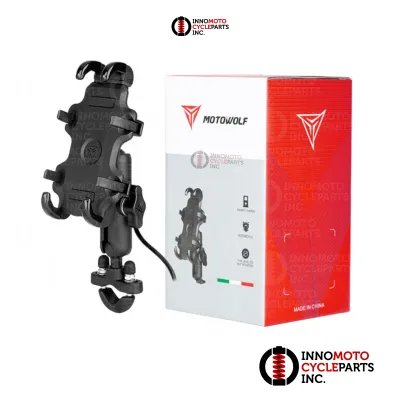
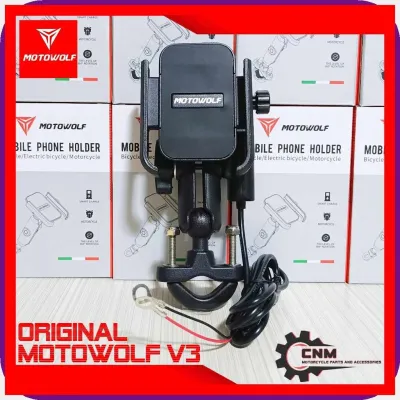
For riders who spend long hours on the road, such as delivery professionals or long-distance touring enthusiasts, specialty Motowolf models with integrated charging capabilities offer a practical solution. These units, such as the MDL 2821 charging variants, connect directly to your motorcycle’s 12V battery system, converting the power to a stable 5V USB output or providing wireless charging functionality.
While having a continuous power source eliminates the anxiety of a dying phone battery while navigating, it introduces specific trade-offs. The integrated wiring and transformer modules add bulk and weight to the mounting setup, requiring a very secure installation to prevent loosening over time. Furthermore, charging a smartphone generates internal heat. When combined with the intense, direct tropical sunlight of the Philippines, a phone mounted in a charging holder can quickly reach its thermal limits.
Fully enclosed waterproof cases represent another specialty category. These cases shield your device from sudden monsoon downpours, but they trap heat. Running a GPS application while simultaneously charging your phone inside a sealed plastic case under 35-degree weather will almost certainly trigger thermal throttling, causing your phone to shut down to protect its battery. If you choose an enclosed waterproof model, use it strictly during heavy rain and avoid charging your device while it is sealed inside.
Installation, Safety, and Tropical Weather Considerations
Before purchasing any phone mount, you must perform a thorough physical inspection of your motorcycle’s cockpit. To verify handlebar compatibility, use a digital caliper or a flexible tape measure to determine the exact outer diameter of your handlebar at the intended mounting point. Do not guess the size, as even a 1mm difference can result in a loose mount that slips during acceleration or a clamp that cannot be bolted shut. For mirror mounts, remove your mirror and inspect the thread diameter (typically 8mm or 10mm) and the thread direction. Ensure that the mounting bracket’s tab thickness does not prevent the mirror stem from threading deeply enough into its socket to remain secure.
Vibration management is a critical safety consideration for your smartphone’s internal hardware. If your phone features an OIS-enabled camera, you should prioritize Motowolf models that explicitly incorporate rubberized dampening joints or purchase the separate Motowolf vibration dampener module. This accessory sits between the mounting clamp and the phone cradle, using high-tensile silicone or rubber dampers to absorb high-frequency engine harmonics. Never mount an OIS-equipped phone directly to a rigid, all-metal bracket without some form of dampening, as even a short ride on a high-vibration single-cylinder motorcycle can permanently ruin your camera’s autofocus capabilities.
The tropical climate of the Philippines presents unique challenges for both your phone and the mounting hardware. High humidity and salty coastal air can accelerate corrosion on non-treated metals and fasteners. Regularly inspect your Motowolf mount’s steel bolts and pivot points, applying a light coat of anti-corrosion spray or lubricant to prevent rust. Additionally, direct sunlight can degrade plastic components over time, making them brittle. While Motowolf’s aluminum models are highly resistant to UV damage, any plastic adjustment knobs or rubber liners should be checked periodically for signs of cracking or hardening.
To protect your smartphone from thermal damage during hot midday rides, position the mount in a way that allows maximum airflow around the back of the device. Avoid placing the phone directly behind a tall, solid windshield where hot engine air can pool. If you are caught in a sudden tropical thunderstorm, ensure your phone has an adequate water-resistance rating (such as IP67 or IP68) before exposing it to the rain. If your phone is not water-resistant, use a dedicated waterproof pouch or remove the phone from the mount entirely and store it in a dry compartment until the weather clears.
Final Decision Framework: Which Motowolf Model to Choose
To simplify your purchasing decision, evaluate your riding habits and motorcycle configuration against the following conditional guidelines:
- Choose a Handlebar Clamp Model if:
- Your motorcycle features an exposed, tubular handlebar with a diameter between 22mm and 32mm.
- You prioritize maximum structural stability and want the phone centered directly over your triple clamp.
- You ride at high speeds on expressways where wind resistance requires a highly rigid mounting system.
- Choose a Mirror Stem Model if:
- You ride a scooter, underbone, or touring bike with fully enclosed handlebars or fairings that cover the steering column.
- Your handlebar space is fully occupied by other accessories like action camera mounts, auxiliary light switches, or GPS units.
- You prefer the phone positioned higher up, closer to your natural line of sight for easier navigation.
- Verify First if:
- Your smartphone has a sensitive camera with Optical Image Stabilization (OIS). If so, ensure you select a Motowolf model with an integrated vibration dampener or purchase a compatible aftermarket dampening accessory.
- Your phone case is exceptionally thick, rugged, or features a built-in ring holder. Measure the total thickness of your phone with the case on to ensure it fits within the maximum depth limit of the clamp you intend to buy.
- You plan to use a charging model. Check your motorcycle's battery health and ensure the electrical wiring is routed safely away from hot engine components and steering pinch points.
Frequently Asked Questions (FAQ)
Will a Motowolf holder fit my specific scooter or underbone motorcycle?
Most modern scooters and underbones in the Philippines, such as the Honda Click, Yamaha Aerox, or Suzuki Raider, cannot accommodate a standard handlebar clamp because their handlebars are encased in plastic fairings. For these motorcycles, you should choose a Motowolf mirror stem mount. This bracket installs directly under the rearview mirror bolt, requiring no modification to your bike’s plastic bodywork. Always verify whether your specific motorcycle uses M8 or M10 mirror threads, and check if you need a thread adapter—especially for Yamaha models which often feature a reverse-threaded right-side mirror.
Can I easily use a Motowolf phone holder while wearing riding gloves?
Your ease of use depends heavily on the locking mechanism of the specific Motowolf model. Manual screw-tightened models require you to spin a small metal knob to secure or release your phone, which can be clumsy and difficult to operate while wearing thick leather or armored riding gloves. If you frequently stop and need to remove your phone quickly, look for Motowolf models featuring a quick-release button or an automatic gravity-locking mechanism. These designs allow you to insert or remove your device with one hand, even while wearing heavy protective gloves, by simply pressing a central release lever.
Community discussion
Share your experience or ask a question. Comments are reviewed before publication.