
Finding the right rxr full face helmet in the Philippines requires balancing your budget with your daily riding environment. Whether you are navigating the congested streets of Metro Manila or cruising along provincial highways, your helmet is your primary line of defense. RXR has established itself as a highly accessible brand in the local market, offering protective gear that fits various price points without compromising on mandatory safety baselines.
To make the best purchase, you must look beyond aesthetic graphics and focus on certified impact protection, proper physical fit, and functional features that match your specific riding habits. This guide breaks down what you can expect from different RXR price tiers, how to verify safety credentials, and how to choose a model that keeps you safe and comfortable under the tropical sun.
Quick Guide: Aligning Your Budget with RXR Helmet Tiers
When shopping for an rxr full face helmet, understanding what each price tier offers helps you set realistic expectations. Instead of focusing on volatile daily retail prices, riders should view the RXR lineup through three conceptual budget tiers: entry-level, mid-range, and upper-tier models. Each step up the price ladder introduces specific upgrades in material quality, rider comfort, and functional convenience.
Products mentioned in this guide
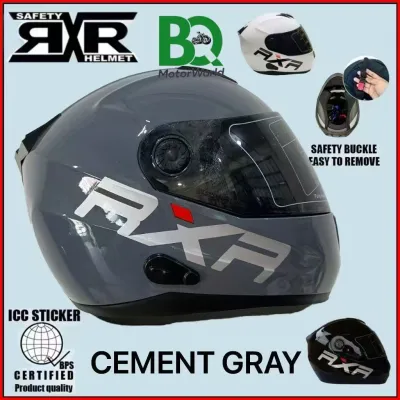
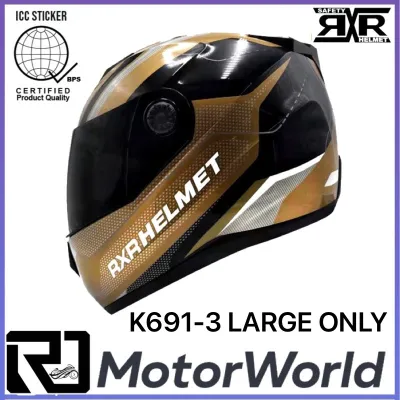
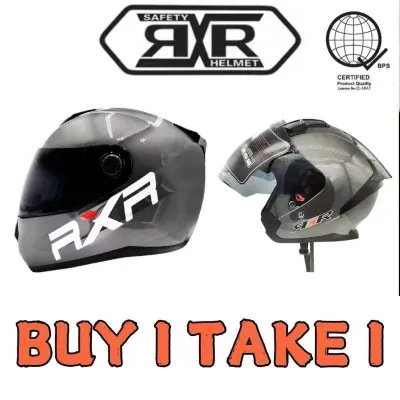
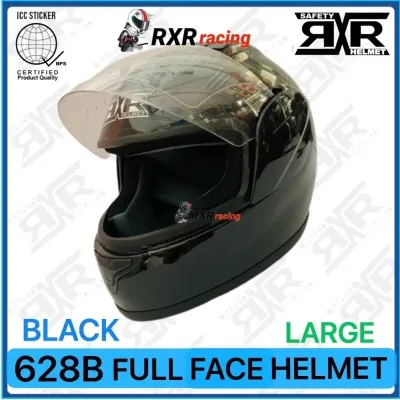
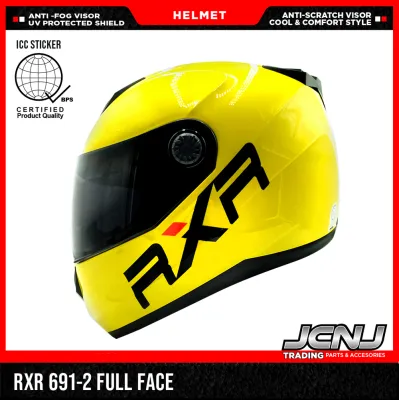
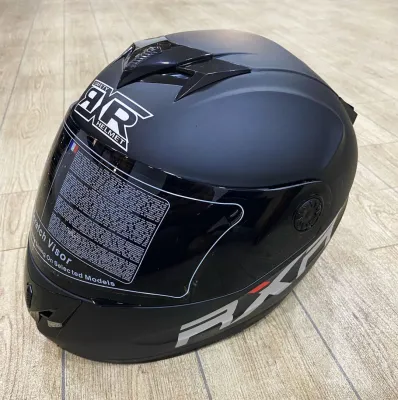
Prices are valid at publication and may change. Please refer to the product page for the latest price.
Entry-Level Models RXR’s entry-level full-face helmets are designed for maximum affordability while meeting basic road safety mandates. These models typically feature a standard Acrylonitrile Butadiene Styrene (ABS) plastic shell, a single clear polycarbonate visor, and basic top and chin ventilation ports. While they are slightly heavier and have fixed or partially removable comfort liners, they serve as excellent options for short-distance daily commuting, low-speed city riding, or as a reliable spare helmet for pillion passengers.
Mid-Range Models Moving up to the mid-range tier introduces features that significantly enhance daily ride quality. In this bracket, you will generally find dual-visor systems, which feature a drop-down inner sun shield to protect your eyes from intense tropical glare without needing to swap visors. These helmets also offer fully removable, washable, and moisture-wicking inner liners, which are essential for maintaining hygiene in hot and humid climates. The ventilation systems in mid-range models are more advanced, utilizing multi-port channels to pull cool air in and push hot air out.
Upper-Tier and Flagship Models At the top of the RXR spectrum, helmets offer refined aerodynamics, lighter shell constructions, and superior noise isolation. These models often feature quick-release visor mechanisms that allow tool-free shield changes, aerodynamic rear spoilers to reduce neck fatigue at highway speeds, and dedicated internal cutouts to accommodate Bluetooth intercom speakers. The paint finishes and graphic designs on these models are also more durable, utilizing UV-resistant clear coats that prevent fading under intense sunlight.
The Core Decision Logic Your primary budget goal should always be securing the highest level of safety and the best physical fit first. A fancy graphic design or a bundled accessory should never tempt you to buy a helmet that does not fit your head shape or lacks legitimate safety markings. Set a strict maximum budget for your purchase, prioritize certified protection and fit, and treat features like tinted visors, integrated spoilers, or complex graphics as secondary “nice-to-have” options.
Non-Negotiable Safety Standards and Certification Checks
Regardless of how much you decide to spend on your rxr full face helmet, safety is a non-negotiable metric. In the Philippines, the Land Transportation Office (LTO) and the Department of Trade and Industry (DTI) strictly regulate protective headgear. Every road-legal motorcycle helmet must display the appropriate safety credentials to prove it can protect your skull during an impact.

Verifying the ICC and PS Marks The most critical marking to look for on any helmet sold in the Philippines is the Import Commodity Clearance (ICC) sticker or the Philippine Standard (PS) mark. These stickers are issued by the Bureau of Philippine Standards (BPS) after rigorous sample testing. A genuine ICC sticker features a unique serial number and a holographic security pattern that shifts under light. Always inspect this sticker closely; avoid helmets with printed, non-holographic replicas, as these are counterfeit and indicate an uncertified product.
International Standards: DOT and ECE In addition to local certifications, reputable RXR helmets carry international safety ratings, most commonly the United States Department of Transportation (DOT) FMVSS 218 standard. Some upper-tier models may also carry the Economic Commission for Europe (ECE) 22.05 or 22.06 certification. These labels are typically painted or permanently decaled onto the rear exterior of the helmet shell. They indicate that the helmet has undergone standardized drop tests, penetration tests, and retention system stress tests.
Checking the Manufacturing Date An often-overlooked safety detail is the helmet’s manufacturing date. The shock-absorbing Expanded Polystyrene (EPS) foam liner inside a helmet naturally degrades over time, even if the helmet sits unused in a box. Locate the manufacturing date stamp, which is usually printed on a white tag sewn onto the chin strap or stuck directly onto the EPS liner beneath the comfort padding. Try to purchase helmets manufactured within the last 12 to 18 months to maximize the usable lifespan of the protective materials.
The Danger of Novelty Helmets Never confuse a certified full-face helmet with cheap novelty or “fashion” helmets. Novelty helmets lack the dense EPS foam liner required to absorb impact energy, featuring only a thin layer of soft comfort foam inside a flimsy plastic shell. In a crash, a novelty helmet will split open or transmit the entire force of the impact directly to your head. Investing in a certified RXR full-face model ensures you have a structurally sound energy-management system protecting your brain.
Inspecting the Chin Strap and Retention System A helmet can only protect you if it stays securely on your head during an accident. Inspect the retention system carefully before buying. RXR helmets generally use either a micrometric quick-release buckle or a classic double-D ring system. The micrometric buckle offers convenient, fast fastening for daily commuters, while the double-D ring provides the most secure hold and is highly resistant to pulling forces. Whichever system your chosen model uses, pull firmly on the strapped buckle to ensure the teeth lock perfectly and do not slip under tension.
Matching Helmet Features to Your Daily Riding Needs
Your daily riding environment dictates which helmet features are essential and which ones you can comfortably bypass to save money. By matching your specific riding habits to the right feature set, you can avoid overpaying for technology you do not need, or conversely, avoid the discomfort of a helmet ill-suited to your commute.
City Commuting in High Traffic If your daily ride consists of navigating congested metropolitan traffic, your primary challenges are heat, low-speed visibility, and neck fatigue. For this environment, look for an RXR model that offers a wide eyeport for excellent peripheral vision, allowing you to spot merging motorcycles and pedestrians easily. Adequate chin and forehead ventilation is crucial to keep air moving when you are stopped at traffic lights. A lightweight shell is also a priority, as constant stop-and-go head movements can quickly strain your neck muscles if your helmet is excessively heavy.
Long-Distance Provincial Touring Riders who frequently travel long distances or traverse provincial highways require a different set of features. At high speeds, aerodynamic stability becomes vital; look for helmets with integrated rear spoilers that reduce wind buffeting and keep your head steady. Noise reduction is another key factor, as prolonged exposure to loud wind noise causes rider fatigue and hearing damage. Dual-visor configurations are highly recommended for touring, allowing you to quickly drop an inner sun shield when riding against a glaring afternoon sun and flip it up instantly when entering shaded mountain passes or tunnels. Ensure the main visor is compatible with anti-fog inserts or has an effective anti-fog coating to prevent condensation during early morning rides or sudden downpours.
Aggressive or Track-Style Riding For those who participate in track days or ride more aggressively, maximum structural integrity and retention security are paramount. Prioritize models constructed with advanced polycarbonate blends or reinforced shells if available in the upper tiers. A double-D ring chin strap is a strict requirement for track use due to its fail-safe mechanical design. Additionally, look for helmets that feature emergency quick-release cheek pads, which allow emergency medical personnel to safely remove your helmet without putting unnecessary strain on your neck in the event of an accident.
The Feature Compromise Matrix If you need to lower your budget, you can make smart compromises without sacrificing safety. Use this guide to decide what features to keep or skip:
- Keep: High-quality EPS liner, genuine ICC/DOT certifications, fully removable and washable comfort liners, and functional ventilation ports.
- Skip: Complex multi-colored graphic designs (choose solid gloss or matte black to save money), pre-installed Bluetooth systems (buy a basic helmet and install a separate, budget-friendly intercom later), and photochromic visors (stick to a standard clear visor paired with sunglasses or a dual-visor system).
How to Verify Fit, Comfort, and Build Quality
A helmet’s safety rating is meaningless if it does not fit your head correctly. An ill-fitting helmet will either cause excruciating pain during long rides or slip off your head during a crash. Whether you are purchasing your rxr full face helmet from a local physical shop or ordering from an online marketplace, you must follow a systematic process to verify fit and build quality.
Measuring Head Sizing and Shape Before looking at models, measure your head circumference. Wrap a flexible measuring tape around your head, positioning it about 2.5 centimeters above your eyebrows and just above your ears. Compare this measurement in centimeters to RXR’s specific sizing chart, as helmet sizes vary significantly between brands. Additionally, consider your head shape. Most Asian riders have an intermediate oval or round oval head shape. If a helmet is designed for a narrow oval shape, it will create painful pressure points on your forehead and temples, even if the circumference measurement is technically correct.
Performing the Physical Fit Test When trying on the helmet, keep it on your head for at least 10 to 15 minutes to allow the interior padding to compress slightly. A properly fitting full-face helmet should feel snug all the way around your head, with even pressure and no localized hot spots. Your cheeks should be pushed up slightly—often referred to as the “chipmunk cheek” fit—but you should not be able to easily bite your tongue or inside cheeks. Next, perform the “roll-off” test: fasten the chin strap securely, grasp the rear base of the helmet shell with both hands, and try to pull the helmet forward and off your head. If the helmet slides off or shifts significantly over your eyes, it is too large or the strap is improperly adjusted.
Precautions for Online Buyers Buying online offers convenience and often lower prices, but it requires extra vigilance. Only purchase from official brand stores or highly rated, authorized local distributors on major e-commerce platforms. Always read the store’s return and exchange policy carefully to ensure you can swap the helmet if the fit is incorrect. Before clicking the checkout button, send a direct message to the seller requesting actual, unedited photos of the specific helmet they plan to ship. Specifically ask for clear photos of the holographic ICC sticker, the DOT decal, and the manufacturing date tag to verify authenticity.
Evaluating Build Quality and Hardware Once you have the helmet in hand, conduct a thorough physical inspection before riding. Open and close the main visor repeatedly; the ratchet mechanism should feel crisp and hold the visor securely in various partially open positions. Check the rubber weather stripping around the eyeport; there should be no gaps when the visor is fully closed, as any gap will allow rainwater to seep inside during a tropical downpour. Examine the interior comfort liner, ensuring the stitching is neat and the plastic snaps that hold the liner to the shell are sturdy and click firmly into place.
Hidden Costs, Accessories, and Long-Term Maintenance
The purchase price of your helmet is not the only cost you need to factor into your riding budget. Understanding the total cost of ownership, along with proper maintenance practices, will help you maximize your investment and ensure your helmet remains protective throughout its lifespan.
Factoring in Accessories and Shipping When budgeting, remember to account for essential accessories that may not come standard with entry-level or mid-range RXR models. If you ride in rainy or humid conditions, an anti-fog lens insert is a highly recommended addition to prevent your visor from misting up. You may also want to purchase an extra tinted or mirrored visor for daytime riding, or replacement cheek pads to customize the fit as the original padding compresses over time. If you are ordering online, remember to calculate shipping fees, handling charges, and potential local taxes, which can add a notable amount to your final bill.
Proper Cleaning and Maintenance Routines To keep your helmet smelling fresh and functioning correctly in the hot Philippine climate, establish a regular cleaning routine. Always check the manufacturer’s care instructions before starting. Remove the comfort liner and cheek pads, and hand-wash them in warm water using a mild, diluted soap, such as baby shampoo. Avoid harsh laundry detergents, bleach, or fabric softeners, as these chemicals can damage the moisture-wicking fabric and cause skin irritation when you sweat. For the outer shell and visor, use only a clean microfiber cloth and warm water. Never use glass cleaners, dish soap, or petroleum-based solvents, as these can chemically degrade the polycarbonate shell and make it brittle, severely reducing its impact resistance.
The Replacement Cycle: When to Retire Your Helmet Helmets do not last forever. Under normal riding conditions, the EPS foam liner slowly degrades due to exposure to hair oils, sweat, cosmetics, and ambient humidity. Industry safety standards recommend replacing your helmet every 3 to 5 years from the date of first use, or 7 years from the date of manufacture. More importantly, you must replace your helmet immediately after any impact or if it is dropped from a significant height onto a hard surface. The EPS liner is designed to compress once to absorb impact energy; once compressed, it loses its protective capability, even if the outer shell looks completely undamaged.
Frequently Asked Questions (FAQ)
Is it safe to buy a second-hand RXR full-face helmet to save money?
No, buying a second-hand helmet is highly discouraged and poses a severe safety risk. You cannot verify the helmet’s history; it may have been involved in a crash or dropped from a height, causing internal structural damage to the EPS liner that is invisible from the outside. Additionally, the protective foam may have already degraded from the previous owner’s sweat and hair oils, or the helmet may have exceeded its safe lifespan. It is always far safer to buy a brand-new, entry-level, certified RXR helmet than a used premium model of questionable integrity.
Do more expensive RXR helmets offer better crash protection?
Not necessarily. Every legitimately sold RXR helmet that carries a genuine ICC sticker or DOT certification has passed the same rigorous baseline impact absorption and penetration tests. This means they all provide the legally required minimum level of head protection during an accident. When you pay more for an upper-tier RXR helmet, you are primarily paying for enhanced comfort features, lighter shell materials that reduce neck fatigue, superior aerodynamic stability, reduced wind noise, better ventilation channels, and more durable visor mechanisms, rather than a guaranteed higher survival rate in a crash.
Community discussion
Share your experience or ask a question. Comments are reviewed before publication.