
Finding the right diagnostic tool for your vehicle or home electrical system can be challenging when faced with dozens of technical specifications, but choosing the right Sanwa tester depends entirely on matching the tool’s measurement functions, safety ratings, and form factor to your specific diagnostic environment. Whether you are troubleshooting a stubborn parasitic drain on a 12V car battery in a humid garage or testing a 220V household outlet, selecting the correct digital, analog, or clamp-on model ensures accurate readings and personal safety. In tropical climates like the Philippines, where high humidity and heat can accelerate wire corrosion and insulation breakdown, having a reliable multimeter is an essential investment for both DIY enthusiasts and professional technicians. A mismatch in specifications can lead to inaccurate diagnoses or, worse, damaged vehicle electronics, making it crucial to understand how different models align with your practical needs.
What type of electrical testing will you primarily perform?
To narrow down your choice, you must first identify whether your work involves low-voltage automotive circuits, standard residential mains, or high-energy industrial systems. Each environment presents distinct voltage levels, current types, and safety hazards that dictate the type of tester required.
For automotive diagnostics, your primary focus is on 12V and 24V direct current (DC) systems. You will frequently test battery voltage, alternator charging outputs, sensor signals, and wiring harness continuity. Because modern vehicles are packed with sensitive electronic control units (ECUs), your tester must be capable of measuring low voltages with high precision without introducing electrical noise. It is vital to remember the safety boundary: always consult the vehicle’s original service manual before probing sensitive circuits, especially those related to restraint systems like airbags or high-voltage hybrid and electric vehicle powertrains. For hybrid or electric vehicles, standard low-voltage automotive practices do not apply, and you must verify that your tool and training meet the high-voltage safety requirements specified by the manufacturer.
Products mentioned in this guide
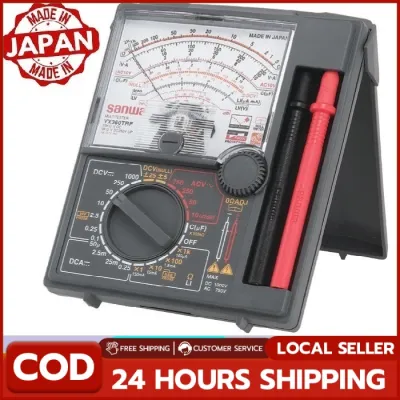
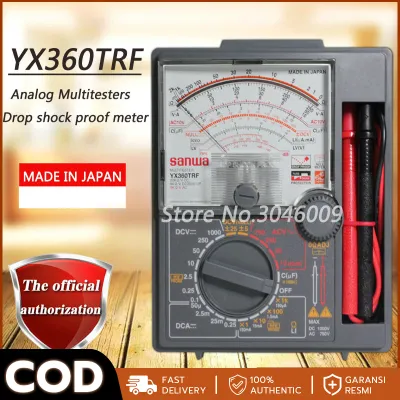
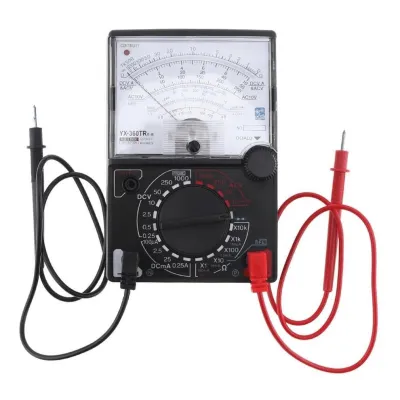
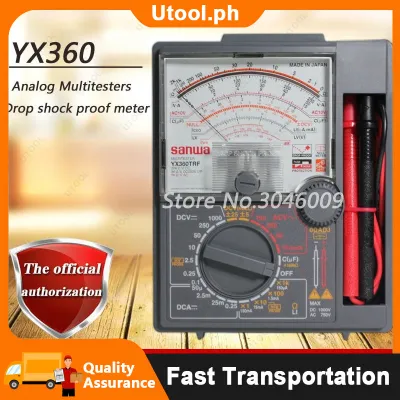
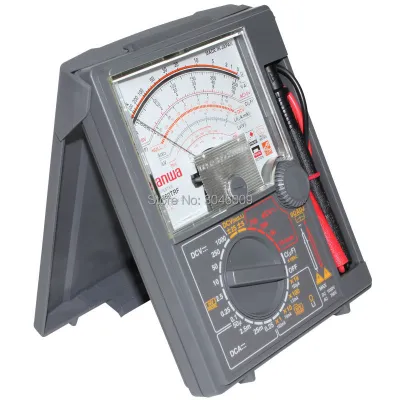
![[Fast Delivery] Sanwa YX360TRF Analog Multi-Tester Multi-Meter Made in JAPAN Analogue Multitester Multimeter DN](https://img.lazcdn.com/g/p/66f9ab4f884c715e99ee36d59c6e8d58.jpg_400x400q80.jpg_.webp)
69 Lazada user ratings
Ideal for weak current circuits, Compact and portable, Precise analog meter, Compact and portable, Drop-proof design, Low voltage high resis…Read full reviewShow less
Ideal for weak current circuits, Compact and portable, Precise analog meter, Compact and portable, Drop-proof design, Low voltage high resistance,
📏Accuracy: Precise voltage readings, Easy to use design,
SANWA DAW...salamat sanwai😀
Easy to use design,
51 Lazada user ratings
🛠️Durability:ok material use. 👌Ease of Use:verry easy to use. 🔨Durability:ok material use but not fixed at the right side.
Great value for the price, looks good and durable considering the cheap price..hope will last.
🛠️Durability:looks durable 👌Ease of Use:quiet handy 📏Accuracy:its accurate though
need ko po replacement ng same na item dont need a refund please thank you
My order is a SANWA multi tester but you me a Sanwai? What is that?
3 Lazada user ratings
Nagsayang kng nang pera ang makabili kung hindi sira ang unit di ma calibrate sa ohms settings mula x1 to x1k nasa gitna lang pag e calibrat…Read full reviewShow less
Nagsayang kng nang pera ang makabili kung hindi sira ang unit di ma calibrate sa ohms settings mula x1 to x1k nasa gitna lang pag e calibrate, pati voltage readings ang layu. Oo what you pay for less is what you get in short INFERIOR product. Sana naman ying pinadala tiniest nyu muna kahit 300 plus lng ang presyo, langhiya mapaaga agad ang tapon ng product nato sa basurahan. hitsura lng okey nilagay pa sanwa yun pala ang sa actual sanwai.
not working.battery installed.
124 Lazada user ratings
Easy-to-read analog display, Compact and lightweight tool, Easy-to-read analog display, Multi-purpose electrical tester, Includes test pen p…Read full reviewShow less
Easy-to-read analog display, Compact and lightweight tool, Easy-to-read analog display, Multi-purpose electrical tester, Includes test pen pair,
need to check all electrical lines in our ancestral house especially since a lot of residential fires are happening everywhere.
Received the item in good shape but the meter does not return to the left. Maybe this has partial damage in the meter.
Portable and durable design, Precise voltage measurements, Compact and lightweight tool,
Built-in overload protection, Precise voltage measurements, Measures decibels for sound,
42 Lazada user ratings
🛠️Durability:9 👌Ease of Use:10 📏Accuracy:9 Packed properly and arrived in good condition. Fast delivery, Durable materials, Good packaging, E…Read full reviewShow less
🛠️Durability:9 👌Ease of Use:10 📏Accuracy:9 Packed properly and arrived in good condition. Fast delivery, Durable materials, Good packaging, Easy to use, The brand is good. Thank you Lazada.
Accurate measurements, Reliable brand, Good packaging, Easy to use, ayos na ayos thank you seller. thank you din ky kuya rider
The quality of the product is very poor, totally not working
Accurate measurements,
working naman maganda
Prices are valid at publication and may change. Please refer to the product page for the latest price.
For household repairs, the electrical environment shifts to alternating current (AC) mains, which typically operate at 220V to 230V in the Philippines. Common tasks include testing wall outlets, checking light switches, troubleshooting home appliances, and verifying circuit breaker connections. These tasks require a tester that can safely handle higher AC voltages and provide clear continuity indications, such as an audible buzzer, to help you trace wiring paths through walls or conduit.
Industrial or heavy-duty maintenance involves working with high-voltage, three-phase AC systems, industrial motors, and complex control panels. This environment demands robust testers with advanced transient protection to handle sudden voltage spikes safely. If your workflow spans multiple environments, you will need a versatile multi-purpose meter, but if you specialize in one area, choosing a dedicated model tailored to that specific voltage and current range will provide the most accurate and efficient diagnostic experience.
How do Sanwa’s digital and analog testers differ in practical use?
Digital multimeters provide precise, numerical readouts and high input impedance to protect sensitive electronics, while analog needle testers excel at showing real-time voltage fluctuations and trends. Choosing between them depends on whether you need exact decimal values or a visual representation of a changing signal.

Digital testers are the modern standard for most electrical work. They feature clear liquid crystal displays (LCDs) that eliminate the parallax error common with analog dials, allowing you to read exact values instantly. Many digital models incorporate True RMS (Root Mean Square) technology, which is essential for obtaining accurate AC voltage and current readings on non-linear loads. Non-linear loads are common in modern homes and vehicles, including LED lighting drivers, computer power supplies, and variable-speed motors. A standard mean-responding meter can miscalculate these distorted waveforms by up to 40 percent, whereas a True RMS digital meter provides a highly accurate calculation.
Another critical advantage of digital testers is their high input impedance, typically rated at 10 megaohms or higher. This high resistance prevents the meter from drawing significant current from the circuit under test, which is crucial when diagnosing sensitive automotive ECUs or computer circuits. Using a low-impedance meter on these circuits can overload and permanently damage the delicate microprocessors inside the vehicle’s computer.
Analog testers, characterized by a physical needle sweeping across a printed scale, remain highly valued for specific troubleshooting scenarios. The physical needle reacts instantly to voltage changes, making it much easier to observe rapid fluctuations, capacitor charging and discharging cycles, or intermittent contact issues that might appear as a confusing blur of numbers on a digital screen. Analog meters also perform basic continuity and resistance checks without relying heavily on battery power, as the needle movement for voltage measurements is powered by the circuit being tested. However, they lack the high input impedance of digital meters, meaning they should generally be avoided when working on modern vehicle computers or delicate electronic boards.
When should you choose a Sanwa clamp meter over a standard probe multimeter?
You should choose a clamp meter when you need to measure high electrical current safely without breaking the circuit, whereas a standard probe multimeter is better suited for precise voltage, resistance, and low-current diagnostics. The decision hinges on the physical access to the conductors and the magnitude of the current you expect to measure.
Clamp meters operate by measuring the magnetic field generated by alternating or direct current flowing through a single conductor. To use a clamp meter, you simply open the spring-loaded jaws and clamp them around a single wire. This method is incredibly safe and convenient for high-current applications, such as measuring starter motor draw during cranking (which can easily exceed 100 amperes) or verifying the total output of an alternator under load. Because you do not have to cut the wire or disconnect a terminal to insert the meter in series, you eliminate the risk of creating dangerous electrical arcs or damaging high-current connections.
Standard probe multimeters, by contrast, require you to connect the test leads in series with the circuit to measure current. This means you must physically disconnect a wire or terminal and route the current through the meter itself. Most standard multimeters are limited to a maximum current of 10 amperes for short durations, making them unsuitable for heavy-duty automotive or household appliance current testing. However, probe multimeters are far better suited for measuring low-current signals, such as milliampere-level sensor outputs or parasitic battery drains when the vehicle is turned off.
Physical space is another major consideration in your choice. Modern engine bays are increasingly cramped, leaving very little room to maneuver. Clamping a bulky meter around a single wire deep inside a tightly bound wiring harness can be extremely difficult, if not impossible, without stripping back the protective loom. In these tight spaces, slim probe leads are much easier to insert into connector backs or terminal blocks. For a well-rounded diagnostic toolkit, many technicians use a standard probe multimeter as their primary diagnostic tool and supplement it with a dedicated clamp meter for high-current testing.
Which safety ratings and durability specs must you verify before buying?
Before purchasing any tester, you must verify its Overvoltage Installation Category (CAT rating) and environmental protection (IP rating) to ensure it can withstand the electrical energy and physical conditions of your workspace. Using an under-rated meter can lead to catastrophic tool failure or severe personal injury.
The International Electrotechnical Commission (IEC) defines four CAT ratings (CAT I through CAT IV) based on the potential transient overvoltage (voltage spikes) a tool might encounter in different parts of an electrical system. CAT II is designed for single-phase receptacle-connected loads, such as household appliances and portable tools. CAT III covers the building distribution level, including lighting panels, feeders, short branch circuits, and three-phase distribution systems. CAT IV is the most stringent rating, applying to the origin of the installation, such as utility service entrances, overhead lines, and electricity meters.
For household electrical work in the Philippines, where the standard voltage is 220V to 230V, a CAT III rated meter is highly recommended if you plan to test main distribution panels or circuit breakers. While a CAT II meter might suffice for testing a simple desk lamp, working closer to the service entrance exposes you to much higher potential energy spikes. In automotive environments, although standard 12V or 24V batteries are low voltage, transient spikes from ignition coils or alternator load dumps can be surprisingly high. Furthermore, if you work on modern hybrid or electric vehicles, you are dealing with high-voltage battery packs that can exceed 400V DC, requiring a minimum of a CAT III or CAT IV rated meter as specified by the vehicle manufacturer.
Durability and environmental protection are equally important, especially in tropical climates characterized by high humidity, heavy seasonal rains, and dusty garage environments. Look for the Ingress Protection (IP) rating on the tester. An IP rating, such as IP54 or IP67, indicates how well the meter’s casing prevents dust and moisture from entering the internal circuitry. Moisture ingress can cause internal corrosion, leading to inaccurate readings or short circuits that compromise the meter’s safety.
Finally, always verify the type of fuses used inside the meter. High-quality testers utilize high-energy ceramic fuses rather than cheap glass fuses. Ceramic fuses are filled with sand designed to extinguish an electrical arc if you accidentally attempt to measure voltage while the test leads are plugged into the current measurement ports. This safety feature prevents the meter from exploding in your hand, highlighting why you should never replace a blown ceramic fuse with a standard glass fuse.
How can you match specific Sanwa tester features to your exact workflow?
To find the right model, map your daily tasks to specific convenience features like data hold, auto-ranging, backlighting, and PC connectivity, while balancing your budget in Philippine Pesos (₱). Always cross-reference your final selection with the official Sanwa specification sheet to confirm the exact tolerances and functions of that model series.
For DIY home users and occasional hobbyists, a compact, auto-ranging digital multimeter is often the most practical choice. Auto-ranging automatically selects the correct measurement scale for voltage or resistance, reducing the risk of user error and making the tool much easier to operate. These entry-level models are highly affordable in ₱, offering a cost-effective way to handle basic household repairs and simple automotive battery checks without breaking the bank.
Professional automotive technicians and industrial electricians require a more robust feature set. A backlit display is invaluable when working under dark dashboards or deep inside engine bays. Data hold allows you to freeze a reading on the screen when working in awkward positions where you cannot see the display clearly. For advanced diagnostics, such as tracking down intermittent electrical faults that only occur under specific operating conditions, a meter with PC connectivity allows you to log data over time and analyze trends on a computer screen.
Before making your final purchase from an authorized distributor or a reputable online marketplace, always download the official Sanwa specification sheet for the exact model series you are considering. Verify that the meter’s measurement ranges, accuracy tolerances, and safety certifications align precisely with your intended tasks. Taking the time to match these technical specifications to your actual workflow ensures that your new tester will be a safe, reliable, and highly effective partner in all your electrical diagnostic endeavors.
Community discussion
Share your experience or ask a question. Comments are reviewed before publication.