
Installing a racing CDI (Capacitor Discharge Ignition) is a popular modification for riders seeking to unlock higher RPM limits and sharper throttle response on their motorcycles. However, it is common to experience frustrating side effects immediately after installation, such as an engine that is incredibly difficult to start when cold or one that repeatedly stalls as soon as you let go of the throttle. This issue typically occurs because a racing CDI alters the ignition timing curve far more aggressively than a stock unit, advancing the spark to occur earlier in the piston’s compression stroke. This shift changes the combustion dynamics entirely, requiring precise adjustments to your motorcycle’s air-fuel mixture, spark plug heat range, and idle settings to accommodate the faster, hotter burn.
What Causes Starting and Stalling Issues After a Racing CDI Installation?
A racing CDI alters the ignition advance curve by initiating the spark earlier in the piston’s compression stroke to maximize high-RPM power, but this aggressive timing often creates too much resistance at low cranking speeds and mismatches the stock fuel delivery. In a standard motorcycle engine, the stock CDI is programmed with a conservative ignition curve optimized for easy starting, stable idling, and fuel efficiency across a wide range of operating temperatures. When you swap this out for a racing unit, you are introducing a system designed to maximize power output, which it achieves primarily by advancing the ignition timing.
Advancing the timing means the spark plug fires before the piston reaches Top Dead Center (TDC). While this is highly beneficial at high engine speeds because it gives the fuel-air mixture more time to burn completely and generate maximum downward force, it presents a major obstacle at low speeds. During starting or idling, the engine is turning over slowly. If the spark fires too early, the expanding combustion gases attempt to push the piston downward before it has finished its upward travel. This counter-force results in engine kickback, starter motor strain, or immediate stalling because the engine lacks the rotational momentum to overcome the premature combustion pressure.
Products mentioned in this guide
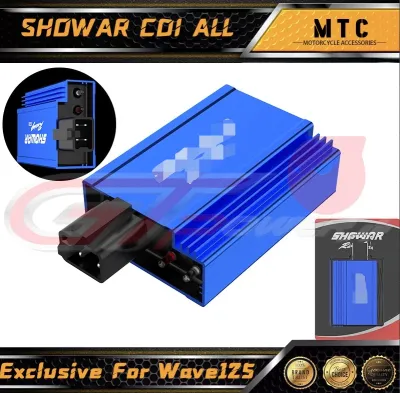
359 Lazada user ratings
🏅Performance:Excellent value for money., Improved acceleration and power!, Reliable and trustworthy brand., Easy installation and plug-and-p…Read full reviewShow less
🏅Performance:Excellent value for money., Improved acceleration and power!, Reliable and trustworthy brand., Easy installation and plug-and-play.,
🔨Durability:Satisfied with tEasy instaEnhanced engine performance., llation and plug-and-play., he quality and performance.,
Perfect fit for my XRM125., Durable and long-lasting materials., Satisfied with the quality and performance.,
Enhanced engine performance., Excellent value for money., Satisfied with the quality and performance.,
good and quality salamat seller Malakar ang kuryenti
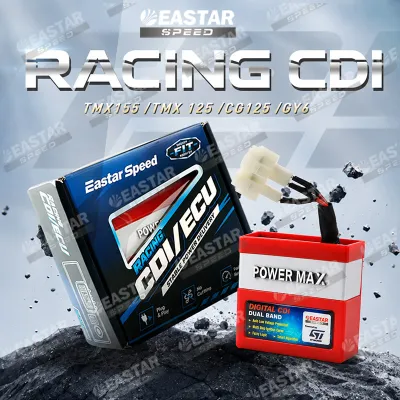
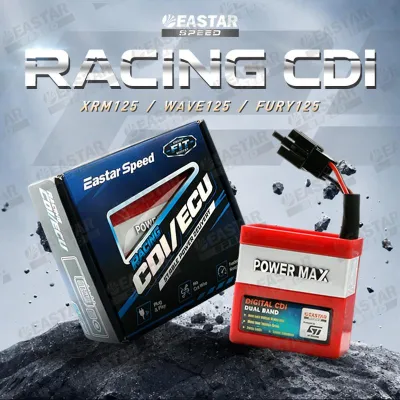
110 Lazada user ratings
Parcel received balot na balot mukang legit naman kaso dkopa na susubukan Sana gumana't at mag tagal,,, follow review ko nalang pag nasubuka…Read full reviewShow less
Parcel received balot na balot mukang legit naman kaso dkopa na susubukan Sana gumana't at mag tagal,,, follow review ko nalang pag nasubukan Kuna.. Salamat po Kay seller pti Kay Kuya rider 😊(umaandar naman kaso mas malakas prin kuryente nang stock sayang Lang pera)
Perfect fit for my TMX155, Great performance upgrade!, Improved acceleration and power, Smoother and more efficient ride, No more speed limi…Read full reviewShow less
Perfect fit for my TMX155, Great performance upgrade!, Improved acceleration and power, Smoother and more efficient ride, No more speed limit restrictions, Easy to install and use, Enhances engine performance,
Easy to install and use, Love the sleek gray color, No more speed limit restrictions, Great performance upgrade!, Easy to install and use, G…Read full reviewShow less
Easy to install and use, Love the sleek gray color, No more speed limit restrictions, Great performance upgrade!, Easy to install and use, Great performance upgrade!,
High-quality materials used, Smoother and more efficient ride, Perfect fit for my TMX155, Enhances engine performance,
dumating na at sakto at manual pa Ng cdi wiring magagamit ko Ng paggawa Ng cdi wiring salamat sa seller at lazada
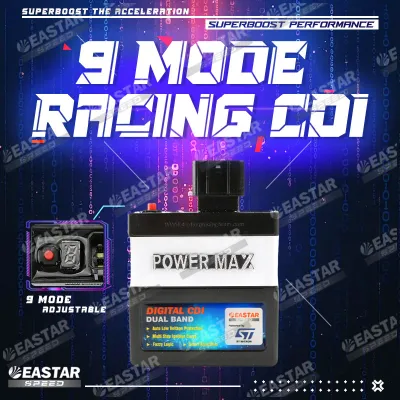
39 Lazada user ratings
Improved acceleration and throttle response, Durable construction, built to last,
goods n goods Po salamat seeler
salamat seller at riders
salamat seller at ride
🔌Compatibility:good
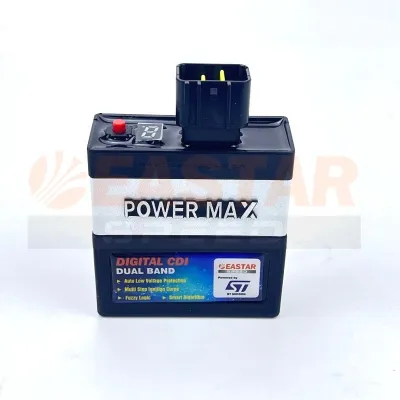
32 Lazada user ratings
Boost your top speed!, Enhance your Raider 150's performance!,
maganda. I hope it will work, hindi pa kasi namin triny.
good na goods...ganda ng performance.thanks seller
hays old breed pinadala.. ayaw gumana sa reborn😞
ok naman d pa natisting
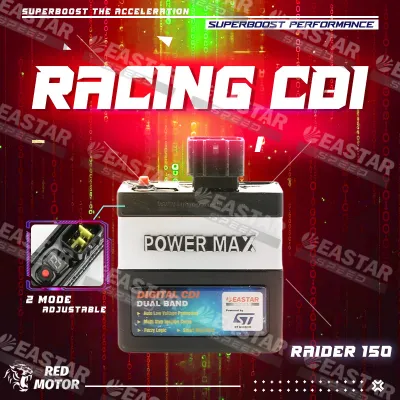
18 Lazada user ratings
Durability:Plug and play installation!,
Hindi gumagana palpak
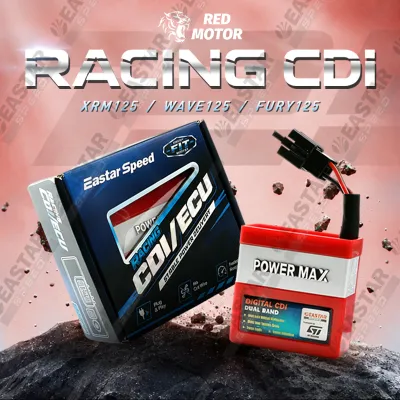
10 Lazada user ratings
Maganda at wala nang babaguhin kapag sa fury flug and play na talaga 10/10
🔨Durability:goods 🔌Compatibility:goods 🏅Performance:goods
salamat sa lagat😂
🏅Performance:good
🏅Performance:
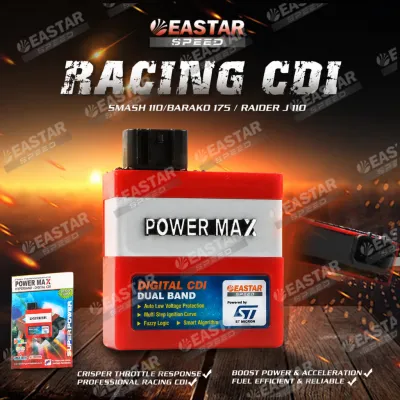
322 Lazada user ratings
🔌Compatibility:Compatible with Raider J Pro 🏅Performance:Goods na Goods
swak n swak s barako k ganda n takdo ng moto k legit n legit toga idol
🏅Performance:lumakas at umabot ng 95 kph ang takbo ni barako
🛠️Durability:good 🔌Compatibility:good 🏅Performance:good
malakas sumipa
Prices are valid at publication and may change. Please refer to the product page for the latest price.
Furthermore, a racing CDI often delivers a higher-voltage spark or a multi-spark discharge profile. While a stronger spark is generally desirable, it changes how rapidly the fuel charge ignites. If your motorcycle’s carburetor or fuel injection system is still calibrated for the slower, milder combustion of the stock ignition curve, the engine will struggle to maintain a stable idle. The mismatch between the advanced spark timing and the stock fuel delivery curve typically manifests as a lean-like condition, causing the engine to sputter, hesitate, or die when cold.
How Can You Check if the Ignition Timing or Mapping Is Too Aggressive?
You can identify overly aggressive ignition timing by observing physical symptoms like kickback during starting, backfiring through the carburetor or exhaust, and rapid engine overheating while idling. Because you cannot visually inspect the spark firing inside the cylinder while the engine is running, you must rely on these clear, observable mechanical indicators to evaluate the CDI’s behavior.

If your motorcycle is equipped with a kickstarter, pay close attention to how the lever behaves when you attempt to start the engine. A violent backward kick against your foot is a classic sign that the spark is firing too early, forcing the piston backward before it can pass TDC. For motorcycles with electric starters, over-advanced timing often sounds like a weak or dying battery; the starter motor will hesitate, groan, or temporarily stop turning as it fights against the premature combustion pressure. Additionally, backfiring through the intake or carburetor indicates that the intake valve was still slightly open when the spark fired, while popping through the exhaust at idle suggests unburned fuel is igniting late in the cycle due to erratic combustion.
To verify if the CDI itself is the source of the issue, consult the manufacturer’s documentation to confirm the unit is fully compatible with your specific motorcycle make, model, and engine displacement year. Many aftermarket racing CDIs feature adjustable dip-switches or programmable maps on the housing. If your unit is adjustable, check the manual to identify the baseline or “softest” timing curve available. Switching to a less aggressive map is a safe, reversible way to test if the timing advance is the primary cause of your starting difficulties. You should also perform a visual inspection of the stator and pickup coil (pulser coil) alignment. Ensure the gap between the pickup coil and the flywheel trigger magnet matches the manufacturer’s specified clearance, using a feeler gauge to verify the distance without altering any physical mounting points.
Why Does the Air-Fuel Ratio Need Adjustment When Upgrading the CDI?
Changing the ignition profile with a racing CDI alters how quickly and completely the fuel charge burns, which directly impacts engine vacuum and requires you to retune the idle circuit to prevent stalling. Because the spark fires earlier, the combustion process is completed sooner in the engine cycle, which fundamentally changes the temperature and pressure dynamics inside the cylinder at idle.
On carbureted motorcycles, this shift almost always requires manual adjustment of the idle mixture. The stock carburetor settings are tuned to deliver a specific volume of fuel to match the stock spark timing. With advanced timing, the engine may require a slightly richer mixture at idle to prevent stalling, especially when cold. Locate the pilot screw (also referred to as the air/fuel mixture screw) on your carburetor, referencing your vehicle’s service manual to identify its exact function. On some carburetors, turning the screw clockwise restricts air (riching the mixture), while on others, it restricts fuel (leaning the mixture). Make very small adjustments—no more than a quarter-turn at a time—and allow the engine to stabilize for a minute before evaluating the change.
Altered ignition timing also affects engine vacuum. A racing CDI can cause the engine to pull vacuum differently at low RPMs, which can amplify the effects of any existing, minor intake leaks. Inspect the rubber intake manifold boot, carburetor mounting flanges, and vacuum lines for tiny cracks, dry rot, or loose hose clamps. A vacuum leak allows unmetered air to enter the engine, leaning out the mixture and causing an erratic, high idle or sudden stalling. Spraying a small amount of authorized carburetor cleaner around the intake joints while the engine is idling can help identify leaks; if the idle speed changes when the cleaner is applied, a leak is present and must be sealed.
Is Your Spark Plug Heat Range Correct for the New Ignition Profile?
A racing CDI’s advanced timing increases combustion chamber temperatures, which often requires upgrading to a colder spark plug heat range to prevent pre-ignition and ensure stable combustion. The spark plug is not just responsible for igniting the fuel; it also acts as a heat exchanger, transferring thermal energy from the combustion chamber to the cylinder head.
To diagnose how your engine is burning fuel with the new CDI, wait for the engine to cool completely, then safely remove the spark plug using a dedicated spark plug socket. Inspect the color of the ceramic porcelain insulator surrounding the center electrode. A healthy combustion cycle leaves the insulator a light tan or grayish-brown color. If the insulator appears blistered, glazed, or stark white, the spark plug is running too hot, which can lead to pre-ignition—a dangerous condition where the plug tip remains hot enough to ignite the incoming fuel charge before the spark even fires. Conversely, a wet, black, carbon-coated plug indicates incomplete combustion, which could be caused by an overly rich fuel mixture or a weak spark delivery.
If your spark plug shows signs of overheating, you may need to install a spark plug with a colder heat range. Colder plugs have a shorter insulator nose, allowing them to transfer heat to the cylinder head more rapidly, keeping the tip temperature within a safe operating window. Consult both your motorcycle’s service manual and the spark plug manufacturer’s application charts to select the correct plug. When installing a new plug, always verify the electrode gap using a wire gapping tool to ensure it matches the specifications recommended by your racing CDI manufacturer, as a gap that is too wide or too narrow can cause weak spark and persistent cold-start issues.
When Should You Stop Troubleshooting and Consult a Professional Tuner?
You should stop DIY troubleshooting and consult a professional technician if you hear persistent metallic pinging or knocking sounds (detonation), experience extreme exhaust pipe glowing, or if the engine continues to stall after basic carburetor and spark plug adjustments. Continuing to operate a motorcycle with incorrect ignition timing can lead to catastrophic engine failure, including cracked pistons, bent valves, or damaged connecting rods.
Severe detonation is the most critical warning sign. If you hear a sharp, metallic rattling or pinging sound under acceleration or even while idling, turn off the engine immediately. This sound indicates that the fuel charge is exploding violently rather than burning smoothly, putting immense mechanical stress on the internal engine components. Additionally, if your exhaust header pipe begins to glow red-hot at idle, it indicates that combustion is continuing into the exhaust stroke, a sign of severely misaligned timing or an extremely lean air-fuel mixture that requires professional diagnostic equipment to resolve.
Professional tuners utilize specialized tools, such as wideband oxygen sensors, exhaust gas analyzers, and chassis dynamometers, to monitor engine parameters in real-time under controlled loads. If you have adjusted your carburetor, verified your spark plug gap, and checked for vacuum leaks but still cannot achieve a stable idle, reinstall your stock CDI. If the motorcycle starts and runs perfectly with the stock unit, you have confirmed that the engine’s mechanical health is sound, and the issue lies entirely within the aftermarket CDI’s compatibility or programming. Reverting to stock is the safest way to keep your motorcycle operational while you seek professional assistance to properly map and tune your high-performance ignition system.
Community discussion
Share your experience or ask a question. Comments are reviewed before publication.