
Choosing the right flyball weight for your Yamaha Aerox V2 depends entirely on your daily riding environment and performance goals. If you frequently navigate congested city streets and need quick, responsive take-offs, lighter flyballs will keep your engine in its optimal power band. Conversely, if your daily commute consists of long, open highway stretches where you want to maintain a relaxed engine speed and maximize fuel efficiency, heavier flyballs are the better choice.
By understanding how these small components affect your scooter’s Continuously Variable Transmission (CVT), you can customize your ride to match your specific needs. This guide breaks down the mechanics of flyball weights, helps you evaluate your riding style, and outlines the essential safety and compatibility checks you must perform before making any modifications.
How Flyball Weight Dictates Your Aerox V2 Performance
The Yamaha Aerox V2 uses a Continuously Variable Transmission (CVT) that relies on centrifugal force to shift gears smoothly without manual clutch intervention. Inside the front pulley assembly, also known as the variator, sit several small, cylindrical weights commonly referred to as flyballs. As the engine’s crankshaft spins, the variator spins with it, generating centrifugal force that flings these flyballs outward along engineered ramps.
Products mentioned in this guide
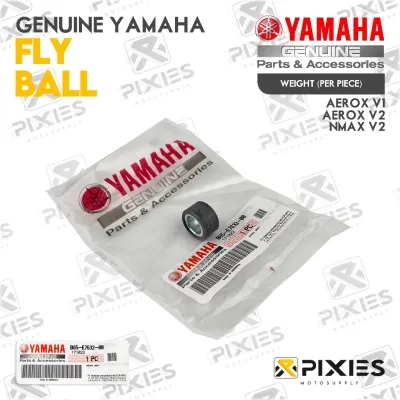
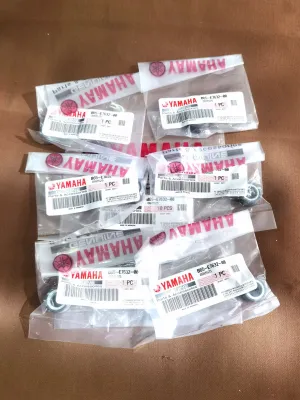
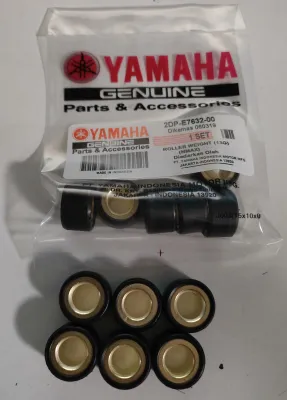
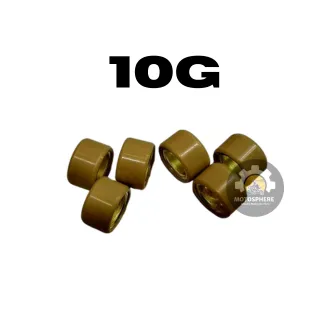
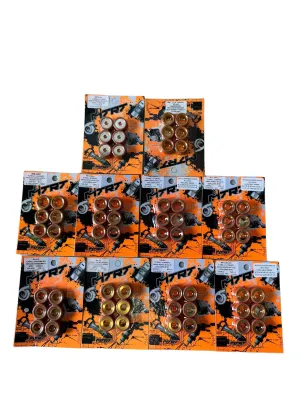

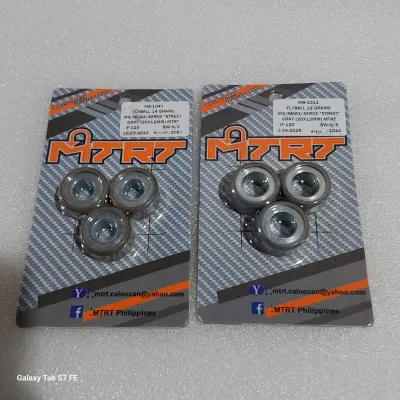
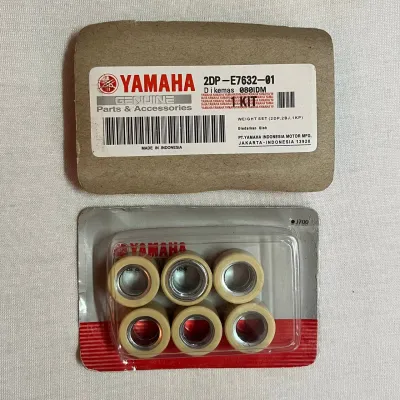
Prices are valid at publication and may change. Please refer to the product page for the latest price.
This outward movement forces the movable face of the variator closer to the fixed face, squeezing the drive belt and forcing it to ride higher up the pulley. Simultaneously, the belt is pulled deeper into the rear clutch pulley. This transition changes the effective gear ratio from a low gear (ideal for starting) to a high gear (ideal for high-speed cruising).
The weight of these flyballs determines how quickly this transition occurs relative to engine speed (RPM). Lighter flyballs require higher engine speeds to generate enough centrifugal force to push the variator face outward, resulting in late shifting. Heavier flyballs generate this force at lower engine speeds, causing early shifting.
It is crucial to understand that changing flyball weights does not add or subtract actual horsepower from your engine. Instead, it alters how the transmission delivers the existing power to the rear wheel. By shifting the RPM at which the transmission changes ratios, you can align the CVT’s behavior with the engine’s peak torque and power curves to suit your specific riding style.
Matching Flyball Weight to Your Daily Riding Style
Before purchasing new flyballs, take a close look at your typical daily route. If your commute involves navigating the dense, stop-and-go traffic of metropolitan areas, you are constantly accelerating from a complete stop, idling at traffic lights, and squeezing through tight spaces. In this environment, a transmission tuned for rapid low-speed response is highly beneficial.

On the other hand, if your route consists of long, uninterrupted provincial highways or bypass roads, your engine spends most of its time at sustained high speeds. Here, a transmission that allows the engine to run at a lower, more relaxed RPM while maintaining cruising speed will improve comfort and fuel economy.
Pay attention to how your scooter currently behaves. Do you feel a sluggish delay when you twist the throttle from a standstill? Or does your engine scream at excessively high RPMs when you are trying to maintain a steady cruising speed on the highway? These observations will guide your decision.
Some riders consider mixing different flyball weights to achieve a middle-ground performance. While this is a common practice among tuning enthusiasts, it must be done with extreme care. The weights must be placed in a strictly alternating, symmetrical pattern to maintain the balance of the variator. Any imbalance can cause severe vibrations, uneven wear on the variator ramp, and potential damage to the crankshaft bearings. For most riders, using a uniform set of weights is the safest and most predictable approach.
Lighter Flyballs for City Acceleration
When you install lighter flyballs, the reduced mass means that the engine must spin faster to generate the centrifugal force needed to push the variator face outward. This delays the shifting process, keeping the transmission in a lower gear ratio for a longer period. As a result, when you twist the throttle, the engine quickly jumps into its high-RPM power band where it produces the most torque.
This setup is highly advantageous for urban riders who face frequent red lights, heavy traffic, and steep city flyovers. The immediate throttle response allows you to merge safely, overtake slow-moving vehicles quickly, and maintain momentum when carrying a pillion passenger or heavy cargo. The scooter feels significantly more agile and responsive at low to mid-range speeds.
However, this performance boost comes with distinct trade-offs. Because the engine runs at higher RPMs during normal operation, you will notice an increase in engine noise and vibration. This sustained high-RPM running also leads to higher fuel consumption, meaning more frequent trips to the gas station. Additionally, because the lighter weights may struggle to fully push the variator to its outermost limit, you may experience a reduction in your scooter’s maximum top-end speed.
Heavier Flyballs for Top-Speed Cruising
Heavier flyballs generate greater centrifugal force at lower engine speeds. This causes the variator to close much earlier in the RPM range, forcing the drive belt to transition to a higher gear ratio sooner. The engine does not need to rev as high to propel the scooter forward, resulting in a smoother, quieter ride at cruising speeds.
This configuration is perfect for riders who travel long distances on open highways, provincial roads, or scenic routes. By keeping the engine RPMs low at cruising speeds, heavier flyballs significantly improve fuel efficiency and reduce engine wear over long journeys. The riding experience becomes much more relaxed, with less vibration felt through the handlebars and floorboards.
The primary drawback of heavier flyballs is a noticeable loss of low-end acceleration. From a complete stop, the scooter may feel sluggish as the transmission shifts into a higher gear too quickly, bogging down the engine. This delayed throttle response can be frustrating in stop-and-go traffic and can even pose a safety hazard when you need a sudden burst of speed to merge into fast-moving traffic or escape a tight situation.
Verifying Compatibility and Safety Before You Buy
Before purchasing any aftermarket flyballs, you must verify their physical compatibility with your Yamaha Aerox V2. The variator requires flyballs with precise dimensions—specifically the outer diameter and width, usually measured in millimeters. Installing weights with incorrect dimensions can cause them to bind, flip, or damage the variator walls, leading to catastrophic transmission failure. Always verify the exact specifications for your specific model year in the official Yamaha service manual.
Flyballs are typically constructed with a metal inner core surrounded by a durable polymer outer sleeve. When choosing aftermarket options, look for high-quality, heat-resistant self-lubricating polymers. Cheap, low-quality rollers can flat-spot quickly under the high heat and friction generated inside the CVT casing, especially in tropical climates like the Philippines where ambient temperatures are consistently high. Flat spots prevent the rollers from rolling smoothly, causing erratic shifting and poor performance.
Modifying your transmission carries inherent safety risks. Avoid extreme weight deviations from the stock setup. Going too light can cause the belt to slip, generating excessive heat that can degrade the belt and even melt the plastic components of the variator. Going too heavy can put undue stress on the clutch assembly and cause premature wear on the drive belt. Always refer to the original vehicle instructions and service manuals. Because transmission work involves critical safety components, we highly recommend having the installation performed by a qualified professional mechanic to ensure all fasteners are torqued to the manufacturer’s exact specifications.
Your Pre-Purchase and Installation Checklist
To ensure a successful and safe upgrade, follow this structured action plan before purchasing and installing your new flyballs:
- Pre-Purchase Checklist:
- Confirm the OEM stock flyball weight for your specific Aerox V2 model year by consulting an authorized Yamaha dealer or service manual.
- Decide on your target weight adjustment. A common rule of thumb is to adjust the weight by no more than 1 to 2 grams lighter or heavier than stock to avoid extreme performance issues.
- Source your parts from reputable motorcycle accessory shops or authorized distributors to avoid counterfeit products that lack proper heat resistance.
- Installation Prerequisites:
- Ensure you have the correct tools, including a dedicated variator holding tool (to prevent the pulley from spinning while loosening the nut) and a calibrated torque wrench. Never use an impact wrench to tighten the variator nut, as this can easily strip the crankshaft threads or damage the oil seal.
- Thoroughly clean the variator faces, ramp plate, and roller tracks using a dedicated brake cleaner or degreaser to remove any accumulated belt dust, grease, or debris. Ensure all parts are completely dry before reassembly.
- Post-Installation Testing:
- Before heading out onto public roads or highways, conduct a safe, low-speed test ride in a controlled, traffic-free area.
- Listen carefully for any unusual metallic noises, excessive vibrations, or slipping sensations.
- Verify that the transmission shifts smoothly as you accelerate and decelerate.
If you experience abnormal vibrations, belt slippage, a sudden loss of power, or if any warning lights illuminate on your dashboard, stop riding immediately. Turn off the engine and consult a qualified professional mechanic to inspect the CVT assembly before attempting to ride again.
Frequently Asked Questions (FAQ)
Do I need to change the drive belt when upgrading flyballs?
You do not strictly need to replace your drive belt when changing flyballs, provided the current belt is still within the manufacturer’s recommended service limits. However, because you must disassemble the CVT casing to access the flyballs, this is the perfect opportunity to inspect the belt. Check the belt thoroughly for any signs of cracking, fraying, glazing, or excessive wear on its width. If the belt shows any of these signs, or if it is nearing its recommended replacement interval, it is highly recommended to install a new OEM belt to ensure optimal performance and safety.
Can I mix different flyball weights in the variator?
Yes, you can mix different flyball weights to fine-tune your CVT’s behavior, but you must follow strict guidelines. You must use only two different weights and place them in a strictly alternating pattern inside the variator. This ensures that the rotational mass remains perfectly balanced. Never mix random weights or place them asymmetrically, as this will cause severe variator wobble, rapid wear of the crankshaft bearings, and potential engine damage. For beginners, using a uniform set of weights is always the safest option.
Will changing flyball weight void my Yamaha warranty?
Modifying internal transmission components like the flyballs can affect your vehicle’s powertrain warranty. In many cases, authorized dealerships may deny warranty claims related to the engine, transmission, or electrical system if they discover aftermarket modifications inside the CVT. Before making any changes, review your specific warranty terms or consult your local Yamaha dealership. If you decide to proceed with the modification, it is a good practice to keep your original OEM flyballs in safe storage so they can be reinstalled if you ever need to bring the scooter in for unrelated warranty service.
Community discussion
Share your experience or ask a question. Comments are reviewed before publication.