
Selecting the right clutch lining for your Yamaha Mio i 125 is critical for maintaining smooth acceleration, preventing transmission shudder, and ensuring optimal fuel efficiency. In the Philippines, where daily commutes involve intense stop-and-go traffic and high tropical temperatures, the performance of your scooter’s transmission relies heavily on the quality and compatibility of the clutch lining. Choosing the correct component requires evaluating the friction material, matching it to your typical riding conditions, and deciding between original equipment manufacturer (OEM) parts and aftermarket alternatives. Always verify compatibility by checking your specific motorcycle model year and part dimensions against the manufacturer’s official documentation before purchase.
Understanding the Centrifugal Clutch in Your Mio i 125
Unlike manual underbone motorcycles or standard manual bikes that utilize a wet multi-plate clutch submerged in engine oil, the Yamaha Mio i 125 relies on a dry Continuously Variable Transmission (CVT). This dry system uses a centrifugal clutch assembly located inside the rear pulley casing. Understanding how this dry system operates is the first step in diagnosing transmission issues and choosing the correct replacement components.
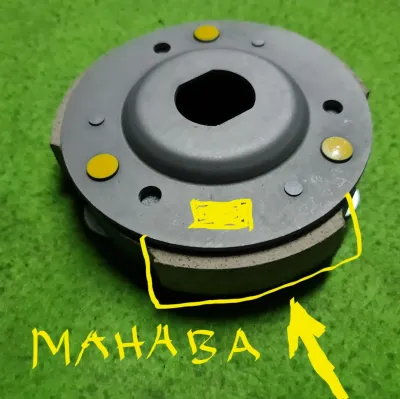
As engine RPM increases, centrifugal force pushes the clutch shoes outward against the tension of the clutch springs. The friction material, or clutch lining, bonded to these shoes grabs the inner surface of the clutch bell. This engagement transfers mechanical power from the engine’s crankshaft, through the drive belt, and ultimately to the rear wheel. When you throttle down, tension springs pull the shoes back, disengaging the drive and allowing the engine to idle without moving the scooter.
Products mentioned in this guide
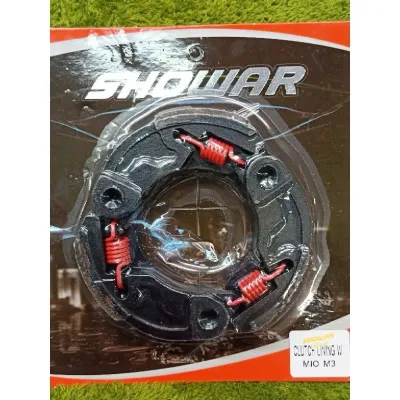
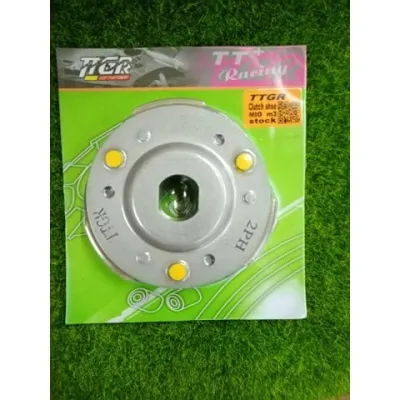
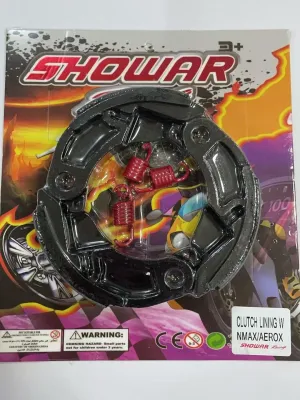
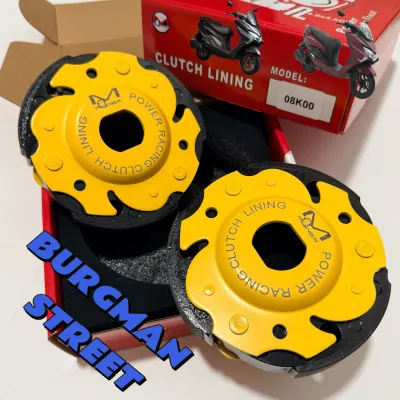
Prices are valid at publication and may change. Please refer to the product page for the latest price.
Because the Mio i 125 features a 125cc fuel-injected engine tuned for specific torque curves, any mismatch in clutch shoe weight, spring tension, or lining surface area can disrupt this balance. A lining that is too hard or too soft, or shoes that do not match the factory dimensions, can cause premature wear, severe vibration, or power loss. Therefore, matching the correct clutch shoe assembly or lining specification to the Mio i 125’s specific engine displacement and CVT tuning is essential for maintaining factory-level performance.
Evaluating Friction Material Categories and Specifications
Friction material is not a one-size-fits-all component. When browsing local motorcycle shops or online marketplaces, you will encounter various material compositions. Reading the manufacturer’s technical data sheets or packaging is essential. Look for specified friction coefficients, maximum operating temperatures, and recommended applications.

Do not rely solely on generic marketing terms. A label claiming “racing performance” is meaningless without technical verification. Ensure the manufacturer explicitly lists the Yamaha Mio i 125 (or compatible engine platforms like the Mio Soul i 125) on the product documentation. Evaluating the specific material categories will help you narrow down your choices.
Standard Organic and OEM-Spec Linings
Organic linings are typically composed of rubber, glass, carbon, and metallic fibers bound together with durable resins. These are the default choice for standard commuting. They offer highly predictable, smooth engagement and operate exceptionally well at normal operating temperatures.
Key Characteristics of Organic Linings
- Smooth Engagement: Minimizes sudden jerking during initial acceleration.
- Low Noise: Operates quietly inside the CVT casing.
- Standard Durability: Designed for typical daily commuting distances.
When selecting an organic replacement, verify the manufacturer’s wear-interval guidelines. While they provide excellent comfort and quiet operation, they may wear down faster under extreme heat or heavy-duty use compared to advanced synthetic compounds.
Aramid and Upgraded Friction Materials
Aramid fibers, which are high-strength synthetic polymers, are integrated into upgraded aftermarket linings to enhance thermal stability and tensile strength. Manufacturers design these materials to offer a more aggressive friction bite and a slightly higher engagement point.
Key Characteristics of Aramid Linings
- High Thermal Resistance: Resists fading and glazing under high heat.
- Enhanced Grip: Provides a more direct transfer of power during acceleration.
- Longer Lifespan: Resists wear better than standard organic compounds under moderate stress.
Before purchasing, check the manufacturer’s label for specific break-in requirements. Aramid-based linings often require a more precise bedding-in process to prevent surface glazing, which can occur if the material is subjected to extreme thermal stress before it has fully mated with the clutch bell.
Sintered and Metallic Compounds
Sintered and metallic clutch linings are engineered by fusing metallic particles under high pressure and temperature. These are primarily marketed for high-performance setups or aggressive riding styles because they retain their friction coefficient even under extreme heat.
Key Characteristics of Sintered Linings
- Extreme Durability: Highly resistant to wear and thermal breakdown.
- Aggressive Bite: Engages rapidly, which is ideal for high-RPM setups.
- High Heat Tolerance: Performs consistently under severe operating conditions.
However, these harder compounds present distinct trade-offs for daily riders. They can significantly alter the smoothness of your scooter’s take-off, sometimes causing a grabby or jerky sensation. Furthermore, because the material is highly abrasive, you must check the manufacturer’s compatibility notes regarding clutch bell wear; using sintered linings on a standard OEM clutch bell can rapidly score or warp the mating surface.
Aligning Clutch Specifications with Your Riding Conditions
To make an informed decision, you must analyze your typical daily routes and load requirements. The tropical climate of the Philippines, characterized by high ambient temperatures and seasonal humidity, acts as an additional stress factor on dry CVT components.
Instead of assuming a “premium” or “racing” grade is automatically better, cross-reference your personal riding profile with the part manufacturer’s recommended use cases. This ensures you do not buy a component that is mismatched to your daily operational reality.
Daily Commuting and Stop-and-Go Traffic
If your daily route involves navigating the dense, slow-moving traffic of urban centers like Metro Manila or Cebu, your clutch experiences constant engagement and disengagement. For this scenario, prioritize smooth, low-RPM engagement to minimize rider fatigue and prevent jerky, uncomfortable acceleration.
Look for manufacturer specifications that emphasize consistent friction at lower operating temperatures. Standard organic or mild aramid-blend linings are highly suitable here, as they do not require high thermal build-up to achieve optimal grip. This keeps your daily ride smooth and manageable.
Heavy Loads and Pillion Riding
Riders who frequently carry a pillion passenger, deliver heavy cargo, or navigate steep, hilly terrains place significantly higher mechanical stress on the transmission. The extra weight forces the clutch to slip longer before achieving full lockup against the clutch bell.
In this case, check product packaging for “heavy-duty” or “high-load” ratings. Linings with reinforced aramid fibers or slightly higher friction coefficients are beneficial here, as they reduce the duration of clutch slippage during initial take-off, thereby protecting the system from excessive heat generation.
Aggressive or High-Speed Riding
For riders who frequently travel on open highways or have modified their Mio i 125’s engine and CVT system for spirited riding, heat management becomes the primary concern. Continuous high-RPM operation and rapid throttle transitions generate immense thermal energy inside the CVT casing.
Verify that the clutch lining you select is explicitly rated for high-RPM engagement and possesses a high maximum operating temperature. Choosing a material that cannot handle these thermal loads will lead to rapid glazing, where the lining surface becomes glassy and loses its ability to grip, resulting in severe transmission slip.
OEM vs. Aftermarket: Replacing Linings vs. Complete Clutch Shoes
When your clutch begins to wear out, you face several replacement pathways. Understanding the practical, financial, and safety differences between these options is vital for making a secure choice.
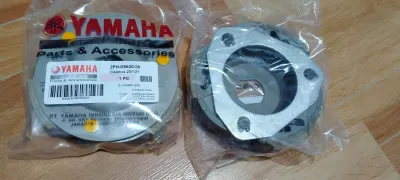
Genuine Yamaha Parts (OEM) Opting for original equipment manufacturer parts is the most reliable way to guarantee perfect fitment and maintain the factory-engineered CVT tuning of your Mio i 125. OEM clutch shoe assemblies are manufactured to strict quality standards, offering predictable engagement, quiet operation, and balanced wear characteristics. They are highly recommended for riders who want a hassle-free, “install-and-forget” solution.
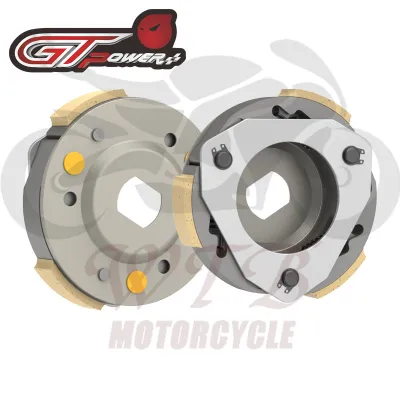
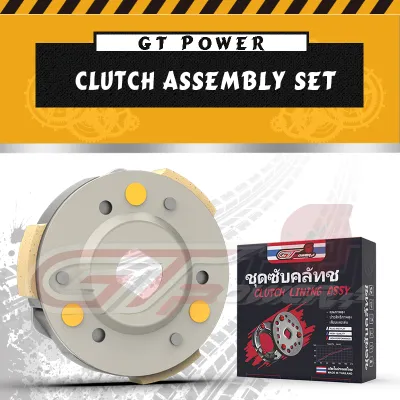
Aftermarket Clutch Shoe Assemblies High-quality aftermarket assemblies are widely available from reputable motorcycle parts brands. When evaluating these options, check the product documentation to ensure an exact dimensional match with the Mio i 125’s 125cc CVT specifications. Many aftermarket assemblies come pre-installed with clutch springs; verify if these springs have a higher tension rating (such as 1000 RPM or 1500 RPM) than OEM, as stiffer springs will delay clutch engagement and alter your scooter’s acceleration profile.
Re-bonding Linings A common practice in some local repair shops is “re-bonding,” where a technician removes the worn friction material from your old clutch shoes and glues a new lining onto the metal backing. While this is often the cheapest route (frequently costing only a few hundred Pesos), it carries substantial safety risks. Improper bonding, uneven lining thickness, or using incorrect adhesives can lead to structural failure, causing the lining to detach at high speeds. This can instantly lock up the CVT system, destroy the clutch bell, or cause a serious accident. If you choose this route, it must only be performed by specialized professionals using industrial-grade, heat-resistant adhesives and precise curing ovens.
Clutch Bell Inspection Checklist Before installing any new clutch shoes or linings, you must thoroughly inspect your existing clutch bell. A damaged bell will rapidly destroy a new lining. Use the following checklist to evaluate its condition:
- Check for scoring: Run a finger along the inner mating surface of the bell; if you feel deep grooves or ridges, the bell must be replaced or machined by a professional.
- Check for glazing: A shiny, mirror-like finish on the inner surface indicates glazing, which reduces friction. This can sometimes be corrected with light sanding, but severe cases require replacement.
- Check for discoloration: Dark blue or purple spots on the exterior of the clutch bell indicate extreme overheating, which can warp the bell out-of-round.
- Check for roundness: Use a caliper or dial indicator to verify the bell is perfectly circular; an out-of-round bell causes severe shuddering during take-off.
Installation Safety, Break-In, and Maintenance
Because the CVT and clutch system are critical safety components responsible for transferring power to your motorcycle’s rear wheel, we strongly advise having all service work performed by a qualified mechanic. Improper torqueing of the clutch center nut or drive face nut can lead to catastrophic transmission failure, belt breakage, or complete loss of drive while riding. Always consult your original-vehicle owner’s manual for the correct torque specifications and assembly procedures if you are an experienced technician undertaking this task.
New clutch linings require a proper break-in period to perform optimally. This process, known as bedding, allows the curved surface of the new lining to wear slightly until it makes 100% contact with the inner surface of the clutch bell. To bed your new clutch, avoid full-throttle starts, heavy loads, or high-speed runs for the first 100 to 200 kilometers of riding. Instead, practice moderate, gradual acceleration to allow the materials to heat cycle and seat correctly. Refer to the specific break-in instructions provided by your part manufacturer, as some high-performance compounds may have unique requirements.
After installing new clutch components, closely monitor your scooter’s behavior. If you experience persistent slipping at high RPM, severe shuddering or vibration during take-off, or unusual metallic grinding noises, stop riding immediately. These symptoms indicate improper installation, component misalignment, or a manufacturing defect. Consult a professional mechanic right away to diagnose the issue before further damage occurs.
Dust, oil, and belt debris are the primary enemies of dry CVT systems. Before installing your new clutch lining, thoroughly clean the interior of the CVT casing and the clutch bell. Use only manufacturer-approved brake or parts cleaners that leave no oily residue. Never allow grease, engine oil, or gear oil to contaminate the new friction material, as even a tiny amount of lubricant on the lining will cause severe slippage and ruin the component.
Frequently Asked Questions (FAQ)
How do I know if my Mio i 125 clutch shoes are worn out?
Common symptoms of worn clutch linings on a Mio i 125 include engine RPM rising rapidly (flaring) without a corresponding increase in actual vehicle speed, delayed throttle response when accelerating from a stop, or a distinct shuddering sensation through the chassis during initial take-off. To confirm, perform a visual inspection: measure the thickness of the friction material on the clutch shoes. If the lining thickness is near or below the manufacturer’s minimum wear limit (typically around 1.0mm to 1.5mm, though you must check your specific product manual), the shoes require immediate replacement.
Can I just sand the clutch lining instead of replacing it?
Sanding is a temporary troubleshooting measure, not a permanent fix. If your clutch shoes have developed a glazed, glassy surface due to mild overheating, light sanding with medium-grit sandpaper can temporarily restore some grip. However, sanding cannot add material back to a worn-down lining. Additionally, hand-sanding can unevenly alter the curved profile of the shoe, leading to poor contact with the clutch bell and uneven wear. If the lining is worn close to its wear limit, proceed with a full replacement rather than attempting to sand it down.
Does a worn clutch lining affect fuel consumption?
Yes, a worn or slipping clutch lining directly increases your fuel consumption. When the friction material fails to grip the clutch bell securely, energy from the engine is wasted as frictional heat rather than being converted into forward motion. This forces the engine to run at higher RPMs to maintain your desired cruising speed, burning more fuel in the process. Replacing a worn clutch lining and restoring efficient, slip-free power transfer will return your Mio i 125’s fuel efficiency back to its normal baseline levels.
Community discussion
Share your experience or ask a question. Comments are reviewed before publication.