
Finding the right replacement clutch bell for your Yamaha Mio Sporty is essential for restoring the smooth, responsive acceleration that makes this scooter a favorite on Philippine roads. As a core component of the continuously variable transmission (CVT) system, the clutch bell works alongside the clutch shoes to transfer engine power directly to the rear wheel. Over time, the intense heat of stop-and-go city traffic, combined with constant friction, can wear down this component, leading to slipping, shuddering, and lost efficiency.
When shopping for a new clutch bell mio sporty owners generally have three main options: genuine Yamaha Original Equipment Manufacturer (OEM) parts, standard aftermarket equivalents, and performance or lightweight upgrades. Each category serves a distinct riding style, budget, and performance goal. Understanding the differences between these options, along with the precise mechanical specifications of your scooter, is the key to making an informed purchase that ensures long-term reliability and safety.
Before purchasing any replacement transmission component, always consult your vehicle’s official service manual and product documentation to verify compatibility. Because transmission work directly impacts your motorcycle’s operation and road safety, any disassembly or installation should be performed using the correct tools and safety boundaries, or entrusted to a qualified motorcycle mechanic.
Products mentioned in this guide
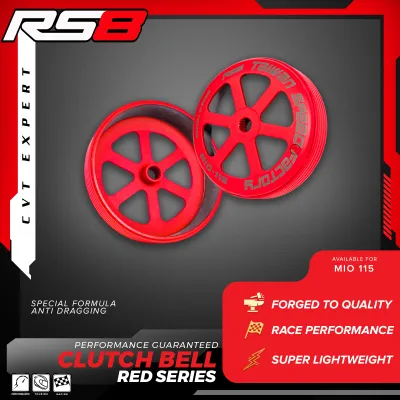

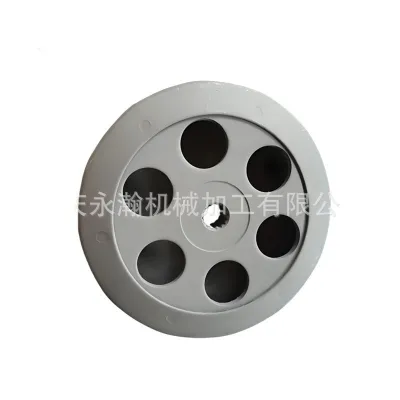
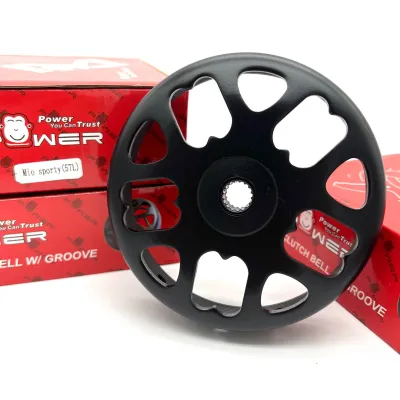
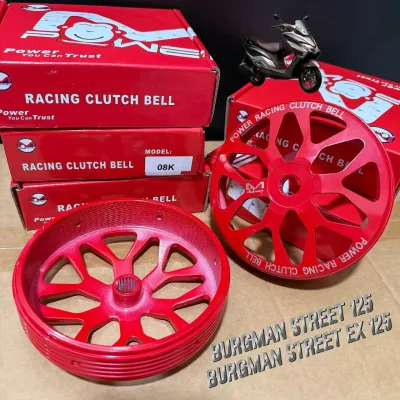
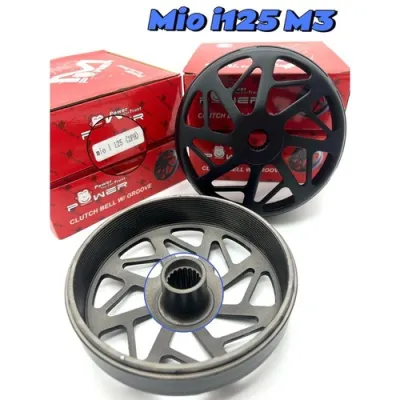
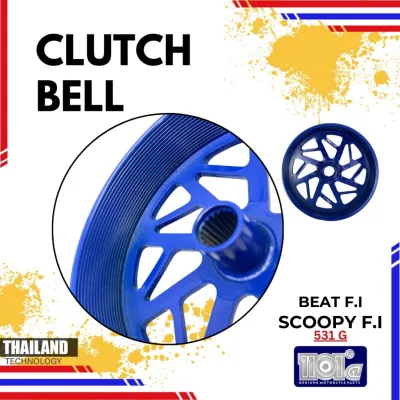
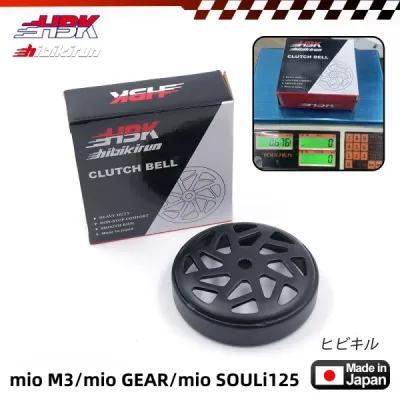
Prices are valid at publication and may change. Please refer to the product page for the latest price.
Recognizing When Your Mio Sporty Needs a New Clutch Bell
Identifying whether your transmission issues stem from the clutch bell or another CVT component is the first step in avoiding unnecessary expenses. A primary symptom of a failing clutch bell is a severe shuddering or vibrating sensation during low-speed takeoff, often referred to locally as “palyado” or “nanginginig.” This shaking occurs when the clutch shoes fail to grip the inner surface of the bell smoothly, causing them to repeatedly grab and slip as you twist the throttle.
Persistent slipping under load is another clear indicator that your clutch bell requires attention. If you notice your engine revving highly but the scooter struggles to gain speed, especially when carrying a pillion passenger or climbing steep inclines, the friction coefficient between the shoes and the bell has likely degraded. You may also hear a distinct metallic rattling or squealing noise coming from inside the CVT casing, which points to physical misalignment or severe wear within the clutch assembly.
To confirm these issues, a physical and visual inspection of the clutch bell is necessary. After safely removing the CVT cover according to your manufacturer’s instructions, inspect the bell for any signs of bluing or dark purple discoloration on the outer steel drum. This discoloration is a clear sign of extreme overheating, which permanently alters the metallurgy of the bell, making it brittle and reducing its ability to provide consistent grip.
Run your finger along the inner friction surface of the bell to check for deep scoring, grooves, or uneven ridges. A healthy clutch bell should have a smooth, uniform inner surface; deep grooves indicate that worn clutch shoes or debris have carved into the metal, preventing proper contact. Additionally, use a vernier caliper or take the bell to a professional to check for out-of-round wear, as a warped or oval-shaped bell will cause uneven engagement regardless of how new your clutch shoes are.
It is crucial to differentiate clutch bell wear from other common CVT issues to ensure you do not replace parts unnecessarily. For instance, a glazed or worn drive belt can cause slipping and power loss, but this is typically accompanied by a flapping sound or a rubbery smell rather than metallic rattling. Worn clutch shoes or weak, sagging clutch springs can also mimic clutch bell shuddering, but if the bell’s inner surface is smooth, within wear limits, and free of discoloration, replacing only the shoes and springs may resolve the issue.
Critical Specifications to Verify Before Purchasing
To ensure a seamless fit and prevent costly return shipping or mechanical damage, you must verify the exact physical specifications of the replacement clutch bell before finalizing your purchase. The inner diameter of the friction surface is the most critical dimension to check. For a standard Yamaha Mio Sporty (115cc carburetor engine), the nominal inner diameter of the clutch bell is typically 107mm, but you must measure your original unit or check your specific model year manual to confirm, as aftermarket variations exist.

The spline count and profile on the center mounting hole must match your final drive shaft precisely. The Mio Sporty typically utilizes a 15-spline shaft interface, but relying solely on generic online product compatibility tags can be highly risky. Manufacturers sometimes introduce minor revisions across different production years, and a bell with the incorrect spline count or pitch will fail to slide onto the shaft or, worse, strip the threads of your drive shaft during installation.
Avoid buying products labeled with vague descriptions like “fits all Mio models.” The Yamaha Mio family in the Philippines is incredibly diverse, encompassing the Mio Sporty, Mio Soul, Mio i 125 (M3), Mio Soul i 125, and Mio Aerox. These models use vastly different engine platforms, shaft diameters, and CVT configurations; for instance, a clutch bell designed for a 125cc fuel-injected engine will not fit the 115cc Mio Sporty due to differences in bell depth and spline dimensions.
To guarantee a perfect physical match, locate the OEM part number stamped on your original clutch bell or cross-reference it using an official Yamaha parts catalog for your specific model year. The standard OEM part number prefix for the Mio Sporty clutch bell often begins with “5TL,” which denotes its compatibility with the classic 115cc engine platform. Having this part number on hand allows you to verify aftermarket listings with confidence.
Finally, pay close attention to the material hardness and machining precision of the replacement bell. Cheap, unbranded alternatives often suffer from poor quality control, resulting in off-center mounting holes or uneven metal density. A bell that is even slightly unbalanced will vibrate violently at high RPMs, causing rapid wear of the clutch shaft bearings, premature degradation of the clutch shoes, and potential damage to the final drive gears inside your transmission.
Comparing Clutch Bell Options for the Mio Sporty
Choosing the right clutch bell involves balancing your daily riding conditions, performance expectations, and budget. The market offers options ranging from highly reliable factory replacements to specialized high-performance components.
Genuine Yamaha (OEM) Replacements
For the vast majority of daily commuters, a genuine Yamaha OEM clutch bell is the most reliable and practical choice. Manufactured from high-grade, heat-treated steel, the OEM bell is engineered to match the precise tolerances and metallurgy specified by Yamaha’s design team. This ensures a predictable lifespan, quiet operation, and consistent performance under standard driving conditions.
- Price Band: Typically ranges from ₱500 to ₱1,200, representing a mid-range investment that offers excellent long-term value.
- Ideal Use Case: Stock engine setups, daily commuting through heavy stop-and-go traffic, and riders who prioritize longevity and hassle-free maintenance over performance gains.
- Avoiding Counterfeits: Due to the popularity of the Mio Sporty, counterfeit OEM parts are common in local markets. Always inspect the packaging for high-quality printing, verified holographic Yamaha security stickers, and purchase exclusively from authorized Yamaha 3S shops or highly reputable, established motorcycle parts dealers.
Standard Aftermarket Equivalents
Standard aftermarket clutch bells are designed as direct, budget-friendly replacements for riders who need to restore their scooter’s operation without paying the premium associated with genuine OEM parts. These components are produced by third-party manufacturers specializing in replacement motorcycle parts.
- Price Band: Generally available between ₱300 and ₱700, making them highly accessible for budget-conscious riders.
- Trade-offs: While functional, these budget options may use slightly lower-grade steel or simpler manufacturing processes than OEM parts. This can result in a shorter overall lifespan, a higher susceptibility to warping under extreme heat, and slightly increased transmission noise during operation.
- Selection Advice: When browsing online marketplaces or local shops, look for established aftermarket brands with positive, long-term customer reviews. Prioritize listings that include detailed dimensional measurements and verified buyer feedback regarding fitment and durability, rather than choosing the absolute cheapest option available.
Performance and Lightweight Upgrades
Performance clutch bells are engineered for riders looking to optimize their scooter’s acceleration, heat management, and throttle response. These units often feature advanced designs, such as drilled holes or machined outer slots, which serve to expel clutch dust, improve cooling, and reduce the overall rotational mass of the CVT assembly.
- Price Band: Typically ranges from ₱1,000 to ₱2,500 or more, depending on the brand and materials used.
- Key Features: The reduction in rotational weight allows the engine to rev up faster, resulting in quicker throttle response and improved acceleration from a standstill. The slotted or grooved inner surfaces also provide a more aggressive bite against the clutch shoes, minimizing slip.
- Prerequisites and Drawbacks: To function correctly without causing severe belt slip or erratic shifting, a performance clutch bell must be paired with compatible performance clutch shoes, stiffer clutch springs, and a high-quality drive belt. For daily commuting, these upgrades can cause faster wear on your clutch linings, increased transmission noise, and a harsher, more abrupt engagement that may feel uncomfortable in slow-moving traffic.
Installation Safety and Break-In Procedures
Replacing a clutch bell involves opening the CVT casing and working with high-tension components, requiring strict adherence to safety protocols. Before beginning, ensure the scooter is parked securely on its center stand on a flat, level surface, and the engine is completely cool to the touch. Working on a hot engine or CVT assembly poses a severe burn risk.
To perform this repair safely, you must use a calibrated torque wrench and the correct socket size (typically a 24mm socket for the rear clutch carrier nut, though you must verify this in your service manual). Never rely on an impact wrench to tighten the clutch nut without verifying the final torque with a manual torque wrench. Under-tightening the nut can cause it to back off while riding, leading to a catastrophic transmission lock-up or parts ejecting from the casing, while over-tightening can strip the shaft threads, requiring a costly engine teardown.
- Inspection Checklist: While the CVT casing is open, take the opportunity to inspect related components for wear:
- Check the clutch shoes for remaining friction material thickness and signs of glazing.
- Inspect the clutch shoe tension springs and the large torque spring for sagging or rust.
- Examine the drive belt for cracks, fraying, or excessive wear along its edges.
- Check the final drive shaft for play or oil leaks from the input shaft seal.
- Consider replacing your final drive gear oil if it has not been changed within the manufacturer's recommended interval.
Once the new clutch bell and shoes are installed and torqued to spec, a proper break-in (bedding-in) procedure is mandatory to ensure longevity. For the first 50 to 100 kilometers of riding, avoid sudden, full-throttle acceleration from a dead stop, carrying heavy loads, or climbing steep hills. This gentle riding period allows the flat surfaces of the clutch shoes and the inner wall of the new clutch bell to wear in together naturally, creating a perfect mating surface and preventing immediate glazing or localized hot spots.
If you do not possess the specialized tools required for this job—such as a CVT holding tool or a flywheel holder—or if you feel unsure about any step of the reassembly process, stop immediately. Attempting to wedge screwdrivers or makeshift metal bars into the clutch fins to hold it in place can easily bend the shaft, crack the engine casing, or cause personal injury. In such cases, take your scooter and the new parts to a qualified motorcycle mechanic to ensure a safe, professional installation.
Frequently Asked Questions (FAQ)
Are clutch bells interchangeable between different Mio models?
No, clutch bells are not universally interchangeable across different Yamaha Mio models. While scooters within the Mio lineup share similar design philosophies, they feature distinct engine displacements, shaft sizes, and transmission configurations. For example, the Mio Sporty (115cc carburetor) uses a different shaft diameter, spline count, and bell depth compared to the Mio i 125 (M3) or the Mio Soul i 115. Attempting to force a clutch bell from a different Mio variant onto your Sporty can strip the drive shaft threads, damage the clutch carrier, or prevent the CVT cover from closing properly. Always verify the exact part number and dimensions for the 115cc Mio Sporty platform before purchasing.
Can I just sand down my old clutch bell instead of replacing it?
Sanding down a clutch bell is only a temporary troubleshooting measure for very minor glazing, and it is not a safe or permanent substitute for replacement. If your clutch bell has developed a shiny, glazed layer from light overheating, gently scuffing the inner surface with fine-grit sandpaper can temporarily restore grip. However, if the bell has deep physical grooves, heat-induced blue or purple discoloration, or has worn out-of-round, sanding will not fix the issue. Sanding a heavily worn bell removes the factory-hardened outer metal layer, exposing softer steel underneath that will wear down rapidly, overheat even faster, and potentially warp, leading to severe vibration and transmission failure. For any structural wear or heat damage, replacing the clutch bell is the only safe and reliable solution.
Community discussion
Share your experience or ask a question. Comments are reviewed before publication.