
Choosing the right brake pads for your Yamaha NMAX is not a matter of finding a single, universally superior brand. Instead, the ideal choice depends on your specific riding style, daily budget, and vehicle warranty status. Original Equipment Manufacturer (OEM) Yamaha brake pads provide predictable, factory-tested stopping power and ensure full compliance with your motorcycle’s warranty. On the other hand, reputable aftermarket options can offer distinct material characteristics, such as enhanced heat resistance or alternative lever feel, which may suit specific riding conditions. Because your braking system is critical to your safety on the road, any replacement pads you select must strictly match the exact dimensions and specifications outlined by Yamaha for your specific NMAX model year.
Assessing Your Riding Style and Braking Needs
Daily commuting through congested urban streets demands a different braking profile than long-distance touring along provincial highways. In stop-and-go city traffic, your brakes experience frequent, low-speed applications that require consistent, predictable bite without needing extensive warm-up time. Conversely, high-speed touring or navigating steep mountain passes requires brake pads that can handle sustained heat build-up without suffering from brake fade, which is the temporary loss of stopping power caused by excessive heat.
Carrying extra weight also significantly alters your braking requirements. If you regularly ride with a pillion passenger or carry heavy delivery cargo, your motorcycle’s total mass increases, which directly extends your stopping distance and places much higher thermal stress on both the front and rear calipers. Under these loaded conditions, you need a friction material that maintains its structural integrity and stopping efficiency under elevated pressures.
Products mentioned in this guide
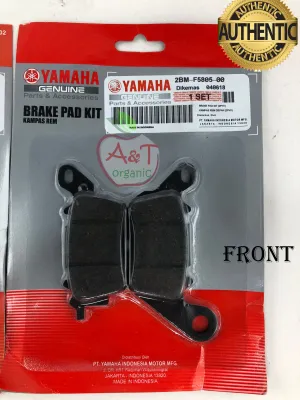
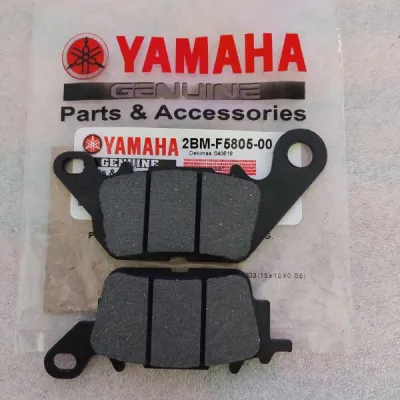
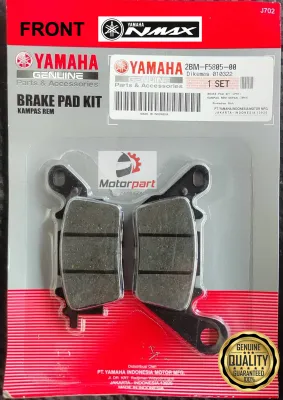
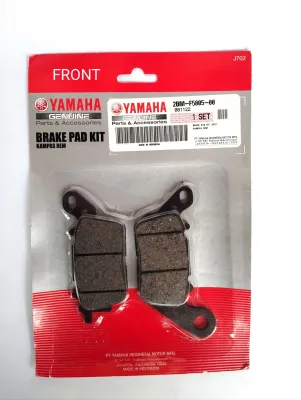
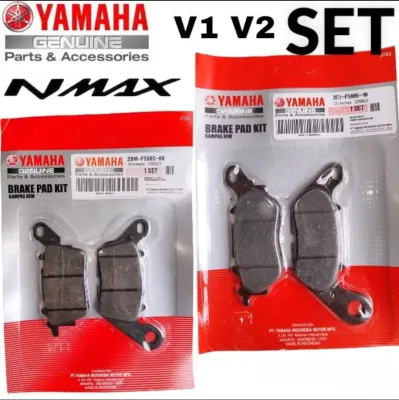
![Elig Brake Pad EM-049 [STANDARD] NMAX (Rear) / SNIPER135 (F) • MIO SOUL (F) • MIO SPORTY MXi 125 (F) * Speed Depot](https://img.lazcdn.com/g/p/d07b9f445d428e379222f5bb2978c18b.jpg_400x400q80.jpg_.webp)
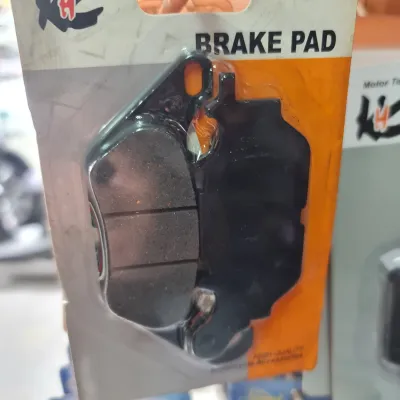
![[KV] Yamaha NMAX V1/V2 REAR BRAKE PAD /DISC PAD B6H-F5805-00](https://img.lazcdn.com/g/p/68ec4591efe11c7a7a251c1e7cc8f587.jpg_400x400q80.jpg_.webp)
Prices are valid at publication and may change. Please refer to the product page for the latest price.
Finally, personal preference regarding brake lever feel plays a major role in your decision. Some riders prefer progressive modulation, where the braking force increases smoothly and proportionally to how hard you squeeze the lever, allowing for fine control in slippery or wet conditions during heavy monsoon rains. Other riders favor an aggressive initial bite, where the brakes respond sharply at the slightest touch of the lever, providing immediate feedback but requiring a more delicate hand to avoid sudden wheel lockups, especially on non-ABS models.
OEM Yamaha Pads: Predictable Performance and Warranty Compliance
Genuine OEM Yamaha brake pads are engineered specifically for the NMAX, ensuring a guaranteed physical fit and a factory-tested performance baseline. These pads are designed to balance stopping power, rotor wear, and noise levels across a wide range of everyday riding conditions. By choosing OEM replacements, you eliminate the guesswork associated with sizing, mounting clearance, and compatibility with your motorcycle’s anti-lock braking system (ABS).

Utilizing genuine parts and having them installed at authorized service centers helps maintain your motorcycle’s warranty and preserves a clean, official service history. For newer NMAX units still covered by the manufacturer’s warranty, installing unapproved aftermarket components can sometimes complicate or void warranty claims related to the braking system or wheel assemblies. Keeping official receipts and service records from authorized dealers provides peace of mind and can preserve the resale value of your scooter.
OEM pads typically feature an organic or semi-metallic compound optimized for quiet operation and minimal brake dust. Under normal riding conditions, they offer reliable longevity and a smooth, progressive lever feel that is highly forgiving for daily commuters. They are designed to wear down gradually while preserving the life of your brake discs, preventing premature and costly rotor replacements.
Because of their popularity, counterfeit OEM parts are common in online marketplaces and unauthorized physical shops. To protect yourself, always inspect the packaging for official Yamaha holographic security labels, clear part numbers, and high-quality printing. Purchasing directly from authorized Yamaha 3S shops or reputable, verified distributors is the most reliable way to ensure you are installing genuine, safe components on your vehicle.
Evaluating Aftermarket Options: Materials, Labels, and Safety Checks
When exploring aftermarket alternatives, understanding the friction material is essential for making an informed choice. Organic pads, made from composite fibers and resins, are quiet and gentle on rotors but wear out faster under heavy use. Semi-metallic pads incorporate metal fibers to improve heat dissipation and durability, though they may produce more brake dust and noise, especially under the high humidity and wet road conditions common in tropical climates. Sintered or ceramic pads use fused metallic or ceramic compounds to deliver exceptional heat resistance and high-speed stopping power, making them highly durable but potentially more abrasive on standard brake rotors.
Before purchasing any aftermarket brand, you must verify the exact part numbers and compatibility details against your Yamaha NMAX owner’s manual. The front and rear calipers on the NMAX often require different pad shapes and dimensions, meaning a single set will not fit both ends. Always cross-reference the manufacturer’s application catalog to ensure the specific pad model is explicitly rated for your NMAX generation, as minor design changes between model years can affect fitment.
Maintaining strict safety boundaries means avoiding unbranded, generic, or suspiciously cheap brake pads found on unverified online marketplaces. Braking systems operate under extreme pressure and temperature; low-quality, uncertified pads can suffer from friction material separation, where the pad material shears off the metal backing plate entirely, leading to catastrophic brake failure. Saving a small amount of money on unbranded parts is never worth the severe risk of sudden braking loss on the road.
To ensure a product’s safety, look for recognized manufacturing standards and quality certifications printed on the packaging. Reputable aftermarket brands typically display certifications such as the European ECE R90 mark, which guarantees that the pad performs within close parameters of the original equipment. Other indicators of quality include ISO certifications or clear safety testing marks, which demonstrate that the manufacturer adheres to strict international quality control protocols.
Comparing Value: Upfront Cost vs. Longevity and Rotor Wear
Evaluating the true value of an NMAX brake pad requires looking beyond the initial purchase price. While some budget-friendly aftermarket options may seem highly attractive at first glance, they often wear down much faster than OEM or premium aftermarket alternatives. A cheaper pad that requires replacement twice as often not only doubles your long-term parts cost but also increases your maintenance labor expenses and downtime.
Furthermore, the hardness of the friction material directly impacts the lifespan of your brake rotors. Highly abrasive materials, such as certain low-grade sintered pads, can cause rapid wear and deep scoring on your NMAX’s brake discs. Replacing a worn-out brake rotor is significantly more expensive than buying a set of high-quality brake pads, meaning an overly aggressive pad can inadvertently drive up your overall motorcycle maintenance costs.
To calculate genuine value, consider the cost-per-kilometer and the overall health of your entire braking system. A slightly more expensive pad that offers stable stopping power, minimal rotor wear, and a long service life ultimately provides better financial and safety value over thousands of kilometers. Balancing these factors ensures that your savings on pads do not result in premature wear of more expensive components like the calipers or discs.
Be skeptical of bold marketing claims on packaging or online listings that promise maximum stopping power or lifetime durability without any verifiable testing data or clear material specifications. Reliable manufacturers provide transparent technical details about their friction compounds, including temperature operating ranges and wear characteristics. Relying on observable material types and certified standards is always safer than trusting unsubstantiated promotional slogans.
Installation Safety and the Critical Bedding-In Process
Because brakes are a critical safety system, having them installed by a qualified professional mechanic is highly recommended. A professional has the specialized tools and experience to handle delicate components, such as cleaning the caliper slide pins, checking the piston seals, and ensuring the ABS sensors are not misaligned or damaged during the process. If you choose to perform a DIY installation, you must strictly follow the step-by-step procedures in the official Yamaha service manual and use the correct torque specifications for all mounting bolts.
Before installing the new pads, perform a thorough inspection of your brake discs. Check the rotors for deep grooves, visible warping, or a lip along the outer edge, and use a micrometer to verify that the disc thickness is well above the minimum limit stamped on the rotor itself. Installing new, flat brake pads onto a heavily worn or warped disc reduces the contact area, which severely compromises your initial stopping power and causes uneven pad wear.
Once the new pads are installed, you must perform a proper bedding-in, or break-in, process before riding normally. This process involves making a series of gentle, controlled stops from moderate speeds to gradually heat the pads and transfer an even layer of friction material onto the rotor surface. Avoid sudden, hard braking during the first few dozen kilometers, as extreme thermal shock on fresh pads can glaze the friction material, permanently reducing their stopping efficiency and causing persistent squealing.
Always establish clear stop conditions during the installation process. If you notice that the new pads do not slide easily into the caliper bracket, if the caliper binds when mounted, or if the wheel does not spin freely after assembly, stop immediately. Do not force the components together or attempt to ride the motorcycle; instead, consult the manufacturer’s instructions or seek immediate assistance from a professional mechanic to resolve the fitment issue.
Frequently Asked Questions (FAQ)
How often should I replace the brake pads on my Yamaha NMAX?
Rather than relying on a fixed mileage interval, you should regularly inspect the physical thickness of your brake pads. Most pads feature built-in wear indicator grooves; when the friction material wears down close to the bottom of these grooves, or reaches a thickness of approximately 2 millimeters, it is time for a replacement. Your actual wear rate will vary significantly based on daily riding conditions, such as navigating heavy stop-and-go traffic, carrying heavy loads, or riding in wet, sandy environments. Additionally, pay close attention to auditory and tactile warning signs, such as a high-pitched squealing noise, a harsh grinding sensation when stopping, or a spongy feel at the brake lever, all of which indicate that your braking system requires immediate professional inspection.
Can I mix OEM and aftermarket brake pads on the front and rear?
While it is physically possible to use different brands or materials on the front and rear calipers, maintaining a balanced braking force is essential for motorcycle stability. The Yamaha NMAX is engineered with a specific brake bias, and mixing materials with vastly different friction characteristics can lead to unpredictable handling, especially during emergency stops or on wet roads. For example, putting an aggressive, high-bite sintered pad on the rear and a soft, progressive organic pad on the front might cause the rear wheel to lock up or trigger the ABS prematurely. If you plan to use different compounds, always consult your vehicle manual or a qualified mechanic to ensure the combination will not compromise your safety or the proper operation of your motorcycle’s ABS.
Community discussion
Share your experience or ask a question. Comments are reviewed before publication.