
Securing the brake calipers on your Yamaha NMAX V1 requires fasteners that match the exact original equipment manufacturer (OEM) specifications for thread diameter, pitch, length, and strength grade. Because the front and rear braking systems bear the immense force of stopping your scooter, installing incorrect or low-grade bolts can lead to catastrophic component failure. To ensure your safety on the road, you must verify these specifications using the official Yamaha service manual or by measuring the original bolts with precision tools before purchasing replacements.
Why Exact Caliper Bolt Specs Matter for Your NMAX V1
Brake calipers operate under extreme mechanical stress. Every time you squeeze the brake levers on your NMAX V1, the calipers clamp down on the spinning rotors, transferring kinetic energy into the mounting bolts. This action subjects the caliper bolts to intense shear stress and constant road vibrations.
Thermal management is also critical. In the tropical climate of the Philippines, stop-and-go traffic combined with heavy braking generates intense heat. Because the brake caliper, fork, and bolts are made of different metals, they expand and contract at different rates. If the bolt material does not match the manufacturer’s thermal design, the fastener can loosen or fatigue rapidly.
Products mentioned in this guide
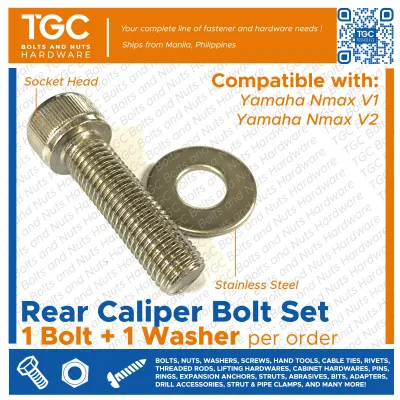
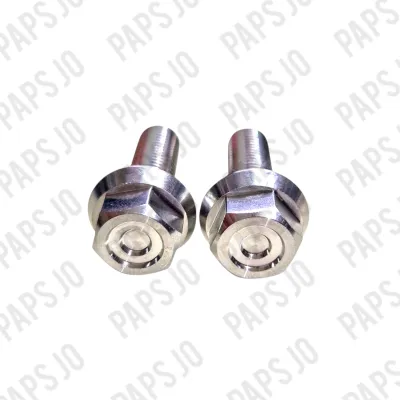
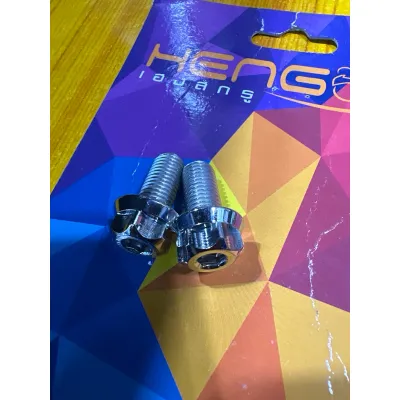
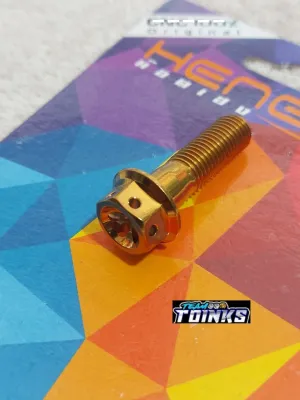
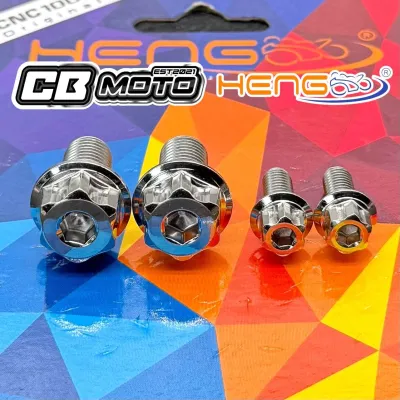
Prices are valid at publication and may change. Please refer to the product page for the latest price.
The consequences of using incorrect bolts are severe. A bolt that is too weak can shear off, while one that is too long can grind against the brake rotor. In the worst-case scenario, a failed bolt can cause the caliper to detach, leading to immediate wheel lockup and a complete loss of braking control.
How to Verify the Correct Bolt Size and Thread Pitch
To find the exact physical dimensions of your NMAX V1 caliper bolts, your primary and most reliable source is the official Yamaha service manual. This document lists the precise part numbers, thread diameters, thread pitches, and lengths for both the front and rear caliper assemblies. Relying on unverified online forums can lead to purchasing the wrong parts, as specifications sometimes change between model years.

If you do not have access to the service manual, you can determine the dimensions by measuring an undamaged original bolt using a digital caliper and a thread pitch gauge. Measure the shank diameter to find the metric size (such as M8 or M10), the length from the underside of the head to the end of the threads, and use a metric thread pitch gauge to identify the distance between thread crests.
Before making a purchase, cross-reference your measurements or part numbers with an authorized Yamaha dealer in the Philippines. Local dealerships have access to parts catalogs that match your scooter’s specific chassis number, ensuring the replacement bolts are fully compatible with your specific NMAX V1 model year.
Decoding Bolt Grade and Material Requirements
Metric fasteners are classified by strength grades stamped on the bolt head. For critical safety components like brake calipers, manufacturers specify high-tensile steel bolts, typically marked with grade numbers such as 8.8, 10.9, or 12.9. The higher the number, the greater the tensile and yield strength, allowing the bolt to withstand immense clamping and shear forces without stretching.
You must never use standard stainless steel or low-carbon steel bolts from a general hardware store for your brake calipers. While stainless steel resists rust, standard hardware-grade stainless bolts are often much softer than the high-tensile carbon steel bolts required for automotive braking systems. Under heavy braking loads, these softer bolts can stretch, deform, or shear.
When inspecting replacement bolts, check the bolt head for the manufacturer’s grade stamps and brand markings. Reject any fasteners that are completely unmarked, as their strength cannot be verified. Additionally, avoid using bolts that show signs of corrosion, thread damage, or previous stretching.
Finding and Applying the Correct Torque Specifications
Tightening your NMAX V1 caliper bolts to the correct torque specification is just as important as choosing the right size. The exact torque value, measured in Newton-meters (Nm), must be sourced directly from the official Yamaha service manual. Tightening by feel is highly risky; under-tightening can cause the bolts to back out due to road vibrations, while over-tightening can strip the soft aluminum threads of the fork leg.
To apply the torque correctly, you must use a calibrated torque wrench. Tighten the bolts in a progressive, alternating sequence to ensure that the clamping force is distributed evenly across the mating surfaces. This prevents the caliper from aligning at an angle, which would cause uneven brake pad wear and reduced stopping power.
Pay close attention to the manufacturer’s instructions regarding thread lubricants or threadlocking compounds. Applying grease, anti-seize, or threadlocker to the bolt threads changes the friction coefficient, which alters the actual clamping force. Unless the service manual explicitly calls for a lubricant, caliper bolts should be installed clean and dry.
Safety Boundaries: When to Stop and Seek Professional Help
Brake maintenance directly impacts your safety on the road, meaning there is no room for error. If you feel any unusual resistance, slipping, or cross-threading while installing the caliper bolts, stop immediately. Forcing a bolt into damaged threads can ruin the aluminum mounting points on your front fork or caliper bracket, requiring expensive component replacements.
If you encounter a seized, broken, or heavily corroded bolt during disassembly, do not attempt to force it out with improper tools. Broken bolt extraction requires specialized drill bits, extractors, and heat application techniques that can easily damage the surrounding components if performed incorrectly.
Whenever you cannot verify the official torque specifications, lack the proper calibrated tools, or suspect that the mounting threads are stripped, consult a professional motorcycle workshop. A qualified mechanic can safely repair damaged threads using professional thread repair inserts or install the correct OEM fasteners to ensure your NMAX V1 remains safe to ride.
Frequently Asked Questions (FAQ)
Can I use standard hardware store bolts if they match the size?
No, you should never use standard hardware store bolts for brake calipers. General hardware store fasteners are typically made of low-carbon steel or standard stainless steel, which lack the high tensile strength and fatigue resistance required to handle braking forces. Always use OEM Yamaha fasteners or certified high-tensile automotive-grade bolts (typically Class 10.9 or higher) to prevent dangerous bolt failure.
Should I apply threadlocker to the NMAX V1 caliper bolts?
You should only apply threadlocker if it is explicitly recommended in the official Yamaha service manual. If specified, use a medium-strength threadlocking compound to prevent the bolts from loosening due to vibration. Always ensure the threads are completely clean and dry before application, and be aware that threadlockers can act as a lubricant, affecting how the bolt reaches its target torque.
Community discussion
Share your experience or ask a question. Comments are reviewed before publication.