
Quick Answer: Selecting the Best Brake Pad for Sniper 150 Riders
To find the ideal brake pad for sniper 150 motorcycles, you must look beyond brand names and focus on your specific riding conditions, budget, and performance expectations. For riders who prioritize factory-level reliability, smooth lever feedback, and predictable daily performance, sticking with Original Equipment Manufacturer (OEM) pads is the safest choice. If you frequently carry a backrider, transport heavy cargo, or ride aggressively on winding provincial roads, upgrading to premium aftermarket semi-metallic or sintered pads offers a significant boost in initial bite and wet-weather stopping power.
Conversely, ultra-budget generic pads should be avoided entirely. Their unpredictable friction coefficients and poor heat tolerance pose a severe safety hazard in dense, stop-and-go traffic. Ultimately, the best brake pad for your underbone is one that matches your daily route and braking intensity while guaranteeing exact compatibility with your caliper setup.
Brake Pad Materials: Organic, Semi-Metallic, and Sintered Compared
The chemical composition of the friction material bonded to the metal backing plate dictates how your motorcycle stops, how long the pads last, and how much wear they inflict on your brake rotors. Brand names are secondary to these material characteristics, which fall into three primary categories.
Products mentioned in this guide
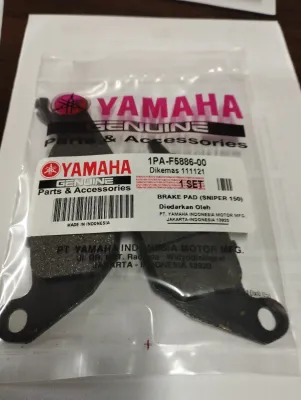
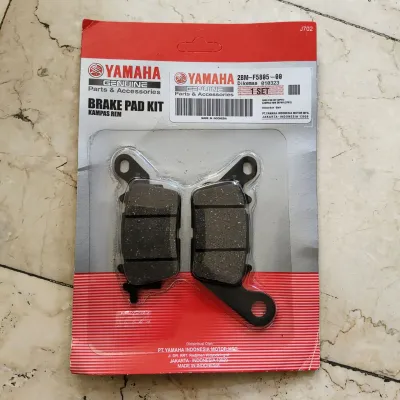
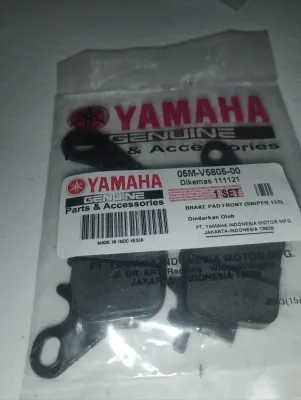
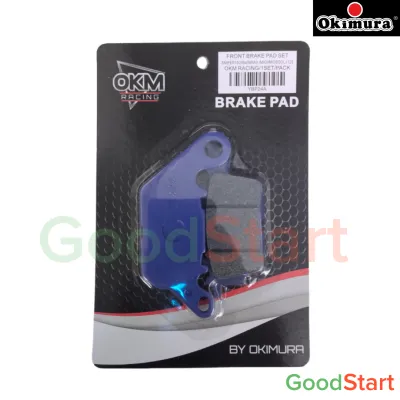
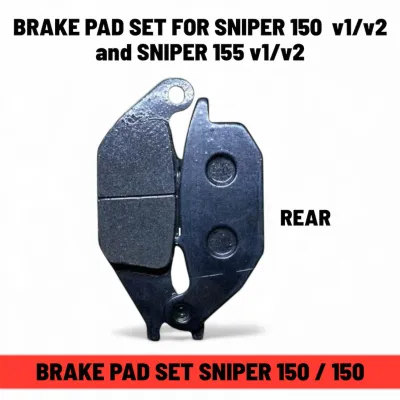
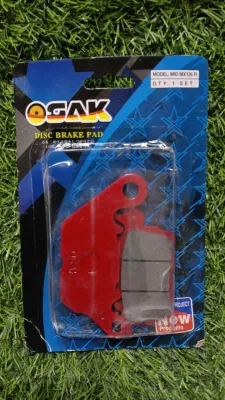
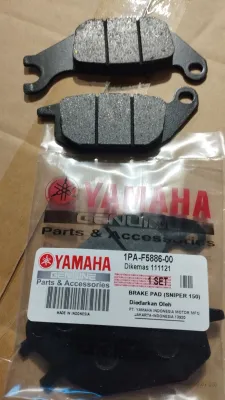
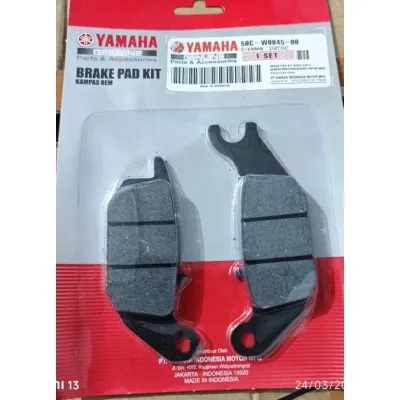
Prices are valid at publication and may change. Please refer to the product page for the latest price.

Organic Pads (Kevlar, Carbon, and Resin)
Organic brake pads are manufactured from a blend of high-strength fibers, such as Kevlar, carbon, glass, and rubber, bound together by a durable resin. These pads are highly favored for light, relaxed city commuting because of their quiet operation and soft, progressive lever feel. Because the material is relatively soft, organic pads are exceptionally gentle on your brake rotors, minimizing disc wear over time.
However, this softness comes with distinct limitations. Organic pads wear down much faster than metallic alternatives and are highly susceptible to brake fade. Under continuous, heavy braking, the resin can overheat and outgas, creating a thin, slippery layer between the pad and the rotor that drastically reduces stopping power.
Semi-Metallic Pads
Semi-Metallic pads offer a balanced compromise by blending synthetic organic materials with metallic fibers, typically copper, steel, or iron. This metallic matrix significantly improves heat dissipation and ensures a consistent coefficient of friction across a much wider temperature range. They are highly versatile and well-suited for mixed city and highway riding.
The added metal makes these pads more durable and resistant to thermal fade than organic pads. However, they require slightly more lever effort when cold, generate a moderate amount of dark brake dust, and can produce a faint squealing noise under light braking. They also accelerate rotor wear faster than organic formulations.
Sintered Metallic Pads
Sintered brake pads are manufactured by fusing metallic particles—usually copper alloys—under intense heat and pressure without melting them completely. This process creates a highly dense, extremely durable friction block. Sintered pads are the gold standard for high-performance riding, heavy loads, and severe weather conditions because they deliver an immediate, aggressive initial bite and virtually zero thermal fade.
Despite their superior stopping power, sintered pads require a brief warm-up period to reach their optimal operating temperature. When cold, they can feel slightly wooden and make a scraping noise. Because they are incredibly hard, they will rapidly wear down standard brake rotors that are not specifically rated for sintered friction materials.
| Material Type | Initial Bite | Wet-Weather Performance | Rotor Wear Rate | Best For |
|---|---|---|---|---|
| Organic | Moderate / Soft | Low to Moderate | Very Low | Casual city commuting, budget-conscious riders |
| Semi-Metallic | Strong / Progressive | Moderate to High | Moderate | Daily mixed commuting, light touring |
| Sintered | Very Strong / Aggressive | Excellent | High | High-speed riding, heavy cargo, steep descents |
OEM vs. Aftermarket Brands: How to Evaluate Your Options
Navigating the motorcycle parts market requires understanding the trade-offs between original factory components, premium aftermarket upgrades, and budget-friendly alternatives.
OEM Brands
Sticking with Yamaha’s original equipment manufacturer supplier guarantees that the brake pads match the exact metallurgical properties of your stock brake discs. OEM pads are engineered to deliver a balanced, predictable coefficient of friction that ensures a smooth lever feel and a long rotor lifespan. For the vast majority of daily commuters, OEM pads provide the most reliable, hassle-free performance without the risk of compatibility issues.
Premium Aftermarket Specialists
Established global and regional braking specialists offer high-performance formulations designed to exceed OEM specifications in targeted areas. Brands such as Nissin, Bendix, EBC, and Brembo engineer specialized street and sport pads that provide sharper initial bite, higher thermal thresholds, and superior wet-weather recovery. When evaluating premium aftermarket options, look for brands that publish transparent material specifications, such as the industry-standard edge codes (e.g., “HH” ratings, which denote a high coefficient of friction at both low and high temperatures).
Budget and Generic Aftermarket
While ultra-cheap, unbranded brake pads are widely available, they represent a significant safety compromise. These budget pads often utilize low-grade bonding adhesives that can fail under high thermal loads, leading to catastrophic delamination where the friction material completely shears off the backing plate. Additionally, inconsistent material density in cheap pads can cause rapid, uneven wear on your brake rotors, leading to expensive disc replacements.
Spotting Counterfeit Parts
Because the Sniper 150 is exceptionally popular, the local market is flooded with counterfeit premium pads. To protect yourself, inspect the packaging carefully before purchase. Genuine premium pads feature high-resolution, crisp printing, clear batch numbers, and holographic security seals. Be highly skeptical of premium-branded pads sold at prices significantly below the market average on online marketplaces; if a deal seems too good to be true, it is almost certainly a dangerous counterfeit.
Choosing Pads for Philippine Road and Weather Conditions
Riding a motorcycle in the Philippines presents unique environmental and infrastructural challenges that demand careful brake pad selection.
Wet and Humid Monsoon Climate
The intense rainfall of the wet season and frequent flash floods require brake pads that can perform reliably when wet. When water gets trapped between the brake pad and the rotor, it acts as a lubricant, drastically increasing stopping distances. Sintered and high-quality semi-metallic pads excel in these conditions because their metallic composition quickly sweeps away the water film, allowing the pads to bite into the rotor almost instantly. Cheap organic pads, by contrast, can absorb moisture and become spongy, leading to dangerous brake lag.
Stop-and-Go City Traffic
Navigating the dense, congested streets of major metropolitan areas involves continuous, low-speed braking. This constant friction builds up intense heat within the brake caliper because there is insufficient high-speed airflow to cool the assembly down. For these conditions, you need a pad with a highly predictable, progressive initial bite. An overly aggressive, race-oriented sintered pad can become grabby in slow traffic, increasing rider fatigue and the risk of accidental front-wheel lockups on oily, uneven city asphalt.
Road Dust, Mud, and Grime
Whether commuting through dusty construction zones or navigating muddy provincial roads, environmental debris poses a constant threat to your braking system. Gritty sand and volcanic ash can easily embed themselves into soft organic pad materials, acting like sandpaper that rapidly scores and grooves your brake rotors. Choosing a durable semi-metallic or sintered pad helps resist debris embedding, but it must be paired with regular caliper cleaning to prevent the slide pins from seizing.
How to Verify Fitment and Avoid Counterfeit Parts
The Yamaha Sniper 150 has undergone several design iterations across its production lifespan. Ensuring you purchase the exact correct part is critical to maintaining a safe braking system.
Identifying the Exact Variant
While often grouped under the generic “Sniper 150” label, different model years and variants (such as the V1, V2, and the closely related Sniper 155/V4) may utilize different caliper designs, mounting bracket dimensions, and pad shapes. For instance, aftermarket calipers or modified dual-piston setups require completely different pad profiles than the stock single-piston rear caliper. Never assume compatibility based solely on a product listing title.
Physical Verification Steps
Before purchasing any replacement pads, consult your motorcycle’s owner’s manual or the official Yamaha parts catalog to verify the precise OEM part number. If you are purchasing from a physical retail store, the most reliable method is to remove your worn brake pads and bring them with you. Directly compare the physical shape, backing plate thickness, overall dimensions, and the placement of the mounting pins and holes. Even a minor sub-millimeter variance can prevent the pad from sliding smoothly within the caliper bracket.
The Danger of Forcing Fitment
Under no circumstances should you attempt to file, grind, or force an ill-fitting brake pad into a caliper bracket. If a pad does not slide effortlessly onto the guide pins, it will bind. This binding causes constant brake drag, which rapidly overheats the brake fluid, warps the rotor, and can lead to sudden, complete brake failure while riding. If a pad does not fit perfectly out of the box, return it and verify the part number.
Secure Purchasing Channels
To guarantee you are receiving genuine, compatible components, purchase your brake pads exclusively from authorized Yamaha 3S shops, highly reputable local motorcycle accessory dealers, or verified flagship brand stores on major e-commerce platforms. Avoid purchasing from unverified third-party sellers who cannot provide clear proof of product origin.
Installation, Bedding-In, and Routine Maintenance
Brakes are your motorcycle’s most critical safety component. Proper installation, a correct break-in procedure, and regular upkeep are vital to ensure optimal stopping power and longevity.
Professional Installation and Safety Boundaries
Because any error in assembly can lead to a complete loss of braking control, we strongly recommend having your brake pads installed by a qualified motorcycle mechanic. If you possess the necessary tools and experience to perform the installation yourself, always refer to the original-vehicle service manual first.
Before fitting the new pads, thoroughly clean the caliper pistons and bracket using a dedicated brake cleaner to remove accumulated road grime and brake dust. Inspect the rubber dust boots for tears, and lubricate the caliper slide pins with a thin coat of high-temperature silicone brake grease. Never allow grease or oil to contact the friction surface of the new pads or the brake rotor. Finally, ensure all caliper mounting bolts are torqued to the manufacturer’s exact specifications.
The Bedding-In (Break-In) Process
New brake pads do not deliver their full stopping power immediately out of the box. They must undergo a bedding-in process to align the micro-contours of the pad friction material with the surface of the brake rotor. For the first 100 to 200 kilometers of riding, follow these guidelines:
- Apply gentle, progressive pressure to the brake levers to gradually slow down.
- Avoid sudden, hard emergency-style braking unless absolutely necessary.
- Allow the brakes to cool down between stops by avoiding continuous dragging.
Failing to bed in your pads correctly can cause “glazing,” a condition where the friction material overheats and forms a hard, glassy surface. Glazed pads exhibit severely reduced stopping power and produce a persistent, high-pitched squeal.
Routine Maintenance Checklist
To ensure your braking system remains in peak condition, perform these simple checks every 1,000 kilometers:
- Visual Thickness Check: Look through the caliper viewing window to inspect the remaining friction material. If the pad has worn down to 1.5 millimeters or if the wear indicator groove has disappeared, replace the pads immediately.
- Auditory Monitoring: Listen for any metallic scraping or grinding noises. Modern pads often feature a small metal tab that contacts the rotor when the friction material is low, serving as an audible warning that immediate replacement is required.
- Brake Fluid Level: Monitor the fluid level in the master cylinder reservoir. As brake pads wear, the caliper pistons extend further, causing the reservoir fluid level to drop. If the fluid is near the "Lower" mark, inspect your pads for wear before adding more fluid.
Frequently Asked Questions (FAQ)
How do I know when it is time to replace my Sniper 150 brake pads?
You can determine if your brake pads need replacement through visual, auditory, and tactile checks. Visually inspect the pads through the caliper window; if the friction material is worn down to 1.5 millimeters or the wear indicator groove is flush with the pad surface, they must be replaced. Auditorily, a high-pitched squeal or a harsh metallic scraping sound during braking indicates that the wear indicator tab or the metal backing plate is making direct contact with the rotor. Tactilely, if your brake lever feels unusually spongy or requires you to pull it significantly closer to the handlebar to achieve stopping power, it is time to inspect both the pads and the brake fluid level.
Are Sniper 150 V2 brake pads compatible with the V1 or V4 models?
You should never assume that brake pads are cross-compatible across different generations of the Sniper 150. Although some model years share identical caliper designs, Yamaha has introduced subtle modifications to the caliper brackets, pin configurations, and disc thicknesses across the V1, V2, and V4 (Sniper 155) iterations. Even a minor structural difference can cause an incorrect pad to bind, rub constantly, or fail to make full contact with the rotor face. Always cross-reference the exact OEM part number or aftermarket product application list with your motorcycle’s specific model year and chassis code before purchasing.
Community discussion
Share your experience or ask a question. Comments are reviewed before publication.