
Selecting the right 205/55 R17 tire type for wet roads during the rainy season in the Philippines depends on your driving environment, vehicle requirements, and maintenance habits. While high-performance tires offer excellent immediate wet-weather grip, premium touring tires provide a practical, long-lasting solution for daily commutes through waterlogged urban streets. There is no single universal winner; instead, the safest choice relies on matching your vehicle manufacturer’s specifications with a tire category designed to resist hydroplaning under your typical driving conditions. Before purchasing, always verify your vehicle’s original manual for correct load indices, speed ratings, and mounting instructions, and ensure any tire replacement is performed by a qualified professional to preserve safety.
Comparing Touring, All-Season, and Performance Tires in Heavy Rain
To make an informed decision, drivers must understand how tire manufacturers engineer different categories of 205/55 R17 tires to interact with wet pavement. Each category represents a distinct set of engineering trade-offs, balancing tread life, ride comfort, dry-road responsiveness, and wet-weather safety.
Touring tires are engineered for longevity, a quiet cabin, and consistent daily performance. In wet conditions, they rely on a dense network of sipes—tiny slits in the tread blocks—to slice through the thin film of water on the road surface. This siping action allows the rubber to make direct contact with the asphalt, providing reliable traction during routine braking and cornering. Because they are constructed from durable rubber compounds, touring tires retain their wet-grip characteristics over a longer lifespan, making them a practical option for daily commutes during the monsoon months.
Products mentioned in this guide
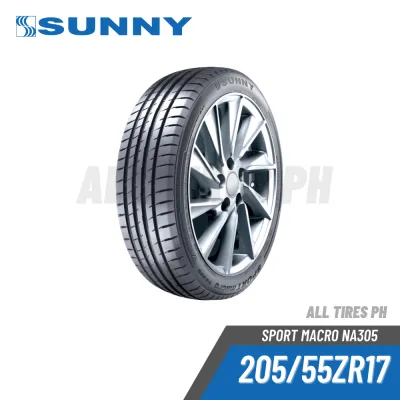
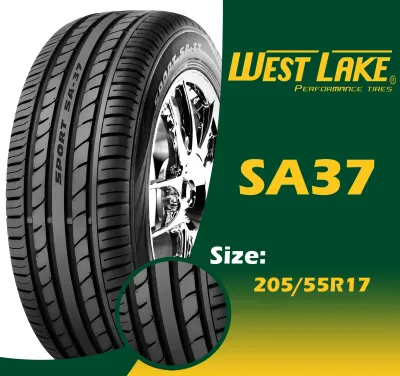
72 Lazada user ratings
Premium tires for a reasonable price., Better mileage, better value., Durable rubber for long-lasting performance., Efficient low rolling re…Read full reviewShow less
Premium tires for a reasonable price., Better mileage, better value., Durable rubber for long-lasting performance., Efficient low rolling resistance., Stable and reliable on wet roads., Smooth and quiet on dry roads., Highly recommended for Toyota Innova owners.,
Premium tires for a reasonable price., at par with other known tire brands at a reasonable price. Fit for my Nissan kicks 17" stock mags (fo…Read full reviewShow less
Premium tires for a reasonable price., at par with other known tire brands at a reasonable price. Fit for my Nissan kicks 17" stock mags (for spare tire usage). Production date 052024. Thank you seller, legit and highly recommended.
Quality:100 Appearance:100 Performance:not yet tested Mabilis dumating for its size. sana may sasakyan mga delivery boy ng ninjavan. kase na…Read full reviewShow less
Quality:100 Appearance:100 Performance:not yet tested Mabilis dumating for its size. sana may sasakyan mga delivery boy ng ninjavan. kase naka motor lang. kawawa naman
Highly recommended for Toyota Innova owners., Excellent grip in all weather conditions., Durable rubber for long-lasting performance., Bette…Read full reviewShow less
Highly recommended for Toyota Innova owners., Excellent grip in all weather conditions., Durable rubber for long-lasting performance., Better mileage, better value.,
Stable and reliable on wet roads., Durable rubber for long-lasting performance., Premium tires for a reasonable price.,
Prices are valid at publication and may change. Please refer to the product page for the latest price.
All-season tires occupy a middle ground, delivering balanced performance across a wide range of temperatures and road conditions. For wet-weather driving, these tires feature tread patterns that combine the dense siping of touring tires with slightly wider lateral grooves to handle moderate to heavy rainfall. While they may not offer the specialized wet-road adhesion of dedicated rain tires, they provide a dependable, versatile solution for drivers who encounter mixed road surfaces, from smooth highways to unpaved provincial roads.
Performance tires focus on maximizing grip and steering responsiveness, utilizing softer rubber compounds that adhere exceptionally well to both dry and wet pavement. To combat heavy rain, high-performance 205/55 R17 tires feature wide, aggressive water evacuation channels designed to pump large volumes of water out from under the tire’s contact patch. However, these tires typically have larger, stiffer tread blocks with fewer sipes, meaning their wet-weather efficacy relies heavily on maintaining deep main grooves. As a performance tire wears down, its ability to evacuate water decreases more rapidly than that of a touring tire.
Critical Tread Features for Hydroplaning Resistance
When driving through heavy downpours, the primary safety hazard is hydroplaning—where water builds up between the tire and the road, causing a loss of control. To prevent this, the physical design of the tire tread must actively channel water away from the contact patch.

Deep circumferential grooves are the most critical feature for resisting hydroplaning. These wide, continuous channels run around the tire’s circumference, acting as primary drainage canals that direct water backward and outward. For a 205/55 R17 tire, having three or four deep circumferential grooves is essential to prevent water from becoming trapped beneath the rubber.
Complementing these channels are lateral sipes and angled grooves. Lateral sipes act as microscopic squeegees, biting through the remaining micro-film of water to establish direct rubber-to-road contact, which is vital during cornering. Angled grooves sweep water out to the shoulders of the tire, ensuring the outer edges of the tread maintain traction when turning.
The effectiveness of these features depends entirely on tread depth. Most tires include built-in tread wear indicators—small rubber bars inside the grooves. When the tread wears down to these indicators, the tire must be replaced immediately. In wet conditions, even partially worn tires experience a drastic reduction in water evacuation capacity, significantly increasing hydroplaning risks.
When shopping, visually inspect the tread pattern to ensure there is a clear, unobstructed path for water to escape from the center to the outer shoulders. Avoid designs that prioritize solid, unbroken rubber blocks at the expense of drainage channels. A visual check, combined with verifying manufacturer specifications, provides a much clearer picture of wet-weather capability than relying on marketing terms.
Verifying Wet Grip and Safety Ratings on Tire Labels
Because category names and visual inspections cannot fully guarantee wet performance, standardized labeling systems provide an objective way to verify traction. In many markets, including those aligned with European or international standards, tires carry official labels that rate wet grip on a clear, standardized scale.
The wet grip rating is typically represented by a letter grade, with “A” representing the highest level of wet traction and “E” representing the lowest. This rating is determined through controlled testing that measures the tire’s braking distance on wet asphalt. Choosing a 205/55 R17 tire with an “A” or “B” wet grip rating can significantly shorten your vehicle’s stopping distance during a sudden downpour, providing a critical safety margin.
It is important to distinguish the wet grip rating from other metrics displayed on the tire label, such as fuel efficiency and external rolling noise. A tire that excels in fuel efficiency may achieve this by using a harder rubber compound that reduces rolling resistance, which can sometimes result in a lower wet grip rating. Drivers must weigh these trade-offs based on safety priorities, keeping in mind that wet-weather braking performance is a direct safety factor.
Before finalizing any tire purchase, always cross-reference the tire’s load index and speed rating with your vehicle manufacturer’s original specifications, typically found on a placard inside the driver’s door jamb or in the owner’s manual. Installing a tire with an incorrect load or speed rating can compromise vehicle stability and accelerate tread wear. Because tires are safety-critical components, always have new tires mounted, balanced, and aligned by a qualified professional to ensure correct installation.
Decision Framework: Which Type Fits Your Driving Needs?
Selecting the ideal 205/55 R17 tire requires balancing your daily driving habits, the typical road conditions you encounter, and your commitment to ongoing tire maintenance. This framework helps categorize which tire type aligns best with your specific driving profile.
Choose touring tires if your daily routine consists of commuting on paved city streets, navigating moderate urban flooding, and prioritizing long-term value. Touring tires offer the high mileage and durability needed to withstand the stop-and-go traffic of major metropolitan areas in the Philippines. Their comfortable ride and quiet operation make them excellent for daily use, while their dense siping provides reliable, predictable traction during typical rainy season downpours.
Choose all-season tires if your driving is highly varied, involving a mix of urban commuting, highway cruising, and occasional trips to provinces where road quality can be unpredictable. All-season tires provide the versatility needed to handle sudden weather transitions and diverse road surfaces, from smooth concrete to wet gravel. They offer a balanced performance profile that does not require you to sacrifice dry-road handling for wet-weather safety.
Choose performance tires only if you drive a vehicle designed for sporty handling, prioritize precise steering response, and are willing to perform rigorous maintenance. Performance tires offer exceptional wet grip when new, but their softer compounds wear down faster, and their water-evacuation capabilities degrade quickly as tread depth decreases. If you select this type, you must commit to frequent tread depth inspections and be prepared to reduce your speed significantly in heavy rain to avoid hydroplaning.
Verify first if your typical driving routes involve severely flooded roads or unpaved, muddy terrain. Standard passenger car tires in the 205/55 R17 size are not designed for deep-water wading or off-road mud. If you frequently encounter deep standing water, consult your vehicle manufacturer’s guidelines to see if your vehicle can safely accommodate specialized mud-and-snow (M+S) rated variants or if you need to adjust your route to avoid mechanical damage.
Essential Wet Season Tire Maintenance and Inspection
Even the highest-rated 205/55 R17 tire cannot protect against hydroplaning if it is poorly maintained. Regular inspections are essential to ensure your tires remain capable of evacuating water and maintaining grip throughout the rainy season.
Before the heavy rains begin, check your tread depth using a dedicated tread depth gauge or the simple coin test. Insert a coin into the main tread grooves; if the outer rim of the coin is fully visible, your tread has worn down to a dangerous level and the tire must be replaced. Maintaining a safe tread depth is the single most effective way to prevent hydroplaning, as worn tires lose their ability to channel water away.
Proper tire inflation is equally critical. Under-inflated tires suffer from a distorted contact patch, which causes the center of the tread to lift away from the road, drastically increasing the risk of hydroplaning. Always check your tire pressure when the tires are cold, using the recommended values specified on your vehicle’s door jamb placard. Do not rely on visual checks alone, as a tire can be significantly under-inflated without looking flat.
Establish a regular tire rotation schedule, typically every 8,000 to 10,000 kilometers, to promote even wear across all four tires, ensuring balanced water evacuation. If you notice your vehicle pulling to one side or observe uneven wear on the tread edges, consult a professional alignment service immediately to correct the issue before wet-weather driving compromises your safety.
Frequently Asked Questions (FAQ)
Can I mix different tire types on my car for the rainy season?
No, mixing different tire types, brands, or tread patterns on the same vehicle is highly unsafe, especially during the rainy season. Different tire designs evacuate water at different rates and offer varying levels of grip. Mixing them can cause a severe imbalance in traction between the front and rear axles, leading to unpredictable oversteer or understeer during emergency braking or sharp turns on wet roads. For optimal safety and balanced handling, always replace tires in complete sets of four, or at least in identical pairs on the same axle, ensuring they match in brand, model, size, and tread wear.
Do I need to lower my tire pressure for better grip in heavy rain?
No, you should never lower your tire pressure for wet-weather driving. This is a dangerous myth; lowering tire pressure actually reduces the tire’s structural rigidity and causes the tread grooves to squeeze together, severely limiting their ability to channel water away. This significantly increases your risk of hydroplaning at lower speeds. To maintain maximum safety, always inflate your tires to the exact cold pressure recommended by your vehicle manufacturer, which ensures the tread pattern remains open and functions exactly as engineered to evacuate water.

Community discussion
Share your experience or ask a question. Comments are reviewed before publication.