
Selecting the right dash cam requires balancing video clarity, storage reliability, and installation complexity against your daily driving habits. For drivers evaluating a 7omai dash camera, the brand’s diverse lineup offers options ranging from basic, budget-friendly recorders to high-end, multi-channel systems with advanced driver assistance features. Finding the ideal model involves matching your specific road conditions—such as frequent night driving or parking in unsecured areas—with the appropriate hardware tier. By understanding how these devices operate under tropical conditions and what technical specifications actually impact performance, you can make an informed investment that protects your vehicle and provides clear, admissible evidence when needed.
Identify Your Core Dash Cam Requirements
Before comparing specific models, you must define what you need your dash cam to accomplish during your daily commute. Your primary driving environment dictates the camera resolution required to capture critical details. For instance, if your daily route consists of high-speed highway travel, you will need a higher resolution and a faster frame rate to clearly capture license plates on fast-moving vehicles. Conversely, city driving in heavy traffic emphasizes the need for a wider field of view to document side-impact incidents and pedestrian activity. Nighttime driving introduces additional challenges, requiring advanced image processing to handle glare from oncoming headlights and low-light street conditions.
Another critical factor is whether you require protection while your vehicle is stationary. Standard setups only record when the engine is running, which is sufficient for documenting active traffic accidents. However, if you frequently park in public lots, street-side spaces, or unmonitored areas, parking surveillance becomes a non-negotiable requirement. This feature monitors your vehicle while parked, recording footage when it detects physical impacts or motion. Implementing this level of security typically requires continuous power, which changes how the camera must be wired into your vehicle’s electrical system.
Products mentioned in this guide
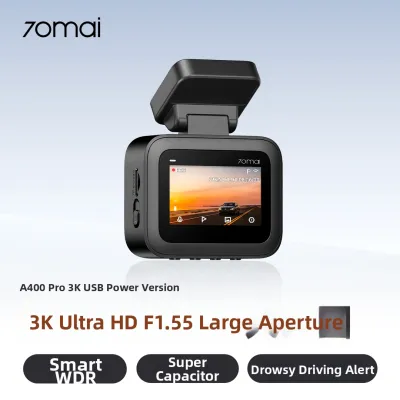
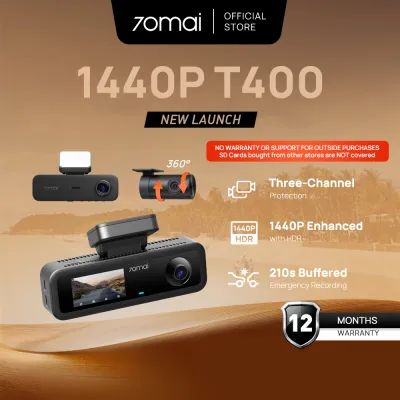
![[New Launch]70mai T800E Dash Cam 4K 3-Channel 360° Rotatable Car Camera HDR GPS With Night Vision](https://img.lazcdn.com/g/p/e7ff1ff40b833845cc4787b57b3d2b12.jpg_400x400q80.jpg_.webp)
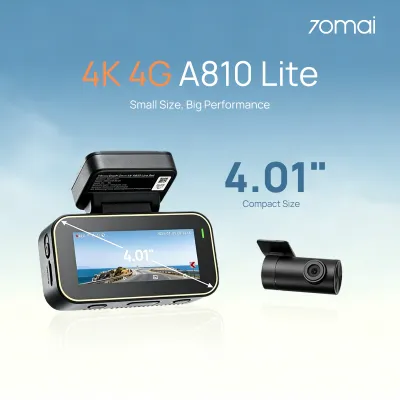
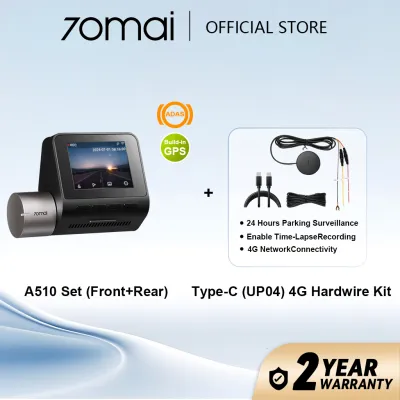
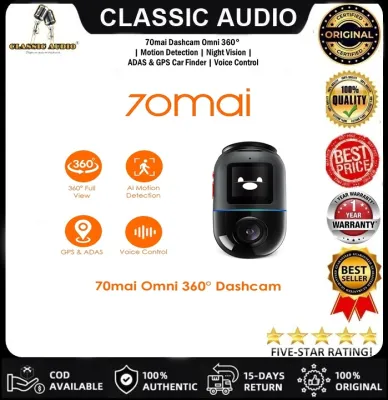
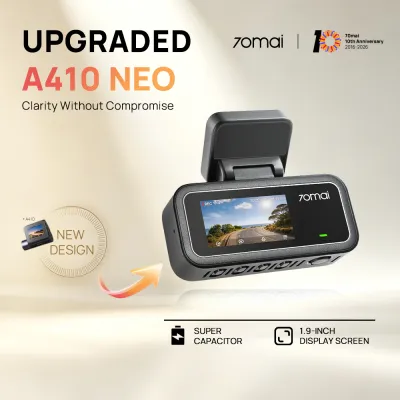
Prices are valid at publication and may change. Please refer to the product page for the latest price.
Finally, you must decide between a front-only camera and a dual-channel system that records both front and rear views. A front-facing camera is simpler to install and covers the most common accident scenarios. However, rear-end collisions and tailgating incidents are incredibly common, and having a rear-facing camera provides comprehensive context that can prove your innocence in multi-car pileups. Assessing these needs beforehand prevents you from overpaying for advanced features you do not require, or conversely, buying an entry-level model that fails to capture crucial details when an incident occurs.
Navigate the 70mai Product Line Tiers
The 70mai product ecosystem is structured into distinct tiers designed to cater to different user needs and budgets. At the top of the lineup is the Premium tier, which showcases the brand’s most advanced imaging technology. These models typically offer true 4K resolution, utilizing high-tier image sensors that excel at resolving fine details in challenging lighting. They also integrate advanced features such as built-in GPS logging, dual-band Wi-Fi for rapid video transfers, and Advanced Driver Assistance Systems (ADAS) that provide lane-departure and forward-collision warnings. These models are ideal for tech-conscious drivers and those who prioritize maximum image clarity above all else.

The Mid-range tier represents a balanced sweet spot for the average driver, offering 2K or 1440p resolution. This tier provides a significant upgrade in clarity over standard high-definition cameras without the premium price tag. These models often include essential safety features, reliable low-light performance, and optional parking mode capabilities. They deliver highly legible footage of road signs and license plates under normal driving conditions, making them an excellent value proposition for daily commuters who want dependable protection without unnecessary extras.
For drivers on a strict budget or those equipping a secondary vehicle, the Entry-level tier offers compact, unobtrusive 1080p models. These devices focus strictly on the essentials: reliable loop recording, basic G-sensor impact detection, and a small footprint that hides easily behind the rearview mirror. While they lack the ultra-sharp resolution needed to read distant license plates at night, they provide clear, indisputable evidence of traffic light colors, vehicle positions, and overall accident dynamics. When shopping, always verify current model availability, exact specifications, and local pricing in ₱ on official brand websites or authorized automotive retailers to ensure you are getting the latest hardware revisions.
Key Specifications to Verify Before Buying
When evaluating a 7omai dash camera, looking past marketing buzzwords and analyzing the technical specifications is crucial for ensuring long-term reliability. The image sensor and aperture size are the primary drivers of video quality. An aperture of f/1.8 or wider (indicated by a lower f-number) allows more light to reach the sensor, which is critical for capturing clear footage on poorly lit roads. Pair this with a high-quality image sensor that features high dynamic range (HDR) processing, which prevents headlight glare from blowing out license plates at night.
Storage management is another vital consideration that directly impacts the camera’s operation. Dash cams write data continuously, subjecting memory cards to intense wear. You must verify the maximum supported microSD card capacity and the required speed class—typically Class 10, U3, or V30—specified in the product documentation. Using an incompatible or low-endurance card can lead to write errors, corrupted files, and sudden recording failures. Always opt for high-endurance cards specifically designed for continuous write cycles to ensure your footage is saved when you need it most.
Environmental durability is especially important in the tropical climate of the Philippines, where parked vehicles are subjected to intense solar heat and high humidity. Internal cabin temperatures can easily exceed safe operating limits for standard electronics. When reviewing specifications, check the operating temperature range of the dash cam. Models utilizing supercapacitors instead of traditional lithium-ion batteries are highly recommended for hot climates, as supercapacitors handle extreme heat much more safely and are far less prone to swelling, leaking, or failing prematurely. Additionally, consider the camera’s field of view (FOV); while a wider angle (such as 130 to 140 degrees) captures more of the roadside, excessively wide angles can distort the image and make distant objects appear further away than they actually are.
Installation, Power, and Safety Boundaries
Installing your dash cam correctly is just as important as choosing the right model, as improper setup can compromise both the device’s functionality and your vehicle’s safety. The simplest installation method uses the included cigarette lighter adapter or a USB port, which powers the camera only when the ignition is on. While this is a straightforward, plug-and-play solution, it means the camera cannot operate in parking mode when the vehicle is turned off. To enable 24/7 parking surveillance, you must use a dedicated hardwire kit that connects directly to your vehicle’s fuse box, drawing constant power while monitoring battery voltage to prevent draining your car’s battery.
Routing the wiring requires careful planning to avoid interfering with your vehicle’s safety systems. When running cables along the windshield and down the A-pillar to the fuse box or power outlet, you must ensure the wire is routed behind the side curtain airbags. Running a cable directly across the path of an airbag can prevent it from deploying correctly in an accident or turn the cable into a dangerous projectile. Similarly, routing the cable for a rear-facing camera requires patience to avoid pinching the wire in weatherstripping or interfering with rear window defroster lines and AM/FM radio antennas integrated into the glass.
Because hardwiring involves tapping into your vehicle’s electrical system, it carries inherent risks if done incorrectly. A misplaced fuse tap can cause electrical malfunctions, trigger warning lights, or even damage sensitive electronic control units. If your vehicle’s manual does not clearly outline the fuse layout, or if you are uncomfortable identifying constant and ignition-switched fuses using a circuit tester, you should halt the DIY process. Consulting a qualified automotive electrician or professional installer ensures the system is wired safely, preserves your vehicle’s warranty, and guarantees that the low-voltage cutoff protection functions correctly.
Decision Framework: Matching Needs to Tiers
To finalize your decision, match your specific driving habits and vehicle constraints to the appropriate product tier. Opt for the Premium tier if your daily routine involves extensive night driving, high-speed highway commuting, or parking in high-risk areas where maximum license plate readability and continuous 24/7 surveillance are essential. This tier provides the highest level of detail and advanced safety warnings, making it a worthwhile investment for high-value vehicles or drivers seeking absolute peace of mind.
Choose the Mid-range tier if you want a highly reliable, clear recording of your daily commute without paying for premium features like ADAS or 4K resolution. This tier offers the best balance of performance and cost, providing excellent daytime clarity, dependable night recording, and optional parking protection that satisfies the needs of the vast majority of drivers. It is the practical choice for standard daily commuting in urban and suburban environments.
Select the Entry-level tier if your primary goal is basic liability protection on a strict budget, or if you need a simple camera for a secondary vehicle or delivery fleet. These models provide the essential video evidence needed to resolve insurance disputes without complex setup requirements. Before purchasing any model, physically inspect your vehicle’s windshield. Heavy window tints, aggressive windshield slopes, or bulky sensor housings around the rearview mirror can restrict mounting space or degrade camera performance, so ensure your chosen model’s physical dimensions and mounting bracket style are compatible with your car’s interior layout.
Frequently Asked Questions (FAQ)
Do I need a special memory card for a 70mai dash cam?
Yes, dash cams subject memory cards to continuous, high-speed writing and overwriting cycles, which quickly wears out standard cards. You should use a high-endurance microSD card rated for continuous recording. Always check your specific 70mai model’s user manual to verify the maximum supported storage capacity and the required speed class, which is typically Class 10, U3, or V30, to prevent recording errors and data corruption.
Will hardwiring the dash cam void my car's warranty?
Generally, simply mounting a dash cam does not void a warranty, but improper hardwiring that damages the vehicle’s electrical system can lead to denied warranty claims for those specific components. To protect your vehicle, always refer to the manufacturer’s warranty guidelines regarding aftermarket electrical modifications. If you are unsure about tapping into the fuse box or routing cables safely around airbags, have the installation performed by a certified automotive electrician.

Community discussion
Share your experience or ask a question. Comments are reviewed before publication.