
Diagnosing whether engine symptoms like white smoke, oil consumption, or power loss in an Aerox V2 stem from a worn cylinder block requires a systematic approach. Before purchasing a new block for Aerox V2, you must isolate the issue from other components like valve seals, head gaskets, or fuel systems. In the tropical climate of the Philippines, where high humidity and stop-and-go traffic accelerate engine wear, understanding these symptoms saves time and unnecessary expenses. This guide outlines the diagnostic steps, from initial visual checks to professional assessments, helping you identify the root cause and choose the right repair path.
Recognizing Engine Symptoms and Initial Checks
Identifying the color of the exhaust smoke is the first step in diagnosing internal engine health. White smoke is often harmless water vapor caused by condensation, which typically clears up after the engine warms up. However, persistent, thick white smoke with a sweet odor indicates that coolant is leaking into the combustion chamber, pointing to a blown head gasket rather than a worn cylinder wall. Blue or bluish-grey smoke is a clear sign of burning engine oil, which suggests that oil is bypassing the piston rings or valve stem seals. Black smoke indicates an overly rich air-fuel mixture, which is usually a fuel injection or air intake issue rather than a mechanical failure of the cylinder block.
Monitoring your engine oil level and condition provides critical clues about internal wear. Pull the dipstick regularly to check for rapid oil consumption; if the oil level drops significantly between scheduled changes without any visible external leaks, the engine is likely burning oil internally. Inspect the oil’s appearance on the dipstick. If the oil looks milky or resembles coffee with milk, coolant is mixing with the oil, which requires immediate attention to prevent severe bearing damage.
Products mentioned in this guide
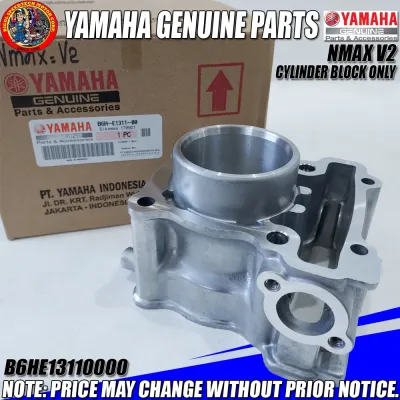
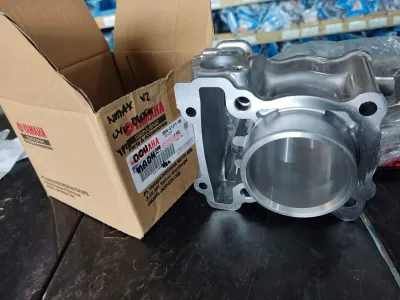
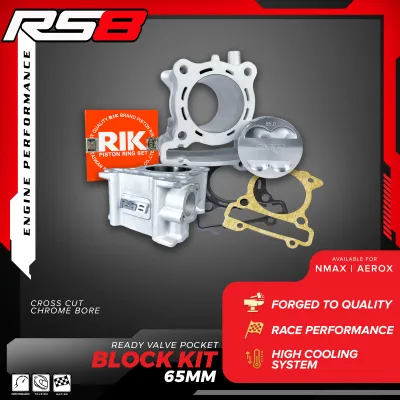
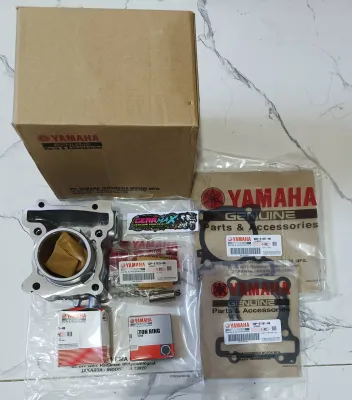
![[COD] For Yamaha NMAX155 AEROX155 NMAX AEROX V1 V2 Motorcycle Accessories Cylinder block Big Bore 63mm](https://img.lazcdn.com/g/p/52b640f04afd9c09c60ea1b62af64c1d.jpg_400x400q80.jpg_.webp)
Prices are valid at publication and may change. Please refer to the product page for the latest price.
Before assuming your cylinder block has failed, perform a thorough external inspection. Check for oil leaks around the cylinder head gasket, the cylinder base gasket, and the cam chain tensioner. Additionally, inspect the airbox; a clogged air filter or a malfunctioning crankcase breather system can build up pressure, forcing engine oil into the combustion chamber and causing symptoms that mimic a worn cylinder block.
Symptom-to-Cause Diagnostic Matrix
To help isolate the root cause of your engine issues, use the following matrix to map observable symptoms to their most likely mechanical causes:

| Symptom | Likely Cause | Primary Component to Inspect |
|---|---|---|
| Blue smoke on cold startup only | Worn or hardened valve stem seals | Cylinder head assembly |
| Continuous blue smoke under acceleration | Worn piston rings or scored cylinder wall | Cylinder block and piston |
| Loss of engine power with high oil consumption | Loss of compression due to ring or cylinder wear | Cylinder block and piston assembly |
| Milky engine oil or sweet-smelling white smoke | Blown head gasket or warped cylinder head | Head gasket and mating surfaces |
| Black smoke with soot on the spark plug | Rich air-fuel mixture | Fuel injector, air filter, or O2 sensor |
Many engine symptoms overlap, making a complete teardown necessary to isolate the cylinder block from the cylinder head. For example, a loss of compression can be caused by worn piston rings, a scored cylinder wall, or poorly sealing valves in the cylinder head. Attempting to diagnose these issues purely by visual inspection from the outside is impossible, as micro-scratches on the cylinder bore or minor warping of the mating surfaces cannot be detected without specialized measuring tools.
Advanced Diagnostics and Professional Assessment
To confirm whether your cylinder block or piston rings are worn, perform a compression test and a leak-down test. A compression test measures the maximum pressure generated by the piston during its compression stroke. If the reading is below the manufacturer’s specification, pour a teaspoon of clean engine oil into the spark plug hole and repeat the test. If the compression reading increases significantly, the oil has temporarily sealed the gap between the piston rings and the cylinder wall, confirming worn rings or a scored cylinder. If the compression remains low, the leak is likely occurring through the valves or a damaged head gasket.
Disassembling an engine block carries significant safety and mechanical risks. Always consult the original vehicle service manual for exact torque specifications, bolt patterns, and clearance limits. Attempting to remove or install engine components without proper tools, such as a calibrated torque wrench and a piston ring compressor, can warp the aluminum components or break the fragile piston rings. If you are uncomfortable performing these steps, seek assistance from a qualified mechanic.
When the engine is disassembled, a professional mechanic must measure the cylinder bore using a dial bore gauge and a micrometer. These measurements determine if the cylinder has developed taper (wearing wider at the top than the bottom) or has become out-of-round. If these measurements exceed the service limits specified by the manufacturer, the cylinder block must be replaced to restore proper engine compression and performance.
Deciding Between Repair, Rebuilding, or Replacement
The Aerox V2 utilizes Yamaha’s proprietary DiASil (Die-cast Aluminum Silicon) cylinder block. DiASil cylinders are highly durable and offer excellent heat dissipation, but they cannot be rebored or honed in the traditional manner because they lack a steel sleeve. If the cylinder wall is deeply scratched, scored, or worn beyond service limits, reboring is not an option. You must replace the entire cylinder block assembly.
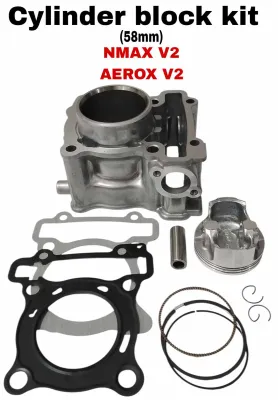
When purchasing a replacement block for Aerox V2, ensure complete compatibility with your specific model year. It is highly recommended to purchase a complete cylinder block kit, which includes the cylinder block, piston, piston rings, piston pin, retaining clips, and a fresh set of high-quality head and base gaskets. Reusing old gaskets or using cheap, non-standard seals often leads to premature oil or coolant leaks, ruining the repair.
Evaluate the overall condition of your scooter before committing to an engine rebuild. If your Aerox V2 has high mileage, other internal components like the crankshaft bearings, connecting rod, and valve train may also be nearing the end of their service life. In such cases, investing several thousand ₱ in a complete engine overhaul or professional rebuild is more cost-effective than simply replacing the cylinder block and risking a secondary failure shortly after.
Preventive Maintenance to Extend Engine Life
Preventing premature cylinder block wear starts with strict adherence to routine maintenance. In the hot, dusty, and humid conditions of the Philippines, engine oil degrades rapidly. Change your engine oil at the manufacturer-recommended intervals, and always use the correct viscosity, such as 10W-40, that meets JASO MB standards for automatic scooters. Clean oil maintains the vital protective film between the piston rings and the cylinder wall, minimizing friction and wear.
Avoid aggressive riding immediately after starting your scooter. Allow the engine to idle for at least one minute on cold starts to give the oil pump sufficient time to distribute lubricant to the cylinder head and cylinder walls. This simple routine drastically reduces dry-start friction, which is a primary cause of cylinder scoring.
Because the Aerox V2 is liquid-cooled, maintaining the cooling system is critical to preventing engine damage. Regularly check the coolant level in the reservoir and inspect the radiator fins for dirt or debris that could block airflow. Overheating can quickly warp the cylinder head and damage the cylinder block, leading to catastrophic compression loss and expensive repairs.
Frequently Asked Questions (FAQ)
Can a worn cylinder block cause a scooter to stall at idle?
Yes, a worn cylinder block or damaged piston rings can cause a scooter to stall at idle. When the cylinder wall or rings are worn, the engine loses compression, making it difficult to maintain a stable air-fuel mixture combustion at low RPMs. However, before assuming the cylinder block is at fault, rule out simpler issues such as a dirty throttle body, a worn spark plug, or incorrect valve clearances.
Is it safe to ride the scooter with mild blue smoke?
No, it is not safe to continue riding with blue smoke. Blue smoke indicates that engine oil is burning in the combustion chamber, which will rapidly deplete your oil level and can lead to sudden engine seizure while riding. Furthermore, burning oil quickly fouls the spark plug, causes heavy carbon buildup on the valves, and damages the catalytic converter in the exhaust system.
How do I know if the issue is the piston rings or the valve seals?
Observe when the exhaust smoke occurs. Blue smoke that appears primarily during a cold startup and gradually disappears as the engine warms up usually points to worn valve stem seals, as oil seeps past the seals while the engine is off. Continuous blue smoke that worsens under acceleration or high engine loads typically indicates worn piston rings or a scored cylinder wall. A professional leak-down test is required to confirm the exact source of the leak.

Community discussion
Share your experience or ask a question. Comments are reviewed before publication.