
Navigating the sudden, torrential downpours of the Philippine rainy season can turn daily commutes into high-stress driving tests, leaving many SUV and pickup owners wondering if their rugged all-terrain tires can actually keep them safe on slick, flooded asphalt. While all-terrain tires offer excellent versatility for off-road excursions, their wet performance on paved roads is generally inferior to dedicated highway or rain tires due to a smaller contact patch, larger tread blocks, and lower sipe density, which increases braking distances and the risk of hydroplaning during heavy monsoon rains. Choosing the right tire requires balancing your actual driving conditions with the physical limitations of all-terrain tread designs.
How Does All-Terrain Tread Design Affect Water Evacuation and Hydroplaning?
All-terrain tread designs prioritize off-road traction by utilizing large tread blocks and wide, deep grooves, which inherently trade off some water evacuation efficiency on flat, paved surfaces compared to passenger car tires. To understand this trade-off, one must look at how water behaves under a rolling tire. When a vehicle travels over a wet road, the tire must rapidly displace the water beneath it to maintain direct contact with the asphalt.
The aggressive tread pattern of an all-terrain tire features deep channels designed to claw through mud, gravel, and sand. While these deep grooves can hold a significant volume of water, they often lack the continuous, directional channels found in dedicated highway or passenger car tires. Directional channels act as high-speed pumps, forcing water outward and away from the center of the tire. Without these optimized pathways, water can become trapped under the large, blocky tread elements, creating a hydraulic wedge that lifts the tire off the road.
Products mentioned in this guide
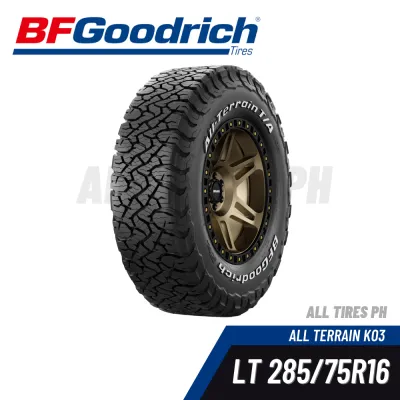
2 Lazada user ratings
super durable & the price much cheaper
good quality fast delivered
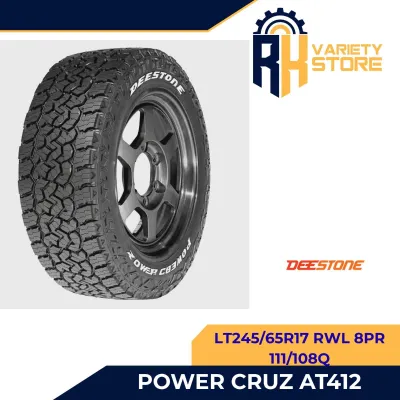
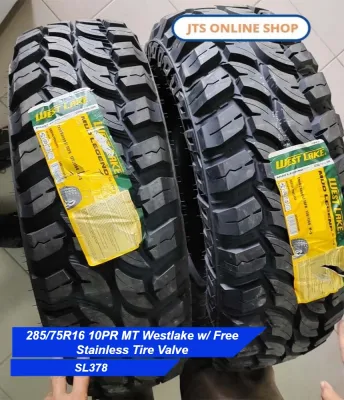
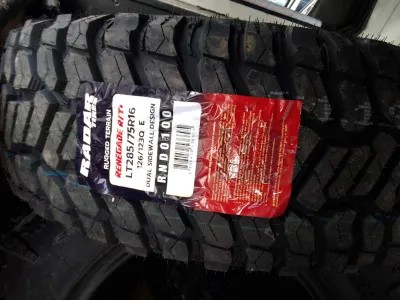
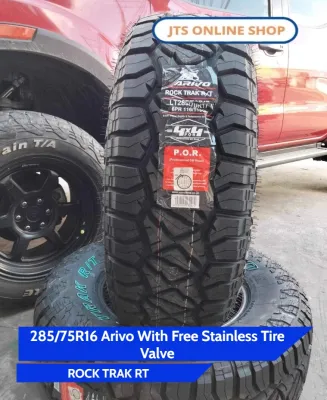
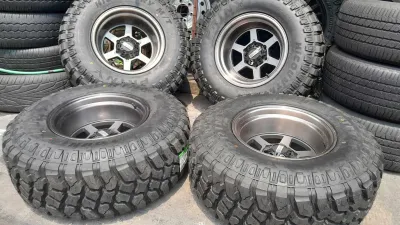
Prices are valid at publication and may change. Please refer to the product page for the latest price.
Furthermore, all-terrain tires feature a high void ratio, meaning there is a larger proportion of empty space relative to the rubber blocks that touch the road. While this design is essential for self-cleaning in muddy off-road conditions, it reduces the physical contact patch on wet city streets. With less rubber making direct contact with the pavement, the tire has fewer opportunities to establish mechanical grip on slick surfaces, making the vehicle more susceptible to slipping during sudden maneuvers.
Hydroplaning represents the ultimate failure of water evacuation, occurring when the tire completely loses contact with the road and floats on a thin film of water. The risk of hydroplaning increases dramatically with vehicle speed, especially during intense monsoon downpours where standing water accumulates quickly on poorly drained highways. Because all-terrain tires cannot evacuate water as rapidly as specialized rain tires, the critical speed at which hydroplaning occurs is typically lower. Drivers must remain highly vigilant, reduce their speed in heavy rain, and avoid sudden steering inputs when crossing deep puddles.
What Wet Braking and Cornering Behavior Should You Expect on Paved Roads?
When driving on wet paved roads, you should expect longer braking distances and reduced lateral stability during cornering compared to standard highway-terrain tires. These behavioral differences stem directly from the physical characteristics of the tire’s rubber compound and tread structure. Understanding these dynamics allows drivers to adjust their driving habits and maintain a safer buffer zone on slick provincial roads and urban streets.

The wet grip of an all-terrain tire is heavily influenced by tread block squirm. Because the tread blocks on an all-terrain tire are taller and more isolated than those on a highway tire, they tend to flex and bend under lateral forces. When you attempt to corner on wet asphalt, this block flex reduces steering precision and delivers a vaguer, less responsive feedback through the steering wheel. This means the vehicle may feel less planted, requiring wider steering angles and slower cornering speeds to maintain your intended line.
Braking distances on wet pavement are noticeably longer with all-terrain tires. In an emergency stopping scenario, the combination of a reduced contact patch and block squirm prevents the tire from biting into the wet road surface effectively. On slick asphalt, this can result in the anti-lock braking system (ABS) engaging much earlier, extending the distance required to bring the vehicle to a complete stop. Drivers transitioning from standard passenger tires to all-terrain tires must increase their following distance to account for this extended stopping margin.
The ability of an all-terrain tire to maintain wet traction over its lifespan depends heavily on its sipe density and rubber formulation. Sipes are tiny, engineered slits within the tread blocks that flex to create biting edges, slicing through the micro-film of water on the road surface. While some premium all-terrain tires feature dense, full-depth siping, others have shallow sipes that quickly disappear as the tread wears down. Additionally, the rubber compounds used in all-terrain tires are often formulated to resist cuts and chips from sharp rocks, which can make the rubber harder and less compliant on cold, wet pavement compared to the softer, silica-rich compounds used in dedicated rain tires.
How Can You Verify a Specific All-Terrain Tire's Wet Safety Ratings?
You can verify an all-terrain tire’s wet safety capabilities by checking its Uniform Tire Quality Grading (UTQG) traction rating on the sidewall and inspecting the manufacturer’s technical specifications for wet-weather compound technologies. Because all-terrain tires vary widely in their design focus—some leaning toward off-road durability and others toward on-road comfort—independent verification is crucial before making a purchase.
The UTQG traction rating is a standardized metric molded directly into the tire’s sidewall, graded as AA, A, B, or C. This rating measures the tire’s straight-line braking coefficient on wet concrete and asphalt test surfaces. For drivers concerned with monsoon safety, selecting an all-terrain tire with a traction rating of A is highly recommended. Tires with a B or C rating offer significantly less wet braking grip and may not provide the safety margin required for heavy tropical downpours.
Beyond the UTQG rating, you should examine the tire’s technical specifications for indicators of wet-weather performance. Look for tires that incorporate high-silica rubber compounds. Silica is a compounding agent that enhances the flexibility of the rubber at various temperatures, allowing the tread to conform more closely to the microscopic imperfections of wet asphalt. Additionally, check the manufacturer’s documentation for specialized tread features, such as multi-angle sipes, stepped block edges, or circumferential zig-zag grooves designed specifically to assist with water evacuation.
Finally, maintaining wet safety requires regular physical inspections of your tires’ tread depth and overall condition. All tires feature tread wear indicators—small rubber bars situated inside the tread grooves. While the legal limit for tread depth is typically 1.6 mm, this minimum is insufficient for safe driving on flooded roads. For effective water evacuation and hydroplaning resistance during heavy rains, a minimum tread depth of 3 mm to 4 mm is highly recommended. If your all-terrain tires are worn past this point, their ability to channel water is severely compromised, regardless of their original safety ratings.
When Should You Choose Highway or Dedicated Rain Tires Instead of All-Terrain?
You should choose highway-terrain (H/T) or dedicated rain tires over all-terrain options if your daily driving consists almost entirely of paved urban commuting and provincial highway travel, with little to no off-road use. While the rugged, aggressive look of all-terrain tires is highly appealing to many SUV and pickup truck owners, prioritizing styling over real-world driving conditions can compromise your safety during the wettest months of the year.
To make an informed decision, honestly assess your actual off-road frequency versus your daily commuting needs. If your vehicle rarely leaves paved roads, or if your off-road driving is limited to well-maintained gravel paths and dry dirt roads, the specialized capabilities of an all-terrain tire are largely wasted. During the heavy rains of the monsoon season, a vehicle equipped with highway-terrain tires will consistently deliver superior safety, shorter stopping distances, and better handling on wet asphalt.
Highway-terrain tires are engineered specifically for paved surfaces, featuring continuous tread ribs, narrower grooves, and high sipe densities. This design maximizes the rubber contact patch while providing highly efficient water evacuation channels, resulting in significantly better hydroplaning resistance and wet cornering stability. Furthermore, highway-terrain tires offer secondary benefits that enhance daily driving comfort, including lower road noise, reduced rolling resistance for better fuel efficiency, and a smoother ride quality.
Ultimately, the decision comes down to prioritizing daily wet-weather safety over occasional off-road capability. If you frequently navigate deep mud, rocky trails, or unpaved construction sites, an all-terrain tire is a necessary tool. However, before purchasing any new set of tires, always consult your vehicle’s owner’s manual to verify the recommended tire sizes, load indexes, and speed ratings. For safety-critical components like tires, ensure they are professionally installed, balanced, and aligned by a qualified technician to guarantee optimal performance and handling on both wet and dry roads.

Community discussion
Share your experience or ask a question. Comments are reviewed before publication.