
Upgrading your Mio Sporty with an Apido pipe changes the scooter’s acoustic profile, replacing the quiet hum of the stock muffler with a deeper, throatier rumble. However, whether this aftermarket exhaust will pass Land Transportation Office (LTO) noise regulations in the Philippines is not a simple yes-or-no question. Compliance depends heavily on the specific pipe design, whether you install a decibel (db) killer, and how local traffic enforcers conduct roadside tests.
This guide breaks down the acoustic expectations of this setup, the regulatory framework governing modified exhausts, and the practical steps you can take to keep your ride street-legal.
Understanding the Sound Profile of an Apido Exhaust
The stock muffler on a Yamaha Mio Sporty is engineered to suppress engine noise to meet strict factory emission and sound standards. It features a restrictive internal baffling system that keeps the exhaust note quiet and polite, which is ideal for neighborhood riding but often lacks the auditory character some riders prefer.
Products mentioned in this guide
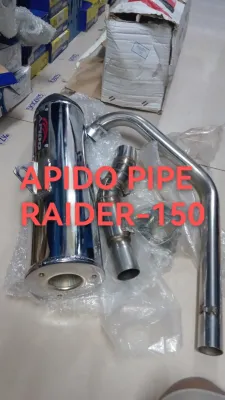
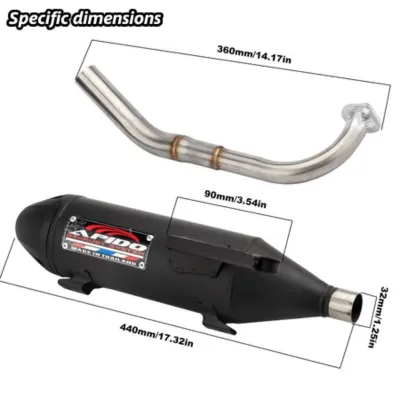
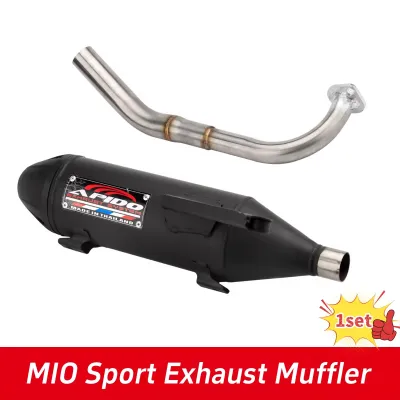
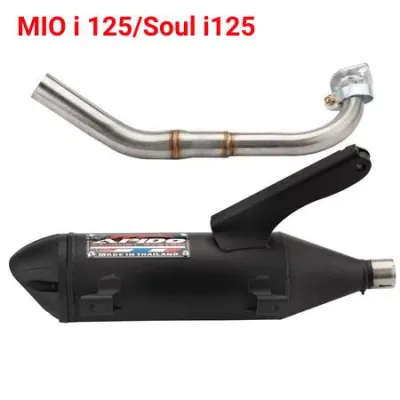
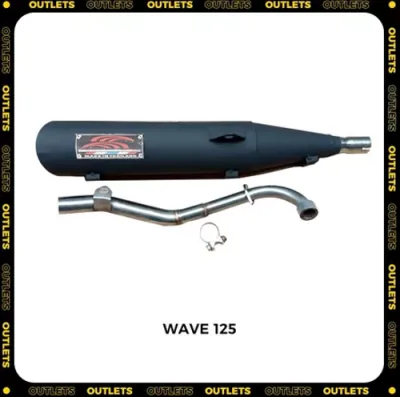
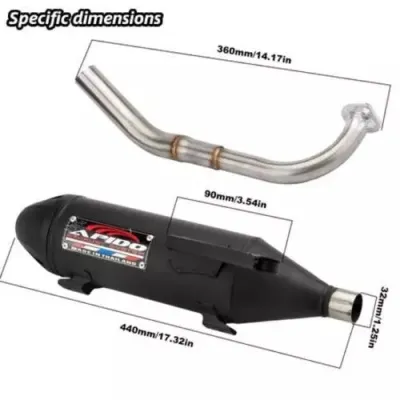
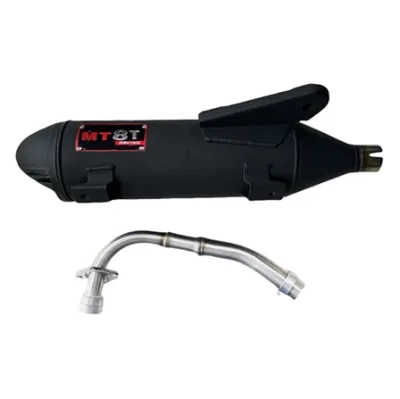
Prices are valid at publication and may change. Please refer to the product page for the latest price.
In contrast, an Apido pipe is designed with a freer-flowing internal structure. This reduces backpressure and alters the exhaust note, producing a louder, more resonant sound that many riders associate with sporty performance.
Several physical factors dictate the final volume of your exhaust. A wider pipe diameter allows more exhaust gas to escape quickly, which generally increases the deep bass frequencies and overall volume.
The internal baffle design also plays a critical role. Some Apido models feature spiral or straight-through perforated cores wrapped in fiberglass packing, which dampens high-frequency harshness but still allows a significant volume increase over stock.
Adding a removable silencer, commonly known as a db killer, restricts the exit tip of the muffler. This restriction mimics some of the backpressure of a stock system, noticeably lowering the overall volume and softening the aggressive tone.
Because exact decibel levels can vary based on engine wear, ambient noise, and the specific testing environment, riders should evaluate subjective loudness carefully. If an exhaust sounds painfully loud to you while idling in a closed garage, it is highly likely to exceed legal limits on the open road.
Navigating LTO and DENR Noise Regulations in the Philippines
In the Philippines, vehicle noise emissions are regulated through joint efforts by the LTO and the Department of Environment and Natural Resources (DENR). These agencies establish maximum allowable decibel limits for motorcycles to curb noise pollution on public roads.

During roadside operations, anti-smoke belching units and traffic enforcers often set up checkpoints equipped with sound level meters (decibel meters) to identify non-compliant motorcycles.
Running an open pipe or a straight-pipe setup without any silencing inserts carries a high risk of roadside apprehension. Enforcers frequently target modified exhausts that produce an excessively sharp or loud bark, which can lead to hefty fines and the confiscation of license plates or the motorcycle itself.
To ensure your motorcycle remains street-legal, it is essential to verify the current official decibel thresholds directly from the latest LTO administrative orders. These regulations specify not only the maximum decibel limit but also the exact distance and angle at which the testing microphone must be placed relative to the exhaust tip.
Because local enforcement practices can sometimes vary by municipality, staying informed about national standards is your best defense against subjective or improper roadside testing.
Practical Steps to Maintain Compliance and Avoid Apprehension
The most effective way to manage the sound output of your Apido pipe is to keep a high-quality db killer installed at all times during daily street riding. This simple insert can mean the difference between a smooth commute and an expensive ticket.
Regular maintenance of your exhaust system is also crucial. Over time, high engine temperatures and tropical humidity can degrade the internal fiberglass packing, cause rust holes, or loosen mounting brackets, all of which artificially increase exhaust noise.
Inspect the connection joint between the exhaust manifold and the engine cylinder head. A leaking exhaust gasket in this area allows high-pressure gases to escape before reaching the muffler, resulting in a loud, ticking noise that will easily fail a roadside inspection.
Riding etiquette plays a major role in avoiding unwanted attention from law enforcement. Practice throttle control by keeping engine RPMs low when traveling through residential areas, school zones, hospital streets, or during late-night hours.
If you are flagged down at a noise compliance checkpoint, remain calm and cooperative. Ensure your motorcycle registration documents are up to date, and politely request that the enforcers conduct the decibel test according to official LTO guidelines, which typically require a quiet testing environment away from heavy traffic.
Choosing the Right Setup for Your Riding Needs
When shopping for an aftermarket exhaust, you will generally choose between a slip-on muffler and a full-system replacement. A full-system replacement for the Mio Sporty replaces the entire exhaust pipe from the engine port to the silencer, which has a more pronounced effect on both sound and engine characteristics.
Before making a purchase on any online marketplace or local motorcycle shop, verify the product specifications and confirm whether the package includes a compatible db killer. Avoid sellers who make vague performance or compliance guarantees without providing clear details about the pipe’s construction.
Keep in mind that modifying your motorcycle’s exhaust system can affect engine tuning and safety. Always verify the specific vehicle model year, interface dimensions, and mounting positions from the product documentation before installation.
If you are unsure about the installation process, seek assistance from a qualified motorcycle mechanic to ensure the pipe is mounted securely and does not interfere with the rear suspension or tire clearance. If your primary goal is hassle-free daily commuting without the constant worry of roadside checkpoints, keeping the stock Mio Sporty exhaust—or choosing a certified, quiet aftermarket alternative—remains the safest and most reliable option.
Frequently Asked Questions (FAQ)
At what RPM does the LTO measure exhaust noise during checkpoints?
Official LTO testing protocols generally require measuring exhaust noise at a specific engine speed, often calculated as half of the motorcycle’s maximum rated RPM, or at a standardized fast idle if the bike lacks a tachometer. Because the Mio Sporty is an automatic scooter without a built-in RPM gauge, enforcers may estimate the engine speed or conduct the test at a steady, partial throttle. Subjective roadside checks might rely on the enforcer’s auditory judgment during acceleration, which is why maintaining a quiet idle and low-RPM sound profile is highly beneficial.
Will installing a db killer guarantee that my Apido pipe passes LTO inspection?
While a db killer significantly reduces the volume of an Apido pipe, it does not offer an absolute guarantee of passing an LTO inspection. The final decibel reading depends on the overall wear of the exhaust system, the condition of the internal packing, and the specific testing environment. Additionally, roadside enforcers retain some level of discretion during visual inspections; if they deem the modification itself to be unauthorized or structurally unsafe, you may still face questioning even if the sound level falls within acceptable limits.

Community discussion
Share your experience or ask a question. Comments are reviewed before publication.