
The safety of a classic vintage helmet depends entirely on its internal structure and official certification, not its retro appearance. In the Philippines, legal road use and daily riding require helmets to carry valid ICC (Import Commodity Clearance) or PS (Philippine Standard) marks. While many online marketplaces sell cheap vintage-style helmets that function merely as novelty items lacking protective capabilities, certified modern retro helmets can successfully balance classic aesthetics with contemporary safety standards. This guide helps you verify certifications, understand design trade-offs, and make an informed purchasing decision for your daily commute.
Riding a motorcycle in the Philippines presents unique challenges, from navigating congested city streets to enduring sudden tropical downpours and intense heat. In these demanding conditions, your riding gear serves as your primary line of defense. For riders of cafe racers, scramblers, and classic scooters, a classic vintage helmet is often the ultimate style accessory. However, choosing style over structural integrity can have severe consequences if the helmet cannot perform during an impact.
Many riders mistake a retro aesthetic for actual vintage construction. An authentic vintage helmet manufactured decades ago is highly dangerous to wear today, as its protective materials have long since degraded. Similarly, modern novelty helmets that mimic old-school designs without meeting safety standards offer virtually zero protection. To ride safely and legally, you must understand how to distinguish these unsafe novelty items from certified, road-worthy retro helmets.
Products mentioned in this guide
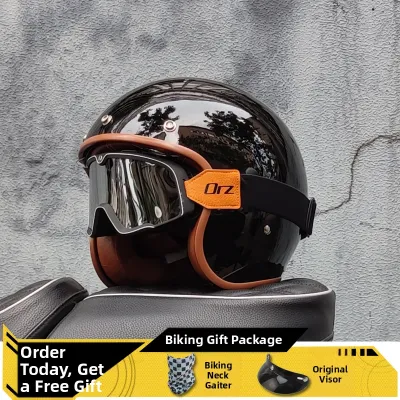
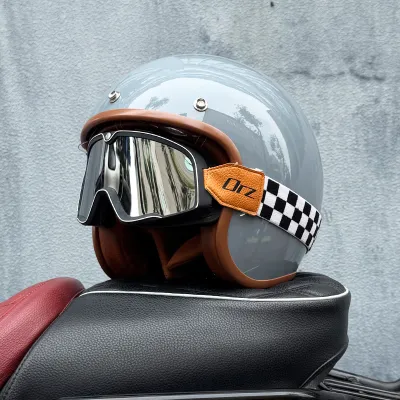
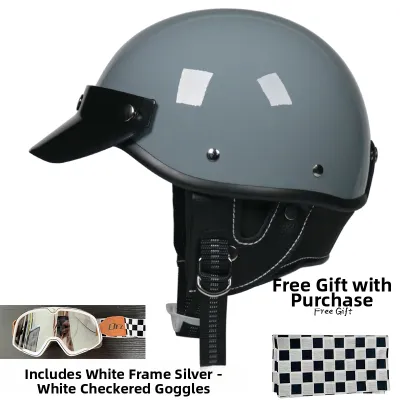
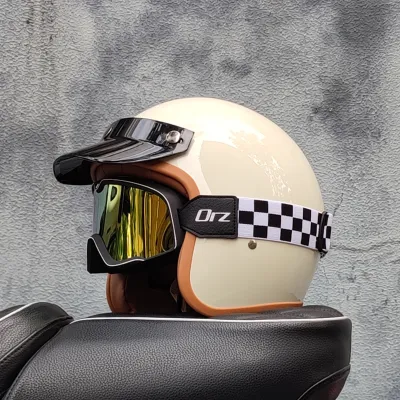
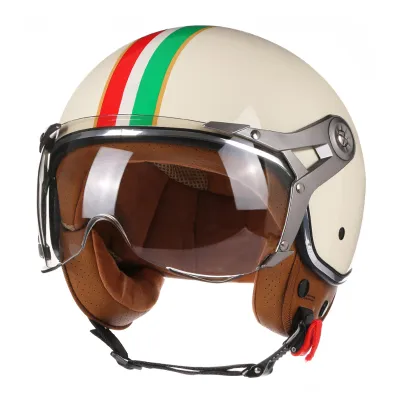
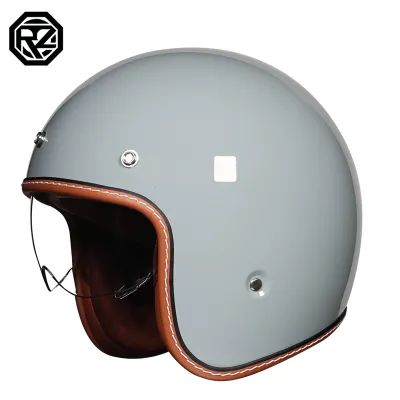
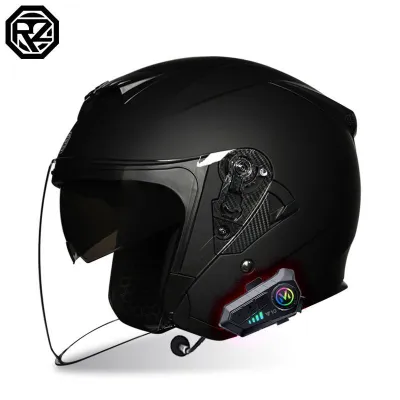
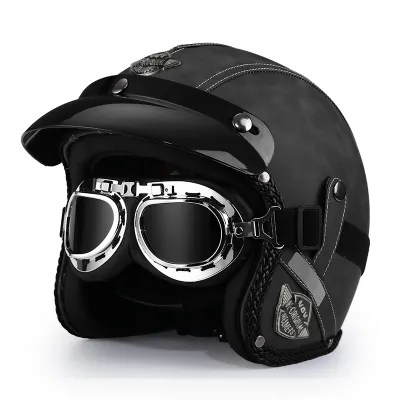
Prices are valid at publication and may change. Please refer to the product page for the latest price.
How to Identify Legitimate PSB and ICC Certification Marks
In the Philippines, the Department of Trade and Industry (DTI) regulates motorcycle helmet safety through the Bureau of Philippine Standards (BPS). For imported helmets, which constitute the vast majority of vintage-style helmets on the market, a valid Import Commodity Clearance (ICC) sticker is legally required. Locally manufactured helmets must bear the Philippine Standard (PS) mark. These certifications are not mere bureaucratic formalities; they indicate that a helmet model has passed stringent laboratory tests for impact attenuation, penetration resistance, and chin strap retention.
An authentic ICC or PS certification mark has distinct physical characteristics designed to prevent counterfeiting. Genuine stickers feature a holographic foil that reflects a spectrum of colors when tilted under light. They also display a unique, traceable serial number printed clearly on the label. This serial number allows authorities and consumers to verify the helmet’s registration status through official government databases.
In contrast, counterfeit stickers are highly prevalent on cheap helmets sold through unverified online marketplaces. These fake labels are often flat, non-holographic paper or vinyl stickers that can be easily peeled off without tearing. Some sellers even apply fake international certification marks to mislead buyers. While legitimate international certifications are excellent indicators of safety compliance, they do not replace the legal requirement for a local ICC or PS mark on Philippine roads.
When inspecting a helmet, look closely at the placement and quality of the certification mark. On a certified helmet, the sticker is typically placed at the rear of the outer shell, often protected under a clear coat of paint or firmly adhered with industrial-strength adhesive. If the sticker looks crooked, lacks a holographic sheen, or has blurry serial numbers, the helmet is highly likely to be an uncertified novelty item that is illegal to use on public roads.
Safety Trade-Offs of Traditional Vintage Helmet Designs
Traditional vintage helmet designs, particularly those from the mid-20th century, were engineered long before modern biomechanics and material sciences were understood. The most common retro design is the open-face or three-quarter helmet, which leaves the face completely exposed. While this style offers excellent ventilation in hot tropical weather and a wide field of view, it leaves the chin, jaw, and nose vulnerable to severe trauma. Accident statistics consistently show that a significant percentage of helmet impacts occur in the facial and chin areas, regions that an open-face helmet cannot protect.

Another major structural limitation of authentic vintage designs or cheap replicas is the thickness and composition of the outer shell. Classic designs often prioritize a very small, low-profile silhouette. To achieve this look, manufacturers of uncertified helmets often use thin, flexible plastic shells and reduce the thickness of the internal foam liner. A thin shell can easily puncture or crack upon impact, failing to distribute the force of a collision across a wider surface area.
The internal cushioning of a helmet is its most critical safety component. Modern certified helmets utilize high-density Expanded Polystyrene (EPS) liners designed to collapse progressively, absorbing and dissipating impact energy before it reaches the skull. Purely decorative retro helmets often use cheap, soft polyurethane foam or low-density packaging foam instead of dense EPS. This soft padding may feel comfortable against your head, but it offers virtually no resistance during a crash, allowing the full force of the impact to transfer directly to your brain.
Furthermore, authentic vintage designs often compromise on basic riding comfort and safety features that modern riders take for granted. They frequently lack adequate ventilation channels, causing heat and sweat to build up rapidly during slow-moving traffic in humid conditions. The absence of an integrated, optically correct face shield also exposes your eyes to wind, dust, insects, and heavy rain, which can suddenly impair your vision and lead to an accident.
Pre-Purchase Inspection Checklist for Classic Vintage Helmets
Before purchasing a classic vintage helmet for daily commuting, performing a thorough physical inspection is essential to ensure your safety. Start by checking for permanent, non-peelable manufacturer labels inside the helmet. Legitimate manufacturers sew or securely glue labels into the comfort liner, detailing the brand name, model designation, size, date of manufacture, and specific safety standards met. If these internal labels are missing, generic, or written in poorly translated text, treat the helmet with extreme suspicion.
Next, evaluate the density of the internal EPS liner. Remove the comfort padding if it is detachable, and press your thumb firmly against the black or white foam liner underneath. A certified, safe EPS liner will feel incredibly firm, similar to a hard foam cooler, and will not compress easily under finger pressure. If the foam feels soft, spongy, or hollow when you tap it, the helmet lacks the necessary impact-absorbing properties.
Examine the retention system, which is the chin strap and buckle assembly. The retention system must keep the helmet securely on your head during a violent slide or tumble. Look for robust double D-ring closures made of heavy-duty steel, or high-quality micrometric quick-release buckles. The straps themselves should be thick, tightly woven nylon, and they must be anchored to the helmet’s inner shell using solid metal rivets. Flimsy plastic quick-release clips or thin, easily frayed straps are clear indicators of a novelty helmet.
Assess the overall weight and solidity of the helmet. Pick it up and tap the outer shell with your knuckles. A certified helmet with a proper fiberglass or polycarbonate shell and a thick EPS liner will feel substantial and produce a dull, solid sound. A cheap novelty helmet will feel exceptionally light—often under 900 grams—and will produce a hollow, high-pitched clicking sound when tapped, indicating a thin, flexible plastic shell with empty space inside.
Modern Retro-Style Helmets: Balancing Aesthetics and Protection
Fortunately, motorcycle riders do not have to choose between classic style and modern safety. Reputable helmet manufacturers now produce modern retro or modern classic helmets. These helmets perfectly mimic the timeless silhouettes of the 1960s and 1970s while incorporating state-of-the-art protective technology. By utilizing advanced composite materials like fiberglass, carbon fiber, and aramid blends, manufacturers can create strong, lightweight outer shells that maintain a compact, vintage look without sacrificing impact resistance.
These modern retro helmets are engineered with multi-density EPS liners that provide targeted impact absorption in critical zones. They are fully certified under international standards like ECE 22.06 or DOT, and they carry the official ICC or PS marks required for legal riding in the Philippines. This ensures that you can enjoy the classic aesthetic of a cafe racer or vintage scooter while riding with the peace of mind that your head is protected by modern engineering.
In addition to superior safety, modern retro helmets offer conveniences that genuine vintage helmets never had. Many models feature discreetly integrated drop-down sun visors, allowing you to shield your eyes from the harsh tropical sun without needing to swap shields or wear sunglasses. They also come with removable, moisture-wicking, and antibacterial comfort liners that can be easily washed, which is a crucial feature for maintaining hygiene in hot and humid riding conditions.
When shopping for your next helmet, prioritize these certified modern retro options from established, reputable brands over unverified replicas or cheap novelty gear. Investing in a certified modern retro helmet ensures that your daily commute is both stylish and safe, protecting your life while preserving your classic riding aesthetic.
Frequently Asked Questions (FAQ)
Is it legal to ride with an uncertified novelty vintage helmet in the Philippines?
No, it is strictly illegal to ride on public roads in the Philippines using an uncertified novelty vintage helmet. Under Republic Act No. 10054, also known as the Motorcycle Helmet Act of 2009, all motorcycle riders must wear standard protective motorcycle helmets that bear the official PS or ICC marks. Wearing a novelty helmet that lacks these certifications is legally treated the same as riding without a helmet. Violators face progressive fines starting at ₱1,500 for the first offense, with subsequent offenses leading to higher fines and the potential confiscation of their driver’s license.
Do vintage-style helmets have an expiration date?
Yes, all motorcycle helmets have a limited operational lifespan, regardless of their style or how often they are used. Helmet manufacturers and safety organizations generally recommend replacing a helmet every five years from its date of manufacture, or three years from its date of purchase. Over time, the internal EPS liner naturally degrades due to exposure to sweat, hair oils, cosmetics, extreme heat, and UV radiation. This degradation makes the foam brittle and significantly reduces its ability to absorb impact energy during a crash.
Can I add an aftermarket face shield to a classic open-face helmet?
Yes, you can add aftermarket face shields, such as classic bubble visors or flat shields, provided you use the manufacturer-approved mounting points already built into the helmet. Many classic open-face helmets feature a three-snap or five-snap system on the brow specifically designed for this purpose. You must never drill holes, insert screws, or make any physical modifications to the helmet’s outer shell to attach an aftermarket shield. Modifying the shell compromises its structural integrity, creates weak points that can fail during an impact, and voids the helmet’s safety certifications.

Community discussion
Share your experience or ask a question. Comments are reviewed before publication.