
The Short Answer: Is a SCav Muffler Legal in the Philippines?
Motorcycle customization is a thriving subculture in the Philippines. From sleek underbones navigating city streets to heavy-duty adventure bikes built for provincial tours, riders constantly seek ways to personalize their machines. Among the most popular upgrades is the exhaust system, with the brand name SCav often coming up in discussions among local riders. However, before purchasing or installing a SCav muffler, every rider must confront a critical question: Is a SCav muffler legally compliant with the Land Transportation Office (LTO) regulations?
The short answer is that the legality of a SCav muffler is conditional rather than a simple yes or no. A SCav muffler—or any aftermarket exhaust system—is only legal for road use in the Philippines if it complies with the strict noise thresholds, emissions standards, and safety guidelines set by the LTO and the Department of Environment and Natural Resources (DENR). If the specific model you install exceeds the legal noise limits, lacks a proper silencer, or fails emissions tests, it is considered an illegal modification. Riding with a non-compliant exhaust on public roads exposes you to heavy fines, roadside apprehension, and registration issues.
Understanding LTO Noise and Exhaust Regulations
To understand why aftermarket exhausts face such intense scrutiny, one must look at the legal framework governing Philippine roads. The LTO, tasked with maintaining road safety and order, operates under national laws that explicitly prohibit unauthorized vehicle modifications that compromise safety or environmental standards. Chief among these is the Clean Air Act (Republic Act No. 8749), which mandates strict control over vehicle emissions and noise pollution.
Products mentioned in this guide
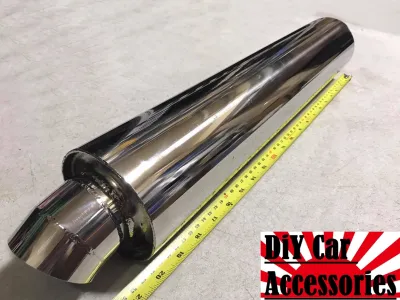
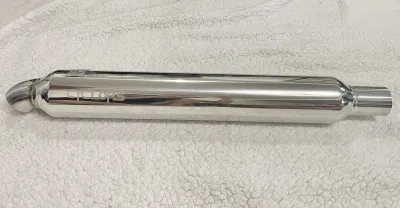
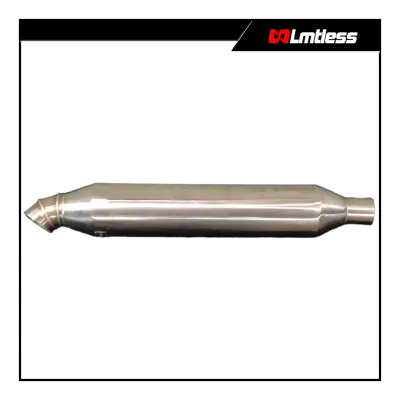
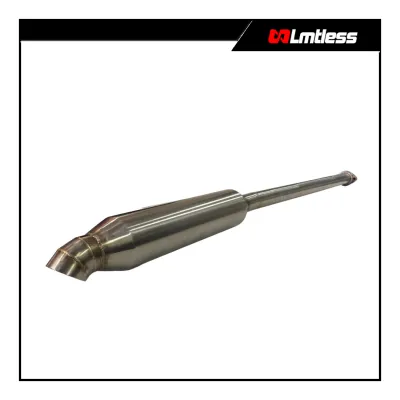
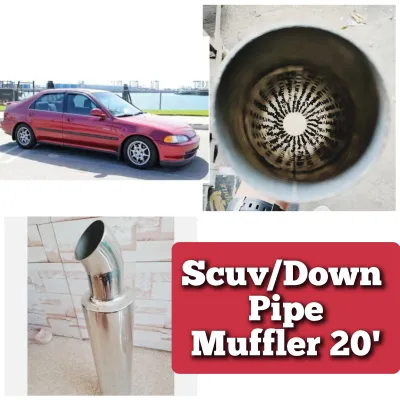
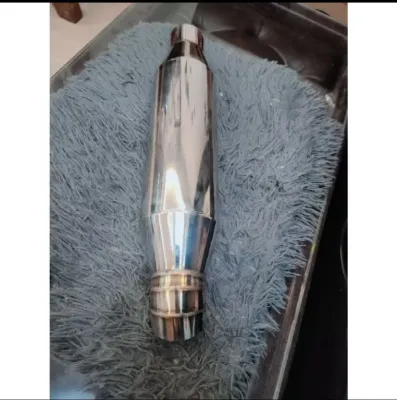
Prices are valid at publication and may change. Please refer to the product page for the latest price.

When it comes to motorcycle exhausts, the LTO and the DENR have established specific, legally mandated decibel limits. These limits are designed to prevent noise pollution in urban centers, residential areas, and highway corridors. Rather than banning aftermarket exhausts outright, the regulations target the actual sound output and environmental impact of the system.
The primary mechanism for enforcing these standards during routine vehicle maintenance is the Motor Vehicle Inspection System (MVIS). During your annual motorcycle registration renewal, your bike must undergo a comprehensive inspection at a Private Motor Vehicle Inspection Center (PMVIC) or an LTO-operated facility. During this process, technicians use calibrated sound-level meters to measure the exhaust noise. The test is conducted under controlled conditions: the meter is positioned at a precise distance and angle from the exhaust tip while the engine is revved to a specific RPM.
Additionally, the MVIS evaluates exhaust emissions. Many aftermarket mufflers achieve a louder sound and minor performance gains by removing the catalytic converter or altering the exhaust flow. However, doing so often causes the vehicle to fail the emission test. Under the current regulatory framework, any aftermarket exhaust must not alter the motorcycle’s original environmental and safety specifications. If your SCav muffler causes your motorcycle to fail either the decibel test or the emission test, it will be deemed non-compliant, and your registration renewal will be denied.
Risks and Penalties for Non-Compliant Exhausts
Riding with a non-compliant or excessively loud SCav muffler carries significant real-world risks on Philippine roads. Law enforcement agencies, including the LTO, the Philippine National Police Highway Patrol Group (PNP-HPG), and local government unit (LGU) traffic enforcers, actively conduct roadside operations and checkpoints. These checkpoints are often set up along major thoroughfares, popular riding routes, and residential bypass roads.
If an enforcer deems your motorcycle exhaust to be excessively loud or suspects an unauthorized modification, you will be flagged down. Upon inspection, if the exhaust is found to violate national standards, the enforcer will issue a Temporary Operator’s Permit (TOP) or a local traffic citation ticket. This citation carries prescribed administrative fines for operating a vehicle with unauthorized modifications. Under Joint Administrative Order (JAO) No. 2014-01, these fines can be substantial, often costing thousands of pesos, which can quickly drain a rider’s budget.
The consequences do not stop at financial penalties. Depending on the specific LGU ordinance or the severity of the violation, enforcers may confiscate the non-compliant muffler or even impound the motorcycle. In some extreme local jurisdictions, confiscated loud pipes are publicly crushed to deter others from using them.
Furthermore, a non-compliant exhaust will prevent you from successfully completing the MVIS registration process. Operating an unregistered motorcycle carries even steeper penalties, including automatic impoundment and higher fines. The administrative hassle of retrieving an impounded bike, paying fines, and sourcing a legal exhaust to clear the violation makes riding with an illegal muffler highly impractical.
How to Verify if Your SCav Muffler is Compliant
Before you purchase a SCav muffler or take your modified motorcycle out onto public roads, you must proactively verify its compliance. Taking these steps can save you from costly fines and the headache of roadside apprehensions.
First, examine the physical product and its documentation. Check the packaging, user manual, or the muffler body itself for any recognized certification marks, compliance labels, or serial numbers. Legitimate manufacturers often provide documentation indicating that the exhaust has been tested and certified to meet specific noise and emission standards. If a muffler is sold without any documentation, brand markings, or specifications, it is highly likely to be a non-compliant, generic pipe.
Second, perform a baseline noise test. While professional testing equipment is ideal, you can obtain a reasonable estimate using a smartphone decibel meter app or a budget-friendly sound-level meter. To conduct a reliable check, find an open outdoor space away from walls that could reflect sound. Position the meter at a 45-degree angle, approximately 0.5 meters away from the exhaust outlet. Start the engine and note the decibel reading at idle. Then, gently rev the engine to the RPM specified for your motorcycle’s testing standard (typically half of the maximum rated engine speed) and observe the peak decibel level. If the reading approaches or exceeds the legally mandated national thresholds, your exhaust is at high risk of failing an official inspection.
Third, inspect the muffler for a removable baffle, commonly referred to as a “DB killer.” Many aftermarket mufflers rely on these inserts to restrict exhaust flow and dampen sound waves. If your SCav muffler features a DB killer, ensure it is securely bolted or riveted inside the exhaust tip. Removing the DB killer to achieve a deeper or louder exhaust note is a direct path to violating LTO noise regulations.
Safety and Compatibility Boundary: Before installing any aftermarket exhaust system, it is vital to check your motorcycle’s original manufacturer instructions and vehicle documentation. Exhaust systems are carefully engineered to match specific engine displacements, fueling systems, and backpressure requirements. Installing an incompatible exhaust can lead to engine overheating, poor fuel economy, burned valves, or voided vehicle warranties. Always verify that the specific SCav model is fully compatible with your vehicle’s make and year. Additionally, because exhaust installation involves critical components near the engine and fuel lines, it is highly recommended to have the system installed by a qualified motorcycle mechanic to ensure proper sealing, mounting, and safety.
Finally, always retain your motorcycle’s original stock muffler. Store it in a clean, dry place protected from tropical humidity and moisture, which can cause rust. Having your stock exhaust on hand is the ultimate safety net. If you face an upcoming MVIS inspection, or if you are planning a long-distance ride through municipalities known for hyper-strict local exhaust laws, reinstalling the stock pipe guarantees absolute compliance and peace of mind.
Best Practices for Responsible Riding and Maintenance
Owning a compliant motorcycle is only half the battle; how you ride and maintain your vehicle plays an equally important role in avoiding legal trouble and maintaining community harmony. The tropical climate of the Philippines, characterized by high humidity, heavy monsoon rains, and intense heat, can accelerate the wear and tear of aftermarket components, making regular upkeep essential.
Practice responsible throttle management. Even a legally compliant aftermarket exhaust can sound exceptionally loud under hard acceleration or high-RPM revving. Avoid aggressive downshifting, engine braking, or unnecessary revving when passing through quiet zones. Be particularly mindful when riding through residential barangays, hospital zones, school areas, and narrow streets where sound easily bounces off concrete walls.
Regularly inspect and maintain your exhaust system. Check for exhaust leaks at the cylinder head joint and slip-on connections. A leaking gasket or a loose clamp can allow exhaust gases to escape prematurely, significantly increasing the noise level and altering engine performance. Ensure that all mounting brackets and rubber dampers are tight and free of cracks. In the Philippines, rough road conditions and potholes can easily loosen exhaust mounts, leading to physical damage or alignment issues.
Additionally, keep yourself informed about Local Government Unit (LGU) ordinances. While the LTO sets national standards, individual cities and municipalities across the Philippines have the authority to implement localized “anti-muffler” or “quiet zone” laws. Some LGUs enforce strict decibel limits within residential zones or during night hours, while others may ban modified exhausts entirely. Knowing the specific rules of the cities you commute through is crucial to avoiding localized penalties.
Frequently Asked Questions (FAQ)
Can I use a loud SCav muffler exclusively for track days?
Yes, you can use a loud or non-compliant SCav muffler if your motorcycle is operated exclusively on closed-course racetracks, private properties, or designated off-road sporting events. These venues are exempt from LTO public road regulations. However, you cannot legally ride the motorcycle on public streets to reach the venue. You must transport the motorcycle using a trailer, pickup truck, or specialized vehicle carrier. Additionally, keep in mind that some private racetracks enforce their own noise limits to comply with local environmental zoning, so always check the track’s rules beforehand.
Will installing a DB killer make my modified exhaust LTO-legal?
Installing a high-quality DB killer (baffle) is an excellent way to reduce noise levels, but it does not automatically guarantee full LTO legality. While it may help your motorcycle pass the roadside decibel check, the vehicle must still comply with other regulatory standards. This includes passing the emissions test during your MVIS registration renewal. If your aftermarket exhaust system lacks a catalytic converter or alters the engine’s emissions output beyond legal limits, the motorcycle remains non-compliant. To ensure complete legality, the exhaust must meet both noise and emission standards simultaneously.

Community discussion
Share your experience or ask a question. Comments are reviewed before publication.