
Determining whether Besco Duramax 10W-30 or an equivalent formulation from Shell, Castrol, or Motul delivers better value depends entirely on your vehicle’s specific manufacturer requirements, your driving conditions, and local retail pricing. There is no single universal winner in the motor oil market. A premium oil that does not meet your engine’s design specifications is a poor value, while an affordable oil that matches your original equipment manufacturer (OEM) guidelines perfectly can provide exceptional long-term protection.
The “10W-30” designation represents the oil’s viscosity characteristics under different temperature conditions. The “10W” (where “W” stands for winter) indicates the oil’s flow properties at low temperatures, ensuring the lubricant can reach critical engine components quickly during a cold start. The “30” denotes the operating viscosity at 100 degrees Celsius, which is the typical running temperature of an internal combustion engine. In tropical climates with high ambient temperatures and humidity, such as the Philippines, cold-start flow is less of a concern than in freezing regions, but the oil must still maintain a stable protective film at operating temperatures to prevent metal-on-metal wear.
Before purchasing any engine oil, you must consult your vehicle’s owner’s manual. The manual specifies the exact viscosity grade, API (American Petroleum Institute) service category, and any proprietary OEM approvals required to keep your engine running safely and to preserve your manufacturer’s warranty.
Products mentioned in this guide
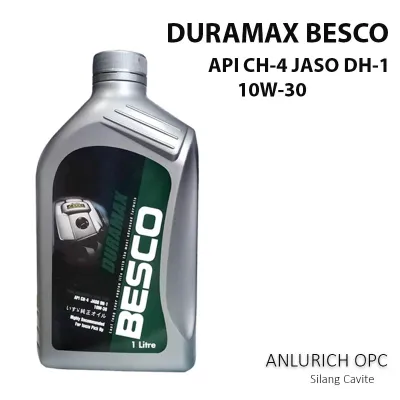
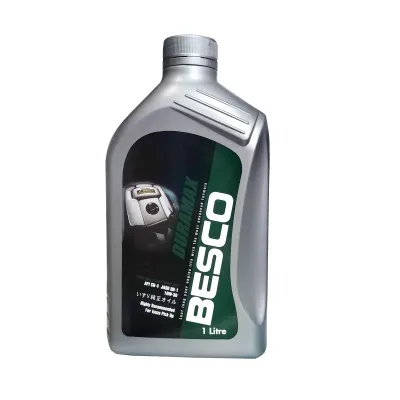
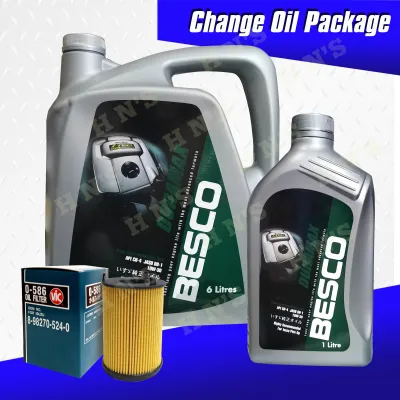
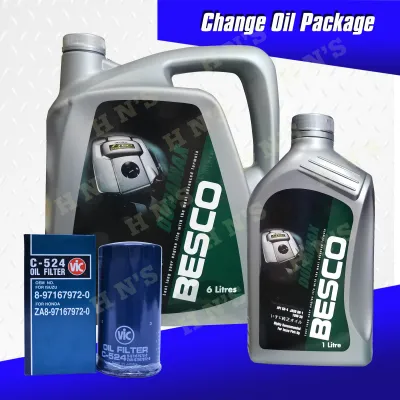
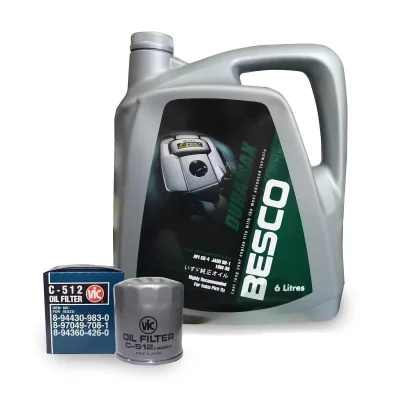
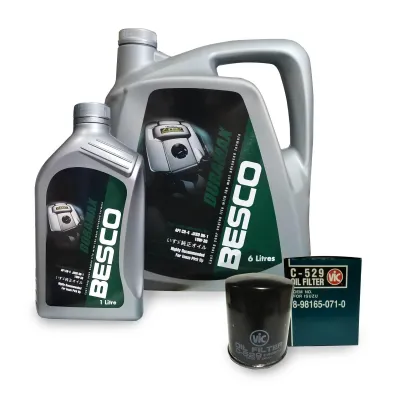
Prices are valid at publication and may change. Please refer to the product page for the latest price.
Key Specifications to Compare Across Brands
When comparing Besco Duramax 10W-30 against offerings from Shell, Castrol, or Motul, look beyond the brand logo and examine the technical specifications printed on the back label. The primary standards to check are the API service categories (such as SP, SN Plus, or SN for gasoline engines, and CK-4, CJ-4, or CI-4 for diesel engines) and ILSAC standards (such as GF-6 or GF-5). These ratings indicate the oil’s performance level, fuel economy benefits, and wear protection capabilities. Using an oil with an obsolete API rating in a modern engine can lead to premature wear or damage to emission control systems.
Engine oils are formulated using different base oil stocks, categorized into mineral, synthetic blend (semi-synthetic), and full synthetic. Mineral oils are refined directly from crude oil and offer basic protection at a lower cost. Synthetic blends combine mineral and synthetic base stocks for enhanced thermal stability, while full synthetic oils use highly processed base stocks to provide superior resistance to oxidation, thermal breakdown, and sludge formation. Comparing a standard mineral-based Besco Duramax 10W-30 against a premium full-synthetic Shell Helix or Motul 8100 is an invalid value assessment; you must compare products within the same base oil category to determine true price-to-performance value.
Front-label marketing terms like “active cleansing agents,” “magnetic molecules,” or “double ester technology” are designed to attract buyers but do not represent standardized performance metrics. To make an accurate comparison, refer to the official Technical Data Sheets (TDS) and Safety Data Sheets (SDS) provided by the manufacturers. These documents list objective physical properties such as the viscosity index, flash point, pour point, and Total Base Number (TBN), which indicate how the oil will actually perform under thermal stress and how effectively it can neutralize acidic combustion byproducts.
Comparing Product Tiers: Besco vs Major Brands
To conduct a fair comparison, you must align the specific product tiers of each brand. Pitting an entry-level fleet oil against a high-performance racing lubricant will yield misleading results. Additionally, local availability and authorized distribution channels play a critical role in your decision; an oil that is theoretically superior but difficult to source reliably in your local area may lead to inconvenient delays during scheduled maintenance.

Evaluating Besco Duramax 10W-30
Besco is a brand closely associated with specific commercial and passenger vehicle manufacturers, particularly Isuzu. When evaluating Besco Duramax 10W-30, check the packaging carefully to identify its specific API service category (often formulated for heavy-duty diesel engines or specific gasoline applications) and ensure it matches your vehicle’s requirements.
Review the manufacturer’s recommended drain interval for this specific formulation. Standard mineral or semi-synthetic 10W-30 oils typically require more frequent replacement intervals compared to high-tier full synthetics. Additionally, note the packaging sizes available in the local market (such as 1-liter bottles, 4-liter gallons, or larger pails) to calculate how much oil you need to purchase for a complete oil change, including the volume required for the oil filter.
Navigating Shell, Castrol, and Motul Lineups
Shell, Castrol, and Motul offer extensive product portfolios that span multiple tiers. For a direct comparison with a standard 10W-30 formulation like Besco Duramax, look at entry-level or mid-tier products. For instance, Shell’s Helix HX5 or Rimula R4 series, Castrol’s GTX or Magnatec lines, and Motul’s Multipower or Tekma lines often feature 10W-30 viscosity grades that align with standard mineral or semi-synthetic specifications.
It is vital to recognize that premium full-synthetic lines—such as Shell Helix Ultra, Castrol EDGE, or Motul 8100—will naturally command a higher price point. These premium lines should only be compared if you are looking at a matching full-synthetic 10W-30 variant from Besco. Comparing a standard Besco formulation to these flagship synthetic products is unequal, as the synthetic options are engineered for extended drain intervals and extreme operating conditions that standard formulations are not designed to handle.
Evaluating Price-to-Performance Value
Calculating the true value of an engine oil requires looking beyond the initial purchase price of the bottle. To establish a realistic cost-of-ownership framework, calculate the cost per kilometer. This is done by dividing the retail price of the oil (in ₱) by the manufacturer’s recommended drain interval (in kilometers). For example, if an affordable oil costs ₱1,500 for a complete change but must be replaced every 5,000 kilometers, its oil cost is ₱0.30 per kilometer. Conversely, if a premium synthetic oil costs ₱3,000 but safely supports a 10,000-kilometer drain interval, the cost per kilometer is identical, but you save time and labor costs by reducing the frequency of service visits.
The local automotive market faces a persistent risk of counterfeit engine oils, particularly on online marketplaces and unauthorized ecommerce platforms. Purchasing a cheap, counterfeit oil disguised as a major brand poses a severe threat to your engine. Counterfeit lubricants often use low-quality base oils without proper additive packages, leading to rapid oxidation, sludge buildup, and catastrophic engine wear. The cost of repairing engine damage from substandard oil can easily run into tens of thousands of pesos, completely wiping out any initial savings. Always prioritize buying from authorized physical dealers, official brand flagship stores, or highly reputable service centers.
Every oil change requires a new oil filter and, in many cases, professional labor fees at a service shop. If you choose a lower-tier oil that requires more frequent changes, you will also have to purchase oil filters and pay for labor more often. These recurring costs must be factored into your overall value calculation. Additionally, when switching between different oil brands or chemical formulations, a complete flush or a highly thorough drain is recommended to prevent the mixing of incompatible additive packages, which can add to the initial service cost.
Decision Framework: Which Oil Should You Choose?
To finalize your decision, apply a structured, condition-based framework. Choose Besco Duramax 10W-30 if your vehicle manufacturer explicitly recommends or approves this specific formulation (as is common with Isuzu vehicles), if the API rating matches your engine’s requirements, and if you can source it reliably from a trusted local distributor at a competitive price point. This choice is highly practical for fleet owners and daily drivers who adhere strictly to standard maintenance schedules.
Choose Shell, Castrol, or Motul if your vehicle requires a specific OEM approval or performance standard (such as European ACEA specifications or proprietary manufacturer approvals) that is not listed on the Besco label. These major brands are also the preferred choice if you want to upgrade to a premium full-synthetic formulation for extended drain intervals, enhanced thermal protection in heavy traffic, or if Besco products are not readily available in your immediate area.
If your vehicle is still covered by a manufacturer’s warranty, you must verify the warranty terms before changing your oil brand or performing DIY maintenance. Some manufacturers require you to use specific certified brands or have the oil changed exclusively at authorized dealerships to keep the warranty active. Always follow the original vehicle instructions and consult a qualified professional for any electrical, mechanical, or fluid maintenance to ensure your vehicle remains safe and road-legal.
Frequently Asked Questions (FAQ)
Can I mix Besco Duramax with Shell or Castrol oils?
Mixing different brands of engine oil, such as Besco Duramax with Shell or Castrol, is generally safe in emergency situations if you need to top up a low oil level and have no other option. However, the oils must share the same viscosity grade (10W-30) and meet or exceed the API service category required by your engine. This is not recommended as a long-term practice because different brands use proprietary additive packages that may not blend optimally, potentially reducing the overall effectiveness of the lubricant. When performing a scheduled oil change, it is best to do a complete drain and replace both the oil and the oil filter to ensure a clean, consistent formulation.
How do I verify if a 10W-30 oil is genuine?
To protect your engine from counterfeit products, carefully inspect the physical packaging of the oil bottle before purchase. Genuine engine oils feature high-quality printing on the labels, intact tamper-evident security seals on the cap, unique batch numbers, and production dates printed directly on the plastic. Many major brands like Shell, Castrol, and Motul also include holographic labels, QR codes, or scratch-off verification codes that allow you to verify the product’s authenticity on the manufacturer’s official website. To minimize risk, avoid buying from unverified sellers on online marketplaces and purchase your lubricants exclusively from authorized distributors, official brand stores, or established automotive service centers.

Community discussion
Share your experience or ask a question. Comments are reviewed before publication.