
Selecting the right engine oil for your Isuzu diesel engine is not about finding a single, universally superior brand. Instead, the ideal choice depends on your specific engine model—such as the widely used 4JK1-TCX or 4JJ1-TCX—your vehicle’s mileage, and your daily driving conditions. While Besco, Shell, Castrol, and Motul all manufacture high-quality lubricants, their suitability is determined entirely by how closely their technical specifications align with your owner’s manual.
Using an oil that does not match your engine’s design can lead to accelerated wear, increased fuel consumption, or damage to sensitive emissions components. This guide provides a practical framework to help you evaluate these four brands. By learning how to read product labels and match them to your vehicle’s requirements, you can make an informed decision that balances engine protection with your maintenance budget.
Check Your Isuzu Diesel Engine's Exact Oil Requirements
Before comparing brands, you must identify the precise lubricant specifications designated by Isuzu for your specific vehicle. These requirements are detailed in your vehicle’s owner’s manual and vary significantly depending on the model year and engine family. For instance, older Isuzu diesel engines have different lubrication tolerances and chemical limits compared to modern BluePower common-rail direct injection (CRDi) systems.
Products mentioned in this guide
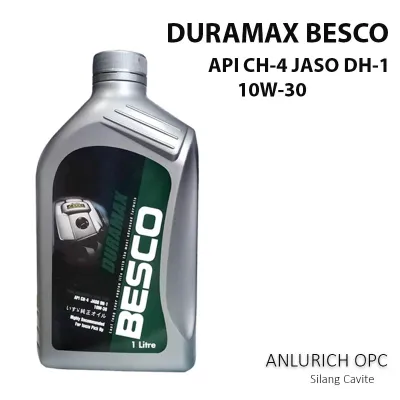
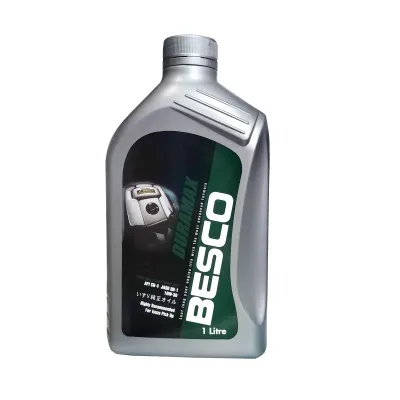
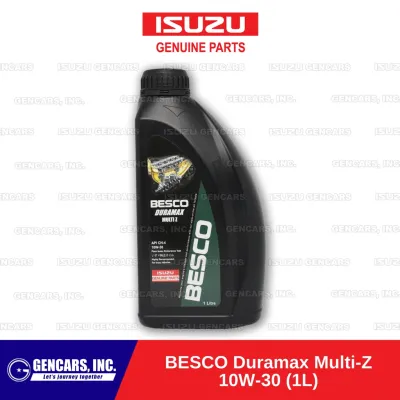
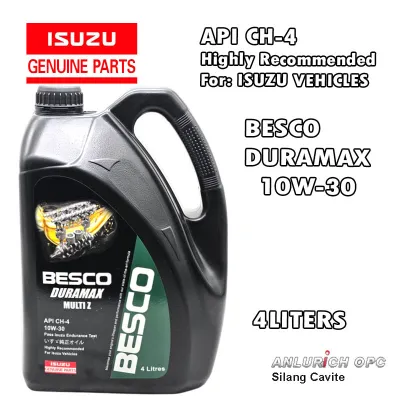
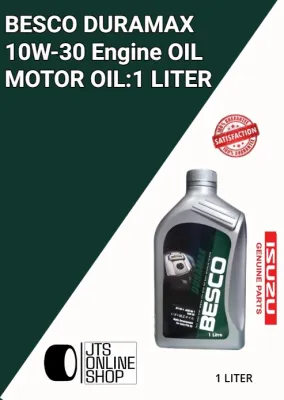
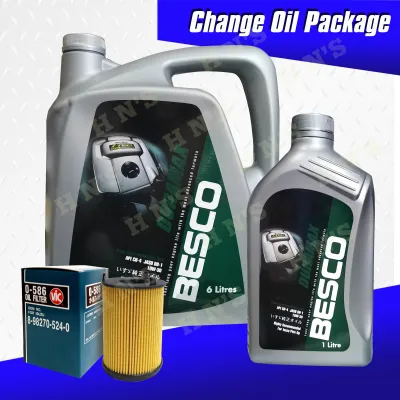
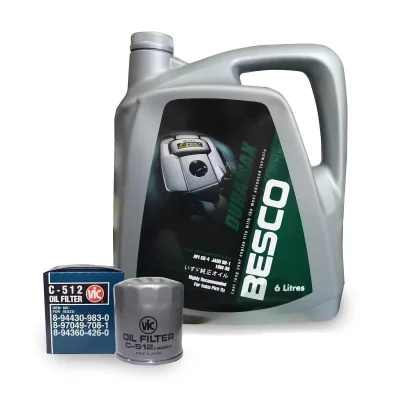
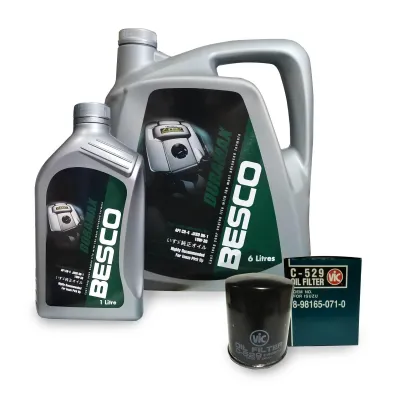
Prices are valid at publication and may change. Please refer to the product page for the latest price.
The first specification to locate is the viscosity grade, which represents the oil’s resistance to flow at low and high temperatures. In the tropical climate of the Philippines, common viscosity grades recommended by Isuzu include 15W-40 for heavy-duty or older engines, and 5W-30 or 10W-30 for newer, more fuel-efficient models. Viscosity choice directly impacts how quickly oil circulates during a cold start and how well it maintains a protective film under extreme engine heat.
Next, check the required performance classifications established by organizations like the American Petroleum Institute (API) or the Association des Constructeurs Européens d’Automobiles (ACEA). For older Isuzu engines without advanced emissions systems, an API CI-4 or CH-4 rating is often specified. However, modern Isuzu engines equipped with Diesel Particulate Filters (DPF) or Selective Catalytic Reduction (SCR) systems require low-SAPS (Sulfated Ash, Phosphorus, and Sulfur) oils, typically carrying an API CK-4 or ACEA C3/E6/E9 classification.
Using a high-SAPS oil in a DPF-equipped Isuzu engine can cause irreversible clogging of the particulate filter, leading to exhaust restriction, loss of power, and costly replacement parts. Always prioritize the original-vehicle instructions and consult an authorized Isuzu service center if you are uncertain about your vehicle’s emissions configuration.
How to Compare Besco, Shell, Castrol, and Motul Specifications
Once you have noted your engine’s exact requirements, you can evaluate the product lines of Besco, Shell, Castrol, and Motul by cross-referencing their printed labels against your manual.

Besco is Isuzu’s genuine oil brand, formulated specifically to meet the baseline engineering standards of Isuzu diesel engines. Because it is an OEM (Original Equipment Manufacturer) product, choosing Besco simplifies the selection process, as the packaging clearly indicates compatibility with specific Isuzu engine families. For example, Besco Multi-Z is commonly prescribed for standard utility vehicles, while Besco Clean is formulated specifically for modern, low-emission Isuzu engines requiring low-ash properties.
Shell offers a diverse range of diesel lubricants, primarily split between the Rimula heavy-duty commercial line and the Helix passenger vehicle line. Shell Rimula R4 or R5 semi-synthetic oils are popular choices for utility vehicles, while Rimula R6 or Helix Ultra Diesel fully synthetic oils cater to modern passenger models. Shell’s formulations often leverage gas-to-liquid base oils, which provide high resistance to thermal breakdown. When evaluating Shell, verify that the specific bottle carries the API CK-4 or ACEA standard required by your manual.
Castrol provides options such as the Vecton range for heavy-duty commercial applications and the Magnatec Diesel or EDGE lines for passenger vehicles. Castrol Magnatec is formulated with molecules designed to cling to critical engine parts during startup, which is when a significant portion of engine wear occurs. Castrol Vecton focuses on maintaining viscosity stability over extended drain intervals. Always check the back label of the Castrol bottle to ensure the specific formulation matches your Isuzu’s viscosity and emissions requirements.
Motul is highly regarded for its premium synthetic lubricants, offering the Tekma line for heavy-duty applications and the 8100 or Specific series for passenger cars. Motul’s fully synthetic formulations are engineered to withstand extreme operating temperatures and resist oxidation, making them a strong candidate for demanding driving conditions. However, because Motul offers highly specialized formulations, you must carefully verify that the product’s API or ACEA certifications match your Isuzu manual rather than assuming any synthetic oil is compatible.
Evaluate Value and Driving Conditions in the Philippines
Operating a diesel vehicle in the Philippines presents unique challenges that directly affect oil performance and oil life. The combination of high ambient temperatures, intense humidity, and severe traffic congestion accelerates the degradation of engine oil.
Under Isuzu’s maintenance guidelines, driving in heavy stop-and-go city traffic, idling for extended periods, or frequently hauling heavy loads on provincial roads classifies as “severe service.” Severe service conditions significantly reduce the effective lifespan of any engine oil. If your daily commute involves navigating congested urban centers, you must adjust your expected drain intervals downward, regardless of the oil brand you choose.
To calculate the true cost of ownership, compare the retail price of the oil in ₱ against the manufacturer’s recommended drain interval for your driving style. While mineral oils are generally less expensive upfront, they require more frequent changes—typically every 5,000 kilometers under standard conditions. Fully synthetic oils carry a higher initial cost in ₱ but offer superior thermal stability, potentially allowing you to safely extend drain intervals up to 10,000 kilometers, provided your owner’s manual permits it under your driving conditions.
Additionally, the local automotive market faces risks from counterfeit lubricants. To protect your engine, always purchase oil from authorized physical dealerships, official brand stores, or highly reputable local auto supply shops. Before purchasing, inspect the packaging for intact tamper-evident seals, clear batch codes, and high-quality label printing. Avoid buying from unverified sellers on online marketplaces where product authenticity cannot be guaranteed.
Decision Framework: Choosing the Right Oil for Your Needs
To select the most appropriate engine oil for your Isuzu diesel engine, apply this conditional decision framework based on your vehicle’s specifications and your driving habits.
Choose Besco if you prefer to follow factory-recommended guidelines strictly, especially if your vehicle is still under its original manufacturer warranty. Besco provides a straightforward, reliable choice that eliminates the guesswork of matching third-party specifications, offering dependable protection for standard daily driving.
Choose Shell, Castrol, or Motul if you require specific performance characteristics or if Besco is not readily available in your area. Shell Rimula is an excellent choice for widespread provincial availability and robust heavy-duty protection. Castrol Magnatec is highly suitable for urban drivers seeking extra protection during frequent cold starts and stop-and-go traffic. Motul is ideal if you want a premium, fully synthetic formulation that offers maximum thermal stability for demanding hauling tasks or high-temperature highway driving.
Verify first if your Isuzu engine has high mileage, as older engines with wider internal clearances may benefit from a slightly higher hot viscosity (such as 15W-40) to minimize oil consumption. Always consult a qualified mechanic or an authorized Isuzu service center before changing oil viscosities or transitioning to a different formulation, particularly if your vehicle has active warranty constraints or aftermarket engine modifications.
Frequently Asked Questions (FAQ)
Can I mix Besco engine oil with Shell, Castrol, or Motul?
While modern engine oils are generally miscible and mixing them will not cause immediate mechanical failure, it is not recommended for regular operation. Mixing different brands, viscosities, or base oil types can dilute the specific additive packages designed by each manufacturer, potentially reducing the oil’s overall protective capabilities. In an emergency, topping up with a different brand of the same viscosity and API rating is acceptable, but you should perform a complete oil and filter change as soon as possible.
Should I change the oil filter when switching to a new oil brand?
Yes, you should always replace the oil filter when switching to a different oil brand or formulation. The used filter retains a significant amount of old, degraded oil and trapped contaminants. Leaving the old filter in place will immediately contaminate the fresh oil, compromising its additive package and reducing its effective lifespan. Installing a high-quality OEM or reputable aftermarket filter ensures your new oil can perform at its best.

Community discussion
Share your experience or ask a question. Comments are reviewed before publication.