
To keep your diesel engine running reliably in the hot, humid, and demanding driving conditions of the Philippines, you must use a high-quality coolant specifically formulated for diesel applications. Unlike standard gasoline engines, diesel powerplants operate under extreme compression and thermal loads, making them highly susceptible to localized boiling, internal corrosion, and a destructive phenomenon known as cylinder liner cavitation. Using a standard passenger car coolant or, worse, plain water, can lead to catastrophic engine failure under the intense heat of tropical traffic. Choosing the right coolant requires looking past the color of the fluid and understanding the specific chemical standards, original equipment manufacturer (OEM) approvals, and dilution requirements demanded by your engine’s design.
Why Diesel Engines Require Specialized Coolant
Diesel engines are built to handle significantly higher compression ratios and operating temperatures than gasoline engines. This robust design is necessary to ignite diesel fuel through heat and compression alone, but it also subjects the entire engine block and cooling system to immense thermal and mechanical stress. The combustion process in a diesel engine generates intense pressure waves that travel through the engine block, causing the cylinder walls to vibrate at extremely high frequencies.
These rapid vibrations give rise to a specialized and highly destructive phenomenon known as cylinder liner cavitation. As the cylinder liner vibrates against the surrounding coolant, it creates localized low-pressure areas that cause microscopic vapor bubbles to form. When the pressure instantly shifts back, these tiny bubbles collapse violently against the metal surface. The force of these microscopic implosions is so intense—reaching thousands of pounds per square inch at the point of impact—that it physically erodes the metal, eventually pitting holes directly through the cylinder liner. If these pits penetrate the liner, coolant will leak into the combustion chamber or engine oil, resulting in catastrophic engine failure.
Products mentioned in this guide
![[LASTDAY Shop]TopBest Premium Coolant High-Performance Engine Coolant for Cars Trucks & Motorcycles](https://img.lazcdn.com/g/p/4de04c9242ea0cea568ce277e6b8e877.jpg_400x400q80.jpg_.webp)
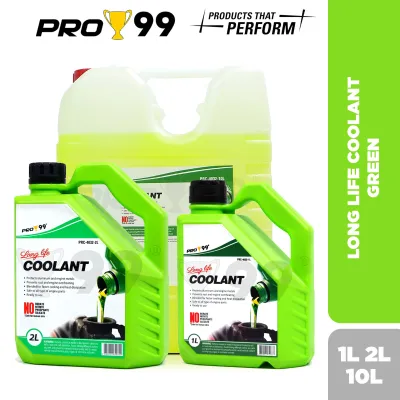
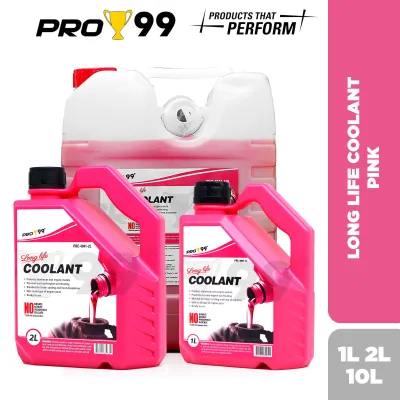
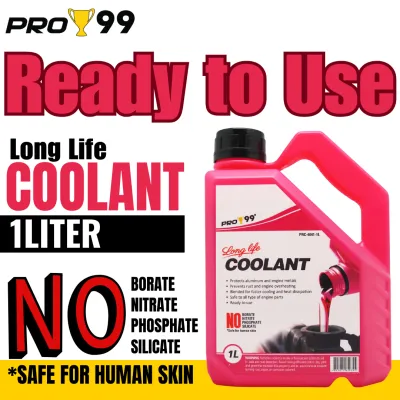
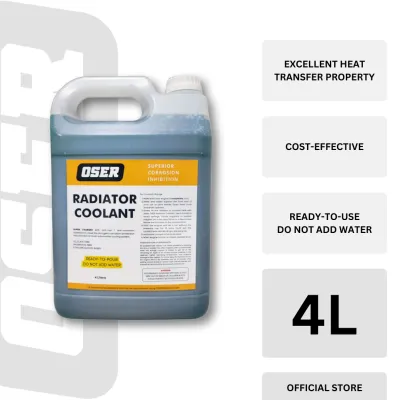
![[L-AX] 4 LITERS COOLANT TOPBEST BRAND](https://img.lazcdn.com/g/p/0a97b6996ff501d6f3c5b547ba0541eb.png_400x400q80.png_.webp)
![[YAMAS] 4 LITERS COOLANT TOP BEST BRAND](https://img.lazcdn.com/g/p/4e94c30d27e1e92e799327048730f2de.png_400x400q80.png_.webp)
Prices are valid at publication and may change. Please refer to the product page for the latest price.
To combat cavitation, specialized coolant for diesel engines contains dedicated anti-cavitation additives, such as nitrites, molybdates, or specialized organic acids. These chemicals form a thin, resilient protective barrier on the outer surface of the cylinder liners, absorbing the impact of collapsing bubbles and continuously self-healing when disrupted. Standard gasoline engine coolants lack these heavy-duty protective compounds. Using a standard gasoline coolant in a diesel engine can result in rapid liner pitting, premature water pump impeller erosion, and severe internal damage that can sideline a vehicle and require an expensive engine rebuild.
How the Philippine Tropical Climate Impacts Coolant Performance
Operating a diesel vehicle in the Philippines presents a unique set of environmental challenges that place an extraordinary thermal load on the cooling system. High ambient temperatures, intense tropical humidity, and prolonged stop-and-go traffic in congested urban centers like Metro Manila, Cebu, or Davao mean that engines have very little opportunity to cool down naturally through airflow. Under these conditions, the cooling system must work continuously at the upper limits of its design. This makes the “anti-boil” property of your coolant just as critical as its ability to prevent freezing in colder climates.

A common and highly dangerous misconception among some local vehicle owners is that because it never freezes in the Philippines, plain water or distilled water is a sufficient coolant. While water is an excellent conductor of heat, it has a relatively low boiling point of 100°C at sea level. In a pressurized cooling system, water’s boiling point increases, but it still falls far short of the protection offered by a proper ethylene glycol-based coolant mixture, which can elevate the boiling point to 129°C or higher when pressurized. If the coolant boils, it turns into steam, which cannot transfer heat away from metal surfaces, leading to rapid localized overheating and warped cylinder heads.
Furthermore, plain water provides absolutely zero lubrication for the water pump’s internal seals and bearings, leading to premature component failure. It also lacks corrosion inhibitors, making the engine’s cooling passages highly susceptible to internal rust, scale buildup, and galvanic corrosion. In the humid tropical climate of the Philippines, these chemical reactions occur even faster. Over time, rust and mineral scale will coat the internal passages of aluminum radiators and cast-iron engine blocks, insulating the heat rather than transferring it, and eventually clogging the narrow tubes of the radiator. A high-quality diesel coolant prevents this degradation, protecting aluminum, cast iron, copper, and rubber hoses from chemical breakdown.
Key Specifications to Check Before Buying
Selecting a coolant for diesel engine systems is not as simple as picking a bottle off the shelf based on color. Coolant color is merely a dye added by manufacturers and is not standardized; a pink coolant from one brand may have a completely different chemical composition than a pink coolant from another. Instead, you must evaluate the fluid based on its chemical technology and its alignment with original equipment manufacturer (OEM) standards.
Matching OEM Standards and Approvals
The absolute first step before purchasing any coolant is to consult your vehicle’s owner’s manual. Manufacturers specify the exact coolant requirements based on the metallurgy of the engine and the design of the cooling system. These requirements are typically expressed as specific OEM approval codes (such as Toyota Super Long Life Coolant, Isuzu Genuine Coolant, or Mercedes-Benz Approval 325.0) or broad industry standards like ASTM D6210 for heavy-duty diesel engines or ASTM D3306 for light-duty applications.
Coolants generally fall into three primary chemical families:
- Inorganic Additive Technology (IAT): This is the traditional green coolant containing silicates and phosphates. It offers excellent, fast-acting protection but has a short lifespan, typically requiring replacement every two years.
- Organic Acid Technology (OAT): Modern diesel engines almost universally require OAT or HOAT formulations. OAT coolants use organic acids to provide long-lasting corrosion protection without silicates or phosphates, offering extended drain intervals.
- Hybrid Organic Acid Technology (HOAT): HOAT coolants combine organic acids with small amounts of silicates or phosphates to provide the rapid protection of IAT alongside the longevity of OAT, making them highly effective at protecting modern aluminum radiators and complex water pump seals.
Concentrated vs. Pre-Diluted (Ready-to-Use) Formulas
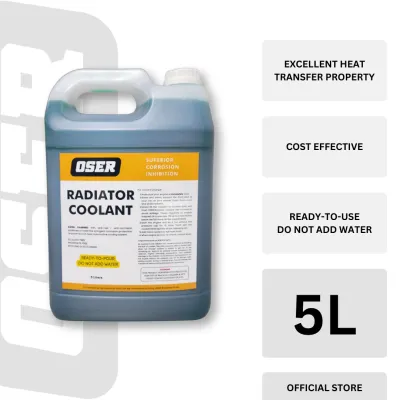
When purchasing coolant, you will encounter two main formats: concentrated formulas and pre-diluted (ready-to-use) formulas. Concentrated coolant consists of pure chemical base and additives, requiring you to mix it with water before pouring it into your radiator. The standard recommended ratio for tropical climates like the Philippines is a 50/50 mix of coolant concentrate and water, which provides an optimal balance of heat transfer capability, boiling point elevation, and corrosion protection.
If you choose a concentrated coolant, you must dilute it exclusively with distilled or deionized water. Never use tap water, well water, or bottled mineral water. Tap water contains dissolved minerals such as calcium, magnesium, and chlorides. When subjected to the high temperatures inside an engine, these minerals precipitate out of the liquid, forming hard scale deposits on the hot metal surfaces of the engine block and radiator tubes. This scale acts as an insulator, trapping heat inside the engine and significantly reducing the efficiency of the cooling system. Pre-diluted coolants, on the other hand, are pre-mixed at the factory with highly purified demineralized water, offering a convenient, hassle-free solution that eliminates the risk of mineral contamination and mixing errors.
Recommended Coolant Technologies for Different Diesel Vehicles
Diesel vehicles in the Philippines span a wide range of designs, from modern common-rail direct injection (CRDI) passenger vehicles to heavy-duty commercial haulers. Each of these categories has distinct cooling requirements based on their engine metallurgy and operating conditions.
Asian Diesel Pickups and SUVs
The Philippine roads are dominated by Asian-manufactured diesel pickups and mid-size SUVs, such as the Toyota Hilux, Mitsubishi Montero Sport, Isuzu D-Max, Nissan Navara, and Ford Ranger. These vehicles feature advanced, high-pressure CRDI aluminum-alloy engines that require precise temperature management.
For these vehicles, manufacturers typically specify long-life OAT or specific phosphate-based HOAT (P-HOAT) formulations. These coolants are specifically engineered to protect aluminum components from high-temperature corrosion while remaining completely free of silicates, which can be abrasive to the delicate seals of Asian-designed water pumps. When shopping for these vehicles, look for products that explicitly state compliance with Japanese or Korean OEM standards, such as JIS K 2234, or those formulated specifically for Asian vehicles. Using a silicate-heavy coolant in these engines can lead to premature water pump leaks and reduced heat transfer efficiency.
European Diesel Passenger Vehicles
European diesel sedans, hatchbacks, and luxury SUVs feature highly sophisticated cooling and emissions systems, including complex heater cores, exhaust gas recirculation (EGR) coolers, and multi-metal engine blocks. These systems are highly sensitive to chemical imbalances and require specialized coolant chemistry.
European manufacturers typically mandate silicate-free or specific silicate-containing Organic Acid Technology (often referred to as Si-OAT or lobrid coolants) that meet strict European OEM specifications such as Volkswagen’s G12++, G13, or G12evo standards, or BMW and Mercedes-Benz approvals. These formulations use a combination of organic acids and fast-acting silicates to form a robust protective layer over aluminum surfaces without forming deposits. It is critical to avoid using generic, high-phosphate coolants in European diesels; the hard water minerals often found in local water supplies can react with phosphates to cause gelation or precipitate out as solid scale, blocking the narrow passages of the heater core and EGR cooler, leading to localized overheating and costly component failures.
Heavy-Duty and Commercial Diesel Trucks
Commercial trucks, buses, jeepneys, and heavy construction machinery operating in the Philippines face extreme duty cycles, hauling heavy loads over steep mountain passes and through congested metropolitan corridors. These large-displacement diesel engines almost always feature wet-sleeve cylinder liners, which are exceptionally vulnerable to the destructive effects of cylinder liner cavitation.
For these heavy-duty applications, standard passenger car coolants are entirely inadequate. These engines require heavy-duty diesel coolants formulated with Nitrite-Organic Acid Technology (NOAT) or heavy-duty HOAT containing nitrites and molybdates. These specific additives provide the robust, continuous chemical shielding required to prevent cavitation erosion on wet-sleeve liners under extreme vibration and pressure. Heavy-duty coolants must meet rigorous commercial vehicle standards such as ASTM D6210 or Cummins CES 14603. Using a light-duty passenger car coolant in a commercial diesel engine can result in rapid liner perforation and catastrophic engine failure within a fraction of the engine’s expected service life.
Safe Practices for Flushing and Replacing Diesel Coolant
Maintaining your diesel engine’s cooling system requires periodic flushing and replacement of the coolant to ensure that the corrosion inhibitors and anti-cavitation additives remain active. Over time, these chemical additives deplete, leaving your engine vulnerable to internal degradation.
Before undertaking any cooling system maintenance, it is absolutely essential to consult your vehicle’s owner’s manual to verify the correct fluid capacity, the specific bleeding procedures required to eliminate air pockets, and the recommended replacement intervals. Always check the label of the coolant product you intend to use and cross-reference it with the vehicle manufacturer’s instructions. If the instructions conflict, if your vehicle’s specific requirements are unidentified, or if the intended application is not covered by the coolant label, stop immediately and consult the vehicle manufacturer or a qualified professional automotive technician.
One of the most critical rules of cooling system maintenance is to never mix different coolant technologies. For example, mixing an older Inorganic Additive Technology (IAT) coolant with a modern Organic Acid Technology (OAT) coolant can trigger a chemical reaction that destabilizes the additive packages. This reaction can cause the corrosion inhibitors to precipitate out of the liquid, forming a thick, muddy sludge that clogs the radiator tubes, blocks the thermostat, and destroys the system’s ability to transfer heat. If you are switching from one coolant technology to another, the entire system must be thoroughly flushed with distilled water to remove all traces of the old fluid before the new coolant is introduced.
Safety must always be your top priority when working on a cooling system. Never, under any circumstances, attempt to open the radiator cap or coolant reservoir while the engine is hot or running. The cooling system operates under high pressure, and opening it while hot can cause boiling liquid and steam to spray out violently, resulting in severe burns. Allow the engine to cool completely—typically for at least several hours—before opening the system.
Additionally, ethylene glycol-based coolants are highly toxic to humans, pets, and the environment. Its sweet smell can attract animals, making it a severe poisoning hazard. Always perform coolant services over a drip pan to catch every drop of fluid. Never dispose of used coolant by pouring it down household drains, storm sewers, or directly onto the soil. In the Philippines, used coolant must be collected in sealed, clearly labeled containers and disposed of at authorized hazardous waste collection centers, recycling facilities, or professional automotive service bays equipped to handle toxic chemical waste.
Frequently Asked Questions (FAQ)
Can I just use distilled water or tap water in my diesel radiator?
No, you should never use plain water—whether distilled or tap water—as a permanent coolant in your diesel engine. While distilled water is excellent for diluting concentrated coolant because it lacks dissolved minerals, using water alone lacks the necessary chemical properties to protect your engine. Plain water has a lower boiling point than a proper coolant mixture, making it highly susceptible to boiling and causing localized engine overheating in hot tropical climates like the Philippines. Furthermore, water alone provides no lubrication for the water pump’s internal seals and completely lacks the anti-corrosion and anti-cavitation additives required to prevent internal rust, scale buildup, and destructive cylinder liner pitting.
How often should I flush and replace the coolant in a diesel engine?
The interval for flushing and replacing your diesel coolant depends heavily on the specific coolant technology used and your vehicle manufacturer’s guidelines. Traditional Inorganic Additive Technology (IAT) coolants typically require replacement every 2 years or 40,000 kilometers, as their corrosion inhibitors deplete rapidly. Modern Organic Acid Technology (OAT) and Hybrid Organic Acid Technology (HOAT) extended-life coolants can last significantly longer, often up to 5 years or 250,000 kilometers, whichever comes first. Heavy-duty commercial vehicles may have different intervals based on operating hours. Always refer to the severe or normal maintenance schedule outlined in your specific vehicle’s owner’s manual to determine the correct interval for your driving conditions.
What happens if I mix two different coolant colors or types?
Mixing different coolant types can lead to severe engine damage. Coolant color is merely a dye and does not indicate chemical compatibility; mixing different formulations, such as OAT and IAT, can cause a chemical reaction that breaks down the protective additives. This often results in the formation of a thick, gel-like sludge that clogs the radiator, heater core, and engine passages, leading to rapid overheating and water pump failure. If you accidentally mix incompatible coolants, or if you are unsure of what fluid is currently in your system, you should have the cooling system completely drained, flushed with distilled water, and refilled with the correct, uniform coolant formulation recommended by your manufacturer.

Community discussion
Share your experience or ask a question. Comments are reviewed before publication.