
Selecting the right coolant red for car radiator systems in the Philippines is a critical decision for protecting your engine from severe thermal damage. While many drivers assume that any red-colored fluid is identical, color is merely a dye added by manufacturers. To safeguard your vehicle during grueling stop-and-go traffic in Metro Manila or long climbs up to Baguio, you must select a formula that matches your vehicle’s precise engineering requirements and offers robust boil-over and anti-corrosion protection.
Failing to use the correct formulation can lead to catastrophic engine failure, radiator leaks, or water pump damage. This guide explains how the tropical Philippine climate stresses your cooling system, how to decode red coolant formulations, what key specifications to look for on the label, and how to perform safe maintenance.
How the Philippine Climate Stresses Your Cooling System
The cooling system of a vehicle operating in the Philippines faces significantly higher thermal stress than one in a temperate climate. With ambient temperatures regularly exceeding 35°C during the dry season, the temperature difference between your engine’s radiator and the surrounding air is narrow. This narrow margin makes it much harder for the radiator to dissipate heat efficiently, forcing the cooling system to work at its absolute limit.
Products mentioned in this guide
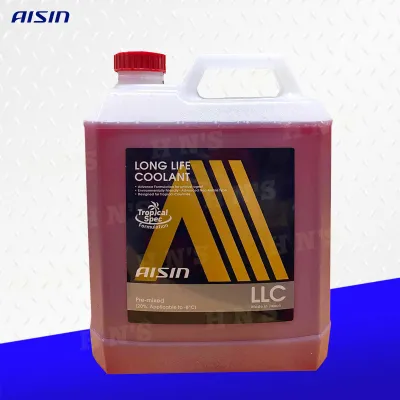
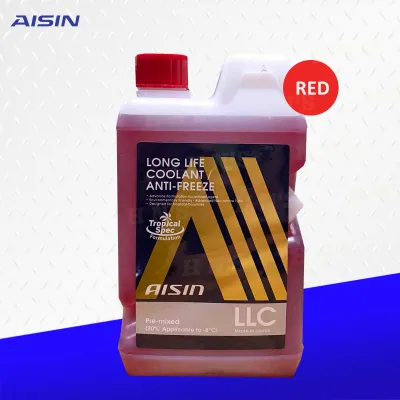
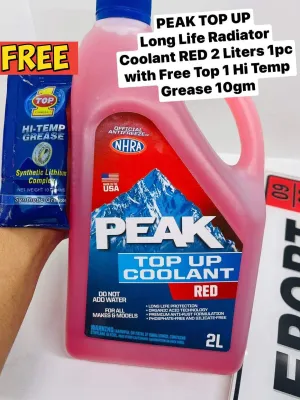
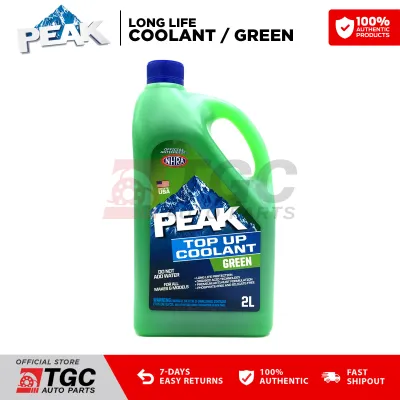
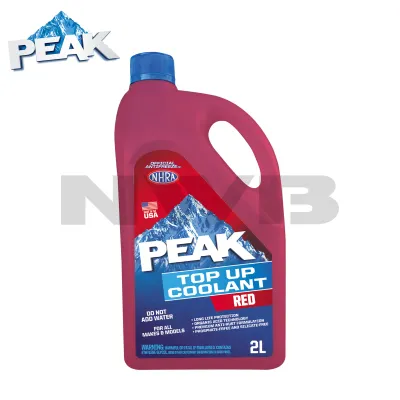
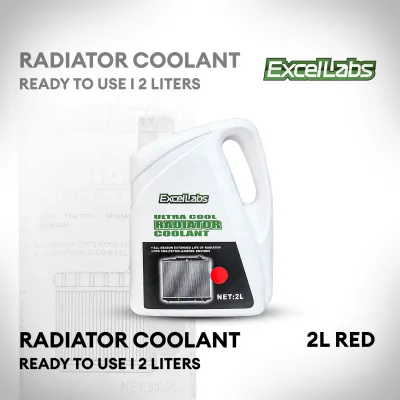
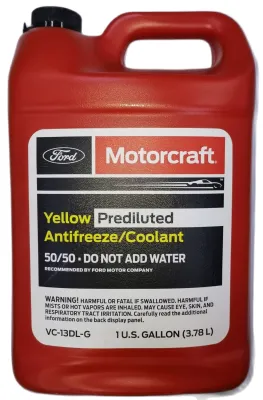
Prices are valid at publication and may change. Please refer to the product page for the latest price.
Urban driving conditions compound this environmental heat. Crawling through heavy traffic on major thoroughfares like EDSA or C-5 means your vehicle lacks the natural high-velocity airflow that passes through the radiator grille at highway speeds. Under these conditions, the engine relies entirely on electric cooling fans and the thermal capacity of the coolant. Consequently, boil-over protection and efficient heat transfer are far more critical in this environment than the freeze protection typically emphasized in cold-climate product marketing.
Additionally, the high humidity and salt-laden air characteristic of coastal regions across the Philippine archipelago accelerate external galvanic corrosion on the radiator’s aluminum cooling fins. This external degradation reduces the unit’s heat-dissipating surface area. To compensate for this loss of efficiency, the internal corrosion inhibitors within your coolant must remain highly active to prevent scale buildup and internal blockages, ensuring unhindered heat transfer from the engine block to the fluid.
Decoding "Red" Coolant: Why Color Is Not Enough
When searching for a coolant red for car radiator protection, it is vital to understand that color does not indicate chemical compatibility. Automotive fluid manufacturers use various dye colors—including red, pink, blue, green, and yellow—primarily to help identify leaks and to distinguish their products. The actual protection comes from the specific corrosion inhibitor technology blended into the base fluid, not the pigment.

Most modern red or pink coolants utilize Organic Acid Technology (OAT) or Hybrid Organic Acid Technology (HOAT). For example, many Japanese and Korean manufacturers specify a particular type of HOAT that contains phosphates but is completely free of silicates (often referred to as Phosphate HOAT or P-HOAT). Conversely, many European manufacturers require silicated OAT (Si-OAT) formulas and strictly prohibit phosphates due to hard water compatibility issues. Both of these distinct chemical families can be dyed red or pink, yet they are chemically incompatible.
Mixing incompatible red coolants can lead to severe cooling system failures. When a phosphate-rich formula is mixed with a silicate-rich formula, the additives can react chemically, causing them to precipitate out of the liquid solution. This precipitation forms a thick, gel-like sludge that settles in the narrow passages of your radiator core and heater core. This sludge blocks fluid flow, isolates heat within the engine block, and can quickly cause the water pump seals to abrade and leak.
To prevent these issues, always check the applied product’s label and your vehicle manufacturer’s instructions before adding or changing fluid. If instructions conflict, or if your vehicle’s specific requirements are unidentified, stop and consult the manufacturer or a qualified professional. Matching the exact Original Equipment Manufacturer (OEM) chemical specification is always more important than matching the color of the liquid.
Essential Label Specifications for Tropical Driving
To ensure your engine remains protected in hot weather, you must look past the marketing claims on the front of the bottle and examine the technical specifications on the back label.
Boiling Point and Concentration
Coolants are generally sold in two forms: 50/50 pre-mixed (ready-to-use) and concentrated. For tropical driving, maintaining a correct water-to-coolant ratio is vital. While pure water transfers heat more effectively than glycol, it boils at 100°C and offers zero corrosion protection. A 50/50 mixture of ethylene glycol and water raises the boiling point to approximately 108°C at atmospheric pressure. When sealed under a standard 1.1-bar radiator cap, this boiling point rises further to around 126°C to 129°C, providing a crucial safety margin against boiling over in heavy traffic.
OEM Approvals and Standards
Verify that the coolant meets recognized international standards such as ASTM D3306 (the standard specification for glycol-base engine coolants) or JIS K2234 (Japanese Industrial Standard). Because the Philippine market is highly populated with Japanese brands like Toyota, Mitsubishi, Honda, and Nissan, ensuring your red coolant complies with JIS K2234 guarantees that the fluid contains the specific phosphate-based inhibitors these engines require to protect their aluminum components.
Additive Technology
Ensure the label explicitly states the additive technology used. For modern vehicles with aluminum cylinder heads, aluminum radiator cores, and synthetic water pump seals, look for silicate-free OAT or P-HOAT formulations. These organic acids provide long-lasting protection by forming a microscopic protective layer only on areas where corrosion begins to develop, rather than coating the entire system and reducing heat transfer efficiency.
Reserve Alkalinity (RA)
Reserve alkalinity is a measure of the coolant’s ability to neutralize acidic contaminants that enter the system over time, such as combustion gases seeping past a cylinder head gasket. In hot, stop-and-go tropical environments, thermal cycling accelerates the degradation of glycol into acidic byproducts. A coolant with a robust reserve alkalinity rating will neutralize these acids, preventing them from corroding the internal copper, brass, solder, and aluminum parts of your cooling system.
Safe Inspection and Maintenance Routines for Hot Weather
Maintaining your car’s cooling system in a tropical climate requires regular, proactive inspections. Following a strict safety protocol is essential to prevent personal injury and component damage.
Safe Visual Inspection
Never attempt to open the radiator cap or reservoir cap while the engine is hot or even warm. The cooling system operates under high pressure, and opening it prematurely can cause boiling liquid and steam to spray out violently, resulting in severe burns. Always park the vehicle on a level surface, turn off the engine, and allow it to cool completely—typically for at least three to four hours—before touching any cooling system components.
Once the engine is completely cold, inspect the coolant level in the translucent plastic expansion reservoir. The fluid level should rest between the “Full” (or “Max”) and “Low” (or “Min”) markings. If you must add fluid, pour the recommended pre-mixed coolant directly into the reservoir up to the maximum line.
Identifying Degradation
Observe the physical condition of the coolant through the reservoir tank or by safely looking inside the radiator neck once the engine is cold. Healthy red coolant should appear bright, clear, and translucent. If the fluid has turned a muddy brown color, looks milky, or contains visible floating rust particles or black flecks, the additive package has depleted. This discoloration indicates that the fluid is no longer protecting the metal surfaces and must be flushed and replaced immediately.
Flushing and Replacement
Over time, even high-quality long-life coolants degrade and lose their protective properties. When performing a full cooling system flush, refer to your vehicle’s service manual for the correct interval, which typically ranges from 40,000 to 100,000 kilometers depending on the manufacturer.
If you purchase concentrated red coolant, you must dilute it using only distilled or demineralized water. Never use tap water, well water, or mineral water. Tap water contains dissolved minerals such as calcium and magnesium. When subjected to the intense heat inside your engine block, these minerals precipitate out and form hard scale deposits on the hot metal surfaces. This scale acts as an insulator, trapping heat inside the engine and eventually clogging the narrow passages of your radiator.
Safety and Compliance Warning
Always prioritize safety by consulting your vehicle’s owner manual for the exact coolant specification, capacity, and bleeding procedure. Some modern cooling systems require specific vacuum-filling tools to eliminate trapped air pockets, which can cause localized hot spots and engine damage. If you are uncomfortable performing these steps, or if your vehicle requires specialized diagnostic equipment, always have the service performed by a qualified professional mechanic.
Frequently Asked Questions (FAQ)
Can I mix two different brands of red coolant?
No, you should avoid mixing different brands of red coolant unless you have verified that both products share the exact same chemical formulation and OEM specifications. Even if both fluids are dyed red, one may be a silicate-free P-HOAT designed for Asian vehicles, while the other could be a silicated OAT designed for European vehicles. Mixing these incompatible additive packages can cause the corrosion inhibitors to drop out of solution, forming a thick sludge that clogs your radiator and causes engine overheating. If you do not know what specific coolant is currently in your system, it is safest to perform a complete system flush rather than topping it up with a different brand.
Is it okay to top up my red coolant with plain water in an emergency?
In an emergency situation where your coolant level is dangerously low and you risk overheating, you may top up the system with distilled water to safely reach a service station. Avoid using tap water or mineral water, as the minerals will deposit scale inside your engine block and radiator. Because adding water dilutes the concentration of your coolant, it lowers the boiling point and reduces the concentration of anti-corrosion additives. You must have the cooling system inspected for leaks, flushed, and refilled with the correct 50/50 coolant mixture as soon as possible after the emergency.
Does red coolant expire if left in the bottle?
Unopened, sealed bottles of high-quality red coolant typically have a shelf life of up to five years when stored in a controlled environment. Once the bottle is opened, exposure to atmospheric moisture and oxygen can gradually degrade the additive package over time. If you store leftover coolant in your garage, ensure the cap is tightly sealed, and keep the bottle in a cool, dry location out of direct tropical sunlight. Always inspect the fluid before use; if you notice any cloudiness, sediment, or separation of ingredients, do not use the product.

Community discussion
Share your experience or ask a question. Comments are reviewed before publication.