
Finding the right replacement tires for a 265/65 R17 SUV or pickup often leads drivers to the Bridgestone Dueler lineup, but choosing between the different available variants can be challenging when balancing daily comfort against off-road durability. The ideal Bridgestone Dueler variant for your vehicle depends directly on whether your routine driving consists primarily of paved highway commuting, which favors the quiet ride of Highway Terrain (H/T) models, or mixed-surface provincial travel, which requires the rugged grip of All-Terrain (A/T) designs. By matching your typical road conditions, vehicle load requirements, and driving habits to the specific engineering of each Dueler sub-model, you can ensure reliable safety, handling, and tread life without overpaying for capabilities you do not use.
What Bridgestone Dueler variants are typically offered in the 265/65 R17 size?
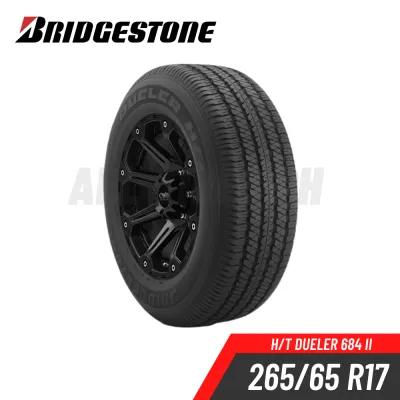
Bridgestone typically offers the Dueler lineup in the 265/65 R17 size across two primary categories: Highway Terrain (H/T) and All-Terrain (A/T) variants. These sub-models are engineered with distinct tread patterns and rubber compounds to address specific driving environments, and you can identify them by reading the letters and numbers molded directly into the tire sidewall.
The 265/65 R17 size is a highly common fitment for midsize SUVs and pickup trucks, such as the Toyota Fortuner, Hilux, Mitsubishi Montero Sport, and Ford Ranger. Within this size, Bridgestone utilizes the Dueler family name to represent its light truck and SUV tire range. The most critical differentiator on the sidewall is the suffix following the Dueler name, which immediately indicates the tire’s intended operating environment.
Products mentioned in this guide
333 Lazada user ratings
Already using the tires. I am happy to have 3522 manufacturing date (Aug or Sept 2022). This is the 2nd Batch of my Purchase w/c complete th…Read full reviewShow less
Already using the tires. I am happy to have 3522 manufacturing date (Aug or Sept 2022). This is the 2nd Batch of my Purchase w/c complete the 4 tires. Sana mey give aways si seller pang spare...para brand new lahat :-) Thanks to seller "All Tires PH" great job on your discounts👍
apat po inorder ko, nalate ng dating yung isa, kinabukasan dumating ang isa pagtanggal ko ng plastic nya may sira. napaka delikado para sa p…Read full reviewShow less
apat po inorder ko, nalate ng dating yung isa, kinabukasan dumating ang isa pagtanggal ko ng plastic nya may sira. napaka delikado para sa pamilya natin ayaw nila irefund ang pera ko, wag kayong bibili dito
2nd order ko na legit at maayos ang item 6pcs and good thank you seller . looking forward ulit.sa next transact. nakabit n din pla agad high…Read full reviewShow less
2nd order ko na legit at maayos ang item 6pcs and good thank you seller . looking forward ulit.sa next transact. nakabit n din pla agad highly recommended👌💯
seller highly recommended. delivered tire is what i ask for. DOT latest 2023.
3rd time ko na nag order! Sobrang legit! Sa uulitin po! Thank you.
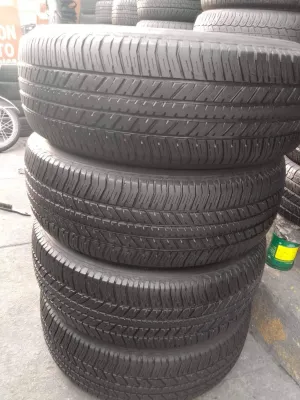
30 Lazada user ratings
I am requesting a return and full refund for all 4 tires. All four tires arrived in a condition that makes them unsuitable and unsafe for us…Read full reviewShow less
I am requesting a return and full refund for all 4 tires. All four tires arrived in a condition that makes them unsuitable and unsafe for use. The bead areas of the tires, which must properly seal against the wheel rims, show damage/deformation. The tires have NOT been used or driven on. The damage was discovered during inspection before installation. Because these are vehicle tires and this condition may affect proper mounting, air sealing, and driving safety, I cannot use them. I am returning all 4 tires and requesting a FULL REFUND, including any applicable shipping charges. Please refer to the attached photos showing the condition of the tires upon receipt.
wow na wow!! I highly recommend this shop! seller is true to his/her word! wala patching holes yung gulong! thread life is more than 85% not…Read full reviewShow less
wow na wow!! I highly recommend this shop! seller is true to his/her word! wala patching holes yung gulong! thread life is more than 85% not bad at all!!! more power to you!! 🙏🙏🙏💯💯💯
Ok lang for price 65 percent
2nd purchase!!! Ang galing!!
Appearance:good
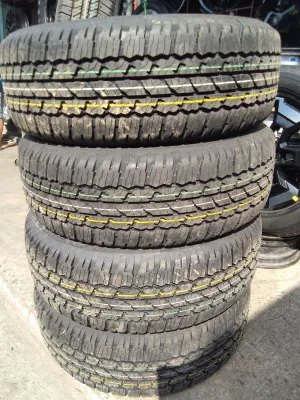
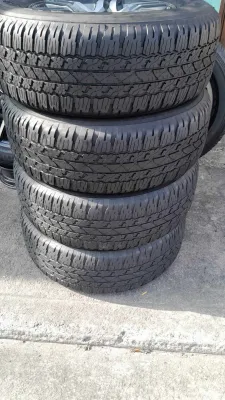
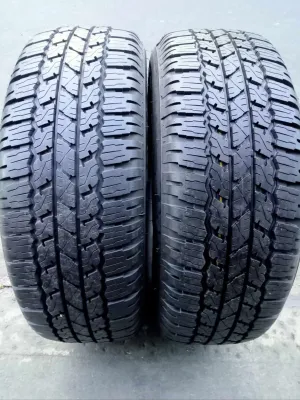
Prices are valid at publication and may change. Please refer to the product page for the latest price.
The “H/T” designation stands for Highway Terrain. These tires are designed primarily for paved roads, expressways, and urban streets, focusing on a smooth ride, low rolling resistance, and reliable wet-weather braking. On the other hand, the “A/T” designation stands for All-Terrain. These models feature deeper tread blocks and reinforced construction to handle unpaved roads, gravel, mud, and light off-road trails while maintaining acceptable performance on paved surfaces.
To determine the exact variant you are looking at, you must inspect the tire sidewall for the specific three-digit model number that follows the Dueler name. Common examples found in the market include the Dueler H/T 684 II, which is frequently fitted as original equipment on many SUVs, and the Dueler A/T 697, known for its rugged block design. Newer generations or specialized sub-variants may also exist, so checking the manufacturer’s official catalog or consulting an authorized dealer is highly recommended.
Because tire manufacturers continuously update their product lines, the specific generations and models available in the 265/65 R17 size can vary. Local dealer stock in the Philippines determines which exact Dueler models are currently accessible for purchase. When shopping, always verify the full model name on the physical tire rather than relying solely on a broad category description, as subtle differences in tread design can exist between different generations of the same model series.
How do Highway Terrain (H/T) and All-Terrain (A/T) Dueler tires compare for SUV use?
Highway Terrain (H/T) Dueler tires prioritize on-road comfort, low cabin noise, and fuel efficiency, whereas All-Terrain (A/T) variants focus on durability, puncture resistance, and loose-surface traction. Choosing between them requires balancing the quiet refinement of a daily commuter against the rugged utility needed for unpaved roads.

The physical design of the tread pattern is the most obvious difference between these two categories. H/T tires feature closely spaced tread blocks with continuous ribs running around the circumference of the tire. This closed design minimizes the air compression that occurs as the tire rolls, which significantly reduces road noise and cabin vibration at highway speeds. For SUV owners who use their vehicles primarily for family transport and daily office commutes, this translates to a quieter, more car-like ride.
In contrast, A/T tires utilize an open tread design with larger, more aggressive blocks separated by wider grooves. While these wide voids are designed for self-cleaning—expelling mud, gravel, and water—they also allow more air to flow through the tread, which typically generates a noticeable hum or growl on paved highways. Additionally, the stiffer, larger blocks of an A/T tire can transmit more road imperfections into the cabin, resulting in a slightly firmer ride compared to the cushioned feel of an H/T tire.
Wet traction and hydroplaning resistance also differ due to these design choices. H/T tires are heavily siped, meaning they have tiny slits cut into the tread blocks that act as biting edges to slice through thin films of water on paved roads. Combined with deep circumferential grooves, they efficiently channel water away from the contact patch to maintain grip during heavy downpours. A/T tires also handle wet roads well, but their primary wet-weather advantage lies in clearing larger volumes of water, slush, or mud, making them more reliable when encountering unpaved, waterlogged tracks.
The structural trade-off between these variants involves rolling resistance and casing durability. H/T tires are constructed with lighter casings and compounds optimized for low rolling resistance, which helps support fuel economy during long highway drives. A/T tires, however, feature reinforced sidewalls and cut-resistant rubber compounds to help resist punctures from sharp rocks, tree roots, and debris. This added reinforcement makes the tire heavier, which can slightly increase fuel consumption but provides essential peace of mind when venturing off the pavement.
To make an informed decision, do not rely solely on broad category assumptions. Always check the official tire labels and the Uniform Tire Quality Grading (UTQG) ratings molded into the sidewall, which provide standardized ratings for treadwear, traction, and temperature resistance. These ratings offer an objective basis for comparison, allowing you to evaluate how a specific H/T or A/T model performs under standardized testing conditions before making a purchase.
Which Dueler variant best suits your typical driving routes in the Philippines?
The most suitable Dueler variant for your vehicle depends on the actual percentage of time you spend on paved highways versus unpaved provincial roads. For most drivers, prioritizing the tire that excels on their daily commute is far more practical than choosing one based on occasional weekend trips.
If your daily routine consists of navigating the stop-and-go traffic of Metro Manila, cruising along the South Luzon Expressway (SLEX) or North Luzon Expressway (NLEX), and parking in smooth concrete multi-level garages, an H/T variant is generally the most sensible choice. The smooth asphalt and concrete of these routes do not require aggressive off-road tread blocks. Instead, they demand a tire that offers reliable wet braking on slick city streets, minimal rolling noise during long highway stretches, and maximum fuel efficiency during prolonged idling in urban traffic.
Conversely, if your regular routes take you through provincial areas with ongoing road construction, unpaved barangay roads, gravel paths, or steep mountain passes, an A/T variant becomes highly beneficial. The rugged construction of an All-Terrain tire is designed to withstand the impact of deep potholes, sharp stones, and uneven road shoulders without suffering sidewall damage or tread chipping. The aggressive tread blocks provide the necessary mechanical grip to climb muddy inclines or maintain stability on loose gravel where a standard highway tire might spin and lose traction.
The tropical climate of the Philippines introduces another critical factor: intense monsoon rains and localized street flooding. During heavy downpours, both H/T and A/T tires require adequate tread depth to prevent hydroplaning, which occurs when a layer of water builds up between the tire and the road surface. While H/T tires are designed to disperse water on flat, paved highways due to their specialized siping, A/T tires offer an advantage when navigating waterlogged roads covered in silt or debris, as their wide grooves are less likely to become clogged.
A common mistake is selecting an aggressive A/T tire based on a single annual holiday trip to a remote beach or mountain campsite, despite spending the other 361 days of the year commuting on smooth city streets. Doing so forces you to tolerate increased road noise, higher fuel consumption, and a firmer ride for a capability you rarely use. Prioritize the tire that matches at least 80% to 90% of your actual driving mileage, and adjust your driving style or speed on those rare occasions when you encounter more challenging terrain.
What load and speed ratings must you verify for a 265/65 R17 SUV or pickup?
Before purchasing any 265/65 R17 tire, you must verify that its load index and speed rating meet or exceed the original specifications established by your vehicle’s manufacturer. Installing tires with inadequate ratings can compromise vehicle stability, accelerate tread wear, and lead to catastrophic tire failure under heavy loads.
To locate the correct specifications for your vehicle, look for the tire information placard typically located on the driver-side door jamb, or consult your vehicle owner’s manual. This label lists the original equipment tire size, recommended cold inflation pressures, and the required load index and speed rating. For the 265/65 R17 size, a typical service description might look like “112S” or “112T,” where “112” represents the load index and the letter represents the speed rating.
The load index is a numerical code that corresponds to the maximum weight a tire can safely carry when inflated to its recommended pressure. A load index of 112, for example, indicates a capacity of 1,120 kilograms per tire. For midsize pickups like the Hilux or SUVs like the Fortuner, which are often loaded with heavy cargo, tools, or a full cabin of passengers, maintaining this load capacity is critical. Installing a tire with a lower load index can cause excessive sidewall flexing, rapid heat buildup, and increase the risk of premature structural failure, especially when driving under heavy payloads or on hot summer roads.
The speed rating is an alphabetical code indicating the maximum speed at which the tire can safely carry a load corresponding to its load index over sustained periods. Common speed ratings for SUV and pickup tires in this size include S (up to 180 km/h), T (up to 190 km/h), and H (up to 210 km/h). Even if you never drive at these speeds, downgrading to a lower speed rating than what the manufacturer specified is highly discouraged. Tires with higher speed ratings are built with stronger internal belts and compounds designed to dissipate heat more effectively and provide crisper steering response; reducing this rating can negatively alter your vehicle’s handling characteristics during emergency maneuvers.
If your vehicle has aftermarket modifications, such as a suspension lift kit, heavy steel bumpers, or a winch, your tire requirements may change. These modifications alter the vehicle’s weight distribution and center of gravity, which can place additional stress on the tires. In such cases, or if you regularly tow heavy trailers or carry payloads near your vehicle’s maximum gross vehicle weight rating, you should consult a qualified tire professional or the vehicle manufacturer to determine if a heavy-duty or light-truck (LT) metric tire is required instead of a standard passenger (P) metric tire.

Community discussion
Share your experience or ask a question. Comments are reviewed before publication.