
Maintaining proper wheel alignment is essential for preserving tire life, ensuring predictable handling, and maximizing fuel efficiency on Philippine roads. From navigating the pothole-ridden streets of Metro Manila to driving along uneven provincial highways, your vehicle’s suspension takes a constant beating. While professional computerized alignments are highly accurate, the cost of frequent shop visits can quickly add up, especially if you regularly modify your suspension or participate in track days. For hands-on car owners, investing in budget-friendly wheel alignment tools offers a practical, cost-effective way to perform routine checks and adjustments in a home garage.
By focusing on manual and mechanical measurement systems rather than expensive computerized rigs, DIYers can achieve highly accurate results at a fraction of the cost. Basic alignment angles—camber, caster, and toe—can be measured using relatively simple instruments such as magnetic camber gauges, aluminum toe plates, and string alignment setups. Understanding how to select, verify, and safely use these tools allows you to maintain your vehicle’s handling characteristics without breaking the bank.
Essential Wheel Alignment Tools for Home Garages
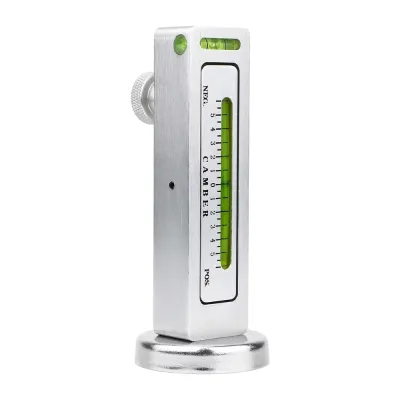
To set up a functional home alignment bay, you need to understand the specific instruments required to measure each suspension angle. The most common starting point is measuring camber, which is the inward or outward tilt of the tire when viewed from the front. Budget-friendly camber and caster gauges generally fall into two categories: traditional bubble levels and digital levels. Traditional bubble gauges use a simple liquid-filled vial with graduated markings. They are highly favored for their durability, as they require no batteries and are completely unaffected by the high humidity and dust typical of Philippine garages. Digital camber levels, on the other hand, utilize electronic sensors to provide a direct numerical readout, often down to a tenth of a degree. While digital gauges offer faster readings, they require a perfectly calibrated reference surface to ensure accuracy. Both types typically feature a strong magnetic base designed to attach directly to the steel brake rotor or wheel hub.
Products mentioned in this guide
1 Lazada user ratings
he gave me 1pcs! i dont like this seller. check the other store i post
30 Lazada user ratings
good, Improves driving stability, Easy to install and use, Compact and portable design, tapos na gamitin, tago mina, private use only
👌Ease of Use:10 🔨Durability:10 thick enough 🔄Versatility:10
goods kung ano ung nakita ko sya den ung dumating
11 Lazada user ratings
Thank you, the material is very good, and I like the appearance very much.
Not aluminum and not the same as per photo
Received in good packaging
51 Lazada user ratings
Suitable for DIY car maintenance, Clear step-by-step instructions,
Ok yong appearance.... Magagamit ko to soon.
Helps adjust tire angles,
🔄Versatility:good 👍 👌
very good quality
5 Lazada user ratings
Orange color design, Accurate measurement,
51 Lazada user ratings
dapat kasi nasa good condition ang items bago nyo ideliver sa buyer at gumagana ng maayos ... nag grinder pa ako at nagwelding,naputol kasi …Read full reviewShow less
dapat kasi nasa good condition ang items bago nyo ideliver sa buyer at gumagana ng maayos ... nag grinder pa ako at nagwelding,naputol kasi pundido ang bakal konting pukpok lang naputol na sya para lang maalign ang items na binili ko ..WALA SA ALIGNMENT..
🔨Durability:legit talaga c seller, ang bilis damating High-quality materials for long-lasting use, Perfect alignment every time, magagamit t…Read full reviewShow less
🔨Durability:legit talaga c seller, ang bilis damating High-quality materials for long-lasting use, Perfect alignment every time, magagamit talaga ng anak ko sa business niya
dumating na Thanks seller maganda di pa nagamit hehe. thanks din sa Nag deliver medyo kinabahan kala nya di kukunin. hehe
Thank you IFMoto nice item not yet try but look durable.thank you sa Lazada at Kay Boss Rider
Oky nmn yng items
Prices are valid at publication and may change. Please refer to the product page for the latest price.
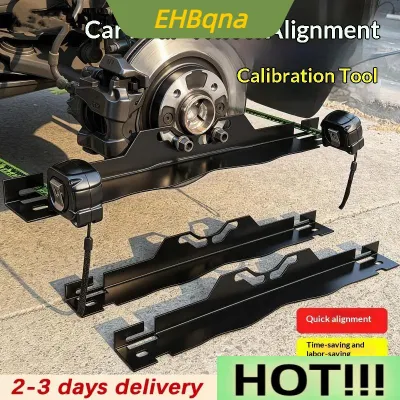
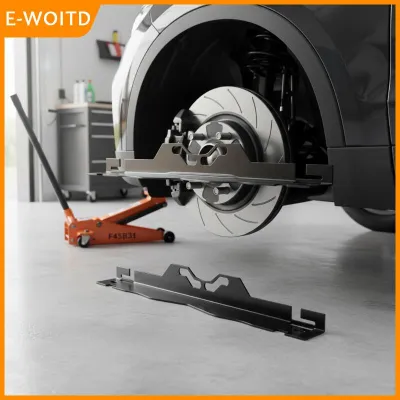
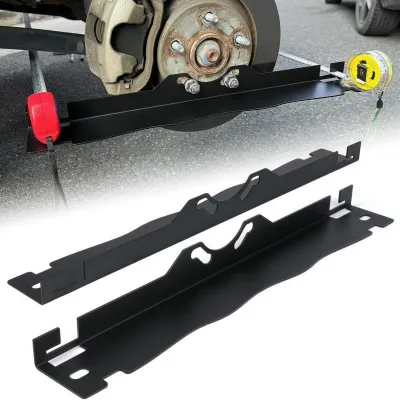
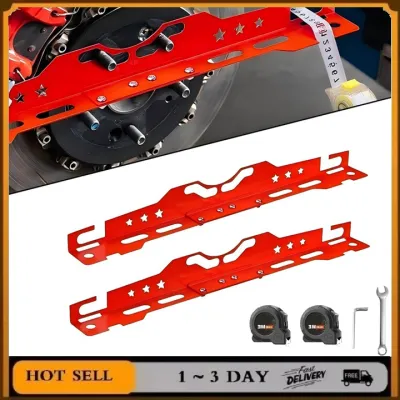
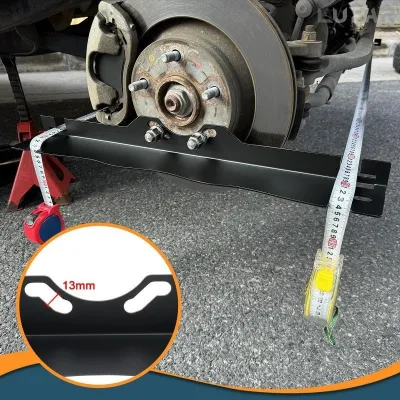
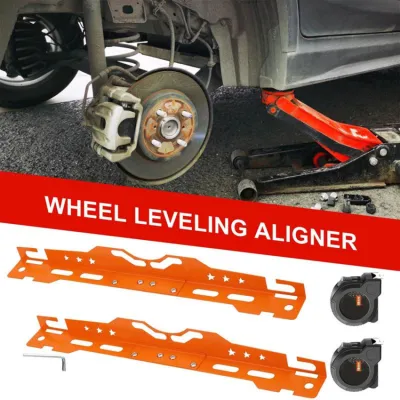
Measuring toe—the direction the tires point relative to the vehicle’s centerline—requires a different set of tools. The most straightforward budget option is a pair of toe plates used in conjunction with two standard tape measures. Toe plates are flat, rigid sheets of metal that rest flat against the sidewalls of the tires on opposite sides of the vehicle. By running tape measures through slots in the front and rear edges of the plates, you can quickly calculate the difference between the front and rear measurements to determine total toe. For a more comprehensive setup, dedicated string alignment kits establish a physical parallel line along both sides of the vehicle’s chassis. While string kits require a more tedious setup process, they allow you to measure individual wheel toe and verify the thrust angle, ensuring the rear wheels track perfectly behind the front wheels.
Beyond measurement tools, adjusting your suspension requires keeping certain components stationary while allowing others to move freely. A steering wheel holder is an indispensable, low-cost tool that clamps between the steering wheel and the driver’s seat or brake pedal. This keeps the steering wheel locked in the dead-center position while you make adjustments to the tie rods underneath; without it, even a perfectly aligned front end can end up with a crooked steering wheel on the road. Additionally, the vehicle’s tires must be able to pivot freely during adjustments to prevent the suspension from binding. Professional shops use heavy steel turn plates, but budget-conscious DIYers can achieve the same effect using DIY slip plates. Placing two heavy-duty plastic trash bags with a small amount of grease or motor oil between them under each front tire allows the rubber to slide and settle naturally as you adjust camber and toe, preventing false readings caused by tire scrub.
Setting Budget Priorities for Alignment Equipment
When building a DIY alignment kit on a budget, it is crucial to distinguish between essential measurement instruments and optional convenience accessories. Your primary financial focus should always be on the accuracy and rigidity of your core tools. A high-quality, rigid set of aluminum toe plates and a reliable, repeatable camber gauge are absolute must-haves. In contrast, expensive laser-guided alignment systems, branded storage cases, and specialized digital turn plates are nice-to-have items that do not necessarily yield more accurate results for a basic street setup. By prioritizing mechanical simplicity and material quality over electronic gimmicks, you can keep your initial investment low while still achieving professional-grade accuracy.

Material selection plays a significant role in both the cost and longevity of your tools. For toe plates, aluminum is highly recommended over plastic or thin steel alternatives. While plastic plates are cheaper, they are prone to flexing when pressed against bulging tire sidewalls, which introduces significant errors into your toe measurements. Aluminum plates offer the necessary rigidity to bridge the tire sidewall accurately while remaining lightweight and highly resistant to corrosion—a vital consideration given the tropical humidity and coastal salt air in many parts of the Philippines.
It is also important to account for the hidden costs associated with DIY wheel alignment. Simply purchasing a gauge and toe plates is not enough; you must also ensure you have the supporting garage equipment to perform the work safely and accurately. This includes a set of heavy-duty jack stands rated for your vehicle’s weight, a reliable hydraulic floor jack, and a perfectly level working surface. Because alignment angles are highly sensitive to gravity, even a slight slope in your garage floor will distort your camber readings. Budgeting for leveling materials, such as vinyl floor tiles, linoleum squares, or wooden shims to build a perfectly flat plane under the tires, is a necessary step. Additionally, you may need to purchase specific hand tools, such as high-torque wrenches, breaker bars, or specialized tie rod adjusting sleeves, to loosen stubborn, rusted suspension bolts.
Verifying Specifications and Quality on E-commerce Platforms
Shopping for automotive tools on online marketplaces requires a critical eye to avoid low-quality, inaccurate, or incompatible products. When browsing listings for wheel alignment tools, always look past the marketing buzzwords and focus on the technical specifications. Check the manufacturer’s stated measurement range and resolution. For camber gauges, a range of at least +/- 6 degrees with a resolution of 0.1 degrees (for digital models) or clear 0.5-degree increments (for bubble levels) is standard. Avoid listings that fail to specify these parameters or rely on generic descriptions.
Vehicle compatibility is another critical factor that must be verified before making a purchase. Never assume a tool will fit your vehicle based solely on a broad category term or a generic product title. You must verify your vehicle’s specific model, year, wheel diameter, and suspension design against the tool’s physical dimensions and mounting requirements. For example, magnetic camber gauges require a flat, magnetic steel surface to cling to. If your car features aluminum wheels with deep-set hubs or custom center caps that block access to the axle nut, a standard magnetic gauge will not work without a specialized wheel lip adapter. Similarly, ensure that the toe plates you choose are tall enough to clear your tire’s aspect ratio and wide enough to span the tire diameter without contacting low-hanging body kits, bumpers, or mudflaps.
To protect your investment, pay close attention to seller reliability and platform return policies. Look for established sellers with high ratings and positive reviews that specifically mention the tool’s calibration accuracy and build quality. Be cautious of extremely cheap listings that lack detailed user feedback. Check if the seller offers a calibration guarantee or includes clear instructions on how to recalibrate the tool at home. Finally, ensure the e-commerce platform’s return policy covers defective, bent, or uncalibrated items, allowing you to return the tool if it fails an initial accuracy check upon arrival.
Safety Boundaries and Limitations of DIY Alignment
While performing a DIY wheel alignment is a rewarding and cost-saving project, it is vital to recognize the safety boundaries and physical limitations of home garage equipment. Before attempting any adjustments, you must understand that suspension modifications and alignment changes directly impact your vehicle’s road legality, handling stability, and overall safety. Always consult your vehicle’s original manufacturer documentation and service manual for specific torque specifications, factory alignment ranges, and step-by-step disassembly instructions. If you are uncomfortable working underneath a vehicle or lack the proper tools, seek qualified professional installation and adjustment.
The complexity of your vehicle’s suspension system is a major limiting factor for DIY tools. Simple suspension designs, such as front MacPherson struts and solid rear axles, are highly receptive to manual alignment methods. However, modern vehicles equipped with complex multi-link independent suspensions, active body control, or adaptive dampers often require highly precise, multi-angle adjustments that are extremely difficult to measure accurately with basic hand tools. Furthermore, vehicles equipped with modern Advanced Driver Assistance Systems (ADAS) rely on electronic steering angle sensors (SAS) that must be electronically recalibrated using specialized diagnostic scanners whenever an alignment is performed. Attempting a manual alignment on these vehicles without recalibrating the sensors can trigger traction control errors or disable safety features.
Physical safety must always be your top priority when working under a vehicle. Never rely solely on a hydraulic jack to support the car while making adjustments; always lower the vehicle securely onto heavy-duty jack stands placed on solid, level ground. When using DIY slip plates or turn plates, ensure they are securely positioned and that the vehicle’s parking brake is engaged (or wheels chocked) to prevent the car from rolling or sliding off the plates while you are underneath. Finally, recognize when a DIY alignment is insufficient. If your vehicle exhibits severe, uneven tire wear, a persistent pull to one side that does not improve after adjustment, or if you have recently been in an accident that may have bent structural suspension components, you must take the vehicle to a professional facility equipped with a computerized 3D alignment machine to diagnose potential frame damage and ensure the vehicle is safe to drive.
Frequently Asked Questions (FAQ)
Can I perform a complete wheel alignment using only string and a tape measure?
While the classic string alignment method is highly accurate for measuring and adjusting toe angles and verifying that the rear wheels track parallel to the front wheels (thrust angle), it is not sufficient for a complete wheel alignment on its own. String setups cannot measure vertical angles like camber (the inward or outward tilt of the wheels) or caster (the steering axis tilt). To perform a comprehensive alignment, you must pair your string setup with a dedicated camber/caster gauge to ensure all three primary alignment angles are within factory specifications.
Do budget digital camber gauges need frequent recalibration?
Yes, budget-friendly digital camber gauges rely on sensitive electronic accelerometers that can drift over time due to temperature fluctuations, physical impacts, or storage conditions. To maintain accuracy, it is highly recommended to zero the gauge on a verified, perfectly level surface before every alignment session. Additionally, avoid dropping the gauge or storing it near strong magnetic fields, as this can damage the internal sensors and compromise the reliability of your measurements.

Community discussion
Share your experience or ask a question. Comments are reviewed before publication.