
Navigating the daily commute on Philippine roads requires a balance of comfort, agility, and uncompromising safety. With the intense tropical heat and heavy urban traffic, many riders naturally gravitate toward the open-face style, often searching for popular options like an ID helmet half face model on local e-commerce platforms. While these helmets offer excellent ventilation and a wider field of vision, shopping for them online presents a major challenge: distinguishing genuine, life-saving gear from cheap, uncertified imitations. Finding a helmet that fits both your budget and strict safety standards requires a clear understanding of local certification marks, material trade-offs, and verification techniques.
Prioritizing safety does not mean you have to spend a fortune, but it does require diligence. A certified half-face helmet is engineered to absorb impact energy and remain securely anchored to your head during an accident. By learning how to decode safety labels, spot counterfeit listings, and verify physical fitment, you can confidently secure a reliable helmet that protects your life without draining your wallet.
Decoding Helmet Certification Standards for Local Roads
Every motorcycle helmet used on public roads in the Philippines must legally comply with national safety standards. The two primary marks of authenticity are the Philippine Standard (PS) license mark and the Import Commodity Clearance (ICC) sticker. The Bureau of Philippine Standards issues these marks only after subjecting helmet samples to rigorous laboratory testing. For riders, these stickers are not mere decorative decals; they are proof that the protective gear meets specific performance thresholds designed to save lives.
Products mentioned in this guide
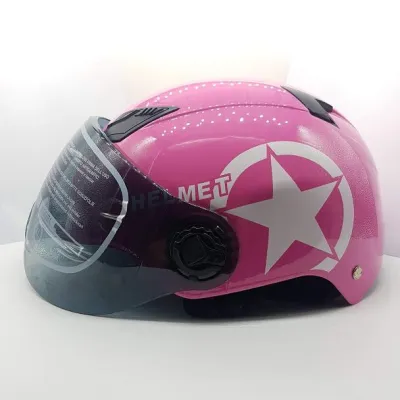
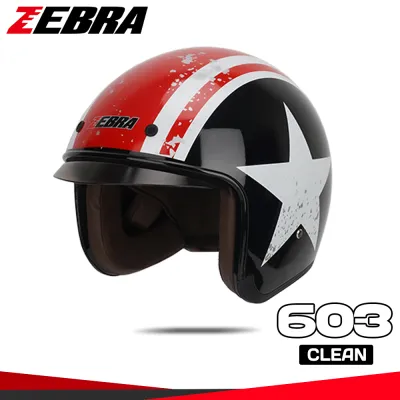
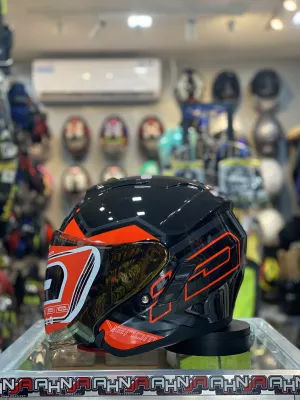
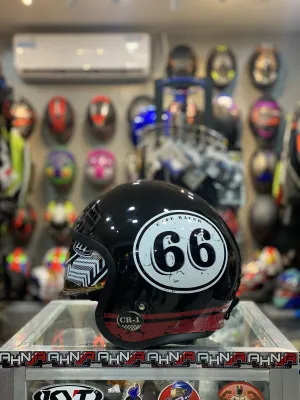
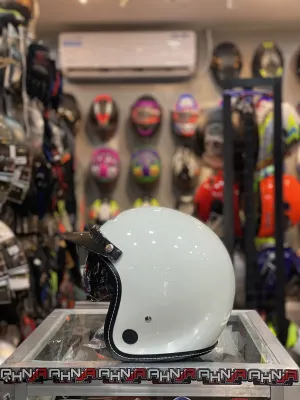
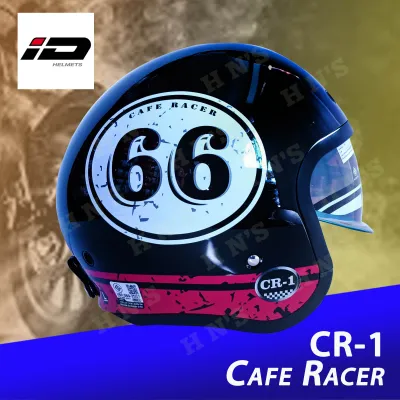
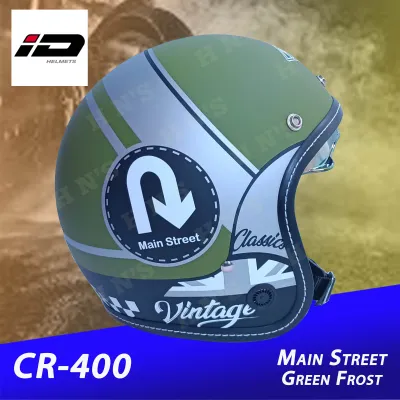
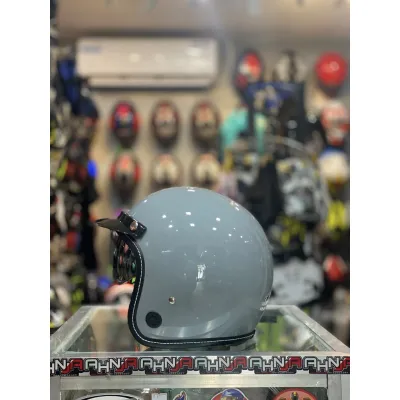
Prices are valid at publication and may change. Please refer to the product page for the latest price.
Genuine certification marks possess distinct visual characteristics that make them difficult for counterfeiters to replicate. Authentic ICC stickers feature a unique serial number, high-resolution holographic elements that shift color when tilted under light, and precise micro-printing. Substandard or counterfeit helmets often use flat, poorly printed stickers that lack these holographic details or display duplicate serial numbers across multiple listings. Verifying the physical integrity of these marks is your first line of defense against low-quality products.
To earn these certifications, helmets must pass demanding physical evaluations. Impact absorption tests measure how well the inner protective liner cushions the head against sudden deceleration during a crash. Retention system tests apply extreme pulling force to the chin strap and buckle to ensure the helmet will not fly off your head upon impact. Because these tests simulate real-world accident scenarios, buying a helmet with a verified PS or ICC mark ensures that the structural integrity of your gear is backed by scientific evaluation.
Ultimately, proper safety certification is a non-negotiable baseline that must supersede all other purchasing factors. A stylish design, a popular brand name, or an incredibly low price point means nothing if the helmet fails to protect your skull during a collision. Before you begin comparing aesthetic features or color schemes, make it a strict rule to filter out any product that does not carry a verifiable, legitimate safety mark.
Allocating Your Budget: Safety vs. Comfort Trade-Offs
When shopping for a half-face helmet, understanding how features scale across different price points helps you allocate your budget effectively. Entry-level certified helmets focus almost entirely on meeting the minimum safety requirements. At this tier, manufacturers typically use standard injection-molded ABS plastic for the outer shell. While highly impact-resistant, these shells tend to be heavier and bulkier, and the interior comfort liners are often non-removable, making them harder to clean after sweaty rides in hot weather.

Stepping up to the mid-range tier introduces significant improvements in daily usability and comfort. In this bracket, you will find lighter thermoplastic shells, dual-visor systems featuring an integrated drop-down sun shield, and multi-port ventilation channels that draw cool air across the scalp. Crucially, mid-range helmets usually feature fully removable, washable, and moisture-wicking interior pads. This is a major advantage in the humid Philippine climate, as it prevents the buildup of bacteria, mold, and unpleasant odors over time.
Premium half-face helmets utilize advanced shell materials such as fiberglass composites or carbon fiber blends. These materials offer exceptional structural strength while drastically reducing the overall weight of the helmet, which minimizes neck fatigue during long rides. Premium models also feature superior optical-grade visors that resist scratching and fogging, highly engineered aerodynamic profiles that reduce wind noise, and emergency quick-release cheek pads. While these features enhance the riding experience, they represent comfort and convenience upgrades rather than a higher level of basic impact protection.
Regardless of how much you choose to spend, certain non-negotiable safety features must be present in any helmet you buy. The helmet must have a thick, high-density Expanded Polystyrene (EPS) foam inner liner, which acts as the primary shock absorber. The retention system must feature a robust quick-release buckle or a double-D ring closure that remains locked under tension. If a budget option lacks a substantial EPS liner or uses flimsy plastic buckles, it cannot provide adequate protection.
If your current budget cannot cover a helmet that meets these minimum safety and structural standards, it is highly advisable to delay your purchase. Riding with a substandard, uncertified helmet provides a false sense of security while leaving you completely exposed to severe head injuries. Saving your money for a short period to afford a certified mid-range or entry-level helmet is a life-saving decision that far outweighs the temporary convenience of buying a cheap, unverified alternative.
Spotting Fake Certifications on E-Commerce Platforms
Online marketplaces are flooded with listings that claim to offer certified helmets at impossibly low prices. To protect yourself from purchasing a dangerous counterfeit, you must adopt an active verification strategy. Before placing an item in your digital cart, message the seller directly and request clear, unedited, real-time photos of the helmet. Specifically, ask for close-ups of the ICC or PS sticker, the manufacturer label sewn into the comfort liner, and the production date stamp.
Never rely solely on optimized product titles, seller badges, or automated user reviews. Unscrupulous sellers often stuff their listings with keywords like “original certified half face” or use fake “preferred seller” badges to project authority. Furthermore, many positive reviews on online platforms are generated by buyers who evaluate only the shipping speed or the external packaging, rather than the actual safety and authenticity of the helmet itself. Your decision must be based on verifiable physical evidence, not marketing claims.
There are several immediate red flags that should prompt you to walk away from an online listing. An unusually low price—such as a helmet listed for a fraction of the cost of established entry-level brands—is a strong indicator of a counterfeit product. Missing manufacturer specifications, vague descriptions of safety testing, and a seller’s refusal to provide real-time photos of the certification stickers are clear warning signs. If a seller cannot or will not provide the specific serial number printed on the ICC sticker, do not risk your safety by purchasing from them.
Verifying Fit and Sizing Before You Checkout
A certified helmet can only perform its life-saving function if it fits your head perfectly. A helmet that is too loose can easily shift or fly off during an accident, while a helmet that is too tight will cause severe headaches and distract you from the road. To find your correct size, use a flexible measuring tape to measure the circumference of your head. Wrap the tape horizontally around your head, about 2.5 centimeters above your eyebrows and just above your ears, keeping the tape level for an accurate reading.
Once you have your measurement in centimeters, compare it directly to the specific size chart provided by the helmet manufacturer. Sizing is not standardized across the motorcycle industry; a medium size in one brand may correspond to a small or a large in another. Avoid relying on generic sizing advice or assuming your size based on a previous helmet. Always default to the manufacturer’s official measurement guide to ensure a precise match.
When your helmet arrives, perform a series of physical checks before removing the tags or discarding the packaging. First, fasten the chin strap securely and perform the “shake test” by vigorously shaking your head side-to-side and up-and-down. The helmet should snuggly hug your head without sliding, rotating, or slipping down over your eyes. Next, assess the pressure on your cheeks; the cheek pads should press firmly against your face, similar to a gentle squeezing sensation, without causing pain or forcing you to bite the inside of your mouth.
Finally, check the forehead area by attempting to slip a finger between your skin and the helmet liner. If you can easily insert your finger, the helmet is too large and will not provide adequate protection during an impact. Because achieving a perfect fit is critical, always verify the seller’s return and exchange policies regarding sizing issues before finalizing your purchase. Ensure the seller allows hassle-free exchanges for different sizes, and keep all original labels, protective visor films, and packaging intact until you are completely satisfied with the fit.
Frequently Asked Questions (FAQ)
Are half-face helmets legal for daily commuting in the Philippines?
Yes, half-face (open-face) helmets are legal for daily commuting on public roads in the Philippines, provided they meet national safety standards. Under Republic Act No. 10054, also known as the Motorcycle Helmet Act, all motorcycle riders and pillion passengers must wear standard protective helmets that bear the official Philippine Standard (PS) or Import Commodity Clearance (ICC) marks. While legal, riders must ensure their chin straps are securely fastened at all times while operating the vehicle. Additionally, it is wise to check specific local government unit (LGU) ordinances, as some municipalities may enforce additional rules regarding visor clarity, prohibiting heavily tinted or mirrored visors during nighttime riding to maintain clear visibility.
How often should I replace a budget half-face helmet?
As a general rule, you should replace a budget half-face helmet every three to five years of regular use, or immediately after any impact. Over time, the protective Expanded Polystyrene (EPS) foam liner naturally degrades due to exposure to sweat, hair oils, cosmetics, extreme tropical heat, and UV radiation, which diminishes its capacity to absorb shock. You must replace your helmet immediately if it experiences a significant drop onto a hard surface, is involved in any road accident, or shows visible signs of wear such as frayed chin straps, cracked outer shells, or a loose inner liner. Even if the helmet looks perfectly fine on the outside, the internal protective structures may be compromised and unable to protect you in a subsequent impact.

Community discussion
Share your experience or ask a question. Comments are reviewed before publication.