
Using a pink coolant for car radiator maintenance depends entirely on your vehicle manufacturer’s technical specifications, not the color of the fluid. While a bottle of pink coolant might look identical to what is already inside your radiator, color is merely an artificial dye added by manufacturers. Pouring the wrong formulation into your engine can lead to severe chemical reactions, costly blockages, and engine failure. To protect your vehicle, you must look past the color and verify the underlying chemical technology.
Why Coolant Color Is Not a Reliable Compatibility Indicator
For decades, drivers associated specific coolant colors with universal formulations. Today, however, coolant color is primarily used for branding, marketing, and quick leak detection. There is no global regulatory standard that dictates what chemical formula must correspond to a specific color. Consequently, one manufacturer might dye an Organic Acid Technology (OAT) formula pink, while another might use pink for a Hybrid Organic Acid Technology (HOAT) blend.
To make an informed decision, you must understand the primary chemical technologies used in modern automotive cooling systems:
Products mentioned in this guide
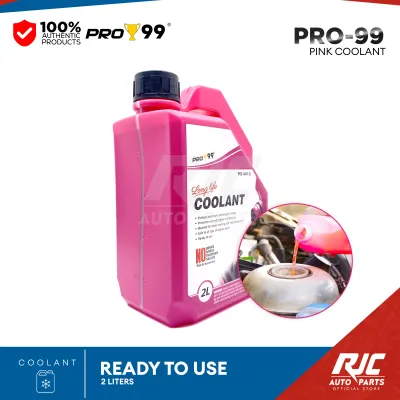
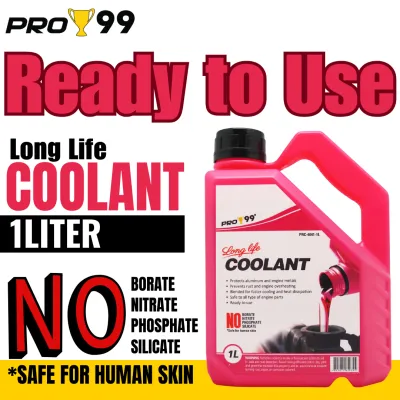
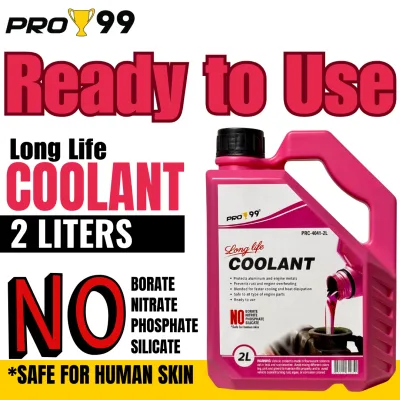
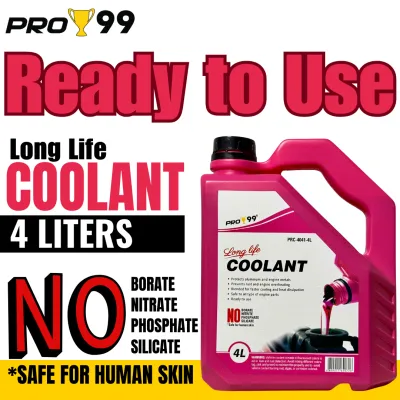
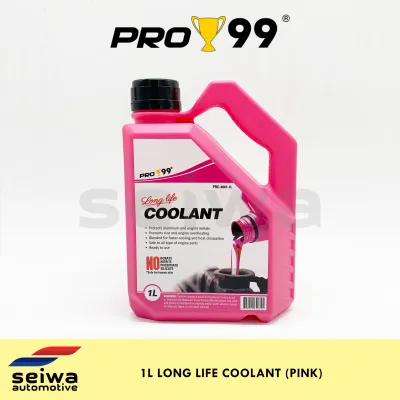
![1L PINK] Coolant for Toyota and Chevrolet - Pro99 Brand](https://img.lazcdn.com/g/p/c64659fadafe40fe81501d09479bef65.jpg_400x400q80.jpg_.webp)
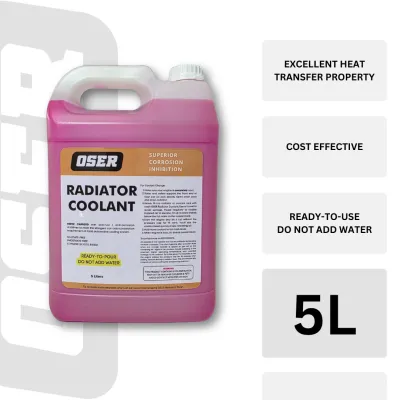
Prices are valid at publication and may change. Please refer to the product page for the latest price.
- Inorganic Additive Technology (IAT): Traditionally dyed green, this older formulation uses silicates and phosphates to provide fast-acting protection for iron and brass components. It requires frequent replacement, typically every two years.
- Organic Acid Technology (OAT): Often dyed orange, pink, or red, OAT contains no silicates or phosphates. Instead, it relies on organic acids to offer long-lasting corrosion protection, commonly found in modern aluminum engines.
- Hybrid Organic Acid Technology (HOAT): Typically dyed yellow, orange, or blue, this is a hybrid blend combining organic acids with a small amount of silicates or phosphates to offer the benefits of both worlds.
- Lobrid or Si-OAT: A newer variation that blends organic acids with silicates, frequently specified for European vehicles and often dyed pink or violet.
Because “pink” can represent a straight OAT formula, a specialized Si-OAT, or a custom HOAT blend, relying solely on color is a major risk. Two different brands of pink coolants may contain entirely incompatible additive packages. Mixing them can deplete their protective properties, leaving your engine vulnerable to corrosion and internal damage.
How to Verify Pink Coolant Compatibility for Your Vehicle
To determine if a specific pink coolant is safe for your vehicle, you must perform a systematic compatibility check before purchasing or adding any fluid.

Step 1: Consult the Owner’s Manual Your vehicle’s owner’s manual is the definitive authority on fluid specifications. Locate the cooling system section and look for the required Original Equipment Manufacturer (OEM) specification code. This code is often an alphanumeric sequence (such as Toyota Super Long Life Coolant, Ford WSS-M97B44-D, or VW TL 774-G/G12++). Write this code down, as it represents the exact chemical composition your engine’s metallurgy requires.
Step 2: Read the Product Label When shopping for a pink coolant for car radiator use, ignore the front-facing marketing claims and turn the bottle around to read the technical label. Look for a section labeled “Specifications,” “Meets or Exceeds,” or “Approvals.” The bottle must explicitly list your vehicle’s OEM specification code. If the label only says “universal” or “for all makes and models” without listing your specific OEM standard, proceed with extreme caution, as generic formulas may not provide the precise corrosion inhibitors your engine needs.
Step 3: Assess Your Current Coolant History Before adding new coolant, inspect the fluid inside your translucent overflow reservoir. If you bought the vehicle used, or if you do not have a documented service history of the last coolant change, do not simply top up the system. Mixing a new pink coolant with an unknown fluid already in the radiator can trigger a negative chemical reaction. If the history is unclear or the existing fluid looks dark, muddy, or discolored, a complete system flush is highly recommended over a simple top-up.
Your engine’s internal materials dictate these strict requirements. Modern engines use a variety of metals, including aluminum cylinder heads, cast iron blocks, brass heater cores, and rubber or silicone gaskets. A coolant formulated for an aluminum-heavy engine block may lack the specific buffers needed to protect yellow metals like copper or brass, leading to rapid component degradation and voided manufacturer warranties.
Risks of Mixing Incompatible Coolants in Your Radiator
Mixing incompatible coolant formulations is one of the most common causes of cooling system failures. When different additive packages are combined, they do not simply coexist; they often react chemically.
The most severe consequence of mixing incompatible formulas is gelation. For instance, if you mix an OAT-based pink coolant with an older IAT-based green coolant, the organic acids can react with the silicates or phosphates. This reaction causes the silicates to drop out of suspension, turning the liquid coolant into a thick, muddy gel or sludge. This gel cannot flow through the narrow passages of your cooling system.
This chemical breakdown leads directly to catastrophic mechanical failures:
- Clogged Heater Cores and Radiator Tubes: The narrow tubes inside your radiator and heater core quickly become restricted by sludge, preventing heat dissipation.
- Water Pump Failure: The abrasive sludge wears down the internal seals of the water pump, leading to coolant leaks and bearing failure.
- Corrosion Acceleration: When incompatible additive packages neutralize each other, the anti-corrosion protection drops to zero, allowing rust and scale to form rapidly on internal metal surfaces.
Safety Boundary: If you realize that the wrong coolant has been added to your radiator, do not start or drive the vehicle. Operating the engine will circulate the incompatible mixture throughout the block, making it much harder to clean out. Keep the engine off and arrange to have the vehicle towed to a professional service center for a comprehensive cooling system flush.
Coolant Selection Considerations for Tropical Climates
Operating a vehicle in a tropical climate like the Philippines presents unique thermal challenges. High ambient temperatures, high humidity, and prolonged idling in heavy urban traffic place immense stress on your vehicle’s cooling system.
A common misconception in tropical regions is that antifreeze properties are unnecessary because it never freezes. However, modern engine coolant serves a dual purpose: it lowers the freezing point and raises the boiling point of the water. A standard 50/50 mixture of concentrated coolant and distilled water raises the boiling point significantly compared to pure water. This elevation is critical to prevent the radiator from boiling over when you are stuck in gridlock under the midday sun.
Furthermore, the high thermal stress of tropical driving accelerates chemical reactions, including corrosion. Aluminum components, which are highly sensitive to heat, require robust, active anti-corrosion additives to prevent pitting and scale buildup. High-quality pink coolants, particularly those formulated with OAT or HOAT technologies, provide a durable protective layer over aluminum surfaces, ensuring efficient heat transfer even under extreme operating temperatures.
To maintain this protection, never use plain tap water to dilute concentrated coolant. Tap water contains minerals like calcium and magnesium that precipitate out under high heat, forming scale deposits inside the radiator tubes. This scaling acts as an insulator, trapping heat inside the engine and accelerating internal corrosion. Always purchase pre-mixed 50/50 formulas or dilute concentrated coolant using only pure distilled water.
Safe Practices for Topping Up or Replacing Radiator Coolant
Maintaining your car’s cooling system requires strict adherence to safety protocols to prevent severe personal injury and component damage.
Critical Safety Rule: Never, under any circumstances, open the radiator cap or expansion tank cap while the engine is hot or warm. The cooling system operates under high pressure, and opening the cap can cause boiling coolant and pressurized steam to spray out, resulting in severe, life-altering burns. Always wait at least several hours for the engine to cool completely before attempting any physical inspection or service.
To safely check or top up your coolant, follow these steps:
- Inspect the Overflow Reservoir: Locate the translucent plastic coolant overflow tank. It will have "Min" and "Max" (or "Cold" and "Hot") markings on the side. You can safely check the level visually without opening any caps.
- Top Up Only When Cold: If the level is below the minimum mark, ensure the engine is completely cold. Slowly unscrew the cap on the plastic overflow reservoir—not the metal radiator cap.
- Use the Exact Match: Add only the exact OEM-specified pink coolant to bring the level up to the maximum line. Do not overfill, as the fluid needs room to expand when the engine warms up.
Topping up is a temporary solution for minor, natural fluid loss over time. If you notice the coolant level dropping consistently, this indicates a leak in the system, such as a cracked hose, a failing water pump, or a damaged radiator. In such cases, or if the fluid in the reservoir appears dark, cloudy, or contains floating debris, a simple top-up will not suffice. You must have the system inspected, repaired, and fully flushed by a qualified professional to restore proper thermal efficiency and engine safety.
Frequently Asked Questions (FAQ)
Can I mix pink coolant with green or blue coolant?
No, you should never mix pink coolant with green, blue, or any other color of coolant unless both products explicitly share the exact same OEM specification code. Mixing different colors almost always means mixing incompatible chemical families, such as Organic Acid Technology (OAT) and Inorganic Additive Technology (IAT). This chemical mismatch can cause the protective additives to precipitate out of the liquid, forming a thick gel or sludge that blocks coolant passages, damages the water pump, and causes severe engine overheating. Always prioritize the manufacturer’s chemical specification over the physical color of the fluid.
Is it safe to use distilled water instead of pink coolant in an emergency?
In a critical emergency—such as when your engine is overheating due to a severe coolant loss and you have no access to the correct pink coolant—using pure distilled water to top up the system is acceptable to prevent immediate engine seizure. However, this is strictly a temporary measure. Distilled water lacks the necessary boiling-point elevators and corrosion inhibitors required to protect your engine’s metal components. Operating your car on pure water for extended periods will lead to internal rust, scale buildup, and localized boiling. You must have the cooling system drained, flushed, and refilled with the correct OEM-specified coolant mixture by a professional mechanic as soon as possible.

Community discussion
Share your experience or ask a question. Comments are reviewed before publication.