
Evaluating whether the 70mai A510 dash cam is suitable for your daily drive in the Philippines requires looking closely at how its technical specifications match up against local road realities. While it is a popular option in the mid-range car electronics market, a tropical climate characterized by extreme cabin heat, dense urban congestion, and poorly lit provincial roads demands rigorous verification of any camera’s hardware limits. Before making a purchase, you must confirm that its thermal management, optical sensor capabilities, and power delivery systems are built to withstand these demanding conditions without failing when you need footage the most.
Key Environmental Challenges for Dash Cams in the Philippines
Operating a vehicle in the Philippines presents a unique set of environmental and operational hurdles that can quickly degrade or disable low-quality electronic accessories. The most prominent of these challenges is intense solar radiation and the resulting cabin heat buildup. When a vehicle is parked outdoors in cities like Manila or Cebu, interior temperatures can easily exceed 60°C within an hour, putting immense thermal stress on a dash cam’s internal circuitry, battery, and adhesive mount. Even during active driving, direct sunlight streaming through the windshield subjects the device to continuous heat, which can trigger automatic thermal shutdowns if the unit lacks adequate heat dissipation.
Beyond thermal stress, the nature of Philippine traffic demands highly reliable recording performance. Daily commutes through congested corridors like EDSA or Circumferential Road 5 involve hours of stop-and-go driving, where minor bumper-to-bumper collisions and sudden motorcycle lane-filtering are common. A dash cam must feature highly dependable loop recording and precise impact detection to ensure that critical moments are never overwritten or missed. The constant vibration from uneven road surfaces and concrete joints also tests the physical stability of the camera mount and its internal connections.
Products mentioned in this guide


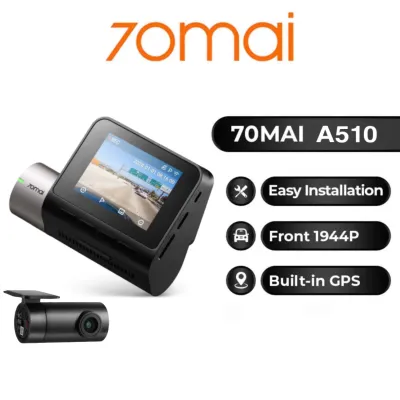
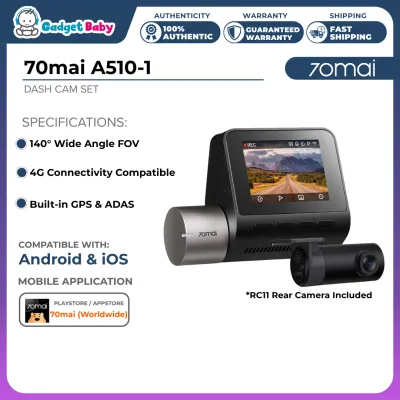
Prices are valid at publication and may change. Please refer to the product page for the latest price.
Finally, night driving in both urban centers and rural provinces introduces severe lighting challenges. Many secondary roads, barangay streets, and provincial highways lack consistent street lighting, forcing drivers to rely solely on their headlights. A dash cam operating in these environments must possess exceptional low-light sensitivity to capture legible license plates, pedestrian movements, and road hazards in near-total darkness. High contrast from oncoming high-beams can also blind inferior sensors, making advanced exposure control a necessity for local drivers.
Verifying Heat Resistance and Thermal Management
To determine if the 70mai A510 can survive the intense Philippine climate, you must first verify its official thermal specifications. Start by locating the manufacturer’s stated operating and storage temperature ranges, which are typically listed on the product packaging, in the user manual, or on the official product specification sheet. A reliable dash cam for tropical use should ideally support operating temperatures up to 60°C and storage temperatures up to 85°C. Operating a device outside its certified temperature envelope can lead to permanent hardware damage, corrupted video files, or complete system failure.

Another critical factor in thermal safety is the type of internal power storage component used by the dash cam. Traditional lithium-ion batteries are highly sensitive to extreme heat; they can swell, leak, or even pose a fire hazard when exposed to prolonged cabin temperatures in parked vehicles. In contrast, supercapacitors are significantly more stable under high temperatures, offering a longer operational lifespan and a much lower risk of thermal runaway. When evaluating the A510, check the product documentation to confirm whether it utilizes a supercapacitor or a lithium battery, as this choice directly impacts the unit’s long-term reliability in the Philippines.
Even with robust internal components, you should remain vigilant for physical warning signs of thermal throttling during peak afternoon driving. If the dash cam experiences unexpected shutdowns, frequent reboots, or screen dimming while driving in direct sunlight, these are clear indicators that the device is struggling to dissipate heat. Modern dash cams often feature built-in thermal protection mechanisms that automatically power down the unit to prevent permanent damage to the image sensor and processor. Regularly checking your recorded footage for gaps or corruption after hot driving days will help you verify if the camera is maintaining stable performance.
Assessing Lens and Sensor Specs for Traffic and Low Light
Evaluating the optical hardware of the 70mai A510 is essential to ensure it can capture clear, actionable evidence during dense daytime traffic and dark night drives. Begin by checking the specific image sensor model and aperture size detailed in the product specifications. A larger aperture, denoted by a lower f-number such as f/1.8, allows more light to reach the sensor, which is crucial for reducing image noise and maintaining clarity in low-light conditions. Advanced image sensors, particularly those featuring back-illuminated technology or specialized night-vision branding, are better equipped to balance high-contrast scenes, such as when bright headlights shine directly into the camera on an unlit road.
Video resolution and frame rate are equally important when trying to read license plates in fast-moving or congested traffic. While high resolutions like 1944p or 1440p offer greater detail for digital zooming, they must be paired with an adequate frame rate—typically 30 frames per second (fps) or higher—to prevent motion blur. In stop-and-go traffic, a clear, high-resolution image allows you to identify the license plates of nearby vehicles, which is vital in hit-and-run scenarios. Verify the camera’s maximum resolution settings in the user manual to ensure you are recording at the optimal balance of clarity and file size.
Additionally, pay close attention to the camera’s field of view (FOV), which is usually measured diagonally in degrees. A wide FOV, such as 140 degrees, is highly beneficial for driving in the Philippines because it captures adjacent lanes, sidewalks, and merging motorcycles that might otherwise remain in your blind spots. However, extremely wide angles can introduce fish-eye distortion, making objects appear further away than they actually are and reducing the legibility of details at the edges of the frame. Confirming that the lens design minimizes edge distortion while maintaining a wide perspective will ensure your recorded footage remains legally and practically useful.
Installation and Maintenance for Tropical Conditions
Proper installation and routine maintenance are vital to protecting your dash cam from the harsh Philippine environment and ensuring its continuous operation. When mounting the device, position it directly behind the rearview mirror to keep it out of your direct line of sight while maximizing its forward-facing coverage. If your windshield features a shaded or dotted ceramic matrix near the top, try to mount the adhesive pad within this area. This placement provides a physical shield against direct solar radiation, significantly reducing the temperature of the mounting bracket and the camera body during long drives.
The adhesive mount itself requires regular inspection, as prolonged exposure to high cabin temperatures can degrade the bonding agent over time. If you notice the dash cam vibrating excessively, tilting, or slipping from its original position, the adhesive pad may be failing. To prevent the camera from falling and sustaining physical damage, proactively replace worn adhesive with high-temperature, automotive-grade double-sided tape. Clean the glass surface thoroughly with isopropyl alcohol before reapplying the mount to ensure a secure, long-lasting bond.
Environmental factors like high humidity, road dust, and interior windshield haze can quickly coat the camera lens, severely degrading video quality. Make it a habit to clean the lens at least once a month using a clean, dry microfiber cloth. Avoid using harsh chemical glass cleaners directly on the lens, as they can strip away specialized anti-reflective or protective coatings. Keeping the lens free of smudges, dust, and condensation ensures that the sensor can capture sharp, high-contrast footage, especially during challenging night drives.
Frequently Asked Questions (FAQ)
Does the 70mai A510 overheat during long daytime drives?
During extended daytime drives across the Philippines, especially under intense midday sun, any dash cam can experience significant heat buildup. To monitor for potential overheating, observe if the device displays warning messages, suffers from sudden restarts, or if the housing feels excessively hot to the touch. You should consult the user manual to verify if the A510 features an automatic thermal shutdown protocol designed to protect its internal processor. Ensuring that your vehicle’s air conditioning is directed toward the windshield can also help mitigate ambient heat around the device during long road trips.
Is it safe to leave parking surveillance mode on under direct sunlight?
Leaving parking surveillance active while your car is parked directly under the sun carries inherent risks due to the extreme temperatures that accumulate inside a closed cabin. Continuous recording generates internal heat, which, when combined with high ambient temperatures, increases the likelihood of thermal stress or battery degradation. Before enabling this feature, verify if the dash cam or its hardwire kit includes a reliable low-voltage cutoff and a high-temperature auto-shutdown feature. To minimize risks, try to park in shaded areas, use a reflective front windshield sunshade placed behind the dash cam, or temporarily disable parking mode during the hottest hours of the day.

Community discussion
Share your experience or ask a question. Comments are reviewed before publication.