
Choosing the right 15W-40 diesel engine oil among Castrol GTX, Shell Rimula, and Motul depends entirely on your vehicle’s manufacturer specifications, operating conditions, and the exact product tier you select. There is no single best brand for every diesel engine; instead, the correct choice is the one that matches the required API or ACEA service category and OEM approvals listed in your owner’s manual. While Castrol GTX often targets everyday light-to-medium duty sludge protection, Shell Rimula is heavily focused on commercial and heavy-duty stress, and Motul provides specialized formulations for specific equipment or performance needs. This guide breaks down how to evaluate these three brands, what technical specifications to look for on the label, and how to make a safe, condition-based decision for your specific diesel engine.
Understanding 15W-40 Viscosity for Diesel Engines
The “15W-40” designation on an engine oil bottle represents its multi-grade viscosity rating, which determines how the fluid flows at different temperatures. The “15W” portion indicates the cold-start viscosity rating, where the “W” stands for winter, representing the oil’s ability to flow and protect the engine during initial startup in cooler temperatures. The “40” represents the operating-temperature viscosity, indicating the oil’s thickness and resistance to thinning when the engine reaches its normal operating temperature of 100 degrees Celsius.
In tropical climates like the Philippines, where ambient temperatures remain high year-round, the cold-start rating is less about freezing conditions and more about ensuring rapid oil circulation during morning starts. The high-temperature rating of 40 is particularly critical in these regions, as it ensures the oil maintains a robust protective film under intense engine heat, heavy traffic, and high-load conditions.
Products mentioned in this guide
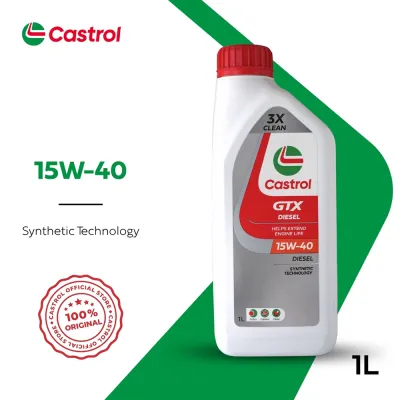
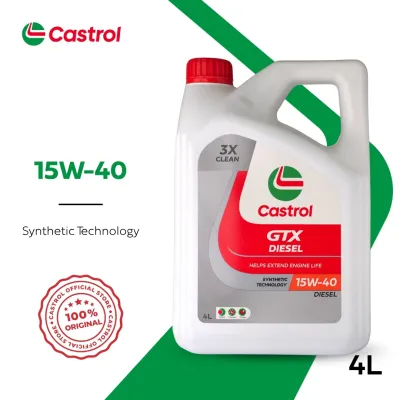
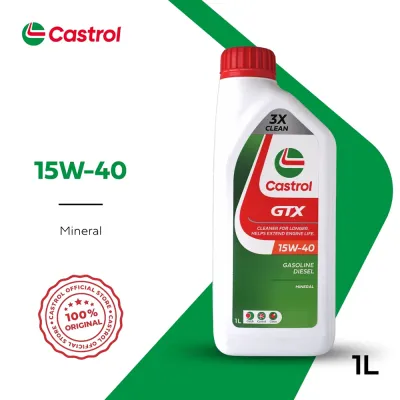
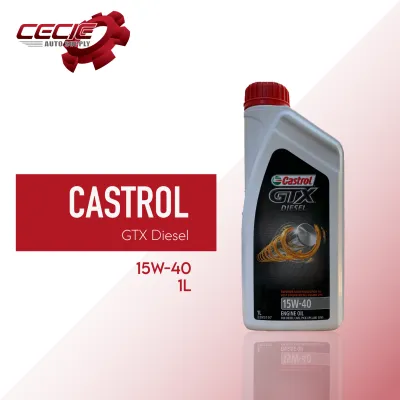
Prices are valid at publication and may change. Please refer to the product page for the latest price.
Diesel engines operate under significantly higher compression ratios and generate more soot than gasoline engines, which demands a highly robust lubricant. The relatively high viscosity of 15W-40 oil helps maintain stable oil pressure and prevents metal-to-metal contact within the engine’s moving parts. Furthermore, diesel-specific formulations contain heavy-duty detergent and dispersant additives designed to keep soot particles suspended in the oil, preventing them from forming abrasive deposits or sludge.
However, 15W-40 is not a universal default for all diesel vehicles. Modern common-rail direct injection (CRDI) engines often require thinner synthetic oils, such as 5W-30 or 5W-40, to meet strict emission standards and fuel efficiency targets. Always verify the recommended viscosity grade in your vehicle’s owner’s manual before purchasing any lubricant.
Comparing Castrol GTX, Shell Rimula, and Motul 15W-40 Lines
Each of these three brands approaches the 15W-40 viscosity grade with a distinct market positioning. While one brand might focus on high-mileage passenger utility vehicles, another might target heavy-duty commercial trucks or high-performance applications.

Because each brand offers multiple sub-products and formulations under their main labels, you must read the specific product tier and label claims rather than relying solely on the brand name. Let us look at how each manufacturer structures its 15W-40 diesel offerings.
Castrol GTX 15W-40 Diesel Formulations
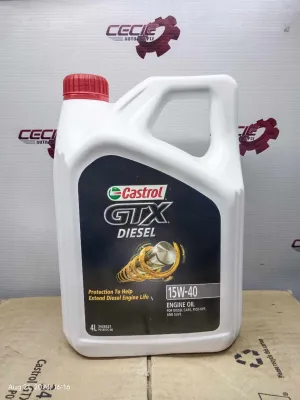
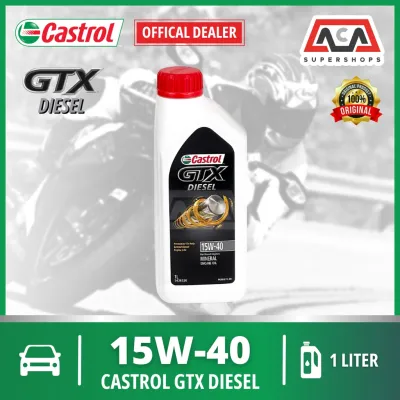
Castrol GTX Diesel is widely recognized for its focus on everyday driving conditions, particularly for older light-duty diesel passenger cars, sports utility vehicles (SUVs), and light commercial vehicles. The primary marketing focus of the GTX line is sludge protection, aiming to prevent the buildup of harmful deposits that can restrict oil flow and accelerate engine wear.
When evaluating Castrol GTX 15W-40, check the label for specific API service categories, such as API CH-4 or CI-4. These formulations are generally designed for engines without advanced exhaust aftertreatment systems.
Before purchasing, verify if your vehicle has modern emission control devices. Standard Castrol GTX formulations may not be compatible with diesel particulate filters (DPFs), making it essential to cross-reference the product’s specifications with your vehicle’s requirements.
Shell Rimula 15W-40 Variants
Shell Rimula is engineered primarily for heavy-duty, commercial, and high-stress applications, making it a common choice for transport trucks, buses, and heavy machinery. The Rimula lineup is structured into different tiers, such as Rimula R4 or R5, which utilize varying additive technologies to handle extreme loads and extended drain intervals.
These oils focus heavily on acid control, deposit control, and wear protection under continuous operating conditions. The formulation is designed to resist thermal breakdown even when the engine is subjected to heavy towing or prolonged idling in hot tropical weather.
When choosing a Shell Rimula variant, look closely at the packaging for specific original equipment manufacturer (OEM) approvals, such as those from Cummins, Mack, or Volvo, which are critical for commercial fleet operations.
Motul 15W-40 Diesel Options
Motul often targets specialized, high-performance, or premium segments with its diesel engine oils. Their 15W-40 offerings include both high-quality mineral oils and semi-synthetic blends designed to provide enhanced thermal stability and shear resistance.
These products are frequently formulated for modern light-duty diesel engines, agricultural equipment, or marine applications that demand robust protection under varying operating temperatures. Motul’s focus is on maintaining a stable oil film even under high-stress performance conditions.
Because Motul offers highly specific formulations, you must cross-reference the exact product label claims and technical data sheets with your equipment’s manual to ensure the oil meets the required performance standards.
Critical Label Specifications to Verify Before Buying
To ensure engine safety and maintain your vehicle’s warranty, you must look beyond the brand name and viscosity grade. The most critical step is verifying the industry standards and OEM approvals printed on the back label of the bottle.
First, check the API (American Petroleum Institute) Service Category. For diesel engines, these categories start with the letter “C” (such as CH-4, CI-4, or CK-4). Newer categories like CK-4 offer backward compatibility and improved oxidation resistance, but you must ensure the oil matches or exceeds the minimum category specified in your manual.
Second, look for ACEA (Association des Constructeurs Européens d’Automobiles) sequences if you drive a European diesel vehicle. These standards (such as ACEA E7 or E9) define specific performance limits for European engine designs, which often have different operating parameters than American or Asian models.
Third, locate and verify OEM-specific approvals. Manufacturers like Toyota, Isuzu, Mitsubishi, and Ford often have their own internal standards. If your manual states that the oil must meet a specific manufacturer specification, look for that exact code on the oil bottle.
Finally, be aware of the severe risks associated with exhaust aftertreatment systems. Standard 15W-40 diesel oils are typically high-SAPS (Sulfated Ash, Phosphorus, and Sulfur) formulations. If your vehicle is equipped with a Diesel Particulate Filter (DPF) or Selective Catalytic Reduction (SCR) system, using a high-SAPS oil can rapidly clog the filter or poison the catalyst, leading to costly repairs. Modern engines with DPFs usually require low-SAPS or mid-SAPS formulations, which are often found in different viscosity grades or highly specialized 15W-40 variants.
Decision Framework: Which Oil Should You Buy?
To make the right choice for your diesel engine, apply this condition-based decision framework based on your vehicle’s specifications and typical driving conditions:
Choose Castrol GTX 15W-40 if your owner’s manual specifies standard API categories (such as CF-4 or CI-4) for an older or light-duty diesel vehicle, and your primary goal is reliable sludge control during daily commuting and light utility use.
Choose Shell Rimula 15W-40 if you operate a commercial vehicle, frequently tow heavy loads, run a fleet of transport trucks, or require specific heavy-duty OEM approvals for high-stress, continuous operations.
Choose Motul 15W-40 if you are looking for a premium semi-synthetic formulation, operate specialized agricultural or marine equipment, or require a high-performance lubricant that matches the exact technical specifications of your manual.
Always stop and consult a qualified mechanic or the vehicle manufacturer if your engine is equipped with a DPF, if you operate under severe warranty conditions, or if there is any conflict between the recommendations in your owner’s manual and the specifications listed on the oil label.
Frequently Asked Questions (FAQ)
Can I mix different brands of 15W-40 diesel oil?
While engine oils of the same viscosity grade and API specification can technically be mixed in emergency situations without causing immediate damage, it is generally discouraged for regular use. Different brands use distinct additive packages that may not interact optimally, potentially reducing the overall effectiveness of the lubricant. For consistent protection, perform a complete drain and refill with a single brand and product line when performing routine maintenance.
How do I know the correct oil change interval?
The correct oil change interval is determined by your vehicle manufacturer and is detailed in the owner’s manual. Standard intervals typically range from 5,000 to 10,000 kilometers, but severe driving conditions—such as frequent short trips, heavy towing, driving in dusty environments, or prolonged idling in heavy traffic—will require more frequent oil changes to protect your engine from premature wear.
Is 15W-40 safe for modern engines with a DPF?
Most standard 15W-40 diesel engine oils are high-SAPS formulations and are not safe for modern engines equipped with a Diesel Particulate Filter (DPF). The metallic additives in these oils can create ash that permanently blocks the DPF, leading to engine backpressure and expensive emissions system failures. If your vehicle has a DPF, you must use a low-SAPS oil that explicitly states compatibility with exhaust aftertreatment systems, which is typically specified in your manual.

Community discussion
Share your experience or ask a question. Comments are reviewed before publication.