
Deciding between an Original Equipment Manufacturer (OEM) Yamaha clutch bell and an aftermarket alternative for your Aerox V2 comes down to a fundamental trade-off: guaranteed dimensional compatibility and predictable service life versus specialized design features or potential cost variations. For riders who rely on their scooter for daily commuting through heavy city traffic, the OEM clutch bell offers unmatched peace of mind, preserving the factory warranty and ensuring seamless integration with stock clutch components. Conversely, aftermarket options may appeal to those looking to address specific riding conditions, such as stop-and-go heat buildup, though these benefits require careful verification against official service specifications. Without verified, independent testing data, any claims of superior durability or performance from third-party manufacturers must be treated as unproven. A reliable approach is to prioritize components that strictly adhere to the physical dimensions and tolerances outlined in your vehicle’s official documentation.
Why the Clutch Bell Matters for Your Aerox V2
The clutch bell plays a critical role in the continuously variable transmission (CVT) of your Aerox V2, serving as the outer drum that the clutch shoes grip to transfer rotational force from the engine to the rear wheel. When you twist the throttle, centrifugal force pushes the clutch shoes outward until they make contact with the inner surface of the spinning clutch bell. This friction locks the components together, translating engine power into smooth forward motion. Because this system relies entirely on friction and heat dissipation, any compromise in the quality or fitment of the clutch bell directly impacts how your scooter accelerates and handles daily riding conditions.
In tropical climates where stop-and-go traffic is common, the CVT system is subjected to intense thermal stress. If a clutch bell becomes warped, excessively worn, or suffers from surface glazing, the clutch shoes will struggle to maintain a consistent grip. This slip results in noticeable symptoms such as shuddering during low-speed acceleration, delayed throttle response, or a distinct loss of power when climbing inclines. Because the Aerox V2 features a precisely tuned CVT setup designed for optimal fuel efficiency and power delivery, even minor deviations in the clutch bell’s inner diameter, weight, or balance can disrupt the entire transmission harmony, leading to accelerated wear on surrounding components like the drive belt and clutch springs.
Products mentioned in this guide
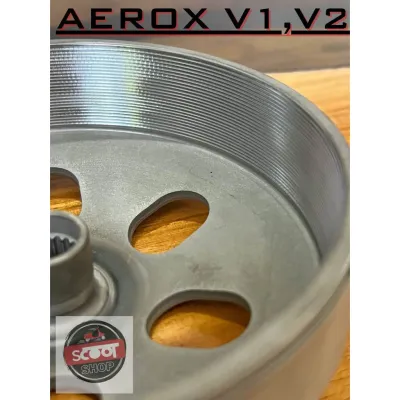
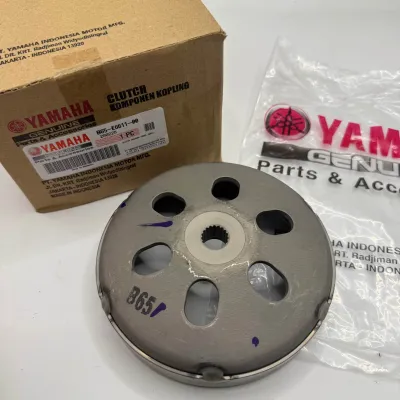
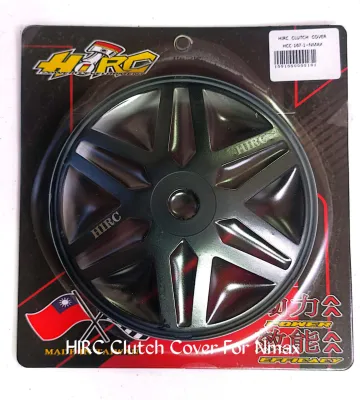
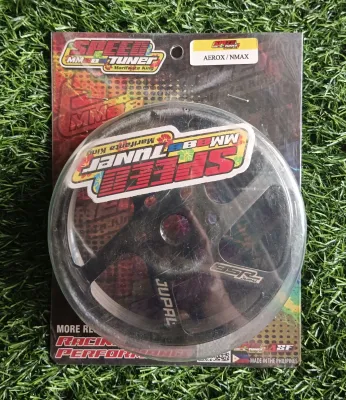
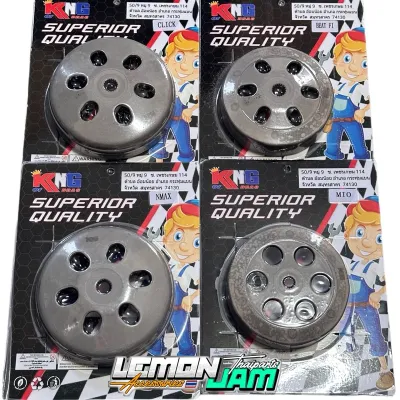
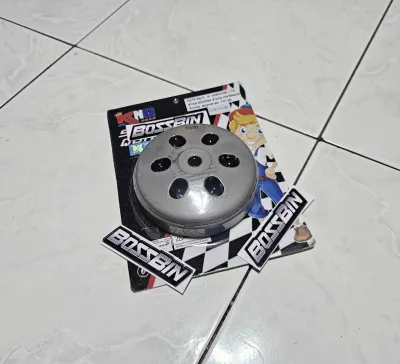
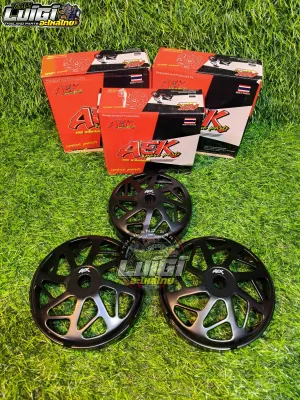
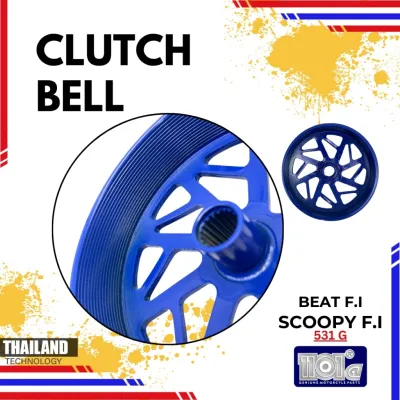
Prices are valid at publication and may change. Please refer to the product page for the latest price.
Evaluating Genuine OEM Yamaha Clutch Bells
Opting for a genuine OEM Yamaha clutch bell ensures that you are installing a component engineered specifically for the exact tolerances of the Aerox V2 engine and transmission housing. Yamaha designs these parts using standardized metallurgy to match the friction characteristics of the stock clutch shoes perfectly. This precise engineering guarantees a predictable wear rate, minimizing the risk of premature glazing or uneven wear on the clutch lining. Furthermore, because the OEM part matches the factory weight specifications, your scooter will maintain its original acceleration profile and fuel economy without requiring additional tuning or modification of the CVT system.

While the OEM clutch bell offers maximum reliability, it typically carries a price premium compared to basic budget aftermarket replacements. To justify this investment, riders must ensure they are purchasing authentic parts, as counterfeit components are common in online marketplaces and unauthorized physical shops. Authentic Yamaha parts are packaged in official branded boxes featuring high-quality printing, specific part number labels, and security holograms that are difficult to replicate. Before purchasing, always verify the part number against the official Aerox V2 parts catalog and inspect the packaging closely. Buying directly from authorized Yamaha 3S shops or certified distributors remains the most reliable way to guarantee you are receiving a genuine product that meets factory safety standards.
Navigating Aftermarket Clutch Bell Options
The aftermarket landscape for Aerox V2 clutch bells is diverse, offering various designs that cater to different rider preferences and operating conditions. Standard aftermarket replacements aim to mimic the OEM design at a lower price point, making them attractive for budget-conscious riders who simply need to restore basic functionality. Other designs feature specialized modifications, such as slotted or drilled outer walls intended to improve air circulation and shed clutch dust, or lightened housings designed to alter the rotational mass of the transmission.
When evaluating these third-party options, it is crucial to look past marketing buzzwords like “racing grade,” “high-performance,” or “forged steel.” These labels rarely translate to improved durability or safety during daily street use and can sometimes mask poor manufacturing tolerances. Instead of relying on promotional claims, riders should demand detailed specification sheets from the manufacturer. A reliable aftermarket brand will clearly state the inner diameter, outer diameter, depth, and weight of the clutch bell. Comparing these figures directly to the measurements in the Aerox V2 service manual is the only objective way to assess whether a part is compatible with your vehicle.
Critical Dimensions to Compare Before Buying
Before committing to any clutch bell purchase, a side-by-side comparison of physical specifications is essential to prevent severe transmission damage. The inner diameter of the bell must match the factory specification exactly; even a fraction of a millimeter of deviation can prevent the clutch shoes from engaging fully or cause them to drag constantly against the bell, leading to rapid overheating and belt failure. Additionally, the depth of the bell and the splines on the mounting shaft must align perfectly with the input shaft of your rear gearbox to ensure secure fastening and correct alignment of the drive belt.
Material composition and structural design also warrant close inspection. While slotted or drilled clutch bells are designed to assist with cooling and debris removal, removing material from the bell housing inherently reduces its overall mass and can affect its structural rigidity under high thermal loads. A lighter clutch bell reduces rotational inertia, which can cause the clutch to engage at a higher engine RPM, altering how the scooter accelerates from a standstill. If you choose a bell with a different weight than the stock unit, you must be prepared to adjust your clutch springs and roller weights to maintain balanced CVT performance.
| Comparison Dimension | Genuine OEM Yamaha Clutch Bell | Aftermarket Clutch Bell |
|---|---|---|
| Dimensional Tolerance | Guaranteed to match factory specifications exactly | Variable; requires manual verification with calipers |
| Material & Construction | Standardized cast steel optimized for stock shoes | Varies (cast, machined, or slotted options available) |
| Weight & Inertia | Factory standard; maintains original acceleration | Can be lighter or heavier; may require CVT retuning |
| Verification Method | Check security hologram and official part number | Measure physical dimensions against service manual |
| Required Tools for Check | Visual inspection, part catalog cross-reference | Vernier calipers, micrometer, precision scale |
| Primary Trade-off | Higher initial cost but guaranteed fit and lifespan | Potential cost savings or cooling, but risk of poor fit |
Pre-Purchase Verification and Installation Safety
To ensure a successful upgrade or replacement, perform a thorough pre-purchase verification. Always cross-reference the seller’s listed part number with the official Yamaha Aerox V2 service manual. If you are uncertain about compatibility, consult a certified motorcycle technician before finalizing your order. Once the part arrives, conduct a physical inspection before attempting installation. Use a digital vernier caliper to measure the inner diameter and depth, checking these values against the wear limits specified in your manual. Inspect the inner friction surface for any machining defects, burrs, or uneven finishes that could damage your clutch shoes.
Installing a clutch bell involves working with critical transmission components that directly affect the performance and operation of your motorcycle. Disassembling the CVT system requires specialized tools, including a clutch holding tool to secure the bell and a calibrated torque wrench to tighten the retaining nut to the exact specification defined by Yamaha. Attempting to tighten these fasteners using impact wrenches without torque control can strip the threads on the secondary shaft or cause the bell to wobble, leading to catastrophic transmission failure while riding. If you do not possess the required tools, the official service manual, or the technical experience to perform this work safely, you should have the component installed by a qualified professional at an authorized service center.
Frequently Asked Questions (FAQ)
How do I know if my Aerox V2 clutch bell needs replacing?
You can identify a failing clutch bell through several physical and operational symptoms. If you experience a shuddering or vibrating sensation when accelerating from a complete stop, or if the engine revs highly before the scooter begins to move, the clutch may be slipping inside the bell. Visually inspect the component by removing the CVT cover; look for deep scoring, grooves, or a distinct bluish discoloration on the metal, which indicates severe overheating. Finally, use a vernier caliper to measure the inner diameter of the bell; if the measurement exceeds the maximum wear limit specified in your Aerox V2 service manual, the part must be replaced immediately to ensure reliable operation.
Can I use an Aerox V1 clutch bell on the V2 model?
While some physical dimensions between the Aerox V1 and V2 transmission components may appear similar, you must verify the exact part numbers in the respective official parts catalogs before attempting to swap them. Even if a V1 clutch bell physically fits onto the V2 shaft, differences in weight, metal composition, or minor dimensional tolerances can alter the clutch engagement characteristics. Using a non-matching bell can lead to premature wear of the V2 clutch shoes, uneven belt wear, or a noticeable drop in fuel efficiency. To maintain the engineered performance of your Aerox V2, always use parts explicitly certified for the V2 model.
Do slotted or drilled aftermarket clutch bells actually reduce fading?
Slotted or drilled aftermarket clutch bells are designed to improve heat dissipation and help expel clutch dust from the friction surface, which theoretically reduces clutch fade during prolonged stop-and-go riding. However, without independent, verified thermal testing data for the specific brand you are considering, these benefits remain theoretical. Removing material to create slots or holes also reduces the structural mass of the bell, which can make it more susceptible to warping or cracking under extreme heat compared to a solid OEM bell. When riding in hot, humid conditions, you must weigh these potential cooling advantages against the risk of reduced structural integrity over long-term daily use.

Community discussion
Share your experience or ask a question. Comments are reviewed before publication.