
Selecting the right clutch spring for your Yamaha NMAX V2 requires a careful look at three primary specifications: the spring rate (often designated by RPM ratings), the physical dimensions (free length, outer diameter, and wire thickness), and the material composition. Because the clutch spring directly regulates when your transmission engages, choosing an incompatible or poorly matched specification can lead to sluggish acceleration, excessive heat, or premature belt wear.
To make an informed decision, you must look beyond generic marketing labels on aftermarket packaging. Verifying the exact technical details of the spring ensures that your scooter maintains its performance, reliability, and safety under demanding daily riding conditions.
Key Clutch Spring Specifications to Evaluate
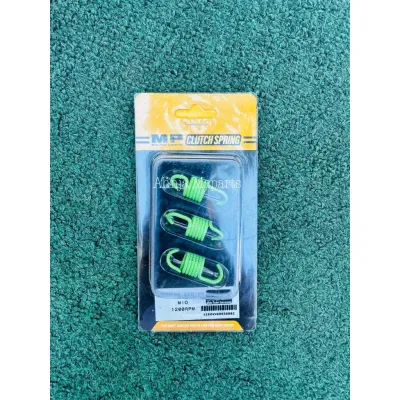
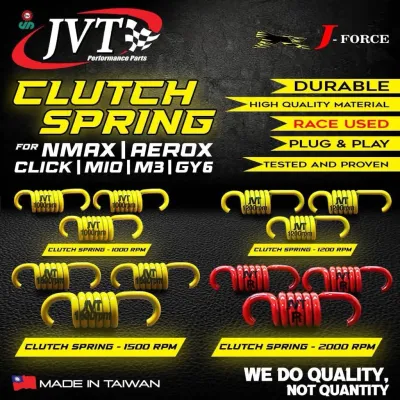
The spring rate, or stiffness, is the most critical specification because it dictates the engine speed at which the clutch shoes engage the clutch bell. In a continuously variable transmission (CVT) like that of the NMAX V2, a stiffer spring requires higher centrifugal force—and therefore higher engine RPM—to fling the clutch shoes outward. This rating is typically categorized by aftermarket manufacturers as 1000 RPM, 1500 RPM, or 2000 RPM, representing the relative increase in engine speed required for engagement compared to the stock setup.
Products mentioned in this guide
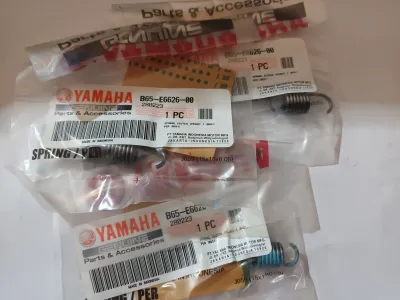
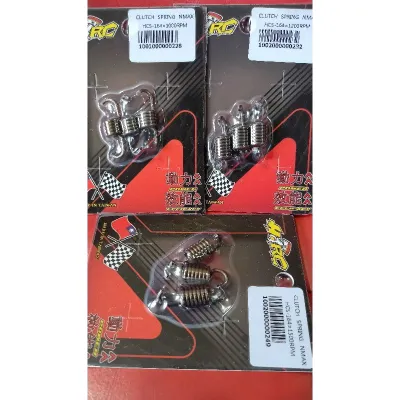
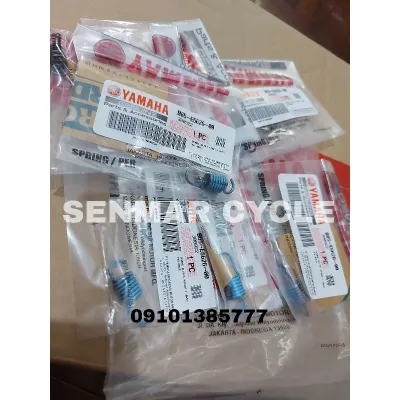
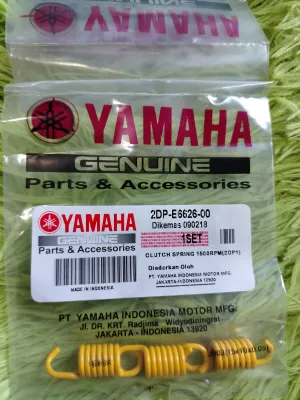
Prices are valid at publication and may change. Please refer to the product page for the latest price.
Physical dimensions are equally vital to prevent mechanical interference inside the clutch assembly. You must verify the free length (the total height of the spring when under no load), the outer diameter, and the wire thickness. Even a millimeter of deviation in outer diameter can cause the spring to bind against the clutch carrier or seat improperly, leading to uneven wear or sudden transmission failure.
Material composition and surface coatings determine how well the spring resists fatigue and heat. High-tensile steel alloys, such as silicon-chromium steel, are commonly preferred for their ability to retain tension under extreme thermal stress. In tropical climates characterized by high humidity and intense ambient heat, look for springs with corrosion-resistant coatings or painted finishes to prevent rust from weakening the metal coils over time.
Verifying Fitment and Compatibility for the NMAX V2
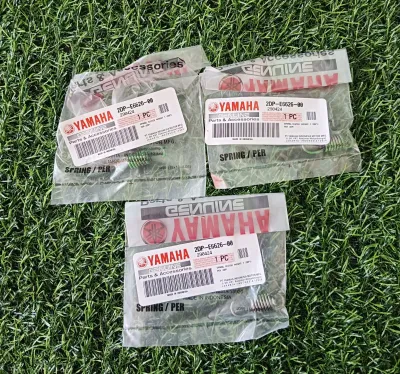
Before purchasing any aftermarket clutch spring, you must verify its physical compatibility with the NMAX V2 clutch assembly. The most reliable way to establish a baseline is to locate the original equipment manufacturer (OEM) part number in your official Yamaha service manual or by consulting an authorized dealer. This part number serves as your primary reference point when cross-referencing aftermarket compatibility lists.

If the service manual is unavailable, you can measure your existing stock spring using a digital vernier caliper. Take precise measurements of the free length, outer diameter, and wire thickness while the spring is completely relaxed. Keep these measurements on hand to compare directly with the specifications printed on aftermarket product packaging.
Never rely solely on broad compatibility claims like “fits most 155cc scooters” printed on the front of a package. Different model years or regional variants of the NMAX can feature subtle variations in CVT design. Always check the back of the packaging or the manufacturer’s official specification sheet for explicit confirmation that the spring is engineered for the NMAX V2 clutch carrier interface.
Matching Spring Rate to Your Riding Needs
Choosing the right spring rate involves balancing performance trade-offs against your typical riding environment and load requirements. A stiffer spring, such as a 1500 RPM variant, keeps the clutch disengaged longer, allowing the engine to rev higher into its powerband before the scooter begins to move. This setup can reduce belt slippage and improve acceleration when carrying heavy loads, riding with a pillion, or climbing steep inclines. However, the trade-off is a jerkier low-speed crawling experience and potentially higher fuel consumption during stop-and-go city commutes.
Conversely, a softer spring or one that matches the factory specification engages the clutch at lower engine speeds. This results in smoother, more predictable low-speed maneuvering, which is highly beneficial when navigating dense traffic. It also keeps engine RPMs lower during gentle acceleration, promoting better fuel efficiency and reducing overall wear on the clutch lining and bell.
If you decide to install a spring with an extreme deviation from the factory rate, you must make matching adjustments to other CVT components. For instance, installing an exceptionally stiff clutch spring without adjusting your variator roller weights or clutch shoes can cause the transmission to shift inefficiently, leading to high engine revs with very little actual speed increase.
Installation Boundaries and When to Seek Professional Help
Working on your scooter’s CVT system carries inherent safety risks due to the high-tension springs and high-torque fasteners involved. To perform a safe installation, you must use specialized tools, including a dedicated clutch holding tool to secure the assembly and a calibrated torque wrench to tighten the clutch nut to the manufacturer’s exact torque specifications. Attempting to loosen or tighten these components with improvised tools can damage the input shaft threads or cause the spring to release violently.
Before installing the new spring, take the opportunity to inspect the surrounding clutch components. Check the clutch bell for signs of glazing, deep scoring, or blue heat discoloration, and inspect the clutch shoes for uneven wear or contamination from grease. If any of these components show signs of damage, replacing the spring alone will not resolve your performance issues.
If you encounter any resistance during reassembly, such as the spring binding, failing to sit flat in its designated seat, or conflicting with the steps outlined in your service manual, stop immediately. Operating a scooter with an improperly installed clutch spring can cause the transmission to lock up while riding. In such cases, take the components to a qualified motorcycle mechanic to ensure a safe and correct installation.
Frequently Asked Questions (FAQ)
Can I use a clutch spring from a different Yamaha scooter model?
While some Yamaha scooter models share similar CVT layouts, you should not assume a clutch spring is interchangeable based on physical appearance alone. Even if a spring physically fits inside the clutch carrier, it may have a completely different spring rate or wire thickness designed for a lighter or heavier vehicle. To verify cross-compatibility safely, compare the official OEM part numbers in the Yamaha parts catalog; if the part numbers match exactly, the spring is safe to use.
How do I know if my current clutch spring needs replacement?
A fatigued or failing clutch spring typically manifests as delayed clutch engagement, high engine RPMs without a corresponding increase in speed, or a noticeable loss of acceleration when climbing hills. Physically, a worn spring may show visible sagging when compared to its original free-length specification, or it may exhibit dark discoloration from overheating. If you observe these symptoms or notice unusual rattling noises coming from the CVT casing, it is time to inspect and replace the spring.

Community discussion
Share your experience or ask a question. Comments are reviewed before publication.