
Choosing between Scoyco motorcycle boots for daily city commuting and those designed for long weekend rides comes down to balancing walking comfort with high-speed protection. For daily urban riding, you need lightweight, breathable, and flexible footwear that allows you to walk comfortably in offices or shops while surviving stop-and-go traffic.
Conversely, long weekend tours demand stiff, highly protective, and weather-resistant boots that shield your feet from high-speed debris, engine heat, and sudden tropical downpours. Identifying where you spend most of your time on the saddle is the first step toward making a smart, safe investment.
Identifying Your Dominant Riding Scenario
To select the most appropriate footwear, you must first analyze your typical weekly riding habits. A daily commute in a bustling metropolitan area involves unique physical challenges. You frequently stop at intersections, plant your feet on hot asphalt, and dismount to walk through parking structures, offices, or shops. In tropical climates, this routine is often accompanied by intense humidity and high ambient temperatures, making heavy, non-ventilated gear highly uncomfortable.
Products mentioned in this guide
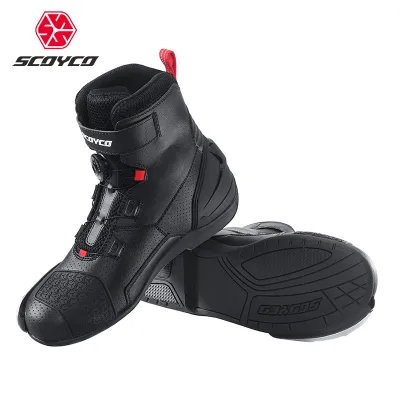
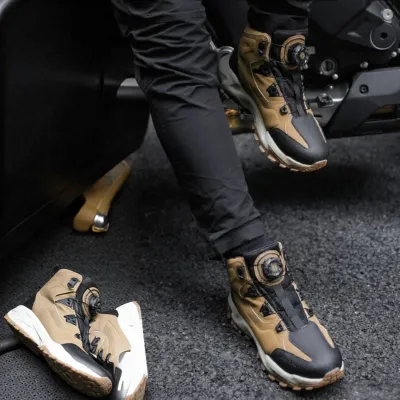
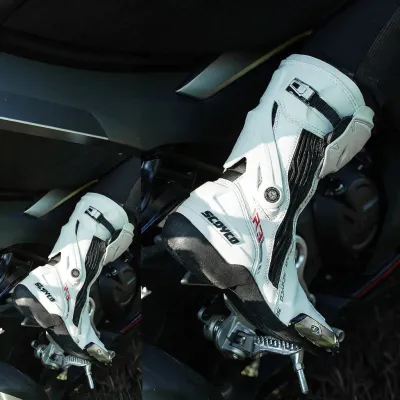
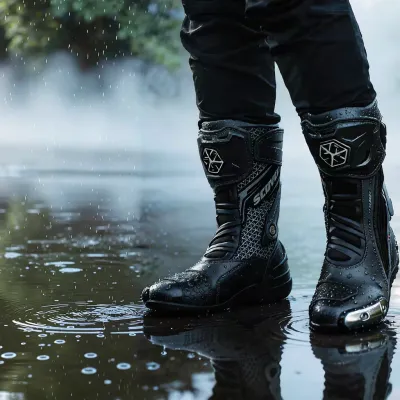
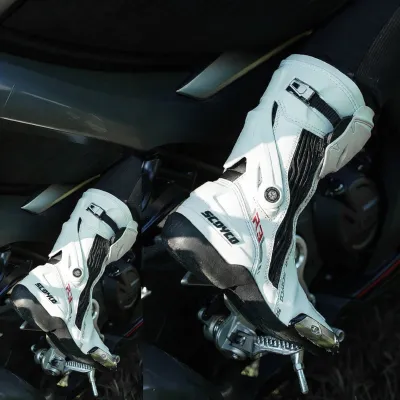
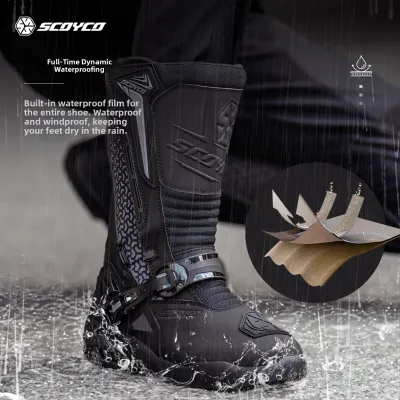
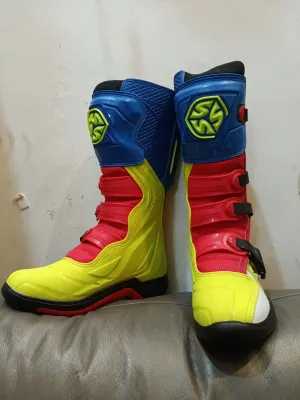
Prices are valid at publication and may change. Please refer to the product page for the latest price.
On the other hand, weekend touring presents a completely different set of demands. When you leave the city limits for long highway stretches, your feet remain on the footpegs for hours at a time. At higher cruising speeds, the wind chill, engine heat, and potential impact from road debris increase significantly. Furthermore, provincial roads are highly unpredictable, exposing you to sudden rain showers, muddy detours, and varying terrain.
To make the right choice, calculate your actual saddle time. If eighty percent of your week is spent navigating tight city lanes with only occasional short weekend jaunts, prioritizing urban comfort is highly logical. However, if your weekend rides span hundreds of kilometers of highway, the advanced safety features of a dedicated touring boot should take precedence, even if it means carrying a spare pair of casual shoes for walking.
Selecting Scoyco Boots for Daily City Commuting
When evaluating Scoyco’s urban-focused lineup, walkability and sole flexibility are paramount. Unlike rigid track or touring boots, city riding shoes are designed with a more pliable sole that mimics standard sneakers. This flexibility allows your foot to roll naturally as you walk, preventing the stiff, awkward gait associated with heavy motorcycle gear. This makes them highly practical for riders who do not want to change shoes upon arriving at their destination.

In hot and humid climates, heat management is a critical safety factor, as overheated feet lead to discomfort and distraction. Look for urban models that incorporate breathable mesh panels, perforated microfiber leather, or canvas sections. These materials facilitate continuous airflow, helping to evaporate sweat and keep your feet cool during slow-moving traffic. Additionally, quick-entry systems such as side zippers, speed laces, or hook-and-loop straps are incredibly convenient for daily wear, allowing you to slip the boots on and off in seconds.
Despite their casual appearance, proper urban riding boots do not compromise on basic safety. They feature low-profile, integrated protection zones that are virtually invisible from the outside. Look for reinforced ankle cups, stiffened toe boxes, and reinforced heel counters. These components shield your feet from common low-speed urban mishaps, such as a tipped-over scooter or a minor slide, while maintaining an aesthetic that blends seamlessly with casual jeans or commuter trousers.
Choosing the Right Pair for Long Weekend Rides
For long-distance weekend touring, the design priorities shift entirely toward enhanced structural integrity and environmental protection. High-speed highway riding exposes you to greater kinetic energy in the event of a fall, requiring robust armor. Dedicated touring boots feature taller shafts that extend well up the shin, providing comprehensive coverage against impact and abrasion. Look for pronounced, external TPU (thermoplastic polyurethane) protectors on the ankles, heels, and shins to absorb and deflect heavy impacts.
Weather resistance is another non-negotiable feature for long-distance travel. Tropical weather can change rapidly, turning a sunny morning ride into a torrential afternoon downpour. High-quality touring boots often utilize integrated waterproof and breathable membranes behind the outer shell. This construction keeps external water out while allowing internal moisture vapor to escape, ensuring your feet stay dry when crossing wet mountain passes or riding through deep puddles.
Finally, pay close attention to the stiffness of the sole. A rigid sole is essential for long-distance comfort because it distributes your body weight evenly across the footpegs. When riding for hours, a soft sole allows the footpeg to press directly into your arch, leading to severe foot fatigue, cramping, and loss of control. A stiff sole, often reinforced with a steel or plastic shank, supports your foot structure, reduces muscle strain, and provides a stable platform for precise gear shifts and rear braking.
Can One Pair of Boots Cover Both City and Touring?
Many riders wonder if they can find a single pair of boots that excels in both environments, especially when managing a strict budget in ₱. While some mid-cut adventure boots or hybrid riding shoes attempt to bridge this gap, they inevitably require compromises. A hybrid boot might offer more protection than a standard city riding shoe, but it will be noticeably stiffer and hotter to wear during a midday walk through a shopping mall.
Conversely, if you take a highly flexible urban boot on a long highway tour, you sacrifice crucial shin protection and weatherproofing, while also experiencing increased foot fatigue from the soft sole on long stretches. The key to navigating this compromise is to evaluate your budget in ₱ and prioritize the riding condition that carries the highest risk or frequency. If you can only afford one pair, it is generally safer to err on the side of more protection, adapting to the stiffness during short walks rather than risking inadequate safety on high-speed roads.
If you choose to use a single pair of boots for all scenarios, look for mid-top models that feature moderate sole stiffness and partial ventilation. These designs offer a reasonable middle ground, providing decent ankle support for highway speeds while remaining tolerable for short walks. Alternatively, you can keep a lightweight pair of slippers or casual shoes in your motorcycle’s top box or under-seat compartment, allowing you to switch out of your heavy touring boots immediately after parking.
Verifying Safety Labels and Sizing Before You Buy
Before finalizing your purchase, it is vital to verify the safety credentials of the boots. Genuine motorcycle footwear should comply with recognized safety standards, such as the European CE certification (specifically EN 13634). This certification label is typically stitched inside the tongue or on the inner lining of the boot. The label displays a motorcycle icon alongside a series of numbers that indicate the boot’s performance level in terms of height, abrasion resistance, impact cut resistance, and transverse rigidity. Checking for this label ensures you are buying tested protective gear rather than a fashion shoe that merely looks like a riding boot.
Sizing is another critical factor that directly impacts both safety and comfort. Motorcycle boots must fit snugly without pinching or restricting blood circulation. To find your correct size, do not rely solely on your everyday sneaker size, as motorcycle gear sizing can vary significantly between brands. Instead, place your foot on a piece of paper, trace the outline, and measure the exact length from your heel to your longest toe in millimeters. Cross-reference this measurement with the manufacturer’s official sizing chart to select the correct size.
When purchasing your boots from an online marketplace or e-commerce platform, always review the seller’s return and exchange policies regarding fitment. Once your package arrives, inspect the boots thoroughly before mounting your motorcycle. Check the stitching, zipper operation, and the bond between the sole and the upper material. Try the boots on indoors and walk around on a clean surface to ensure there are no pressure points or slipping heels, keeping the tags intact in case you need to request a size exchange.
Frequently Asked Questions (FAQ)
How should I clean and maintain my motorcycle boots after a wet ride?
After riding through a heavy downpour or muddy roads, it is crucial to dry and clean your boots properly to preserve the materials. Always allow your boots to air-dry naturally at room temperature in a well-ventilated area. Never place them near direct heat sources like stoves, engines, or electric heaters, and avoid using a hair dryer, as excessive heat can crack leather, melt adhesives, and damage waterproof membranes. Once dry, use a soft, damp cloth to wipe away surface dirt, mud, and road grime. For stubborn dirt, refer to the manufacturer’s care label to identify approved cleaning agents, and avoid harsh household detergents that can strip away protective coatings.
Do I need to wear specific socks with touring boots?
Yes, your choice of socks plays a significant role in overall comfort and moisture management during long rides. Avoid standard cotton socks, as they absorb and retain sweat, leading to damp feet, skin chafing, and painful blisters inside stiff touring boots. Instead, opt for technical, moisture-wicking socks made from synthetic blends or merino wool, which actively pull sweat away from your skin and dry quickly. Additionally, consider the thickness of the socks in relation to your boot’s fit. If your touring boots have a snug, protective fit, a thin moisture-wicking sock is ideal, whereas slightly looser boots may benefit from a thicker, padded sock to cushion high-pressure areas along the shin and ankle.

Community discussion
Share your experience or ask a question. Comments are reviewed before publication.