
The correct Mitsubishi coolant for your vehicle depends strictly on your car’s specific model year, engine design, and the factory guidelines detailed in your owner’s manual. While older Mitsubishi models often utilize standard Long Life Coolant (LLC), newer models typically require Super Long Life Coolant (SLLC). In the tropical climate of the Philippines, where engines face constant high ambient temperatures and heavy traffic congestion, choosing the exact original equipment manufacturer (OEM) specification is vital. Relying solely on the color of the fluid can lead to severe engine damage, as different chemical formulations may share the same hue. To protect your engine from overheating and corrosion, you must verify the exact specification code on your product label or consult an authorized service center before adding any fluid to your cooling system.
Understanding Mitsubishi Coolant Specifications
To keep your engine running efficiently, you must first understand the distinction between the primary coolant types used by the manufacturer. Mitsubishi categorizes its official fluids into Long Life Coolant (LLC) and Super Long Life Coolant (SLLC). Standard LLC is typically formulated for older vehicle generations, requiring more frequent replacement intervals to maintain its protective qualities. In contrast, SLLC is an advanced, extended-life formulation designed to protect modern aluminum engines and cooling system components over much longer periods without degrading.
A common mistake among car owners is relying on fluid color as the primary indicator of chemical compatibility. Coolant manufacturers add dyes—such as green, blue, pink, or red—purely for identification and leak detection purposes. A generic green coolant purchased at a local store may use an inorganic additive technology (IAT) that is highly abrasive to modern Mitsubishi water pumps. Meanwhile, the official Mitsubishi fluid of a similar color might use a completely different organic acid technology (OAT) or hybrid formulation. Mixing these incompatible chemistries can cause the protective additives to drop out of solution, forming a thick gel that blocks the radiator passages.
Products mentioned in this guide
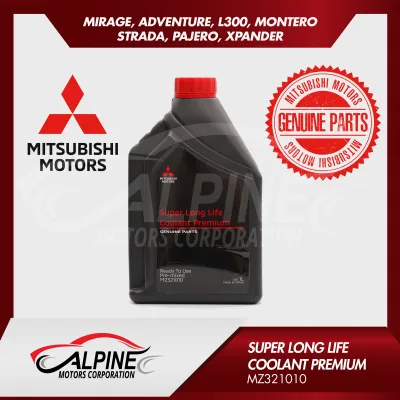
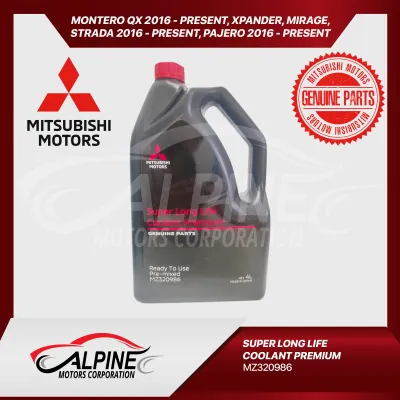
![[1 LITER] Mitsubishi Coolant BLUE - Genuine Mitsubishi Auto Parts](https://img.lazcdn.com/g/p/0c0a02cb3c402746e4b2561dd1b95c44.jpg_400x400q80.jpg_.webp)
![[1L BLUE] Mitsubishi Coolant - Genuine Mitsubishi Auto Parts](https://img.lazcdn.com/g/p/d2f5ef88ec40771e2704ccef9334beec.jpg_400x400q80.jpg_.webp)
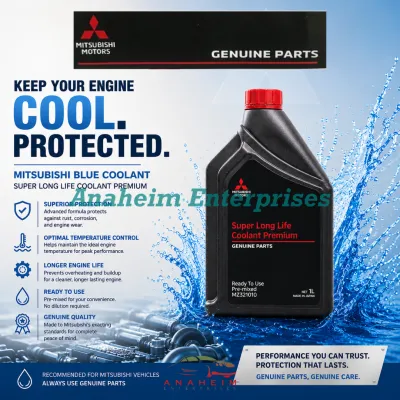
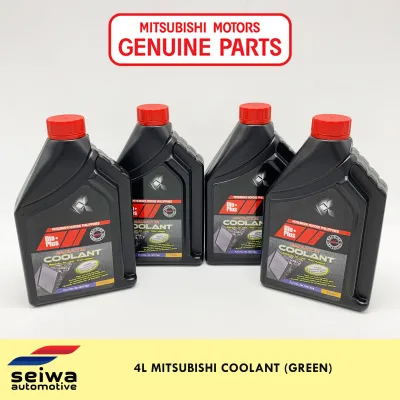
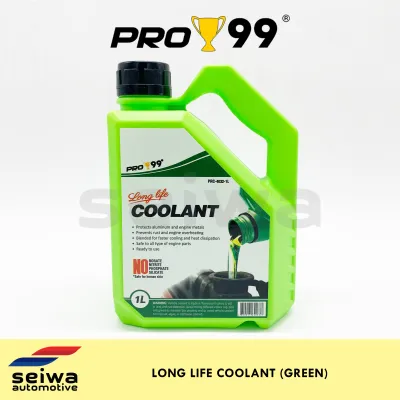
Prices are valid at publication and may change. Please refer to the product page for the latest price.
To avoid costly mistakes, always prioritize the official specification code over visual appearance. Every Mitsubishi vehicle, whether a Mirage, Montero Sport, Xpander, or Triton, has its coolant requirements documented in the owner’s manual. Additionally, many models feature a small sticker or placard under the hood, often near the radiator support or on the coolant reservoir cap, listing the required fluid type. Drivers must locate these official specifications rather than relying on generic retail recommendations or advice from unverified online forums.
Evaluating Coolant Performance in Tropical Conditions
While the term “antifreeze” suggests a product designed solely for freezing temperatures, its primary role in a tropical climate like the Philippines is raising the boiling point of the cooling system and preventing internal corrosion. Under intense tropical heat and stop-and-go traffic, a pressurized cooling system relies on the ethylene glycol mixture to remain liquid at temperatures well above the normal boiling point of water. This prevents steam pockets from forming inside the engine block, which can cause localized overheating and cracked cylinder heads.

Maintaining the correct coolant-to-water mixing ratio is critical for optimal heat transfer. A standard 50/50 mixture of ethylene glycol and demineralized water is generally recommended for tropical climates. This specific ratio provides the ideal balance between heat transfer capacity—which pure water excels at—and boiling point elevation and corrosion protection, which the glycol and additive package provide. Altering this ratio by adding too much water reduces corrosion protection, while adding too much concentrate reduces the fluid’s ability to carry heat away from the engine.
Using pre-mixed OEM coolant is highly recommended over manually diluting concentrated coolant with local tap water. Tap water in the Philippines often contains high levels of minerals like calcium and magnesium. When subjected to extreme engine heat, these minerals precipitate out of the water, forming scale deposits inside the radiator tubes and engine water jackets. This scale acts as an insulator, severely reducing heat transfer efficiency and eventually clogging the narrow passages of the cooling system. Pre-mixed coolants are blended at the factory using high-purity demineralized or deionized water, eliminating this risk entirely.
Using the incorrect coolant type in high-heat conditions carries severe mechanical risks. Modern Mitsubishi engines utilize a variety of materials, including aluminum cylinder heads, cast iron blocks, copper heater cores, and synthetic rubber seals. The wrong chemical formulation can rapidly deplete the corrosion inhibitors, leading to electrolysis and cavitation. Cavitation creates micro-bubbles that implode against the water pump impeller, eroding the metal until the pump fails. Additionally, incompatible fluids can degrade the elastomer seals, causing premature leaks and catastrophic coolant loss on the road.
Step-by-Step Guide to Verifying Coolant Compatibility
To ensure you are adding the correct fluid to your vehicle, follow this systematic verification process before making a purchase or performing any maintenance.
First, locate the manufacturer’s specification in your vehicle documentation. Open your glove compartment and retrieve the owner’s manual or service booklet. Navigate to the maintenance, capacities, or technical specifications section to find the recommended coolant type. If you do not have the physical manual, check the underside of the hood or the coolant reservoir cap, which sometimes features molded text indicating the required fluid specification.
Second, cross-reference the specification code with the product label. When shopping at an auto parts store or browsing an official brand store on an e-commerce platform, do not rely solely on the vehicle compatibility list on the front of the bottle. Turn the container over and read the technical specifications on the back label. Ensure it explicitly states compatibility with the Mitsubishi specification code or meets the exact chemical standards required by your engine.
Third, inspect the current coolant’s condition and color as a secondary reference. Carefully observe the fluid inside the expansion tank only when the engine is completely cold. Note its color and clarity. If the fluid appears brown, muddy, or contains floating particles, it indicates severe contamination or rust, meaning a simple top-up is insufficient and a professional flush is required. Keep in mind that if a previous owner used the wrong fluid, the current color is misleading; the owner’s manual specification must always override the visual color of the existing fluid.
Fourth, consult a certified Mitsubishi service center if you are uncertain. If you bought the vehicle pre-owned and lack its service history, or if you cannot find the correct specification in a missing manual, do not guess. Visit an authorized dealership or service center. Service advisors can look up your vehicle’s Vehicle Identification Number (VIN) to determine the exact factory-fill coolant and check if your cooling system requires a complete flush to remove unknown aftermarket fluids safely.
Sourcing and Replacing Your Coolant Safely
To protect your engine from damage, you must ensure that you purchase authentic products and follow safe handling procedures during maintenance.
Always purchase your coolant from reliable sourcing channels. These include authorized Mitsubishi dealerships, established local auto supply shops, or official brand flagship stores on reputable e-commerce platforms. Avoid buying from unverified third-party sellers offering prices that seem unusually low, as the market contains counterfeit automotive fluids that lack proper corrosion inhibitors and can cause rapid engine damage.
When purchasing, inspect the packaging closely for red flags of counterfeit products. Genuine Mitsubishi coolant bottles feature clean, high-quality label printing, clear batch numbers, production dates, and intact tamper-evident seals under the cap. If the label is misaligned, the plastic bottle feels unusually flimsy, or the safety seal is broken or missing, do not use the product and return it immediately.
If you choose to perform a DIY drain and refill, safety must be your absolute priority. Never open the radiator cap or expansion tank cap while the engine is hot. The cooling system operates under high pressure, and opening it prematurely can cause boiling liquid and steam to spray out, resulting in severe burns. Always allow the engine to cool completely—typically for at least several hours—before performing any cooling system maintenance.
When refilling the system, consult your vehicle’s service manual for the correct bleeding procedure. Modern cooling systems are highly prone to trapping air pockets, known as airlocks, when refilled. An airlock prevents coolant from circulating properly, leading to localized hot spots and rapid engine overheating. Many vehicles require specific bleeding valves to be opened or the engine to be run at a specific temperature with the heater on to purge all air from the system.
Know when to stop and seek professional help. While a simple top-up of the expansion tank is a straightforward DIY task, a complete cooling system flush is best left to professionals. If your vehicle is experiencing persistent overheating, if you notice sweet-smelling puddles under the engine bay, or if the drained fluid contains metallic flakes or oil droplets, seek immediate assistance from a qualified mechanic. Complex engine layouts require specialized diagnostic tools and bleeding equipment to service safely.
Frequently Asked Questions (FAQ)
Can I mix different colors of Mitsubishi coolant in an emergency?
Mixing different coolant colors or chemical formulations is highly discouraged. If you mix organic acid technology (OAT) with traditional inorganic additive technology (IAT), the chemical inhibitors can react, causing them to precipitate out of the liquid. This reaction often forms a thick, gel-like sludge that can clog your radiator, heater core, and narrow engine cooling passages, leading to severe overheating. In an emergency where your coolant level is dangerously low and no matching OEM fluid is available, it is safer to top up the system with distilled water rather than an incompatible coolant. Distilled water will dilute the mixture slightly but will not cause chemical gelling. Once you reach safety, you should have the system inspected, flushed, and refilled with the correct OEM coolant specification.
Does the tropical climate require a higher concentration of antifreeze?
No, a tropical climate does not require a higher concentration of antifreeze (ethylene glycol). Some drivers mistakenly believe that because it never freezes in the Philippines, they should use pure water or a very low concentration of coolant. Conversely, others believe a higher glycol concentration will provide superior cooling. In reality, water is the component that actually transfers heat away from the engine, while ethylene glycol raises the boiling point and prevents corrosion. A concentration higher than 60% glycol actually reduces the fluid’s ability to transfer heat, making the engine run hotter. Sticking to the manufacturer’s recommended pre-mixed 50/50 ratio ensures the ideal balance of heat transfer capacity, corrosion protection, and boiling point elevation necessary to handle intense tropical heat and heavy traffic.

Community discussion
Share your experience or ask a question. Comments are reviewed before publication.