
When your scooter’s temperature gauge climbs or you notice coolant pooling under the kickstand, the radiator cap is often the first suspect. For popular daily commuters like the Honda Click and Yamaha Mio, replacing a failing cap with a reliable brand like Niles can restore proper cooling system pressure. However, simply buying a cap labeled for “scooters” is not enough. Cooling systems are precisely engineered around specific pressure thresholds and physical neck dimensions. This guide will help you identify your scooter’s exact requirements, verify the correct Niles specifications, and safely install the new component to keep your engine running at optimal temperatures.
Navigating the crowded spare parts market requires a methodical approach. A mismatch in radiator cap specifications can lead to quiet, ongoing engine damage or sudden, catastrophic cooling failure on the road. By understanding how these components function and how to verify their compatibility, you can protect your engine from the extreme heat and humidity of daily tropical riding.
Understanding Your Scooter's Cooling System Requirements
A radiator cap is far more than a simple lid to keep fluid inside the cooling system. It functions as a sophisticated two-way pressure valve designed to regulate the internal environment of your engine’s cooling loop. By keeping the coolant under a specific, pre-determined pressure, the cap raises the boiling point of the liquid. This physical mechanism prevents the coolant from turning into steam, ensuring it remains in a liquid state to absorb and dissipate heat effectively from the cylinder head.
Products mentioned in this guide
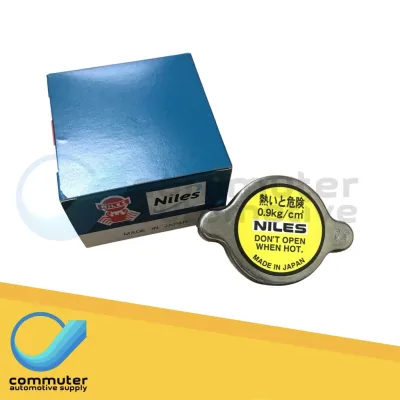
Prices are valid at publication and may change. Please refer to the product page for the latest price.
Using a radiator cap with an incorrect pressure rating introduces severe mechanical risks to your scooter. If you install a cap with a pressure rating that is too high, the cooling system will over-pressurize. This excess force puts intense strain on aging radiator hoses, plastic fittings, and the delicate water pump seal, eventually causing them to rupture. Conversely, a cap with an under-rated pressure limit will allow the coolant to boil prematurely. This leads to localized hot spots in the engine, rapid coolant loss into the overflow reservoir, and eventual engine overheating.
Cooling system specifications are not universal across all small-displacement two-wheelers. These requirements frequently vary by scooter generation, engine displacement, and specific market variants. A manufacturer might update the radiator design or change the operating pressure between different model years of the same scooter line. Consequently, you must treat your specific vehicle’s cooling requirements as a fixed engineering specification that cannot be compromised or estimated.
How to Identify the Correct Radiator Cap Specifications
Before searching for a Niles replacement, you must determine the exact specifications of your original equipment (OE) cap. The most reliable way to find the pressure rating is to inspect the top metal surface or the printed label of your existing cap. This rating is typically expressed in kilopascals (kPa) or kilograms per square centimeter (kg/cm²). Common ratings for modern Japanese-designed scooters include 0.9, 1.1, or 1.2 kg/cm². Always ensure the engine is completely cold before attempting to touch or remove the cap to inspect these markings.

Physical dimensions are just as critical as the pressure rating. You must verify the physical shape of the cap, including the neck inner diameter, the flange configuration, and the depth of the lower seal plunger. Radiator caps generally fall into distinct physical categories, often referred to in parts catalogs as small-head or big-head designs, alongside variations in seal depth. A cap with the correct pressure rating but the wrong plunger depth will fail to seal the radiator neck, rendering the pressure valve useless.
To eliminate guesswork, consult your scooter’s official owner’s manual or contact an authorized service center to retrieve the exact original equipment manufacturer (OEM) part number. This unique identifier is the most secure reference point. When you have the OEM part number, you can cross-reference it directly with official Niles application catalogs or authorized distributor databases to find the precise matching Niles product code.
Matching Niles Caps to Honda Click and Yamaha Mio Variants
When matching a Niles radiator cap to your scooter, you must distinguish clearly between the specific variants of the Honda Click and Yamaha Mio. For instance, the Honda Click 125i, Click 150i, and the newer Click 160 utilize different engine platforms and cooling capacities. These differences can translate to variations in radiator neck depths or required operating pressures. An older Click model may not share the same radiator cap dimensions as a newer generation variant.
The Yamaha Mio lineup requires even greater scrutiny because many Mio models do not use liquid cooling at all. Popular variants like the classic Mio Sporty, Mio i 125, and Mio Soul i 125 are air-cooled engines and do not feature a radiator or a radiator cap. However, liquid-cooled models within the broader Yamaha scooter family, such as the Mio Aerox or specific regional variants like the Gravis, rely on pressurized cooling systems. You must first confirm that your specific Mio variant is liquid-cooled before attempting to source a radiator cap.
Visual similarity is highly deceptive when comparing radiator caps. Two caps may look virtually identical when viewed from above, but their internal spring tensions, rubber gasket thicknesses, and valve heights can differ by fractions of a millimeter. These tiny physical discrepancies are enough to prevent the secondary vacuum valve from operating, which stops coolant from returning to the radiator from the reservoir tank. Always prioritize verified technical measurements and OEM cross-references over visual comparisons.
Do not rely on compatibility lists provided by unauthorized online sellers or generic product listings on ecommerce platforms. These descriptions often use broad, catch-all titles like “fits all Honda and Yamaha scooters” to maximize search visibility. Instead, use the pressure rating and physical dimensions you verified from your original cap as your primary filter when selecting a Niles replacement.
Purchasing and Verification Checklist for Niles Products
To ensure you are buying a genuine Niles radiator cap that will perform reliably, you must know how to spot authentic packaging and product markings. Genuine Niles products are packaged in high-quality, professionally printed boxes that display clear part numbers, accurate pressure ratings, and distinct manufacturing origin marks. The printing on the box should be sharp, with no blurry text, spelling errors, or faded colors, which are common hallmarks of counterfeit goods.
Upon receiving the radiator cap, perform a thorough physical inspection before attempting installation. Check the rubber seals on both the upper flange and the lower pressure plunger; they should be soft, highly pliable, and completely free of cracks, tears, or manufacturing debris. Press down on the main spring to test its tension. The spring should feel firm, compress evenly without tilting to one side, and snap back smoothly to its original position when released.
To protect your engine from the risks of counterfeit components, always purchase your Niles radiator cap from authorized distributors or highly reputable local automotive parts stores. Compare prices in Philippine Pesos (₱) across multiple trusted physical and online retailers. If you encounter a listing that is priced significantly lower than the established market average for genuine Japanese aftermarket parts, treat it with extreme caution. Saving a small amount on a cheap, unverified cap can result in thousands of pesos in engine repair bills if the cap fails and causes your engine to overheat.
Safe Removal, Installation, and System Bleeding
Working on a vehicle’s cooling system carries inherent safety risks that require strict adherence to safety boundaries. You must never, under any circumstances, attempt to remove the radiator cap while the engine is hot or warm. The cooling system operates under high pressure, and opening it prematurely will cause boiling coolant and steam to spray out violently, resulting in severe burns. Allow the scooter to sit turned off for several hours until the radiator and surrounding engine components are completely cold to the touch.
To install the new Niles cap, first clean the radiator filler neck thoroughly with a clean, lint-free cloth to remove any accumulated debris, rust, or old rubber residue. Align the locking tabs on the sides of the new cap with the corresponding notches on the radiator filler neck. Push down firmly on the cap to compress the internal spring, then rotate it clockwise. You must feel it pass the first safety detent and lock securely into the second, final stop. Verify that the cap sits perfectly level and does not wiggle.
After installing the new cap, you must bleed any trapped air from the cooling system, a process often called “burping.” Air pockets trapped in the cooling passages can block coolant flow and cause localized overheating. To bleed the system, leave the radiator cap off, start the engine, and let it idle for a few minutes. Watch the open filler neck as the engine warms up; you should see air bubbles rising to the surface. Top up the coolant level as these bubbles escape. Once the bubbles stop and the coolant level stabilizes, turn off the engine and immediately secure the new radiator cap.
Monitor your scooter closely during your first few rides after the installation. Check the area around the radiator neck and the overflow hose for any signs of fresh coolant leaks. If you notice persistent coolant leaks, if the reservoir tank overflows consistently, or if the engine temperature warning light remains illuminated, stop riding immediately. These symptoms indicate a deeper system issue or an incorrect part fitment, and you should consult a qualified professional mechanic to diagnose the system.
Frequently Asked Questions (FAQ)
Can I use a higher pressure Niles cap to improve cooling performance?
No, you should not use a higher pressure radiator cap in an attempt to boost cooling performance. While a higher pressure cap does raise the boiling point of the coolant, it does not lower the operating temperature of the engine. Instead, the increased pressure places unnecessary, excessive stress on your scooter’s radiator core, plastic tanks, rubber hoses, and water pump seals. Over time, this added stress can cause these components to fail prematurely, leading to sudden coolant leaks and severe engine overheating under normal riding conditions.
How often should I replace the radiator cap on my scooter?
There is no strict mileage interval for replacing a radiator cap, but you should inspect it thoroughly during every routine coolant change, which is typically recommended every two years or 10,000 to 12,000 kilometers. During inspection, look closely at the rubber gaskets for signs of hardening, swelling, cracking, or flattening. If the rubber has degraded, or if the metal spring shows signs of rust or weakened tension, you must replace the cap immediately to maintain proper system pressure.
Why is coolant overflowing into the reservoir even with a new cap?
If coolant continues to overflow into the reservoir tank after installing a correctly specified Niles cap, the issue lies elsewhere in the cooling system. Common culprits include a stuck thermostat that prevents coolant flow, a failing water pump that cannot circulate liquid, or radiator fins blocked by dirt and road debris. Additionally, a damaged cylinder head gasket can allow high-pressure combustion gases to leak into the cooling passages, forcing coolant out into the reservoir. If this issue persists, seek professional diagnostic services to identify the root cause.

Community discussion
Share your experience or ask a question. Comments are reviewed before publication.