
Selecting the right disc brake components for your motorcycle in the Philippines is not about finding a single, universally superior brand. Instead, a reliable choice depends on matching your motorcycle’s original manufacturer specifications, selecting the correct friction material for your daily riding environment, and ensuring you purchase genuine parts. With the country’s unique mix of intense tropical heat, sudden heavy downpours, and congested stop-and-go city traffic, your braking system faces severe thermal and physical stress every day. Trustworthy braking performance comes from understanding how different brands and materials behave under these specific conditions, allowing you to make an informed, safety-first decision.
Safety First: Matching Brakes to Your Motorcycle
Before comparing aftermarket brands or friction compounds, you must establish your motorcycle’s exact technical requirements. Every manufacturer designs the braking system as an integrated unit, where the master cylinder, caliper, brake lines, and disc rotors work in precise harmony. Refer to your owner’s manual or service guide to identify the original equipment manufacturer (OEM) part numbers, specified friction materials, and exact rotor dimensions. Installing components that deviate from these specifications can alter your braking bias, reduce stopping power, or cause premature wear on other parts of the system.
Physical compatibility goes beyond simple bolt patterns. You must verify the caliper piston count, mounting bracket configuration, and rotor thickness limits. A rotor worn below its stamped minimum thickness cannot dissipate heat effectively, leading to brake fade or structural failure under hard braking. For ABS-equipped motorcycles, modifying rotor dimensions or caliper setups can disrupt wheel speed sensor readings, potentially disabling this critical safety feature when you need it most.
Products mentioned in this guide
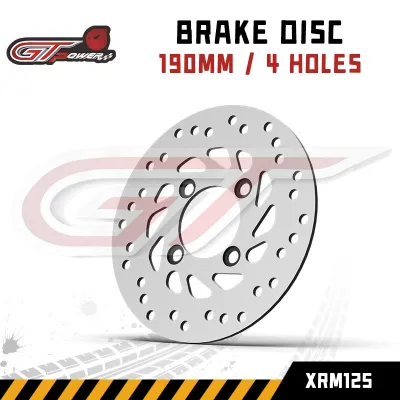
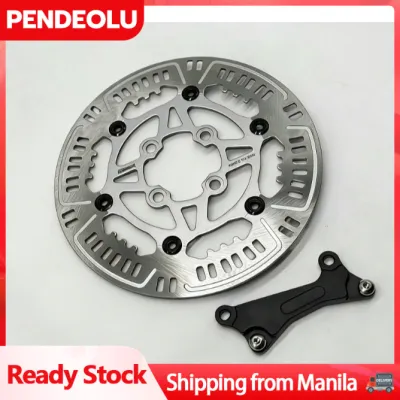
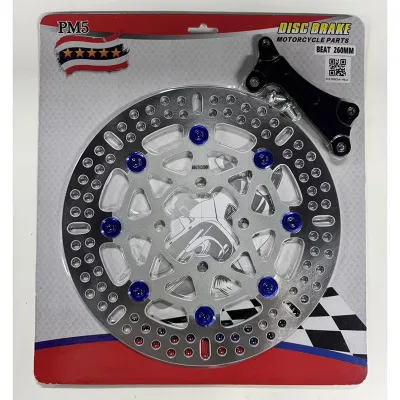
![[Fast Delivery] CLICK V2 / CLICK V3 Big Disc CNC Floatings Disc Ligthen 260mm With Bracket Front Click /Beat 4 Holes](https://img.lazcdn.com/g/ff/kf/Sf6bf9a89343e47fc9c707b2a0c90974ar.jpg_400x400q80.jpg_.webp)
Prices are valid at publication and may change. Please refer to the product page for the latest price.
Upgrading to higher-performance calipers or larger rotors requires a matching master cylinder output. An undersized master cylinder feels spongy and fails to actuate larger pistons, while an oversized one results in a stiff lever with poor modulation. Prioritize maintaining original system balance unless replacing the entire assembly with a certified, fully compatible upgrade kit designed specifically for your motorcycle model.
Understanding Brake Pad Materials for Daily Riding
Brake pads are available in several distinct material formulations, each offering a different balance of initial bite, heat resistance, noise level, and durability. Organic or Kevlar-based brake pads are made from a blend of fibers, resins, and lubricants. These pads are known for their quiet operation, low rotor wear, and excellent initial bite at low temperatures, making them highly suitable for light city commuting on smaller scooters and underbone motorcycles. However, organic pads tend to wear down quickly under heavy loads, continuous hard braking, or when exposed to the abrasive road grit common during the rainy season.

Semi-metallic brake pads offer a balanced compromise by mixing organic materials with metallic fibers like copper, steel, or iron. This combination improves heat dissipation and durability, allowing the pads to maintain consistent stopping power across a wider temperature range. Semi-metallic pads are highly versatile, making them a popular choice for mixed city and highway riding where you encounter both stop-and-go traffic and higher-speed stops. They do produce slightly more brake dust and noise than organic pads, and they will wear down your disc rotors at a slightly faster rate.
Sintered or metallic brake pads are manufactured by fusing metallic particles together under high pressure and temperature. These pads deliver exceptional heat resistance, high friction coefficients, and extremely long service life, making them the standard choice for heavy-duty motorcycles, high-displacement bikes, and carrying heavy cargo. Sintered pads perform exceptionally well in wet and muddy conditions, as the metallic compound quickly cuts through water films on the rotor. However, they require a brief warm-up period to reach optimum operating temperature, can be noisy, and will accelerate rotor wear significantly if paired with softer, non-sintered-compatible disc rotors.
Evaluating Brake Brands: OEM vs. Reputable Aftermarket
When shopping for replacement brake components, you will generally choose between OEM parts and aftermarket alternatives. OEM parts are packaged and distributed by your motorcycle’s manufacturer, guaranteeing an exact fit and predictable, factory-standard performance. Because these parts are engineered specifically for your vehicle’s weight, speed capabilities, and hydraulic system, they represent the safest and most reliable baseline choice for daily commuting. While OEM components sometimes carry a price premium, they eliminate the guesswork associated with compatibility and material matching.
Premium aftermarket brands are established global manufacturers that specialize in braking technology. These companies develop their own proprietary friction compounds and rotor designs, often offering specialized options for different riding styles, such as high-mileage touring or sport riding. When choosing a premium aftermarket brand, it is crucial to verify the manufacturer’s official distribution channels in the Philippines. Reputable aftermarket brands provide detailed application charts and technical specifications, allowing you to select a compound that matches or safely exceeds your original equipment standards.
In contrast, budget-friendly, unbranded, or generic brake components present a significant safety risk. These low-cost alternatives often use inferior friction materials that can crumble under high heat, leading to sudden brake failure. They may also feature poorly bonded backing plates, inconsistent dimensions, and inadequate heat dissipation, which can warp your rotors or damage your calipers. Saving money on unbranded brake pads is a false economy that compromises your primary safety system; always stick to established brands with verifiable manufacturing standards.
How to Spot Counterfeit Brake Components
The popularity of major brake brands has unfortunately led to a proliferation of counterfeit products on online marketplaces and in unauthorized physical shops. Using counterfeit brake pads or rotors is extremely dangerous, as these fakes are made without quality control and often fail catastrophically under emergency braking. To protect yourself, always inspect the product packaging closely before purchase. Genuine packaging typically features high-quality printing, clear and correct spelling, unique security holograms, and matching part numbers that can be verified on the manufacturer’s official website.
Next, examine the physical brake pad or rotor itself. Genuine brake pads have a clean, precisely stamped backing plate with clearly legible batch numbers, material codes, and brand markings. The friction material should be evenly bonded to the backing plate without any visible gaps, excess glue lines, or crumbling edges. On disc rotors, look for precise machining, consistent thickness, and clean, stamped wear limits rather than cheap laser-etched markings. If the price of a premium brand product seems suspiciously low compared to authorized retail prices, it is highly likely to be a counterfeit.
To minimize the risk of buying fake parts, purchase your brake components exclusively from authorized dealers, official brand flagship stores on major e-commerce platforms, or reputable physical motorcycle shops. Avoid buying from unverified third-party online sellers who cannot provide proof of authenticity or official receipts. If you are unsure about the legitimacy of a seller, check the official website of the brake brand for a list of authorized distributors and retail partners in your region.
Decision Framework: Which Brand Type Fits Your Ride?
To select the right brake brand and material type for your motorcycle, you should evaluate your specific riding profile, vehicle type, and typical road conditions. If your daily commute consists primarily of stop-and-go traffic in congested urban areas, and you ride a light scooter or underbone, prioritizing OEM or premium organic aftermarket brands is highly practical. This combination ensures smooth, quiet braking engagement, minimizes wear on your disc rotors, and provides reliable stopping power from the moment you start your ride without needing a warm-up period.
If your daily route involves carrying heavy passenger or cargo loads, navigating steep mountainous terrain, or traveling at sustained highway speeds, you should opt for premium semi-metallic or sintered aftermarket brands. These conditions generate substantial heat, which can quickly cause organic pads to fade. Sintered or high-quality semi-metallic compounds will maintain their friction coefficient under high thermal loads, ensuring you have consistent stopping power when descending long hills or making sudden stops from high speeds.
Before making your final selection, always verify if your motorcycle features specialized braking systems such as ABS or a Linked Brake System (LBS). These systems are calibrated around the specific friction coefficients of the original factory pads. Installing aftermarket pads with significantly higher or lower friction levels can alter the system’s modulation, potentially causing the ABS to intervene too early or too late. For motorcycles with these advanced safety systems, sticking to OEM pads or aftermarket options explicitly certified as direct OEM replacements is highly recommended.
Installation and Bedding-In Essentials
Even the highest-quality brake components will fail to perform safely if they are installed incorrectly. Before mounting new brake pads, it is essential to clean the disc rotor thoroughly using a dedicated brake cleaner spray. This step removes any accumulated road grime, grease, and manufacturing oils that could contaminate the new friction material and permanently ruin its stopping capability. Inspect the rotor surface for any deep grooves or uneven wear; if the rotor is damaged, it must be resurfaced or replaced alongside the new pads to ensure proper contact.
Once the new pads are installed, you must perform a proper bedding-in, or break-in, procedure. This process involves making a series of gentle, controlled stops from moderate speeds without coming to a complete halt, allowing the new pads to gradually mate with the rotor surface and transfer an even layer of friction material. Skipping this step can lead to uneven material transfer, resulting in brake judder, squealing, and reduced braking efficiency. Avoid hard, emergency-style braking for the first few dozen kilometers of riding unless absolutely necessary.
If you do not possess the proper tools, mechanical experience, or a calibrated torque wrench, do not attempt to replace brake components yourself. Properly retracting caliper pistons, lubricating slide pins, torquing mounting bolts to manufacturer specifications, and bleeding the hydraulic lines are critical tasks that directly impact your safety. Always consult a qualified motorcycle mechanic at a professional service center to perform the installation, ensuring your braking system is fully operational and safe for the road.
Frequently Asked Questions (FAQ)
Can I mix different brake pad brands on the front and rear?
It is highly recommended to avoid mixing different brake pad brands or material types between your front and rear brakes. Your motorcycle’s braking system is designed with a specific front-to-rear bias, typically relying on the front brake for the majority of its stopping power. Mixing compounds with different friction coefficients can unpredictably alter this balance, potentially leading to premature rear-wheel lock-up or insufficient front stopping power. Additionally, mismatched pads can confuse the wheel speed sensors on ABS-equipped motorcycles, leading to improper system intervention during hard braking.
How often should I replace my motorcycle disc brake rotors?
There is no fixed mileage interval for replacing disc brake rotors, as wear rates depend heavily on your riding style, load, and the hardness of the brake pads used. Instead, you should inspect your rotors during every brake pad change. Look for the minimum thickness limit stamped directly on the rotor body and measure it using a micrometer or vernier caliper. You must replace the rotor immediately if it falls below this limit, or if you observe deep grooves, warping, severe heat discoloration, or cracks around the mounting holes.

Community discussion
Share your experience or ask a question. Comments are reviewed before publication.