
Deciding whether to replace your scooter’s original equipment manufacturer (OEM) clutch bell with an aftermarket option like a Daytona clutch bell is a common crossroads for riders looking to optimize their daily commute. In tropical climates where stop-and-go traffic combines with high ambient temperatures and humidity, the efficiency of your continuously variable transmission (CVT) is critical. While aftermarket upgrades promise enhanced throttle response and superior cooling, the actual benefit depends heavily on your specific riding conditions, the wear state of your existing transmission components, and verifying exact compatibility before purchase. Rather than assuming an aftermarket part is universally superior, a systematic comparison of material specifications, physical dimensions, and design features is the safest path to a reliable upgrade.
Understanding the Clutch Bell's Role in Scooter Performance
The clutch bell serves as the final link in your scooter’s CVT power transmission before torque reaches the rear wheel. Inside the CVT casing, the engine spins the clutch assembly, which houses weighted clutch shoes. As engine speed increases, centrifugal force pushes these shoes outward until their friction linings grip the inner wall of the clutch bell. Once engaged, the bell spins, turning the input shaft of the reduction gearbox and propelling your scooter forward. Because this engagement relies entirely on friction, the interface between the shoes and the bell generates significant heat, especially during low-speed maneuvering or when climbing steep inclines.
Over time, the constant friction and thermal stress can degrade a stock OEM clutch bell. Common symptoms of a worn or failing bell include a distinct shuddering or vibration when pulling away from a stop, a sensation of slipping where the engine revs but the scooter hesitates to accelerate, and a deep blue discoloration on the outer steel surface. This discoloration, known as glazing or heat spotting, indicates that the metal has reached extreme temperatures, altering its friction characteristics and structural integrity.
Products mentioned in this guide
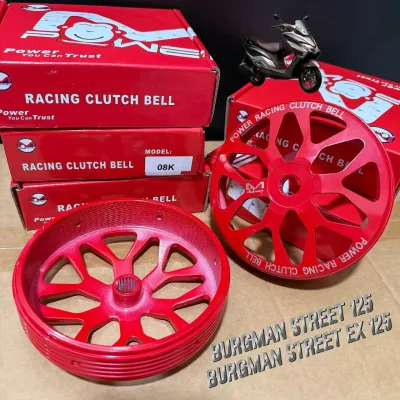
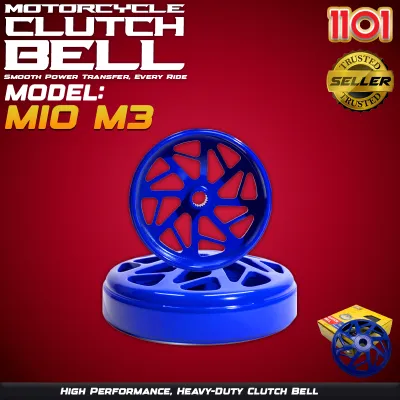
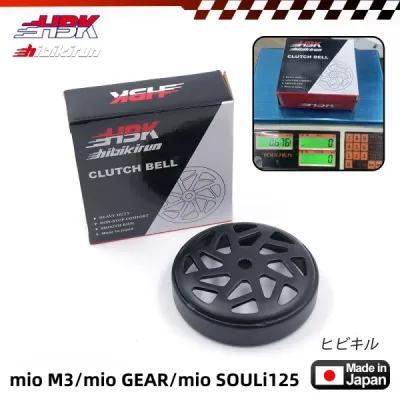
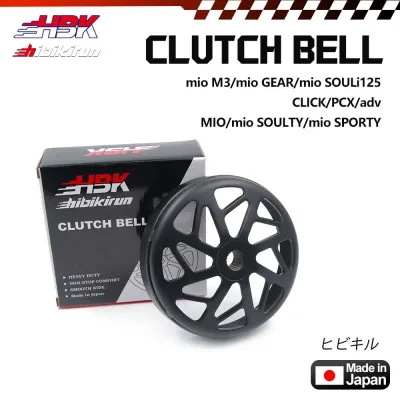
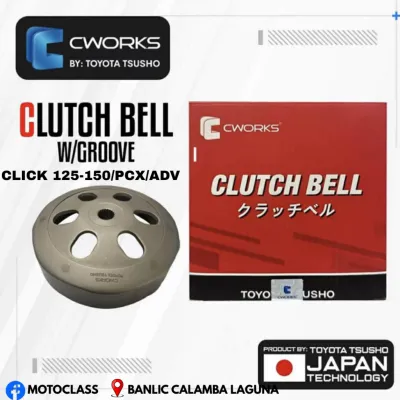
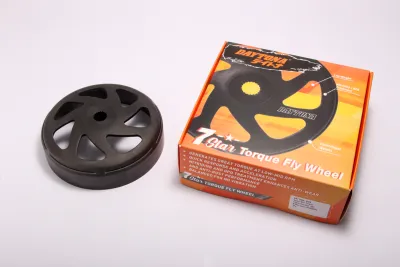
Prices are valid at publication and may change. Please refer to the product page for the latest price.
However, it is vital to recognize that the clutch bell does not operate in isolation. Upgrading to a new bell—whether Daytona or OEM—will not resolve underlying transmission issues if your clutch shoes are worn thin, your clutch springs have lost their tension, or your variator rollers have developed flat spots. A comprehensive inspection of the entire CVT system is always the necessary first step before blaming the clutch bell alone for poor performance.
Key Comparison Dimensions: Daytona vs. Stock OEM
To make an objective decision, you must compare the physical specifications of the Daytona aftermarket unit against your scooter’s stock OEM part. Because manufacturers frequently update designs and dimensions across different model years, you should never rely on general compatibility claims. Instead, use the following framework to record and compare the exact specifications of both options using official product labels, manufacturer spec sheets, and your vehicle’s service manual.

| Feature | Daytona Aftermarket Specs | Stock OEM Specs | Verification Method |
|---|---|---|---|
| Inner Diameter | Check product label (e.g., 115mm, 125mm) | Check service manual specification | Measure with a digital vernier caliper |
| Spline Count | Count shaft splines on product packaging | Count splines on the input shaft | Physical count of the inner teeth |
| Total Weight | Verify on manufacturer spec sheet | Weigh original part on digital scale | Use a calibrated digital gram scale |
| Material Grade | Look for high-carbon steel or alloy markings | Typically pressed or cast carbon steel | Review manufacturer material certifications |
| Cooling Features | Identify outer fins, slots, or vents | Typically smooth or basic outer ring | Visual inspection of surface area |
Verifying material claims requires looking past marketing terminology. High-quality aftermarket options often utilize specialized steel alloys or CNC-machined components designed to resist warping under high thermal loads. Check the manufacturer’s documentation for specific steel grades or heat-treatment certifications. Conversely, OEM parts are engineered for maximum longevity and quiet operation under standard riding conditions, often prioritizing structural dampening over aggressive weight reduction.
Evaluating Material and Build Quality
When inspecting both options, pay close attention to the inner friction surface of the bell. This surface must be perfectly round, with a consistent, finely machined finish that allows the clutch shoes to bite even. Any ripples, rough machining marks, or out-of-round variances will lead to rapid shoe wear and persistent clutch shudder.
Additionally, examine the structural joints of the bell. Many clutch bells consist of a stamped outer drum welded or riveted to a splined center boss. Inspect the quality of these welds or rivets; they must be uniform, deep, and free of porosity or micro-cracks. A failure at this joint under high rotational speeds can cause catastrophic damage to your CVT housing and engine casing.
Assessing Heat Dissipation and Design Features
Heat is the primary enemy of CVT efficiency. In hot, humid tropical environments, a clutch bell that cannot shed heat quickly will cause the clutch shoes to glaze, leading to chronic slipping. Look closely at the external design of the Daytona bell compared to your stock unit. Many aftermarket designs incorporate raised cooling fins, external machined grooves, or ventilation holes designed to draw air across the friction surfaces.
However, these cooling features are only effective if your scooter’s CVT cover allows for proper airflow. If your transmission cover’s air intake filter is clogged with road dust, or if the rubber cooling duct is cracked or blocked, even the most advanced cooling fins on an aftermarket bell will fail to lower operating temperatures. Ensure your entire cooling path is clear before expecting design features to deliver real-world thermal benefits.
Checking Weight and Rotational Mass
Weight is a critical factor in how quickly your scooter responds to throttle inputs. To understand the actual difference, place both the stock OEM bell and the Daytona bell on a digital gram scale. A lighter clutch bell reduces the rotational inertia (parasitic drag) that the engine must overcome to spin the drivetrain, which can translate into a crisper, more immediate throttle response when accelerating from a standstill.
However, a lighter bell is not a guaranteed performance upgrade for every rider. While it can improve acceleration response, the reduction in mass means the bell has less thermal capacity to absorb sudden spikes in heat. For heavy riders, those carrying frequent pillion passengers, or riders navigating steep mountain roads, a slightly heavier OEM bell may actually provide more stable performance by absorbing heat more effectively without warping.
Compatibility, Installation, and Safety Boundaries
Before purchasing any transmission component, you must verify absolute compatibility with your scooter’s specific make, model, and production year. Even a minor variance of a single millimeter in inner diameter or a slight difference in the spline count on the gearbox input shaft will prevent installation or, worse, strip the splines during operation. Never attempt to force a clutch bell onto a shaft that does not match perfectly.
Working on your scooter’s CVT system carries significant safety responsibilities. Always consult your vehicle’s official service manual for the exact torque specifications required for the clutch securing nut. Over-tightening this nut can strip the threads on the input shaft or crush the bearings, while under-tightening can cause the clutch assembly to spin loose at high speeds, destroying the transmission.
Furthermore, always use the correct CVT holding tools or a strap wrench to secure the bell while tightening or loosening the nut. Never wedge a screwdriver or chisel into the cooling fins or ventilation holes of the clutch bell to hold it in place, as this will bend the bell out of round, ruin its balance, and void any manufacturer warranty. If the Daytona packaging does not explicitly list your exact scooter model and year as compatible, halt the installation immediately and consult an authorized distributor or a qualified motorcycle mechanic.
Evaluating Cost and Long-Term Value
When weighing the financial aspect of this upgrade, compare the retail price of the Daytona clutch bell in your local currency ₱ against a genuine OEM replacement part sourced from an authorized dealership. While aftermarket performance parts can sometimes carry a premium, OEM parts for certain scooter models can also be surprisingly expensive due to import duties and dealership markups.
Beyond the initial purchase price, factor in the cost of the tools required for a safe installation. If you do not already own a torque wrench, a clutch spring compressor, and a proper holding tool, you will need to purchase these or pay a professional mechanic for the labor. A professional installation ensures that the components are torqued to exact factory specifications, preserving your warranty and ensuring road safety.
Additionally, review the warranty terms. Genuine OEM parts typically carry a manufacturer warranty when installed by an authorized dealer, whereas aftermarket parts may have more limited return policies or require you to deal directly with the distributor if a manufacturing defect arises.
Decision Framework: Which Clutch Bell Should You Choose?
To make your final decision, evaluate your specific riding habits, mechanical readiness, and the physical condition of your scooter’s transmission. Use the following condition-based rules to guide your choice:
- Choose the Daytona aftermarket clutch bell if: Your verified measurements confirm an exact fit for your scooter model, you frequently ride in demanding conditions where enhanced cooling fins can prevent glazing, you are looking to improve throttle response by reducing rotational mass, and you are comfortable inspecting and potentially retuning other CVT components (such as variator rollers and clutch springs) to match the new bell's characteristics.
- Choose the Stock OEM clutch bell if: You use your scooter primarily for daily commuting, prioritize absolute plug-and-play compatibility without the need for additional tuning, want to maintain standard factory warranty coverage, and prefer the predictable, quiet operation and high thermal capacity of a standard-weight steel bell.
- Verify first if: You are currently experiencing clutch shudder or slipping. Before buying any new bell, disassemble your CVT and inspect the clutch shoes. If the shoes are glazed or worn down to their metal backing, replacing the clutch bell alone will not solve your performance issues. You must replace or service the clutch shoes simultaneously to ensure a proper mating surface and prevent immediate damage to your new bell.
Frequently Asked Questions (FAQ)
Can I reuse my old clutch shoes with a new Daytona clutch bell?
You can only reuse your old clutch shoes if they pass a thorough physical inspection. Measure the thickness of the friction material against the service limit specified in your scooter’s manual. The shoes must show even wear across their entire surface, with no signs of deep heat cracking, chunking, or oil contamination from a leaking gearbox seal. If the shoes are glazed, you must thoroughly sand away the glazed layer using medium-grit sandpaper before pairing them with the new Daytona bell. If they are worn close to the limit, replace them to prevent damaging the inner surface of your new bell.
Does a lighter clutch bell increase top speed?
No, a lighter clutch bell does not increase your scooter’s top speed. The weight of the clutch bell only affects the rotational inertia of the drivetrain, meaning a lighter bell allows the engine to rev up more quickly, improving initial acceleration and throttle response. Your scooter’s top speed is determined by other factors, including the engine’s maximum power output, the gear ratios in the final reduction gearbox, the face angle of your pulleys, and the weight of your variator rollers which dictate how high the belt rides in the pulleys.

Community discussion
Share your experience or ask a question. Comments are reviewed before publication.