
When shopping for a modular helmet in the Philippines, you will constantly encounter terms like SEC, PS, and ICC. Understanding what these marks actually mean is critical for your safety on the road and your compliance with local traffic laws. While some riders mistake brand names for safety standards, others struggle to distinguish between corporate registrations, import clearances, and actual physical impact testing.
For a modular helmet—which features a chin bar that flips up—certification is not just a legal formality. It is a verification that the moving parts, locking hinges, and structural integrity can withstand an impact. Knowing how to decode these certifications ensures you choose a helmet that protects you during daily commutes in tropical downpours and intense highway heat.
The Legal and Safety Role of Compliance Marks
To navigate the local market safely, you must first separate corporate identity from product safety testing. In the Philippines, “SEC” is a well-known local brand of motorcycle helmets and gear, registered under the Securities and Exchange Commission (SEC) as a business entity. However, the SEC acronym itself is not a safety certification or a testing standard. Buying an “SEC modular helmet” means you are purchasing a specific brand, but that helmet must still carry official government safety marks to be legally road-worthy.
Products mentioned in this guide
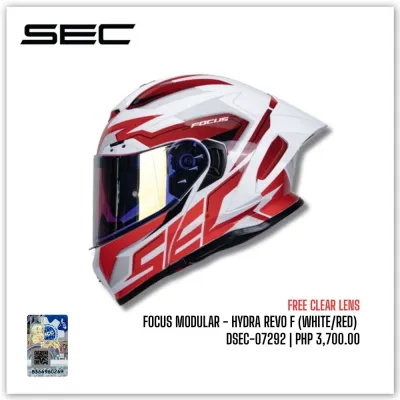
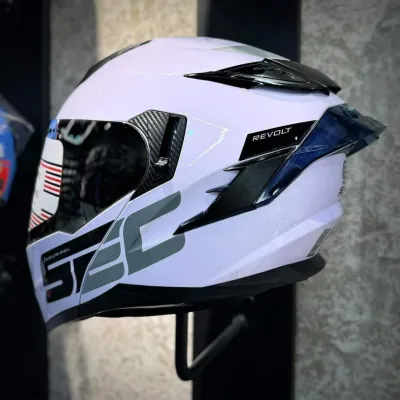
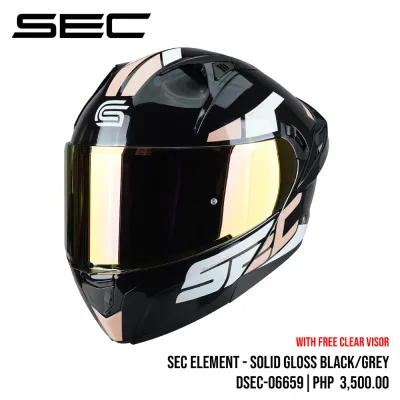
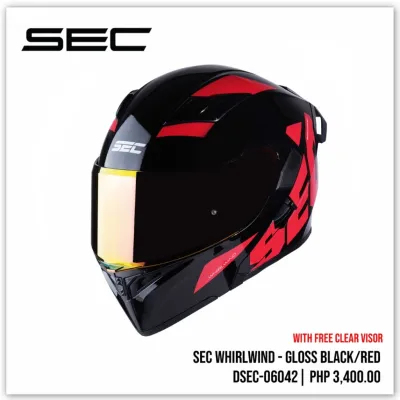
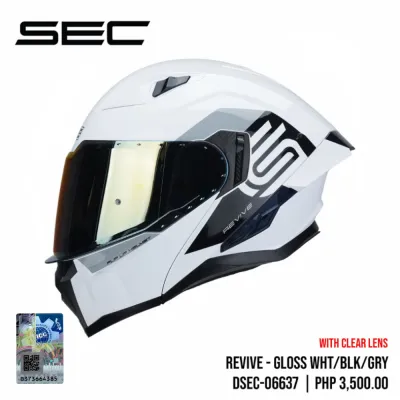
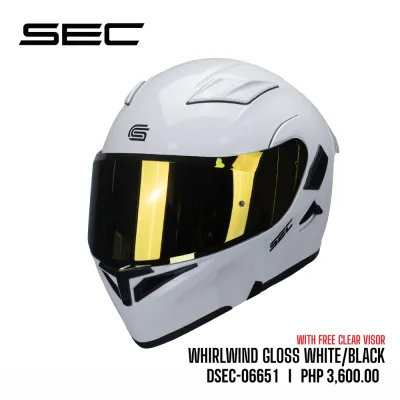
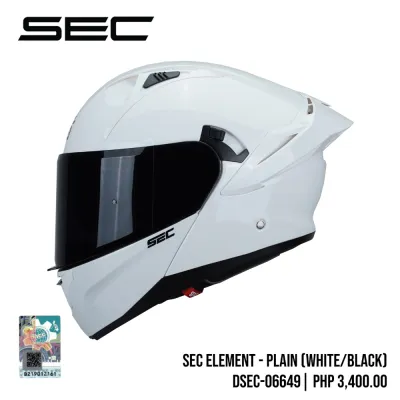
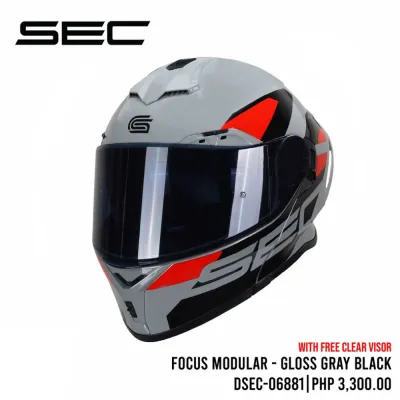
Prices are valid at publication and may change. Please refer to the product page for the latest price.
The actual safety and import compliance marks are the Philippine Standard (PS) Quality and/or Safety Mark and the Import Commodity Clearance (ICC) sticker. The Bureau of Philippine Standards (BPS), an agency under the Department of Trade and Industry (DTI), administers these marks. Locally manufactured helmets or those with consistent, long-term distribution channels receive the PS mark, while imported batches undergo inspection to receive the ICC sticker.
Under the Motorcycle Helmet Act of 2009 (Republic Act No. 10054), all motorcycle riders on public roads must wear heavy-duty protective helmets equipped with these official DTI-conforming stickers. Land Transportation Office (LTO) officers and local traffic enforcers look specifically for these physical marks during routine checkpoints.
Relying solely on a brand’s marketing or its popularity among local riding groups is never a substitute for these official marks. Even if a helmet is highly praised online, it cannot legally protect you from traffic citations or guarantee standardized impact performance without a verifiable PS or ICC certification.
What These Standards Require for Modular Helmets
Modular helmets present unique engineering challenges compared to fixed full-face designs. Because the chin bar rotates on a hinge mechanism, it introduces potential weak points where the moving parts meet the main shell. During a frontal impact, a substandard locking mechanism can fail, causing the chin bar to fly open and expose your face to the road.

Local safety standards require that modular helmets undergo rigorous testing to ensure the chin bar remains securely locked under stress. When verifying a modular helmet, you must check whether the certification applies to the helmet in both its open and closed positions. This is often indicated in the manufacturer’s documentation or on a permanent label inside the helmet liner as a dual-homologation rating (such as a “P/J” designation under international frameworks adopted locally).
To confirm this coverage, look for the permanent fabric label sewn into the helmet’s retention strap or printed on the rear of the outer shell. This label should explicitly state the standards the helmet meets. If the manual or the label only certifies the helmet as an open-face model (sometimes marked only with a “J” rating), the chin bar is considered purely cosmetic and does not offer certified impact protection.
Visual inspection alone cannot determine the strength of a metal or plastic hinge hidden inside the helmet shell. If you cannot find clear documentation or a permanent label specifying that the modular mechanism is fully certified for impact protection, stop using the helmet in the closed position and consult the manufacturer or an authorized distributor for clarification.
How to Spot Genuine Certification Marks and Avoid Fakes
Because compliance stickers are legally required, counterfeit marks are unfortunately common on cheap, unbranded helmets sold through unauthorized channels. Genuine ICC stickers feature a distinct holographic background that shifts colors when tilted under direct sunlight. They also display a unique, traceable serial number and the official logo of the Department of Trade and Industry.
A major red flag of a counterfeit helmet is a sticker that peels off easily without tearing. Genuine ICC stickers use a strong, tamper-evident adhesive designed to self-destruct or leave a pattern behind if someone attempts to transfer them to an uncertified helmet. Additionally, look closely at the print quality; blurry text, misaligned logos, or a lack of a clear serial number indicate a fake mark.
When purchasing a modular helmet from online marketplaces or independent physical shops, always cross-reference the seller with the official list of authorized dealers provided by the brand. You can also verify the validity of the ICC serial numbers through official DTI databases or consumer care portals. If a seller offers a helmet at an unusually low price and cannot provide verifiable proof of its import clearance, it is highly likely to be uncertified.
Navigating Local Marks and International Safety Standards
Many premium modular helmets imported into the Philippines carry highly respected international safety ratings, such as the United States Department of Transportation (DOT) FMVSS 218 standard or the United Nations Economic Commission for Europe (ECE) 22.05 or 22.06 standards. While these international marks indicate excellent safety engineering, they do not legally replace local requirements.
By law, even if a helmet has a prominent ECE or DOT logo printed on the back, it must still bear a physical ICC or PS sticker to be legally ridden on public roads in the Philippines. This is because the local government requires independent verification that the specific batch imported into the country meets national safety guidelines.
Fortunately, many reputable manufacturers design dual-certified helmets. These models undergo international testing abroad and then successfully pass the local BPS verification process upon arrival in the country, receiving an official ICC sticker. Choosing a dual-certified modular helmet gives you the best of both worlds: advanced international testing and full local legal compliance.
International standards often include testing parameters that go beyond basic local requirements, such as the rotational acceleration tests introduced in the ECE 22.06 standard. These tests simulate real-world angled impacts, which are highly relevant for modular helmets that may experience complex forces during a fall. Checking for these international marks alongside your local ICC sticker ensures a higher level of overall protection.
Frequently Asked Questions (FAQ)
Can I legally ride with only an international certification mark?
No, you cannot legally ride on public roads in the Philippines with only an international mark like DOT or ECE. Local traffic laws strictly require a physical, government-issued ICC or PS sticker on your helmet. Even if your helmet is internationally certified, riding without the local sticker can result in fines and confiscation by traffic enforcers.
Do modular helmets need a different certification than full-face helmets?
Modular helmets do not use a completely separate certification system, but they must undergo specific testing for their moving parts. You must verify that the helmet’s official documentation or permanent strap label certifies the chin bar’s locking mechanism. Look for dual-homologation markings to ensure the helmet is certified to protect you in both the open and closed configurations.

Community discussion
Share your experience or ask a question. Comments are reviewed before publication.